Short-term memories are thought to be formed deep within the brain in structures such as the hippocampus, but little is known about how and where memory-related information is kept in the brain or the process of drawing on this information. A good example is the sound of a car horn—most of us recognize it as a warning and know how to respond, even though not all horns sound the same and the circumstances in which we might hear a horn are different each time.
New research led by Professor Lucy Palmer from The Florey’s Neural Network Group has uncovered new insights into how and where memory-related information is stored and how these memory banks are used. These findings improve our fundamental understanding of how the brain works, providing a springboard for other scientists to make further, disease-specific discoveries. The paper is published in the journal Science Advances.
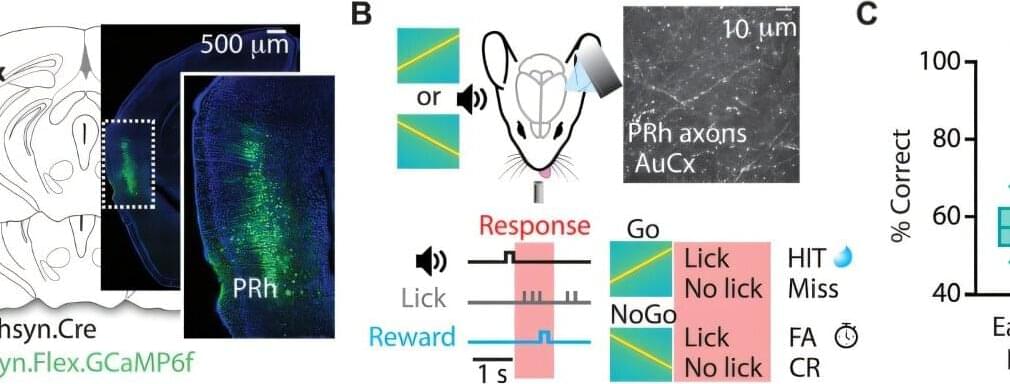
“Using mice that we trained to respond to similar, but slightly altered sounds, we identified a long-range cortical circuit that links memory and sensory systems,” Professor Palmer said. “Our findings provide valuable insights into the cellular and network mechanisms that support learning and memory-guided sensory behavior.