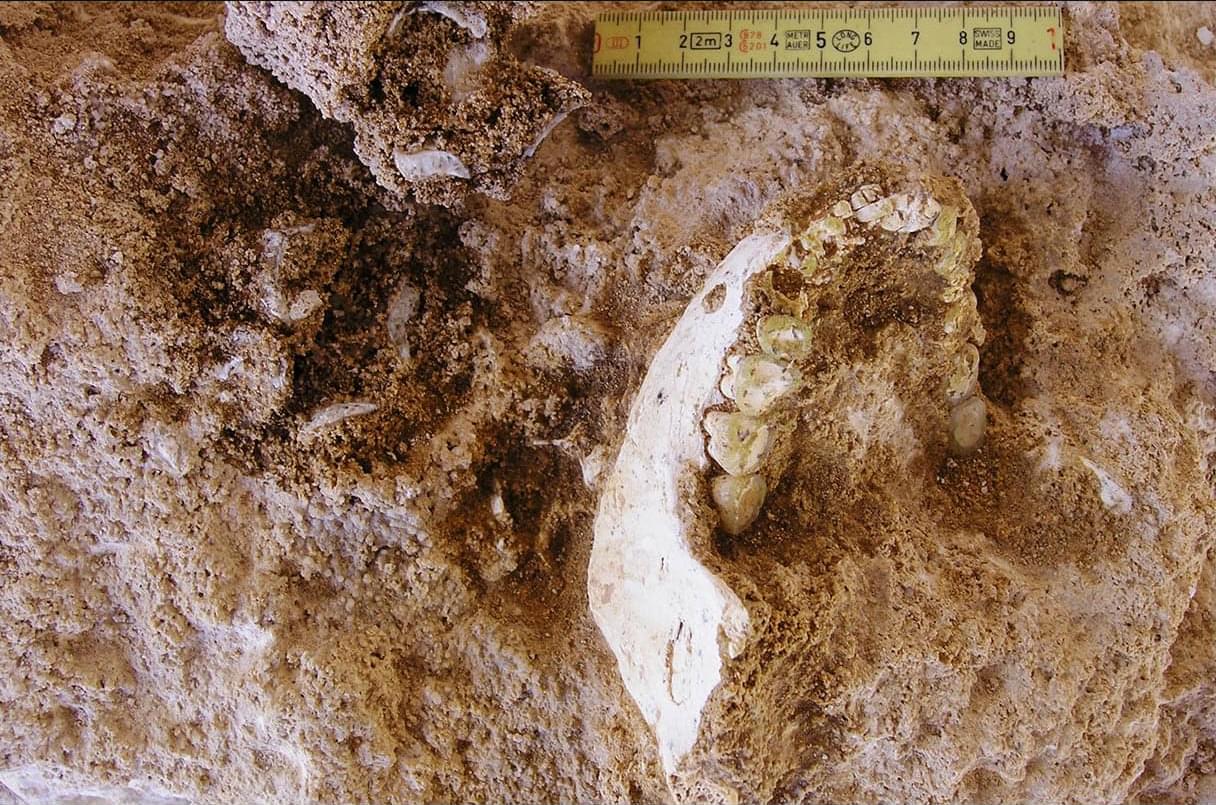
Bones from a Moroccan quarry belonged to a hominin that lived when the human lineage was splitting

Astronomers report the discovery of a new binary system, designated LAMOST J065816.72+094343.1. The newfound binary consists of a massive and hot subdwarf and an unseen companion. The finding was detailed in the January issue of the Astronomy & Astrophysics journal.
LAMOST J065816.72+094343.1, or J0658 for short, was first identified in 2018 by the Large Sky Area Multi-Object Fiber Spectroscopic Telescope (LAMOST) and classified as a hot subdwarf star of an sdOB type. Initial observations of J0658 have found that it is a helium-poor star with an effective temperature of about 35,800 K and a projected rotational velocity of 37 km/s.
Given that very little is known about J0658, a team of astronomers led by Fabian Mattig of the University of Potsdam in Germany decided to analyze the archival LAMOST data and to conduct follow-up observations of this star with the Southern Astrophysical Research (SOAR) telescope and the Very Large Telescope (VLT), hoping to unveil its true nature.
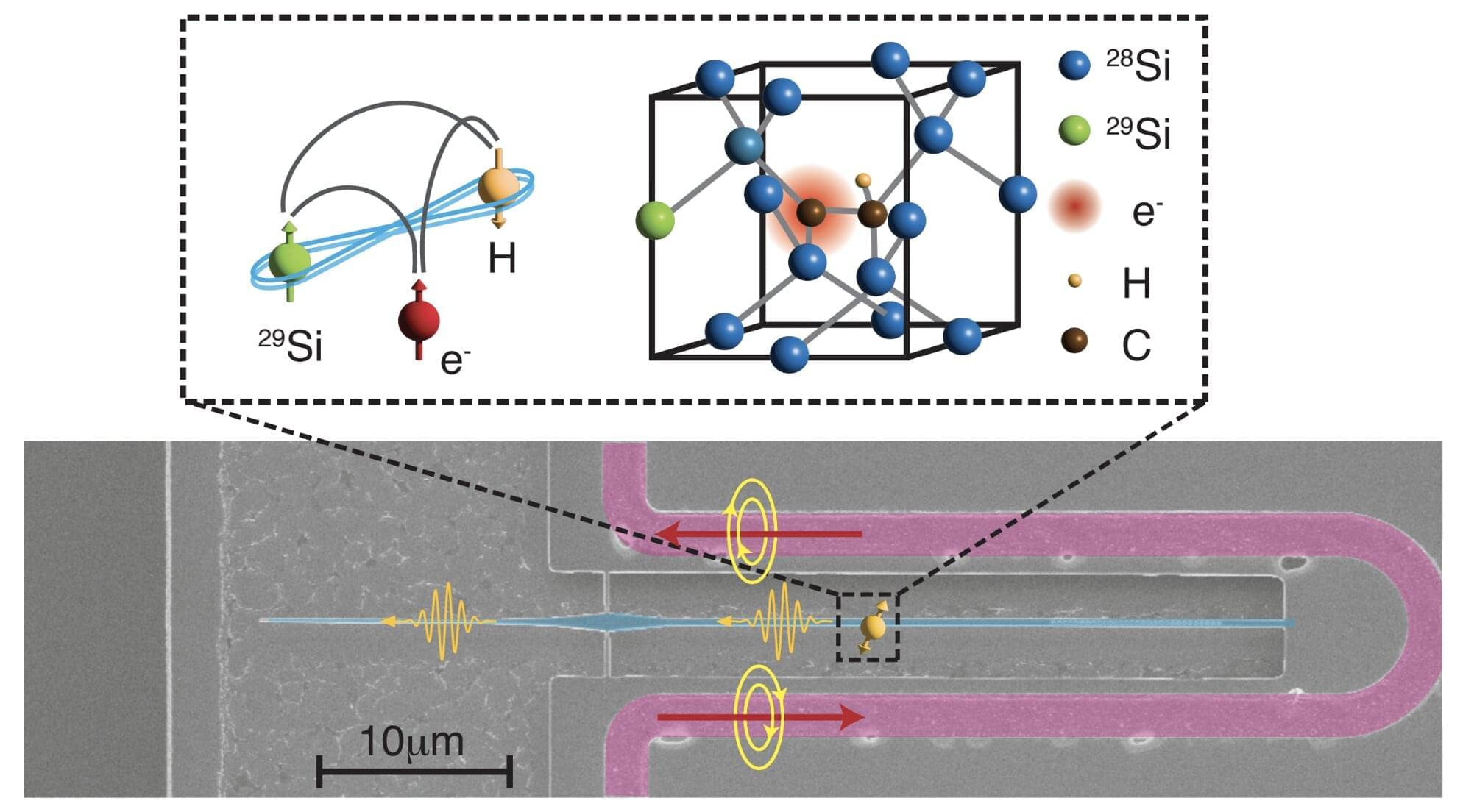
Quantum technologies are highly promising devices that process, transfer or store information leveraging quantum mechanical effects. Instead of relying on bits, like classical computers, quantum devices rely on entangled qubits, units of information that can also exist in multiple states (0 and 1) at once.
A research team at the University of California Berkeley (UC Berkeley) supervised by Alp Sipahigil recently demonstrated the potential of leveraging atomic-scale defects on silicon chips, known as T-centers, to create small multi-qubit memory units that store quantum information (i.e., quantum registers).
Their paper, published in Nature Nanotechnology, could open new possibilities for the development of quantum technologies that are based on silicon, which is the most widely used material within the electronics industry.
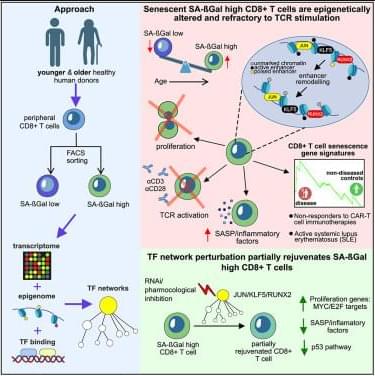
Turano et al. reveal the transcription factor networks driving CD8+ T cell senescence in healthy aging humans. Inhibiting key transcription factors modulates the senescence program and partially restores responsiveness to TCR stimulation. They also show that CD8+ T cell senescence gene signatures predict response to CAR-T cell therapy in B cell lymphomas.
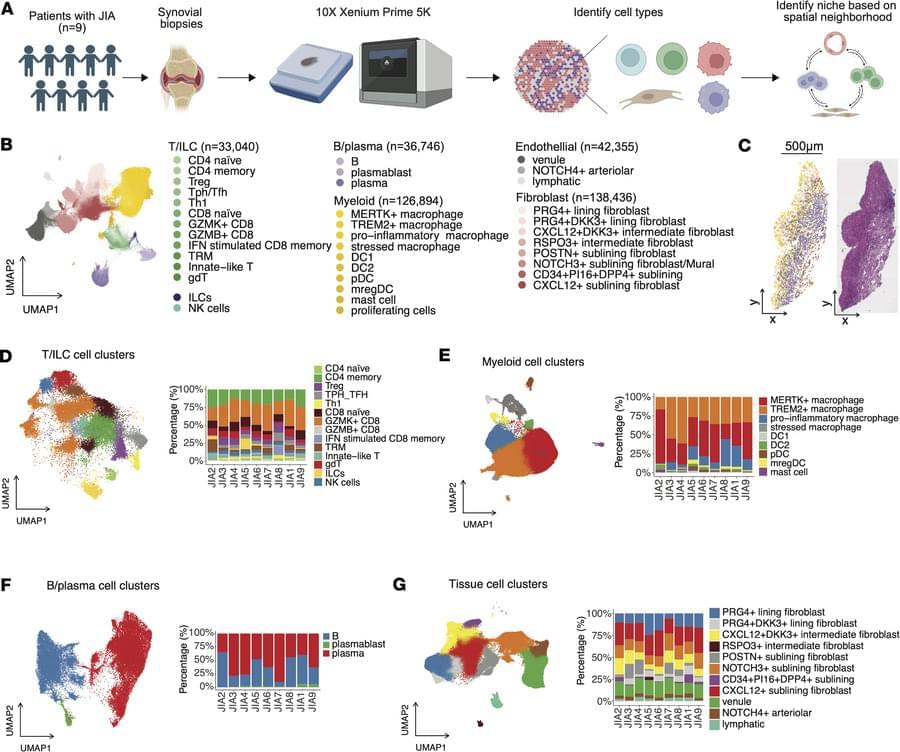
Jun Inamo & team profiles nearly 400,000 cells across 9 patients with juvenile idiopathic arthritis (JIA), revealing disease-specific immune–stromal interactions within the synovium.
1Department of Biomedical Informatics, Center for Health Artificial Intelligence, and.
2Division of Rheumatology, University of Colorado School of Medicine, Aurora, Colorado, USA.
3Division of Rheumatology, Department of Internal Medicine, Keio University School of Medicine, Shinjuku-ku, Tokyo, Japan.

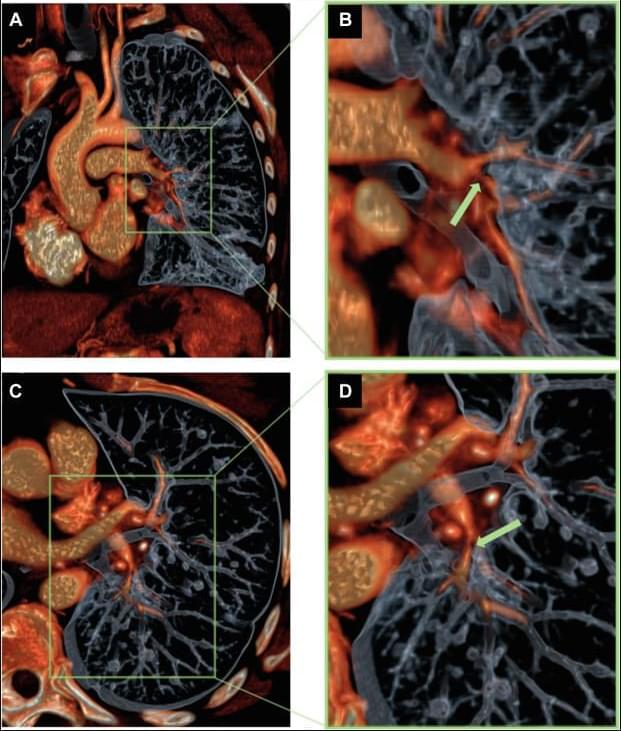
Sarcoidosis is a systemic, granulomatous disorder commonly affecting the lungs that has the potential to cause numerous thoracic complications. We present a novel case of a 44-year-old woman with pulmonary sarcoidosis who demonstrated a large pulmonary infarction. The disease presentation ultimately was attributed to arterial stenosis resulting from sarcoidosis-associated fibrosing mediastinitis and compressive mediastinal adenopathy. The patient was treated with an extended course of prednisone and subsequently was transitioned to azathioprine with eventual resolution of symptoms, but persistence of imaging findings.
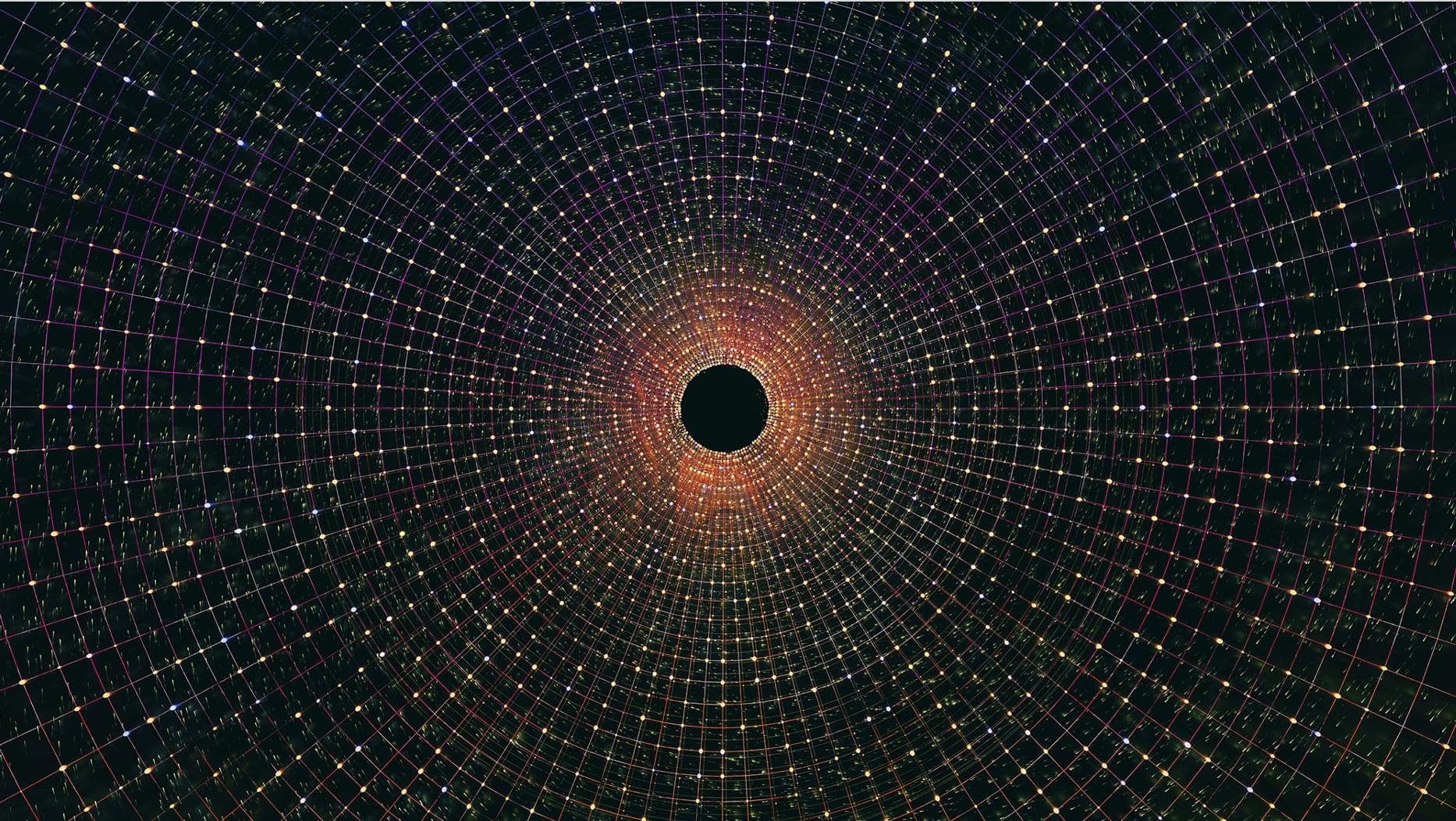
With the rise of AGI, the need for Primal eye theory and the understanding of our form of sentience becomes greater than ever if we who are “Born of Nature” are to remain relevant.
Which is, of course, my doing. I’ve been working on a couple of big projects across the summer; time has been, to say the least, at a premium. The real point is: both projects have major implications for the future of this newsletter. I can’t wait to share more on all that in the coming weeks.
In the meantime, though, I’ve still been writing a whole lot. As most of you know, along with Raoul Pal I run The Exponentialist, a community focused on emerging technologies and their economic, social, and human implications.
In this special update, then, I’d like to share a recent essay from The Exponentialist. One that allows you a glimpse of the kind of work I do there. And that articulates an set of idea that are at the heart of my current thinking when it comes to our journey into the decades ahead.