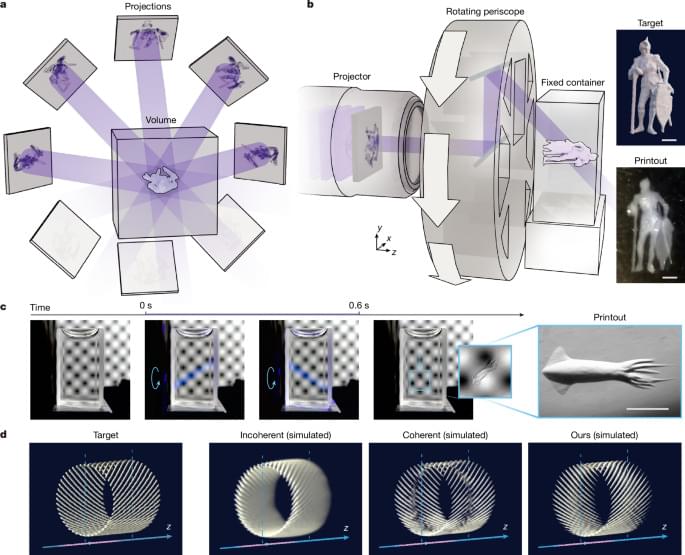
A new method is described that uses a periscope to generate high-speed, high-resolution projections of light fields, enabling sub-second volumetric 3D printing of millimetre-scale objects without rotating the sample.
Questions to inspire discussion AI Model Performance & Capabilities.
🤖 Q: How does Anthropic’s Opus 4.6 compare to GPT-5.2 in performance?
A: Opus 4.6 outperforms GPT-5.2 by 144 ELO points while handling 1M tokens, and is now in production with recursive self-improvement capabilities that allow it to rewrite its entire tech stack.
🔧 Q: What real-world task demonstrates Opus 4.6’s agent swarm capabilities?
A: An agent swarm created a C compiler in Rust for multiple architectures in weeks for **$20K, a task that would take humans decades, demonstrating AI’s ability to collapse timelines and costs.
🐛 Q: How effective is Opus 4.6 at finding security vulnerabilities?

Researchers have developed a new computational method, DOCI-QSCI-AFQMC, which accurately simulates complex molecular systems by effectively doubling the number of orbitals considered in standard quantum simulations and overcoming limitations of existing single-reference techniques, as demonstrated through successful modelling of chemical bonds and reactions.
Gold, M., Lin, J., Chitambar, E. et al. Heralded photonic graph states with inefficient quantum emitters. npj Quantum Inf (2026). https://doi.org/10.1038/s41534-026-01181-7
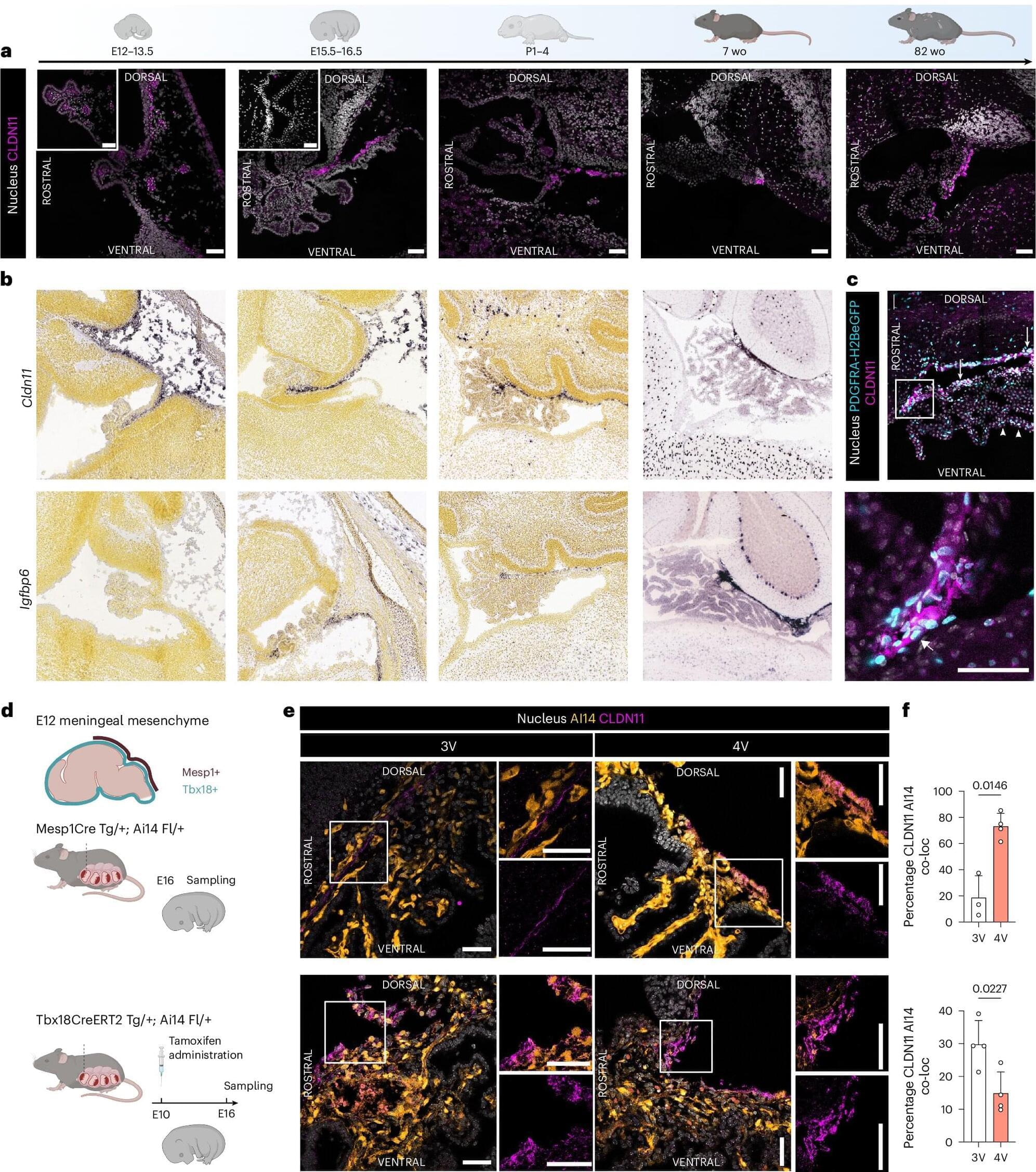
VIB and Ghent University researchers have identified and characterized a previously unknown cellular barrier in the brain, which sheds new light on how the brain is protected from the rest of the body. In a study published in Nature Neuroscience, the scientists also reveal a new pathway by which the immune system can impact the brain.
Prof. Roosmarijn Vandenbroucke (VIB–UGent Center for Inflammation Research), said, “These findings reveal how vulnerable and protectable the brain is, opening new perspectives for more targeted interventions in brain disorders.”
The brain is protected from the rest of the body by multiple barriers that maintain a stable, tightly regulated environment and defend it against harmful substances and pathogens. The most well-known of these barriers is the blood-brain barrier, but another critical interface is the choroid plexus, a small structure found within the brain’s fluid-filled spaces, which produces cerebrospinal fluid.
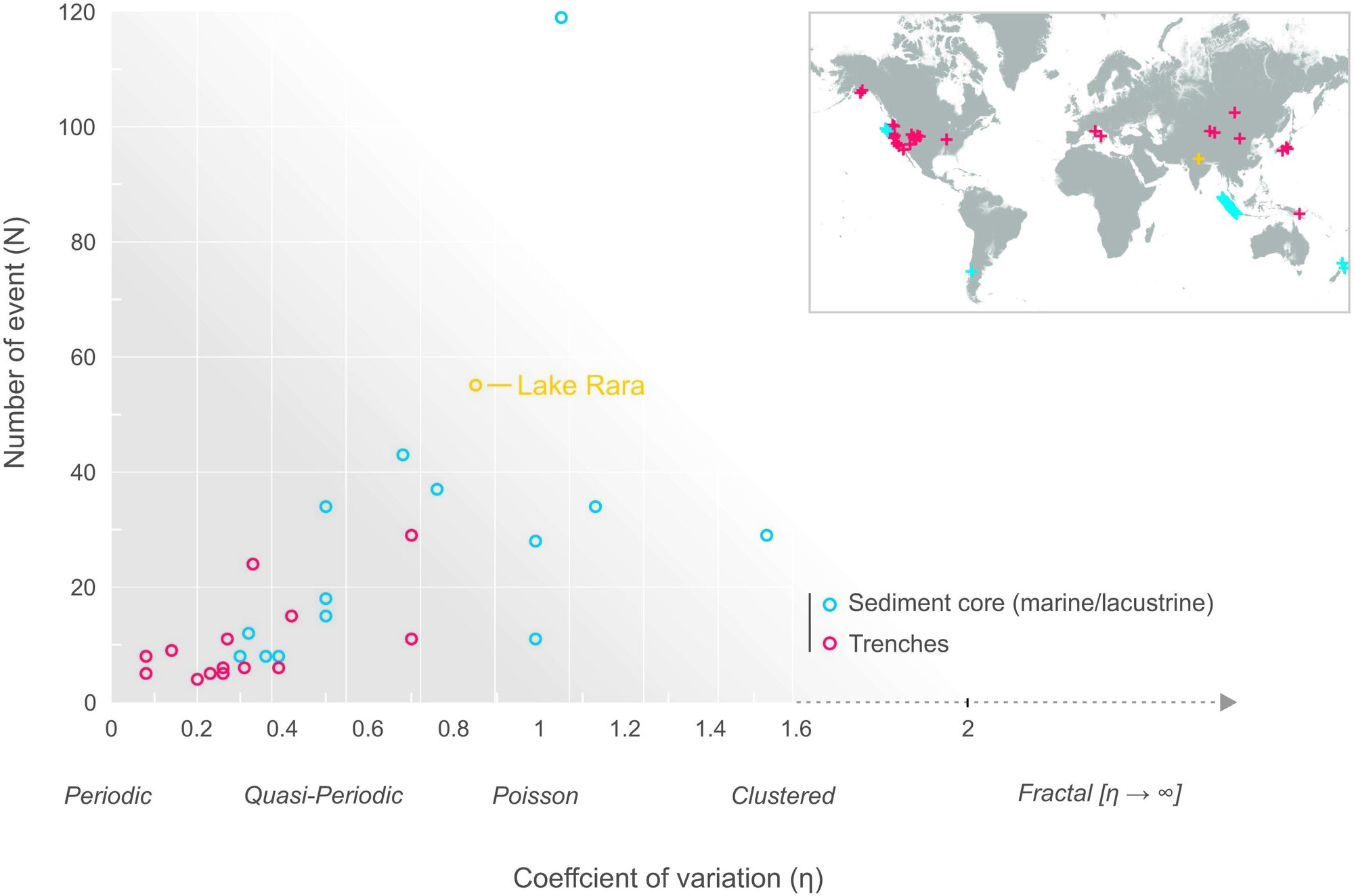
For obvious reasons, it would be useful to predict when an earthquake is going to occur. It has long been suspected that large quakes in the Himalayas follow a fairly predictable cycle, but nature, as it turns out, is not so accommodating. A new study published in the journal Science Advances shows that massive earthquakes are just as random as small ones. A team of researchers led by Zakaria Ghazoui-Schaus at the British Antarctic Survey reached this conclusion after analyzing sediments from Lake Rara in Western Nepal.
The team extracted a 4-meter-long tube from the bottom of the lake and identified 50 sediment layers spanning 6,000 years. Whenever a major quake shakes the region, underwater landslides create layers of sediment called turbidites. These deposits are characterized by coarse materials that settle first, followed by sand, then silt and finally clay. Each layer is essentially a snapshot of an individual earthquake, although they can also result from floods and slope failures.
To confirm that these layers were caused by quakes, the team compared them with modern records and computer models. They concluded that only a quake of magnitude 6.5 or higher could trigger underwater landslides. Radiocarbon dating of organic material within each layer revealed roughly when each of the major quakes occurred.

Supermassive black hole binaries form naturally when galaxies merge, but scientists have only confidently observed a very few of these systems that are widely separated. Black hole binaries that closely orbit each other have not yet been measured. In a paper published today in Physical Review Letters, the researchers suggest hunting down the hidden systems by searching for repeating flashes of light from individual stars lying behind the black holes as they are temporarily magnified by gravitational lensing as the binary orbits.
Supermassive black holes reside at the centers of most galaxies. When two galaxies collide and merge, their central black holes eventually form a bound pair, known as a supermassive black hole binary. These systems play a crucial role in galaxy evolution and are among the most powerful sources of gravitational waves in the universe. While future space-based gravitational-wave observatories like LISA will be able to probe such binaries directly, researchers are now showing that they may already be detectable using existing and upcoming electromagnetic surveys.
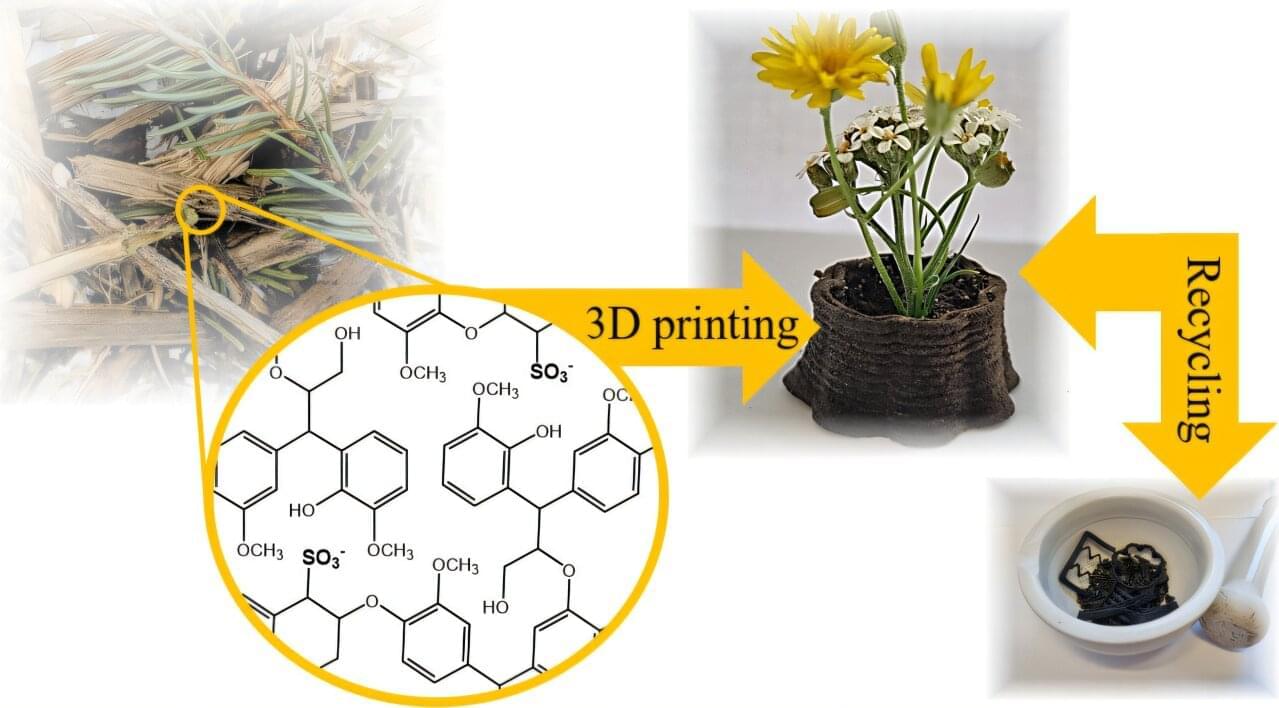
Additive manufacturing (AM) methods, such as 3D printing, enable the realization of objects with different geometric properties, by adding materials layer-by-layer to physically replicate a digital model. These methods are now widely used to rapidly create product prototypes, as well as components for vehicles, consumer goods and medical technologies.
A particularly effective AM technique, called direct ink writing (DIW), entails the 3D printing of objects at room temperature using inks with various formulations. Most of these inks are based on fossil-derived polymers, materials that are neither recyclable nor biodegradable. Recently introduced lignin-derived inks could be a more sustainable alternative. However, they typically need to be treated at high heat or undergo permanent chemical bonding processes to reliably support 3D printing. This prevents them from being re-utilized after objects are printed, limiting their sustainability.