Toggle light / dark theme

Get the latest international news and world events from around the world.

Log in for authorized contributors

Say what’s on your mind, and AI can tell what kind of person you are

If you say a few words, generative AI will understand who you are—maybe even better than your close family and friends. A new University of Michigan study found that widely available generative AI models (e.g., ChatGPT, Claude, LLaMa) can predict personality, key behaviors and daily emotions as or even more accurately than those closest to you. The findings appear in the journal Nature Human Behavior.

AI as a new personality judge

“What this study shows is AI can also help us understand ourselves better, providing insights into what makes us most human, our personalities,” said the study’s first author Aidan Wright, U-M professor of psychology and psychiatry. “Lots of people may find this of interest and useful. People have long been interested in understanding themselves better. Online personality questionnaires, some valid and many of dubious quality, are enormously popular.”

Study solves key micro-LED challenges, enabling ‘reality-like’ visuals for AR/VR devices

From TVs and smartwatches to rapidly emerging VR and AR devices, micro-LEDs are a next-generation display technology in which each LED—smaller than the thickness of a human hair—emits light on its own. Among the three primary colors required for full-color displays—red, green, and blue—the realization of high-performance red micro-LEDs has long been considered the most difficult.

KAIST researchers have successfully demonstrated a high-efficiency, ultra-high-resolution red micro-LED display, paving the way for displays that can deliver visuals even sharper than reality. The work is published in the journal Nature Electronics.

A research team led by Professor Sanghyeon Kim of the School of Electrical Engineering, in collaboration with Professor Dae-Myeong Geum of Inha University, compound-semiconductor manufacturer QSI, and microdisplay/SoC design company Raontech, has developed a red micro-LED display technology that achieves ultra-high resolution while significantly reducing power consumption.

Scientists teach microorganisms to build molecules with light

Researchers are continually looking for new ways to hack the cellular machinery of microbes like yeast and bacteria to make products that are useful for humans and society. In a new proof-of-concept study, a team from the Carl R. Woese Institute for Genomic Biology showed they can expand the biosynthetic capabilities of these microbes by using light to help access new types of chemical transformations.

The paper, published in Nature Catalysis, demonstrates how the bacteria Escherichia coli can be engineered to produce these new molecules in vivo, using light-driven enzymatic reactions. This framework sets the foundation for future development in the emerging field of photobiocatalysis.

“Photobiocatalysis is basically light-activated catalysis by enzymes. Without light, the target enzyme cannot catalyze a reaction. When light is added, the target enzyme will be activated,” said Huimin Zhao (BSD leader/CAMBERS/CGD/MMG), Steven L. Miller Chair of Chemical and Biomolecular Engineering. “We have published many papers showing that it is possible to combine photocatalysis with enzyme catalysis to create a new class of photoenzymes. These artificial photoenzymes can catalyze selective reactions that cannot be achieved by natural enzymes and are also very difficult, or sometimes even not possible, with chemical catalysis.”

Quantum mechanical effects help overcome a fundamental limitation of optical microscopy

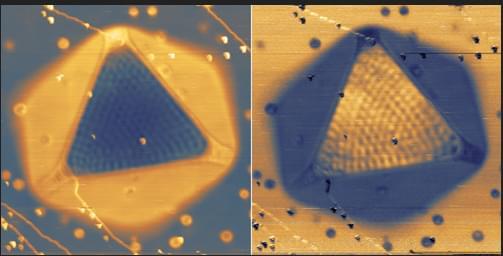
Researchers from Regensburg and Birmingham have overcome a fundamental limitation of optical microscopy. With the help of quantum mechanical effects, they succeeded for the first time in performing optical measurements with atomic resolution. Their work is published in the journal Nano Letters.

From smartphone cameras to space telescopes, the desire to see ever finer detail has driven technological progress. Yet as we probe smaller and smaller length scales, we encounter a fundamental boundary set by light itself. Because light behaves as a wave, it cannot be focused arbitrarily sharply due to an effect called diffraction. As a result, conventional optical microscopes are unable to resolve structures much smaller than the wavelength of light, placing the very building blocks of matter beyond direct optical observation.

Now, researchers at the Regensburg Center for Ultrafast Nanoscopy, together with colleagues at the University of Birmingham, have found a novel way to overcome this limitation. Using standard continuous-wave lasers, they have achieved optical measurements at distances comparable to the spacing between individual atoms.

Beyond the eye of the beholder: Mathematically defining attributes essential to color perception

Research on the perception of color differences is helping resolve a century-old understanding of color developed by Erwin Schrödinger. Los Alamos scientist Roxana Bujack led a team that used geometry to mathematically define the perception of color as it relates to hue, saturation and lightness.

Presented at the 2025 Eurographics Conference on Visualization, their work formalizes Schrödinger’s model of color, decisively establishing the perception of color attributes as an intrinsic property. The paper, “The Geometry of Color in the Light of a Non-Riemannian Space,” was published in the Computer Graphics Forum.

“What we conclude is that these color qualities don’t emerge from additional external constructs such as cultural or learned experiences but reflect the intrinsic properties of the color metric itself,” Bujack said. “This metric geometrically encodes the perceived color distance—that is, how different two colors appear to an observer.”

Beamline measurements of unstable ruthenium nuclei confirm advanced nuclear models

A novel apparatus at the U.S. Department of Energy’s (DOE) Argonne National Laboratory has made extremely precise measurements of unstable ruthenium nuclei. The measurements are a significant milestone in nuclear physics because they closely match predictions made by sophisticated nuclear models.

“It’s very difficult for theoretical models to predict the properties of complex, unstable nuclei,” said Bernhard Maass, an assistant physicist at Argonne and the study’s lead author. “We have demonstrated that a class of advanced models can do this accurately. Our results help to validate the models.”

Validating the models can build trust in their predictions about astrophysical processes. These include the formation, evolution and explosions of stars where elements are created.

Liquid-repellent particle coating enables near-frictionless motion of pico- to nanoliter droplets

The precise control of tiny droplets on surfaces is essential for advanced manufacturing, pharmaceuticals, and next‐generation lab‐on‐a‐chip diagnostics. However, once droplet volume reaches pico- and nanoliter scales, the droplets become extremely sensitive to microscopic surface irregularities, and friction at the solid‐liquid interface becomes a major obstacle to smooth transport.

Immunoglobulin G’s overlooked hinge turns out to be a structural control hub

The lower hinge of immunoglobulin G (IgG), an overlooked part of the antibody, acts as a structural and functional control hub, according to a study by researchers at Science Tokyo. Deleting a single amino acid in this region transforms a full-length antibody into a stable half-IgG1 molecule with altered immune activity.

The findings provide a blueprint for engineering next-generation antibody therapies with precisely tailored immune effects for treating diseases such as cancer and autoimmune diseases.

Antibodies are Y-shaped proteins that help the immune system recognize and eliminate foreign threats such as bacteria and viruses. The dominant antibody in the bloodstream is immunoglobulin G (IgG), which accounts for about 75% of circulating antibodies. Its structure is divided into two main functional units connected by a flexible hinge that must work together seamlessly.

Shining a light on sustainable sulfur-rich polymers that stay recyclable

For the first time, scientists have used ultraviolet (UV) light, a low-cost and readily available energy source, to successfully synthesize more sustainable and recyclable polymer materials. Led by green chemistry experts at Flinders University, the development is a major step in making polymers high in sulfur content for more sustainable plastic alternatives using waste materials.

Their paper, “Making and Unmaking Poly(trisulfides) with Light: Precise Regulation of Radical Concentrations via Pulsed LED Irradiation” is published in the Journal of the American Chemical Society.

3D covalent organic framework offers sustainable solution for wastewater treatment

Industrial dye pollution remains one of the most persistent and hazardous challenges in global wastewater management. The dyes from textile and chemical manufacturing sectors are difficult to remove, non-biodegradable, and can be toxic to plants, animals, and humans. However, conventional treatment technologies for dyes often fail to efficiently purify the wastewater without significant trade-offs.

To remedy this issue, researchers from Tohoku University developed a three-dimensional covalent organic framework (COF), TU-123, that enables highly efficient and selective removal of anionic dyes from contaminated water.

The highly porous COF acts like a sponge—trapping dyes for easier separation. This work establishes a new structural blueprint for constructing highly connected imidazole-linked three-dimensional COFs. Furthermore, it opens sustainable pathways for advanced wastewater purification technologies.

/* */