Toggle light / dark theme

From one frontier to another: The quantum revolution

Manchester’s quantum researchers are building on the Ferranti Mark I legacy, using ultra-pure silicon and single atoms to move quantum computing closer to real-world impact.

In February 1951, a machine the size of a room arrived at the University of Manchester.

The Ferranti Mark I, the world’s first commercially available general-purpose computer, came with 4,000 vacuum tubes, 100,000 soldered joints and six miles (10 kilometers) of wires. The 27 kilowatts of power it needed to operate is the equivalent of running roughly 600 midrange laptops today, yet at the time, it must have felt miraculous.

Quantum Newton’s cradle set to level up computing

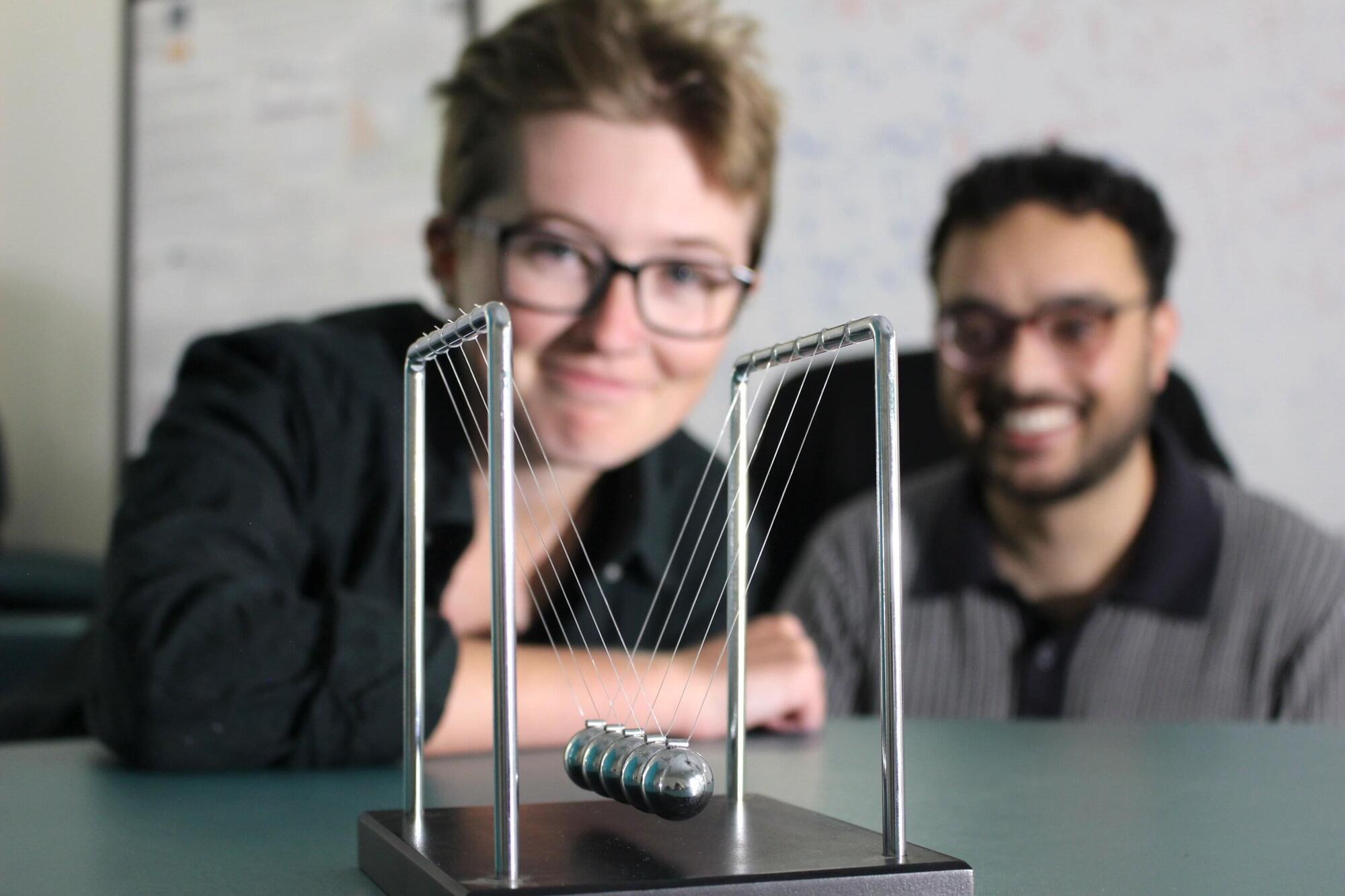
Sending quantum information through a chain of qubits, like energy through a Newton’s cradle, could be the key to faster operations and take quantum computing to the next level.

The quantum Newton’s cradle design shows how a laser can be used to give a precisely designed kick of energy to a row of trapped ions, quickly preparing them for quantum calculations known as gates.

The superpower of the new algorithm is its ability to rapidly entangle any two ions in the row without affecting the ones in between: Like a Newton’s cradle, the energy travels through the ions, leaving them untouched.

New tool uncovers overlooked disease-linked genes by accounting for ancestry and family ties

Every person’s DNA tells a unique story. To unlock the full potential of genetic research, scientists need tools that reflect the complexity of the people they study.

Researchers at Baylor College of Medicine and Texas Children’s Duncan Neurological Research Institute (Duncan NRI) have developed a new computational method that enables scientists to more accurately identify genetic changes linked to disease by accounting for the ancestry and family relationships found in real-world populations.

Published in Nature Genetics, the new approach, called Tractor-Mix, addresses a longstanding challenge in genetic research. Many existing methods struggle to accurately analyze people whose DNA reflects ancestry from more than one ancestral population, as well as relatives participating in the same study. As a result, researchers often must simplify their data or exclude participants altogether.

Philosophy Of Physics (@PhilosophyOfPhy) on X

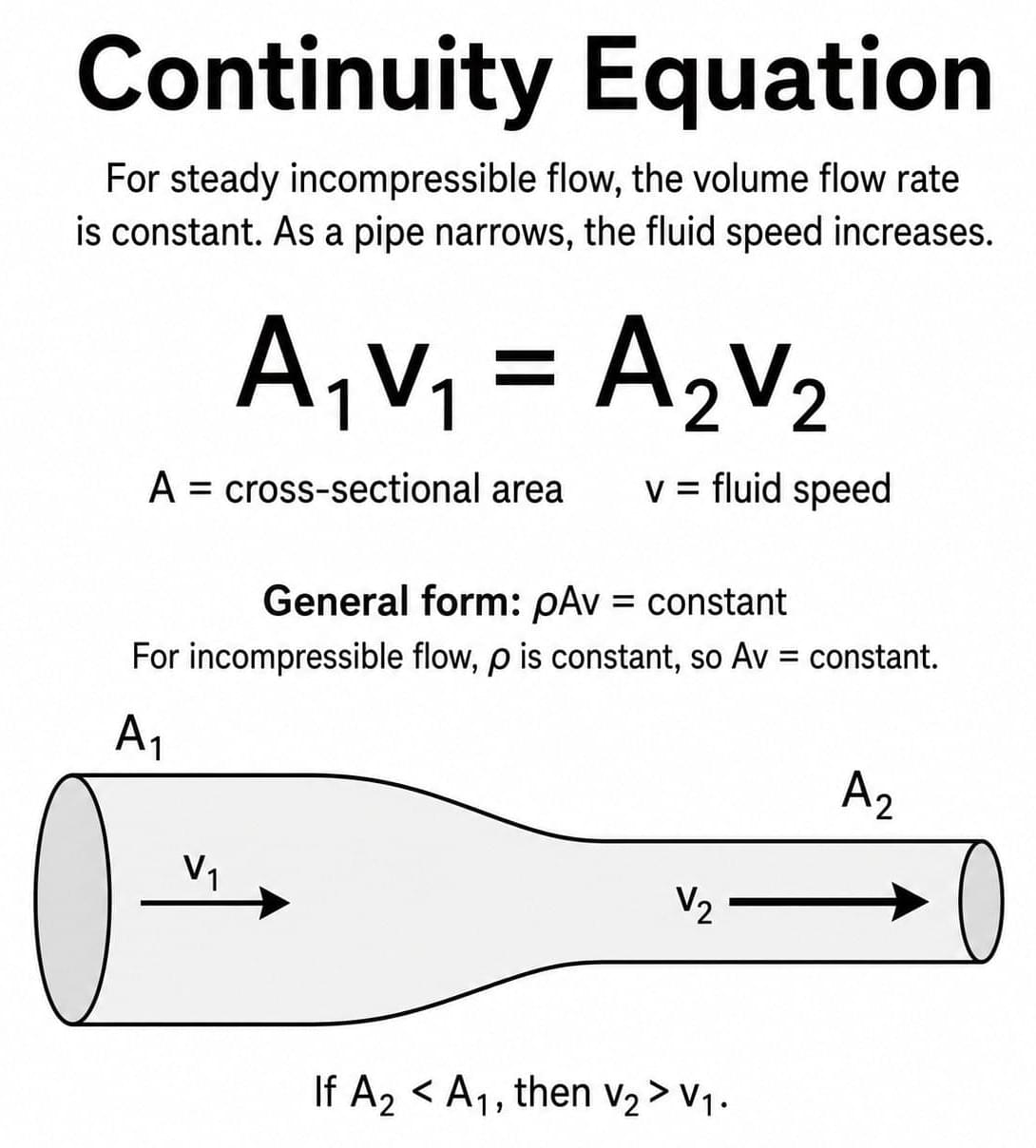
The continuity equation was not the work of a single physicist. Its development grew from early hydraulic studies and the work of Daniel and Johann Bernoulli. In the eighteenth century, Jean le Rond d’Alembert produced the first partial-differential expression of mass conservation in fluid motion, and Leonhard Euler soon placed it in the general mathematical framework that became the foundation of modern fluid mechanics. It should therefore not be attributed solely to Giovanni Battista Venturi, whose later work concerned flow through constricted tubes. Its general form is ∂ρ/∂t + ∇·(ρv) = 0 where ρ is fluid density and v is the velocity field. The equation says that mass cannot simply appear or disappear: any change in the amount of fluid inside a region must be explained by fluid entering or leaving it. For steady flow through a pipe, this becomes ρ₁A₁v₁ = ρ₂A₂v₂ If the fluid is effectively incompressible, its density remains constant, giving the familiar form: A₁v₁ = A₂v₂ The meaning is simple. The same volume of fluid must pass through every section of the pipe each second. When the pipe becomes narrower, the fluid must move faster; when it becomes wider, the fluid slows down. This equation is fundamental to the study of pipes, nozzles, rivers, aircraft flow, circulation systems and computational fluid dynamics. More broadly, continuity equations appear throughout physics wherever something locally conserved, such as mass or electric charge, moves through space. The equation is not merely about fluids; it is the mathematical language of the principle that what flows into a region must either flow out or remain inside.

Australian scientists unveil first quantum battery that could one day charge devices in seconds

A new development from Australia’s national science agency is offering a glimpse of a future in which charging your phone, laptop, or even grid-scale storage systems could take a fraction of the time it does now.

Researchers in Australia say they have built the world’s first fully functioning proof-of-concept quantum battery.

Scientists from the CSIRO, the University of Melbourne, and RMIT announced that they had successfully developed and tested a quantum battery prototype, Lab Worldwide reported.

From quantum error correction to emergent gravity: Probing holographic universes at QLab

One of the deepest ambitions in modern physics is understanding how the fabric of space and time could emerge from fundamental quantum degrees of freedom to establish a quantum theory of gravity.

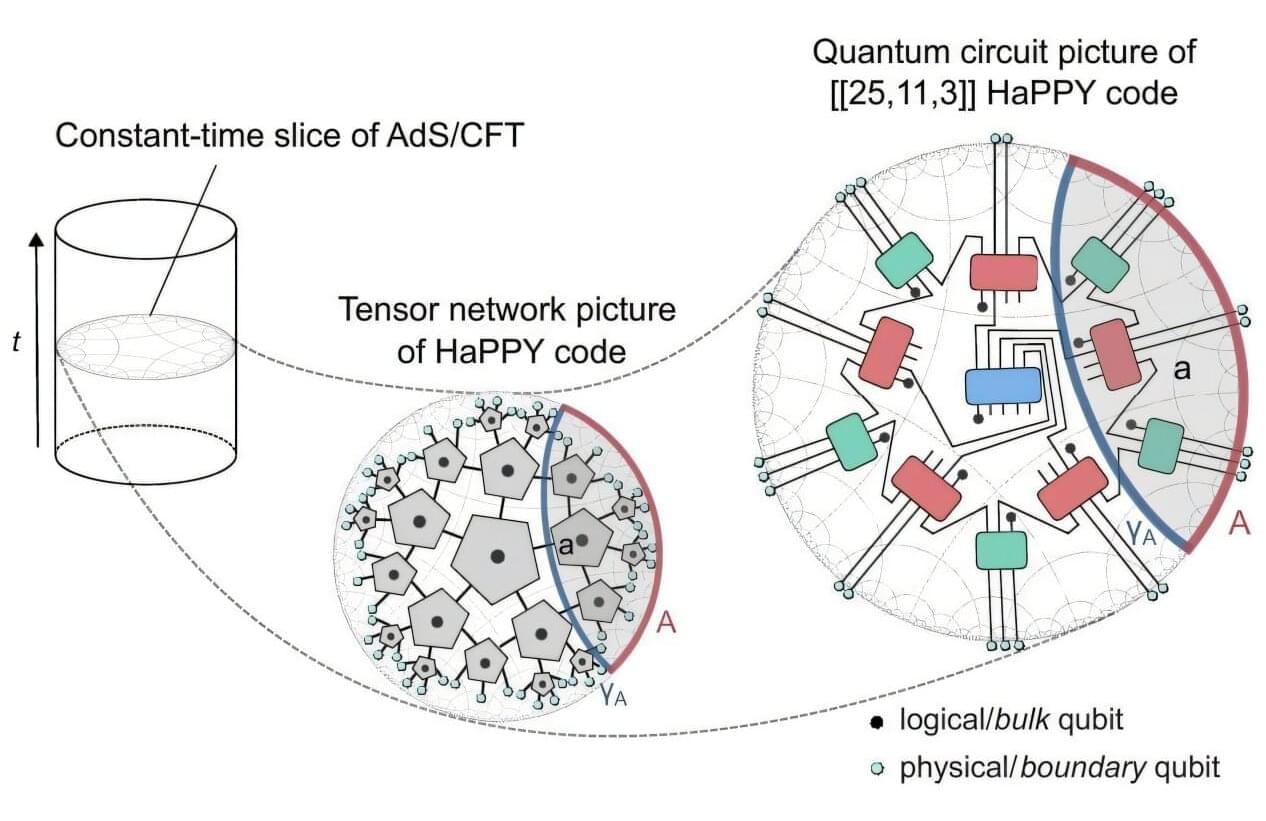
In the new paper, “Observation of gravity-like signatures in holographic codes on a quantum computer,” posted to the arXiv preprint server, researchers from the National Quantum Laboratory (QLab@UMD), the Duke Quantum Center, the Virginia Tech Center for Quantum Information Science and Engineering, Caltech’s Institute for Quantum Information and Matter, IonQ and BlueQubit have successfully simulated toy models of quantum gravity according to the AdS/CFT correspondence. The team, led by Crystal Noel and Charles Cao, includes quantum-computation pioneers John Preskill and Christopher Monroe.

Using the IonQ Forte ion-trap quantum computer, the study implements the intriguing HaPPY quantum error-correction code, which forms a bridge between quantum computing and quantum gravity. This code simulates a highly simplified model of a universe with a negative cosmological constant that features a so-called bulk-boundary correspondence, in which the properties of a higher-dimensional gravitational universe (bulk) are completely determined by a lower-dimensional quantum system without gravity living on the boundary. The team successfully demonstrated fundamental entanglement properties of these systems.

Frozen fiber couples light and sound 1,000 times more strongly than standard glass fibers

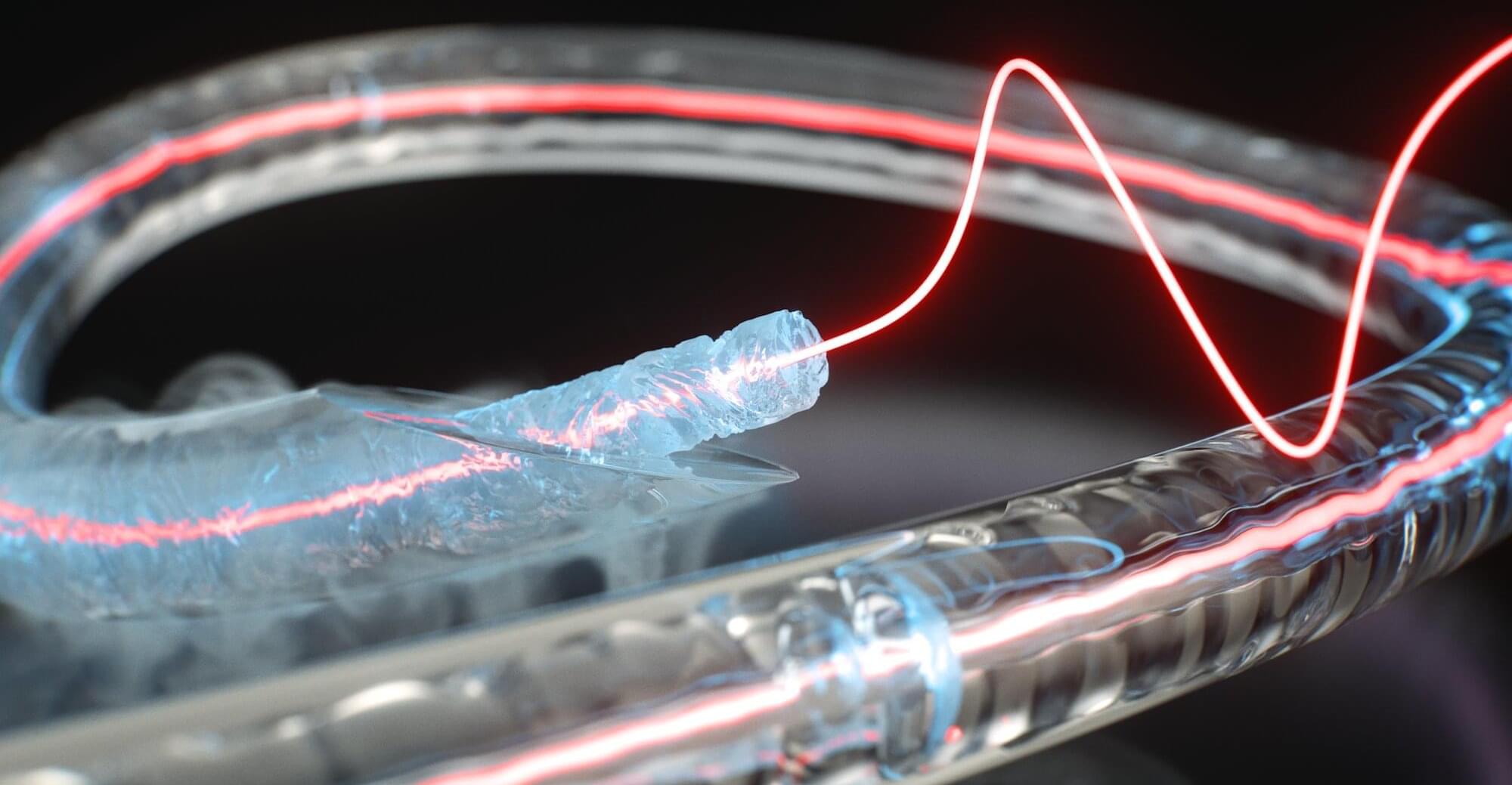
Researchers have developed a new type of optical fiber by freezing a glass capillary filled with liquid. It guides light and sound waves simultaneously and enables highly efficient coupling between them. The high coupling strength lowers the energy consumption of photonic neuromorphic computing schemes and quantum signal processing applications by several orders of magnitude.

When volcanoes erupt, one can observe streams of liquid lava cool and solidify into rock formations at the bottoms of volcanoes. The same physical process—a liquid changing into a solid phase upon cooling—can be observed when lakes start freezing during cold winters. These phase changes always come with changes in the physical properties of the material, such as the density or refractive index that govern how sound and light move through it.

This fundamental physical process is also used during the melting of glass preforms to loosen their structure while drawing optical fiber. These fibers then guide light through their cores, allowing the transmission of information via light very quickly over long distances, which is why they are widely used for telecommunications applications.

/* */