Toggle light / dark theme

Researchers improve accuracy of synthetic clock

Nice.


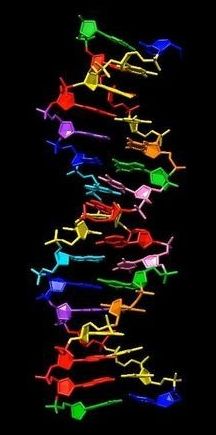
(Phys.org)—A team of researchers with Harvard University and the University of Cambridge has successfully improved the accuracy of a synthetic clock known as a repressilator. In their paper published in the journal Nature, the team describes the steps they took to reduce the amount of noise in the biological system and how well it worked. Xiaojing Gao and Michael Elowitz with the California Institute of Technology offer a News & Views piece on the work done by the team and explain how their results could improve understanding of natural gene circuits.

Scientists have noted the high precision that some living cells demonstrate in keeping track of time, such as those that are part of the circadian clock, and have tried to duplicate the process. Sixteen years ago, Michael Elowitz and Stanislas Leibler developed what is now known as the repressilator—a synthetic oscillating genetic circuit. Their results demonstrated that it was possible for genetic circuits to be designed and built in the lab. The resulting circuit functioned, but was noisy, and therefore much less accurate than natural cell clocks. In this new effort, the researchers improved several of the design of the repressilator, each greatly reducing the amount of noise, and in so doing, increased the precision.

The repressilator was made using repressor proteins that would bind to DNA sequences that were adjacent to a gene to be targeted for inhibition. Three repressors were created such that each one represented the expression of the next cycle—when the protein in one repressor increased, it caused a decrease in the expression of the second, which in turn caused an increase in expression of the third, and so on, resulting in oscillations—the actions were monitored by reporters. Unfortunately, each was bothered by random fluctuations known as noise. To reduce the noise, the researchers integrated the reporters into the repressilator, engineered the repressor proteins to degrade in order to reduce the number of copies made, and increased the binding threshold between one of the repressors and the DNA sequence.

A possible explanation for why male mice tolerate stress better than females

The nerves we feel before a stressful event—like speaking in public, for example—are normally kept in check by a complex system of circuits in our brain. Now, scientists at Rockefeller University have identified a key molecule within this circuitry that is responsible for relieving anxiety. Intriguingly, it doesn’t appear to reduce anxiety in female mice, only in males.

“This is unusual, because the particular cell type involved here is the same in the male and female brain—same in number, same in appearance,” says Nathaniel Heintz, head of the Laboratory of Molecular Biology and a Howard Hughes Medical Institute investigator. “It’s a rare case where a single cell type is activated by the same stimulus but yields two different behaviors in each gender.”

NASA’s new bleeding-edge gauze might save astronauts lives

We are seeing lot of inventions being made prior to the upcoming Mars missions. However, you don’t have to be into science-fiction to understand that NASA still needs to get a grip on many technical hurdles before our astronauts can put their boots on the red planet safely.

Yes, [Mark Watney](http://www.imdb.com/title/tt3659388/) has become quite a Martian but real humans need more to survive and especially have to consider the *less obvious* things like how to deal with injuries that far away from mother Earth. That can be overlooked, but certainly is important.

As there’s only so much space on a trip to Mars, there will be limited access to medical care due to supply restrictions. Expertise to manage complex medical conditions might also be hard to come by.

Scientists have created a drug that replicates the health benefits of exercise

Researchers have made the breakthrough of couch potatoes’ dreams with a new drug that mimics some of the most important effects of exercise. Scientists from Deakin University in Melbourne published their findings in Cell Reports earlier this week, showing that overweight mice who were given the drug no longer showed signs of cardiovascular disease.

A new treatment appears to have erased HIV from a patient’s blood

The first of 50 patients to complete a trial for a new HIV treatment in the UK is showing no signs of the virus in his blood.

The initial signs are very promising, but it’s too soon to say it’s a cure just yet: the HIV may return, doctors warn, and the presence of anti-HIV drugs in the man’s body mean it’s difficult to tell whether traces of the virus are actually gone for good.

That said, the team behind the trial – run by five British universities and the UK’s National Health Service – says we could be on the brink of defeating HIV (human immunodeficiency virus) for real.

Engineering a Better Body and the End of Disease

There are two kinds of people in Washington, DC, says entrepreneur Dean Kamen. There are the policy experts, whom he calls cynics. And there are the scientists, whom he deems optimists.

Kamen, speaking at the White House Frontiers Conference at the University of Pittsburgh, places himself in the latter camp. Unlike policy wonks and politicians who see diseases like Alzheimer’s or ALS as unstoppable scourges, Kamen points out that previously terrifying diseases were all toppled by medical innovation. The plague, polio, smallpox — all were civilization-threatening epidemics until experimental scientists discovered new ways to combat them.

If that sounds like the kind of disruption that the tech industry has unleashed across the rest of the world, that’s no accident. Kamen, the founder of DEKA, a medical R&D company, says that the same trends that have empowered our computers and phones and communication networks will soon power a revolution in health care. He says that medical innovation follows a predictable cycle. First we feel powerless before a disease. Then we seek ways of treating it. Then we attempt to cure it.

/* */