But that doesn’t mean you should start chugging bone broth.
Long story short, qubits need a better immune system before they can grow up.
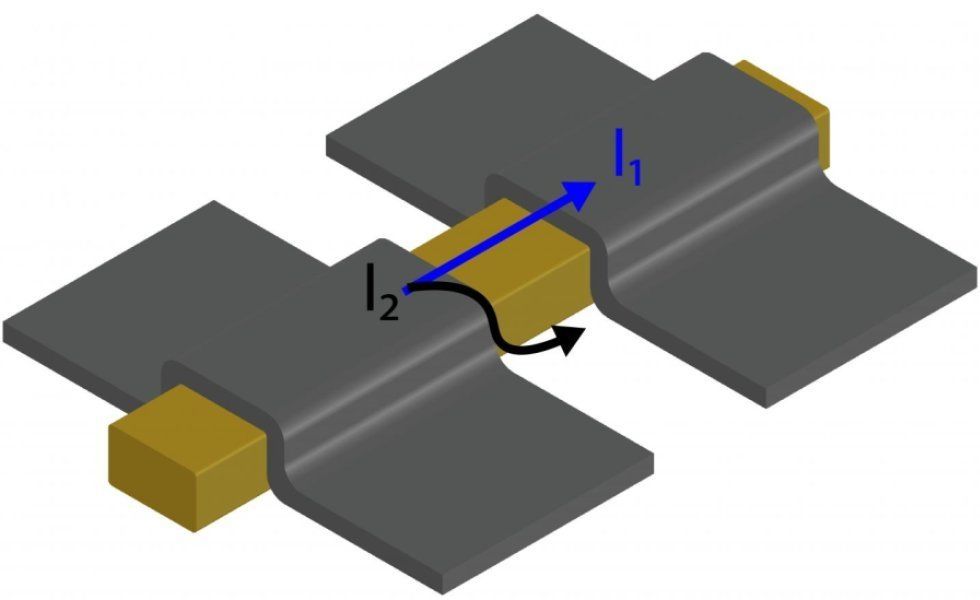
A new material, engineered by Purdue University researchers into a thin strip, is one step closer to “immunizing” qubits against noise, such as heat and other parts of a computer, that interferes with how well they hold information. The work appears in Physical Review Letters.
The thin strip, called a “nanoribbon,” is a version of a material that conducts electrical current on its surface but not on the inside — called a “topological insulator” — with two superconductor electrical leads to form a device called a “Josephson junction.”
Hosted by Dr. Oliver Medvedik, we will be joined by study authors, Dr. Peter Joshi and Paul Timmers both from the University of Edinburgh, UK, who will guide us through this fascinating genomics study of human longevity.
The research paper can be found here.:
https://elifesciences.org/articles/39856
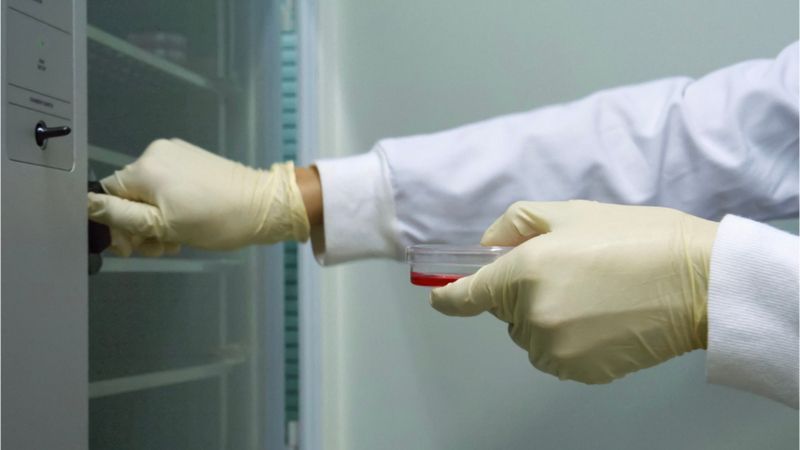
Researchers at UC San Francisco have taken science a step closer to creating stem cells that are effectively “invisible” to the immune system. This may ultimately lead to the production of “off-the-shelf” stem cell therapies that do not need to be patient matched.
The immune system is a double-edged sword
One of the big challenges in creating effective stem cell therapies is how the immune system responds to cells from other donors and sources. This complex, multilayered system is designed to defend our bodies from the constant onslaught of invading pathogens that we encounter in our daily lives.
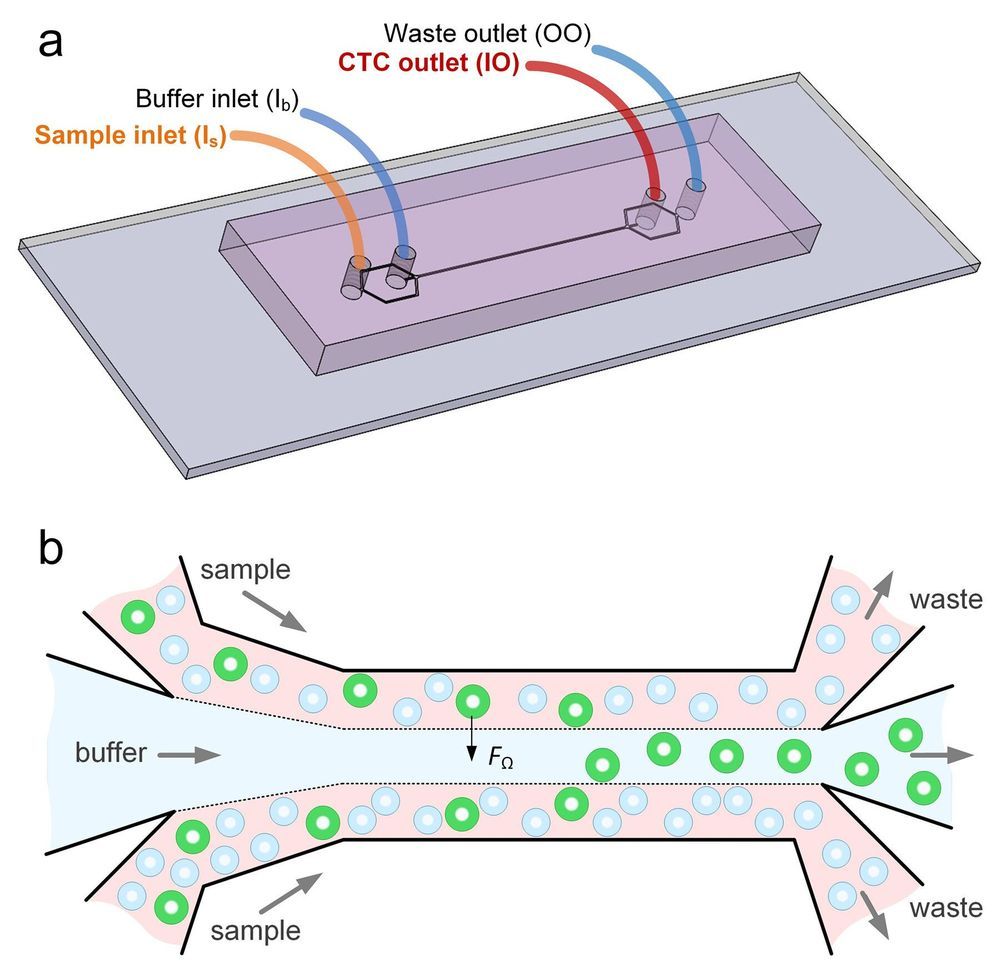
Researchers at the University of Illinois at Chicago and Queensland University of Technology of Australia, have developed a device that can isolate individual cancer cells from patient blood samples. The microfluidic device works by separating the various cell types found in blood by their size. The device may one day enable rapid, cheap liquid biopsies to help detect cancer and develop targeted treatment plans. The findings are reported in the journal Microsystems & Nanoengineering.
“This new microfluidics chip lets us separate cancer cells from whole blood or minimally-diluted blood,” said Ian Papautsky, the Richard and Loan Hill Professor of Bioengineering in the UIC College of Engineering and corresponding author on the paper. “While devices for detecting cancer cells circulating in the blood are becoming available, most are relatively expensive and are out of reach of many research labs or hospitals. Our device is cheap, and doesn’t require much specimen preparation or dilution, making it fast and easy to use.”
The ability to successfully isolate cancer cells is a crucial step in enabling liquid biopsy where cancer could be detected through a simple blood draw. This would eliminate the discomfort and cost of tissue biopsies which use needles or surgical procedures as part of cancer diagnosis. Liquid biopsy could also be useful in tracking the efficacy of chemotherapy over the course of time, and for detecting cancer in organs difficult to access through traditional biopsy techniques, including the brain and lungs.
University of Massachusetts Amherst food science researchers have pinpointed a set of enzymes involved in tumor growth that could be targeted to prevent or treat colon cancer.
“We think this is a very interesting discovery,” says Guodong Zhang, assistant professor of food science, whose study was published in the journal Cancer Research. “Our research identifies a novel therapeutic target and could help to develop novel strategies to reduce the risks of colon cancer.”
Colon cancer is the third most common cancer and the second leading cause of cancer-related death in the United States, according to the Centers for Disease Control and Prevention, claiming some 50,000 lives each year. Those statistics emphasize the need to discover new cellular targets that are crucial in the development of colon cancer, Zhang says.

Modern theories of semantics posit that the meaning of words can be decomposed into a unique combination of semantic features (e.g., “dog” would include “barks”). Here, we demonstrate using functional MRI (fMRI) that the brain combines bits of information into meaningful object representations. Participants receive clues of individual objects in form of three isolated semantic features, given as verbal descriptions. We use machine-learning-based neural decoding to learn a mapping between individual semantic features and BOLD activation patterns. The recorded brain patterns are best decoded using a combination of not only the three semantic features that were in fact presented as clues, but a far richer set of semantic features typically linked to the target object. We conclude that our experimental protocol allowed us to demonstrate that fragmented information is combined into a complete semantic representation of an object and to identify brain regions associated with object meaning.

When they looked into how various physiological factors changed in the mice that had experienced chronic stress, the researchers closed in on a hormone called epinephrine.
New research in mice explains the mechanism through which chronic stress contributes to cancer cell growth and suggests a potential therapeutic strategy.

The researchers have examined blood samples from 702 pregnant Danish women who were registered in the database “Aarhus Children’s Biobank”. Such thorough studies of the concentration of perfluorinated substances and their biological effect in pregnant woman have not been done previously, but the study is nevertheless in line with previous research in the area. The substances have furthermore been associated with a range of issues including breast cancer, fertility problems, ADHD, the risk of asthma, a weakened immune system and the reduced effect of vaccines.
For the first time, researchers have shown that a combination of perfluorinated substances in the mother significantly inhibits child growth. These are the substances which Denmark’s minister for environment and food is currently working to ban.

On Monday, April 8th, we will be hosting our second research webinar, during which we will be discussing the microbiome and its role in aging and disease.
Our second research webinar
Our work is largely supported by the generosity of our monthly patrons, the Lifespan Heroes, so to thank them we have launched a new series of exclusive webinars where Heroes can join the researchers live, listen to discussion panels, and take part in Q&A sessions.