So-called ” asteroid mining” company Planetary Resources is built on the belief that asteroids and other objects in space are loaded with resources that we can take advantage of, both here on Earth and as we begin to explore space in earnest. The essentially infinite supply of rocks floating through space, filled with valuable minerals that we’ll eventually run out of on our home planet, sounds like a great resource to take advantage of. But the idea of mining, processing and building with alien metals also sounds like a massive and daunting undertaking.
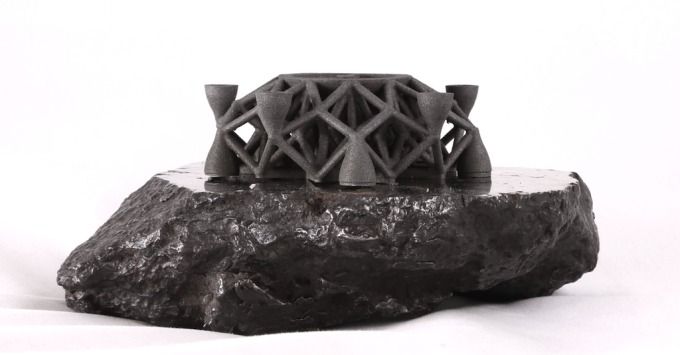
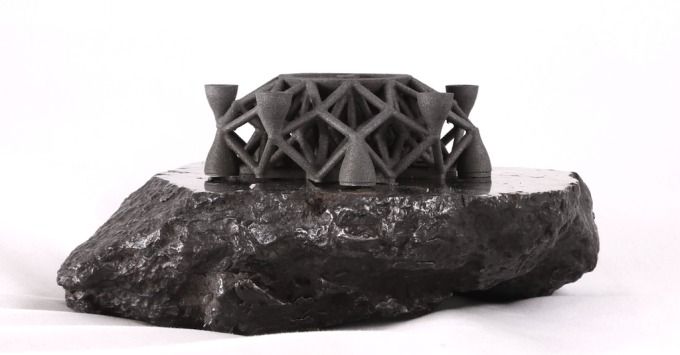
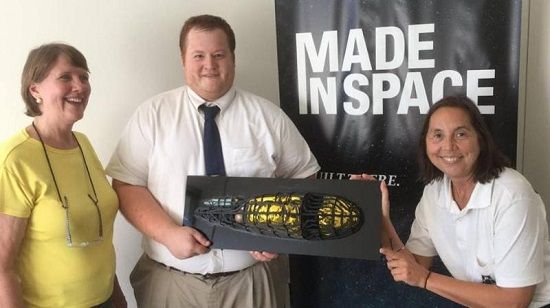
Up until now, everything we’ve ever used in space has been brought there from Earth. Planetary Resources Inc. has long-term ambitions to mine the infinite resources space provides. In the mean-time, they’ve proven its possible by 3D printing material derived from an asteroid.
The future of space colonization and industrialization can now be visualized.
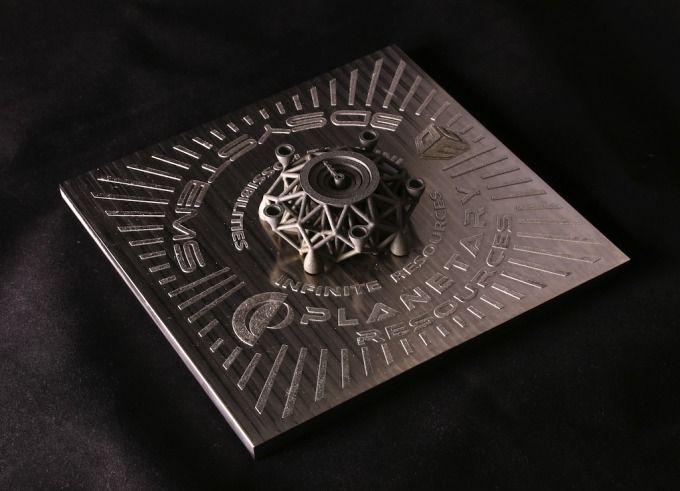
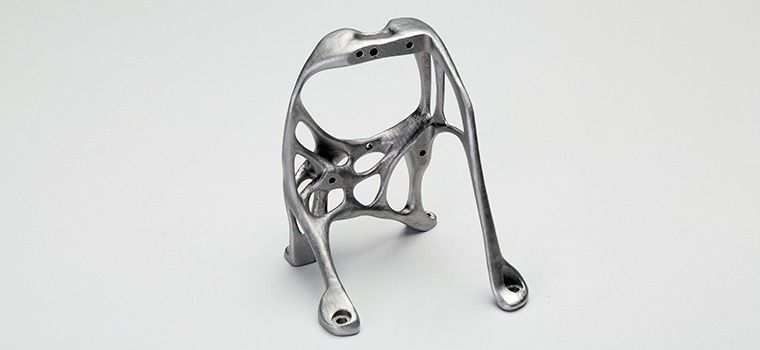
Planetary Resources, in collaboration with our partner 3D Systems, have developed the first ever direct metal print from asteroid metals. At the Consumer Electronics Show (CES) today in Las Vegas, NV., we unveiled the geometric object on the Engadget stage.
3D printed ceramics are still something of a rarity, compared to other materials. The material has several limitations; it’s generally printed by sintering powder materials that result in porous, relatively weak end products with low heat resistance. This greatly limits the size and shape of objects that can be printed; 3D printed ceramic objects have thus far been pretty much limited to relatively small decorative items or tableware. But that’s all about to change, thanks to a new material developed by research and development company HRL Laboratories, LLC.
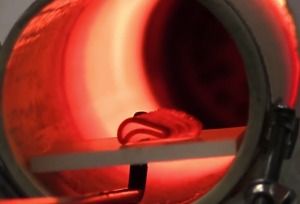
HRL, which is owned by Boeing and General Motors, has developed a ceramic resin that can be printed through stereolithography. The company actually calls it a “pre-ceramic” resin that prints like a typical plastic resin, and is then fired in a high temperature kiln, which turns it into a dense ceramic. The resulting objects are about ten times stronger than other 3D printed ceramics, have virtually no porosity, and can withstand temperatures higher than 1700°C.
“With our new 3D printing process we can take full advantage of the many desirable properties of this silicon oxycarbide ceramic, including high hardness, strength and temperature capability as well as resistance to abrasion and corrosion,” said program manager Dr. Tobias Schaedler.
After the acquisition of Phenix Systems, 3D Systems has been slow to roll out its metal 3D printing technology, an issue raised in a class action lawsuit against the company. Nevertheless, the company has been making progress and, today, 3D Systems announced the availability of their newest system, the ProX DMP 320.
The ProX DMP 320 is designed to be a high precision, high throughput laser sintering metal 3D printer capable of handling itanium, stainless steel, and nickel super alloy. Built with exchangeable manufacturing modules, the ProX DMP 320 is meant to allow for quick material change. To achieve the repeatability much sought after in mainstream manufacturing, the machine has preset build parameters based off of almost half-a-million builds. The ProX DMP 320 features a large build volume of 275mm x 275mm x 420mm with two configurations available, one meant for stainless steel and the other nickel super alloy. The machine offers centralized maintenance management, reduced argon gas use, and support for a serial manufacturing workflow.
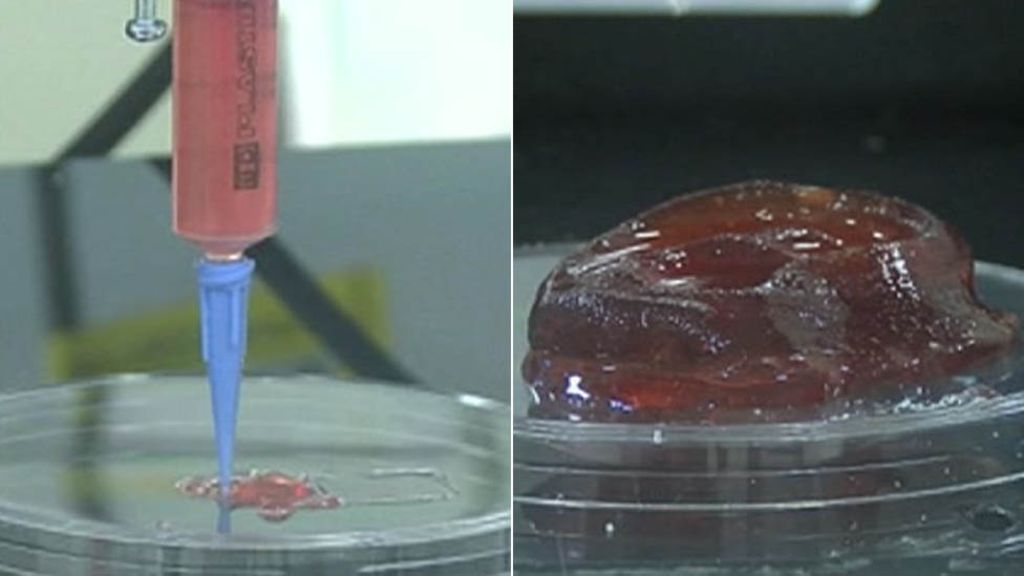
3D printing in the medical industry isn’t new. We’ve seen companies 3D print prosthetics and even bones, but now a company in India has claimed to have developed 3D printable liver tissue, which they are hoping that one day will be usable for full-fledged liver transplants, although we suppose there will be quite a bit of legal and regulatory hurdles to overcome.
According to Pandorum Technologies, the company behind the technology, they claim that these 3D printed liver tissues are made of human cells and will allow for inexpensive medical research. This also means that reachers will need to rely less on human and animal trials. The entire process could also save companies millions of dollars which is usually needed in research and development.
Pandorum Technologies’ co-founder Arun Chandru said, “Our 3D bio-printed mini-livers that mimic the human liver will serve as test platforms for discovery and development of drugs with better efficacy, less side effects and at lower costs.” Apart from being used as test platforms, 3D printable liver tissue could also be used for other purposes.
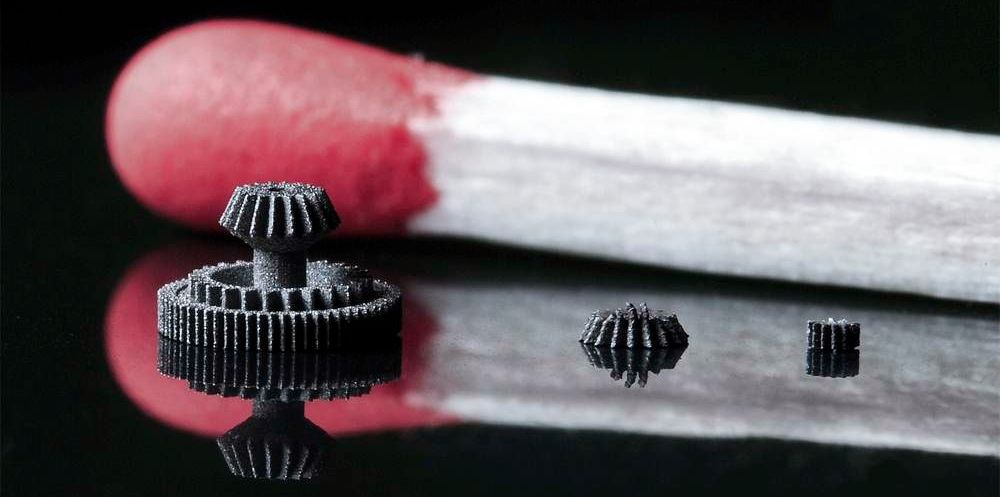
3D MicroPrint is a new micro laser sintering technology for small, precise metal parts: ideal for automotive, medical and jewelery applications.
A new company dubbed 3D MicroPrint has unveiled a new micro laser sintering technology (MLS) for 3D printing tiny metal components for potential applications in industries like watchmaking, cars, and medicine.
The enterprise is a collaboration between two companies based in Germany: 3D-Micromac AG, a provider of laser micromachining systems, and EOS GmbH, an e-Manufacturing group.
In a breakthrough that could lead to printable organs and an enhanced understanding of human physiology, researchers from Lawrence Livermore National Labs have 3D-printed functional blood vessels that look and function like the real thing.
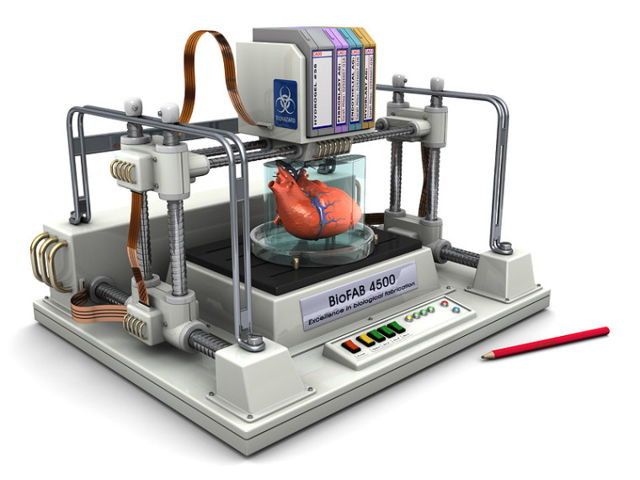
3D bioprinters are similar to conventional 3D printers, but instead of using inert materials, they use “bio-ink:” basic structural building blocks that are compatible with the human body.