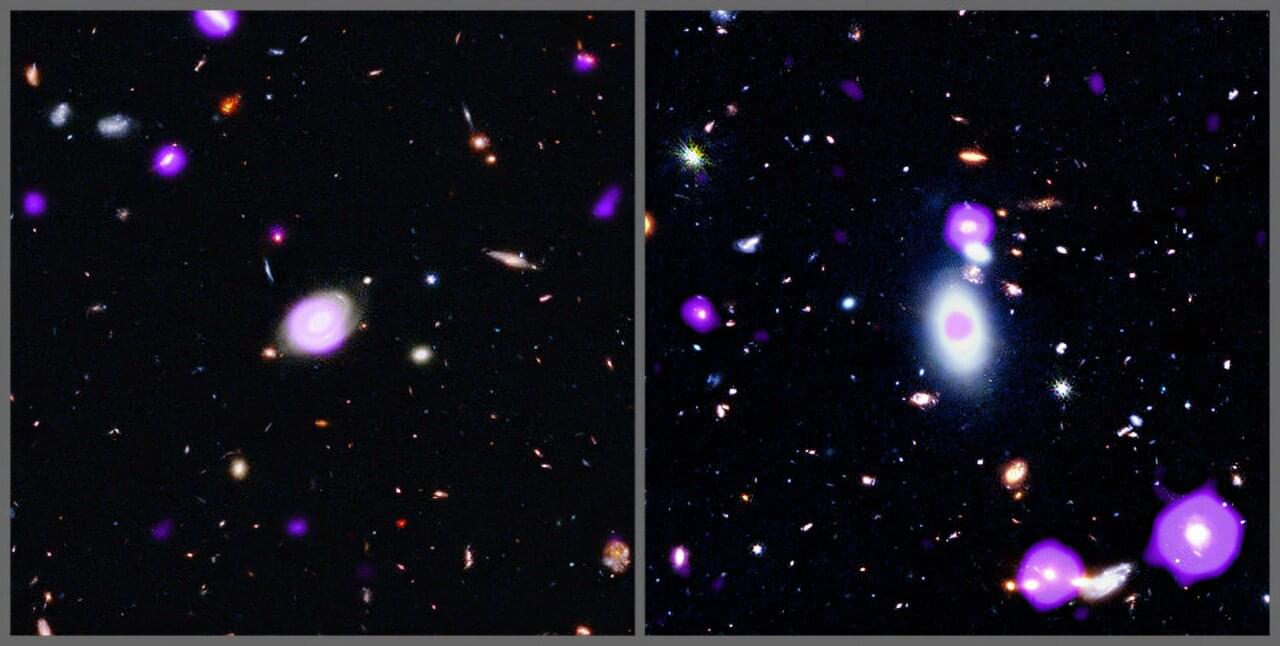
Astronomers have an answer for a long-running mystery in astrophysics: why is the growth of supermassive black holes so much lower today than in the past? A study using NASA’s Chandra X-ray Observatory and other X-ray telescopes found that supermassive black holes are unable to consume material as rapidly as they did in the distant past. The results appeared in the December 2025 issue of The Astrophysical Journal.
Ten billion years ago, there was a period that astronomers call “cosmic noon,” when the growth of supermassive black holes (those with millions to billions of times the mass of the sun) was at its peak across the entire history of the universe. Between cosmic noon and now, however, astronomers have seen a major slowdown in how rapidly black holes are growing.
“A longstanding mystery has been the cause of this big slowdown,” said Zhibo Yu of Penn State University, lead author of the new study. “With these X-ray data and supporting observations at other wavelengths, we can test different ideas and narrow down the answer.”