Solar cells, devices that can convert sunlight into electricity, are now widely used in many countries worldwide. Over the past few years, energy engineers have been exploring alternative designs that could further boost these devices’ power conversion efficiencies (PCEs) and ensure that they continue operating reliably over time.
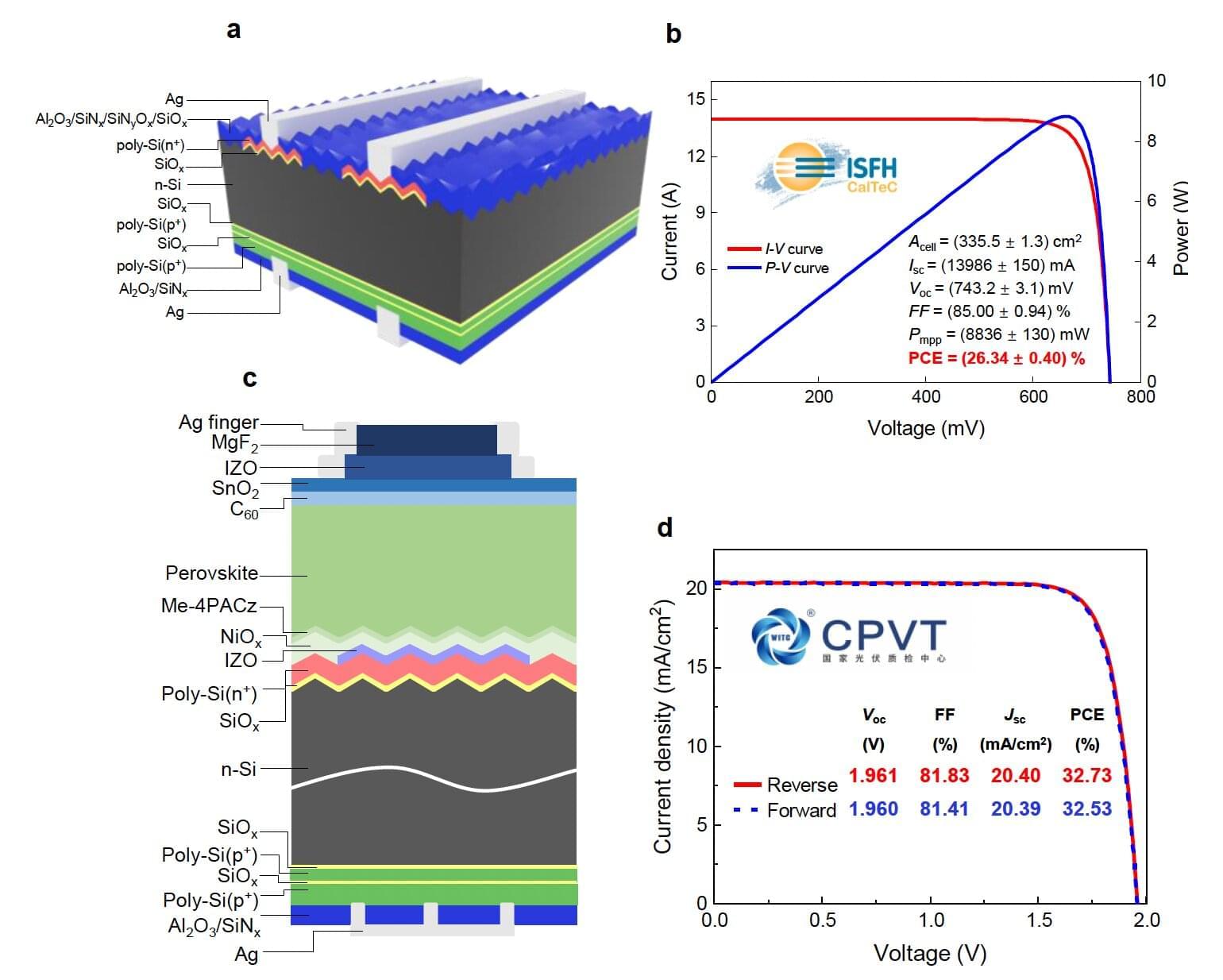
Researchers at Soochow University, Zhejiang Jinko Solar Co. Ltd. and other institutes introduced a new bifacial solar cell design that could overcome some of the limitations of a recently introduced type of solar cell that leverage components known as tunnel oxide passivating contacts (TOPCon). Their design, outlined in a paper published in Nature Energy, combines TOPCon structures with perovskites, a class of materials with a unique crystal structure that efficiently absorbs light.
“Our work is rooted in a fundamental limitation of current TOPCon solar cells,” Kun Gao and Prof. Xinbo Yang, first author and co-senior author of the paper, respectively, told Tech Xplore. “In industrial TOPCon devices, a boron-diffused p+ emitter is still used on the front side, which introduces significant recombination losses and limits further efficiency improvements. A natural strategy is to replace this emitter with localized TOPCon contact.”