Toggle light / dark theme

Get the latest international news and world events from around the world.

Log in for authorized contributors

People who consume ultra-processed foods have worse muscle health, study suggests

Researchers found that a diet high in ultra-processed foods is associated with higher amounts of fat stored inside thigh muscles, regardless of calorie or fat intake, physical activity or sociodemographic factors in a population at risk for knee osteoarthritis. Results of the study were published in Radiology. Higher amounts of intramuscular fat in the thigh could potentially increase the risk for knee osteoarthritis.

Ultra-processed foods usually have longer shelf lives and can be highly appealing and convenient. They contain a combination of sugar, fat, salt and carbohydrates which affect the brain’s reward system, making it hard to stop eating.

These foods include breakfast cereals, margarines/spreads, packaged snacks, hot dogs, soft drinks and energy drinks, candies and desserts, frozen pizzas, ready-to-eat meals, mass-produced packaged breads and buns, which all include synthesized ingredients.

Long-Term Cognitive Ability and Academic Achievement After Childhood Severe Malaria

Among children with a history of CerebralMalaria or severe malarial anemia, long-term follow-up demonstrated lower overall cognitive ability and lower math achievement compared with unaffected children when assessed 4 to 15 years after the index episode of Malaria.

Attention and reading scores did not differ, and outcomes among children with other forms of severe malaria were similar to unaffected children.

These findings indicate that specific severe malaria phenotypes are associated with persistent cognitive and academic effects into later childhood and adolescence, with implications for long-term follow-up and supportive services.

ESCMIDGlobal2026.


This descriptive analysis uses a subset of data from the Malarial Impact on Neurobehavioral Development (MIND) cohort study to assess whether severe malaria in Ugandan children is associated with long-term cognitive impairment or decreased academic achievement.

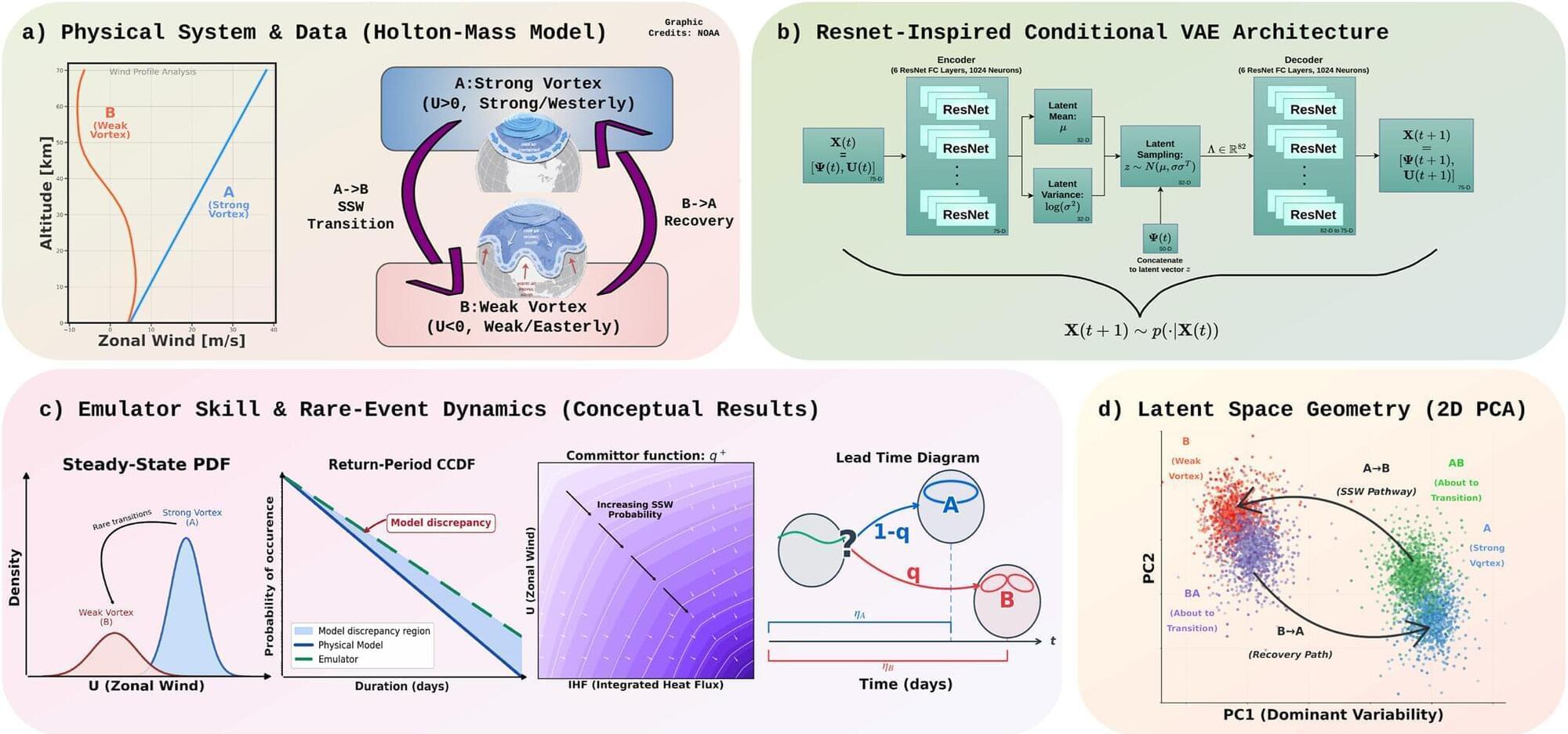
The longevity effects of reduced IGF-1 signaling depend on the stability of the mitochondrial genome

This insight has major implications for the development of antiaging therapies. First, they suggest that mtDNA integrity is not simply one of the many hallmarks of aging, but rather the foundation upon which others are built. And when that platform is broken, downstream hallmarks such as proteostasis or DNA repair cannot be engaged by typical means. Second, it suggests that interventions that target nutrient-sensing pathways may fail, or even backfire, when applied to organisms or tissues with high levels of mitochondrial damage. Hence, the next generation of geroprotective treatments must be tested in diverse models of aging, including those that combine multiple hallmarks, to better understand the scope and boundaries of their efficacy. Last, the efficacy of those treatments could be amplified by measures that improve the stability of the mitochondrial genome. While a reduction in IGF-1 signaling did not alter the frequency of mutations in WT or PolgD257A mice, it did slow the pace with which they reached homoplasmy. Thus, although it may not be possible today to reduce mitochondrial mutagenesis in human cells, our data show that it may already be possible to curtail the impact of mtDNA mutations on mammalian health span by slowing their clonal expansion in nondividing cells, the cells that are most sensitive to metabolic dysfunction.

While the precise mechanism by which Pappa influences clonal expansion of mtDNA mutations remains uncertain, several plausible explanations can be proposed. In the absence of cell division (the major driver for homoplasmy in dividing cells), the progression of mtDNA mutations toward homoplasmy is primarily driven by random genetic drift, the rate of mtDNA replication, and mitochondrial quality control. Thus, it is likely that loss of Pappa influences one of these three processes. Loss of Pappa may either reduce the rate of random genetic drift (potentially by changing mitochondrial fusion and fission or the spatial segregation of semi-isolated pockets of mtDNA), reduce the rate of mtDNA replication (less replication lowers the chance that a mutant mtDNA molecule expands enough to reach homoplasmy), or improve mitochondrial quality control by degrading mitochondria with mutant mtDNA molecules. It will be important to distinguish between these possibilities in future work to clear the way for novel interventions aimed at curbing the impact of mtDNA mutations on human health.

Regardless of the mechanism, these findings provide a compelling example of how the interplay between distinct hallmarks of the aging process can fundamentally alter the outcome of otherwise beneficial interventions. They reveal that the efficacy of antiaging strategies such as IGF-1 suppression is not absolute but context dependent. They are contingent on the integrity of underlying systems, including proteostasis and DNA repair. Without an intact mitochondrial genome, these pathways cannot be engaged, indicating that mtDNA integrity is required for these critical antiaging pathways. More broadly, our results underscore the need for a more integrated model of aging, one that considers not only individual pathways but also their interactions, hierarchies, and points of failure. By mapping these interactions, we can better anticipate the limitations of existing interventions and design next-generation therapies that are robust to the complex biology of aged tissues. In this light, strategies that target the expansion of mtDNA mutations, rather than their origin, may offer a powerful new axis for preserving tissue function and extending health span, even when the underlying genomic damage cannot be undone.

Epigenetic biomarkers in neurodegenerative diseases: from molecular signatures to therapeutic targets

Epigenetic molecular signatures as biomarkers in neurodegenerative diseases.

Integration of multiomic data is driving the development of cell-type-resolved reference atlases and molecular signatures of neurodegeneration.

Next-generation epigenetic editors are enabling causal interrogation of disease associated marks, revealing disease driving and potentially modifiable epigenetic mechanisms.

Altered chromatin architecture and global epigenomic dysregulation are emerging hallmarks of neurodegenerative diseases, detectable not only in the brain but also in peripheral biofluids.

Peripheral chromatin accessibility and conformation signatures are emerging as clinically actionable biomarkers for early diagnosis, prognosis, and stratification.

Circulating DNA (hydroxy-)methylation profiles offer new avenues for noninvasive biomarker discovery for neurodegenerative diseases, but low yield and sensitivity in detecting neuronal signals remain key challenges. sciencenewshighlights ScienceMission https://sciencemission.com/Epigenetic-biomarkers-in-ND


Inside a White Dwarf, Matter Stops Behaving Normally

What happens when gravity crushes a dead star so completely that atoms themselves are destroyed? Inside a white dwarf, matter enters a state so extreme that the normal rules of physics no longer apply. The familiar categories — solid, liquid, gas — all break down. What holds the star up is not heat, not fusion, not any force you encounter in everyday life. It is a quantum mechanical rule about electrons that most people have never heard of: the Pauli exclusion principle.

In this calming long-form science documentary, we explore what white dwarfs really are, why their matter is millions of times denser than anything on Earth, and how a law governing subatomic particles can hold up an object with the mass of the sun. We break down electron degeneracy pressure in physically intuitive terms, explain why these stellar remnants can cool for trillions of years without ever collapsing, and reveal the Chandrasekhar limit — the critical mass threshold beyond which even quantum mechanics loses its battle against gravity, leading to some of the most violent explosions in the universe.

From the death of sun-like stars to the far future of the cosmos, this is the story of matter pushed to its absolute limit.

Sources and Further Reading:

Chandrasekhar, S. (1931). \

LOL…not my title! Old picture! But fun interview

For this episode, I’m joined by Rick Tumlinson, co-founder of the Space Frontier Foundation and one of the most influential figures in the commercial space industry.

In this episode, we slice the conversation into four categories: the social history of the space movement and how we got here; the business of space and the astropolitics shaping who controls the final frontier; the genetics and ethics of humanity becoming a multi-planetary species; and the deeper philosophy of why leaving Earth isn’t just raw and blind ambition but something closer to destiny (for some people).

Timestamps:
0:00 Social History.
30:19 Business and Astropolitics.
45:20 Genetics and Ethics.
56:02 Philosophical.

Connect with Rick:
LinkedIn: / ricktumlinson.
Website: https://www.ricktumlinson.com.
Book: https://www.amazon.com/Why-Space-Purp?tag=lifeboatfound-20… Info: Spotify: https://open.spotify.com/show/1ILhje5… Apple Podcasts: https://apple.co/3qXL37W Connect: Website: https://ayushprakash.com LinkedIn: / prakash-ayush Instagram: instagram.com/ayushprakashofficial Books: AI for Gen Z: https://www.amazon.com/dp/0981182135?tag=lifeboatfound-20

Podcast Info:
Spotify: https://open.spotify.com/show/1ILhje5
Apple Podcasts: https://apple.co/3qXL37W

Connect:

Advancements and challenges in inverse lithography technology: a review of artificial intelligence-based approaches

Inverse lithography takes a radically different approach. Instead of starting with the desired circuit pattern and tweaking it to compensate for optical distortions, ILT works backwards. It asks: “What mask pattern would produce the exact shape we want after the light does its distorting work?” It’s like designing a funhouse mirror that makes your reflection look perfectly normal.

What’s particularly elegant are the “model-driven deep learning” approaches, which combine the physics of how light actually behaves with AI’s pattern-recognition abilities. Rather than making the AI learn optics from scratch, these hybrid methods embed the known laws of physics into the learning process, creating solutions that are both fast and physically accurate.


Yang, Y., Liu, K., Gao, Y. et al. Light Sci Appl 14, 250 (2025). https://doi.org/10.1038/s41377-025-01923-w.

Download citation.

Novel Opioid Offers Potent Pain Relief Without Classic Side Effects

Researchers have discovered a novel synthetic opioid that provided potent pain relief in preclinical models without many of the dangerous side effects that limit current opioid therapies.

The compound, N-desethyl-fluornitrazene (DFNZ), produced strong analgesia in rodents without causing respiratory depression, tolerance, or other indicators of potential addiction, reported the researchers, led by Michael Michaelides, PhD, with the National Institute on Drug Abuse (NIDA).

“Opioid pain medications are essential for medical purposes, but can lead to addiction and overdose. Developing a highly effective pain medication without these drawbacks would have enormous public health benefits,” NIDA Director Nora D. Volkow, MD, said in a news release.


A novel mu-opioid receptor agonist showed strong analgesia without respiratory depression, tolerance, or significant addiction signals in animal models.

/* */