Read more
Get the latest international news and world events from around the world.
New Deep-Space Color Image And Revolutionary Insight About Interstellar Comet 3I/ATLAS From Jupiter-Bound JUICE Mission
The new observations indicate that it was a very peculiar comet… up to a point.
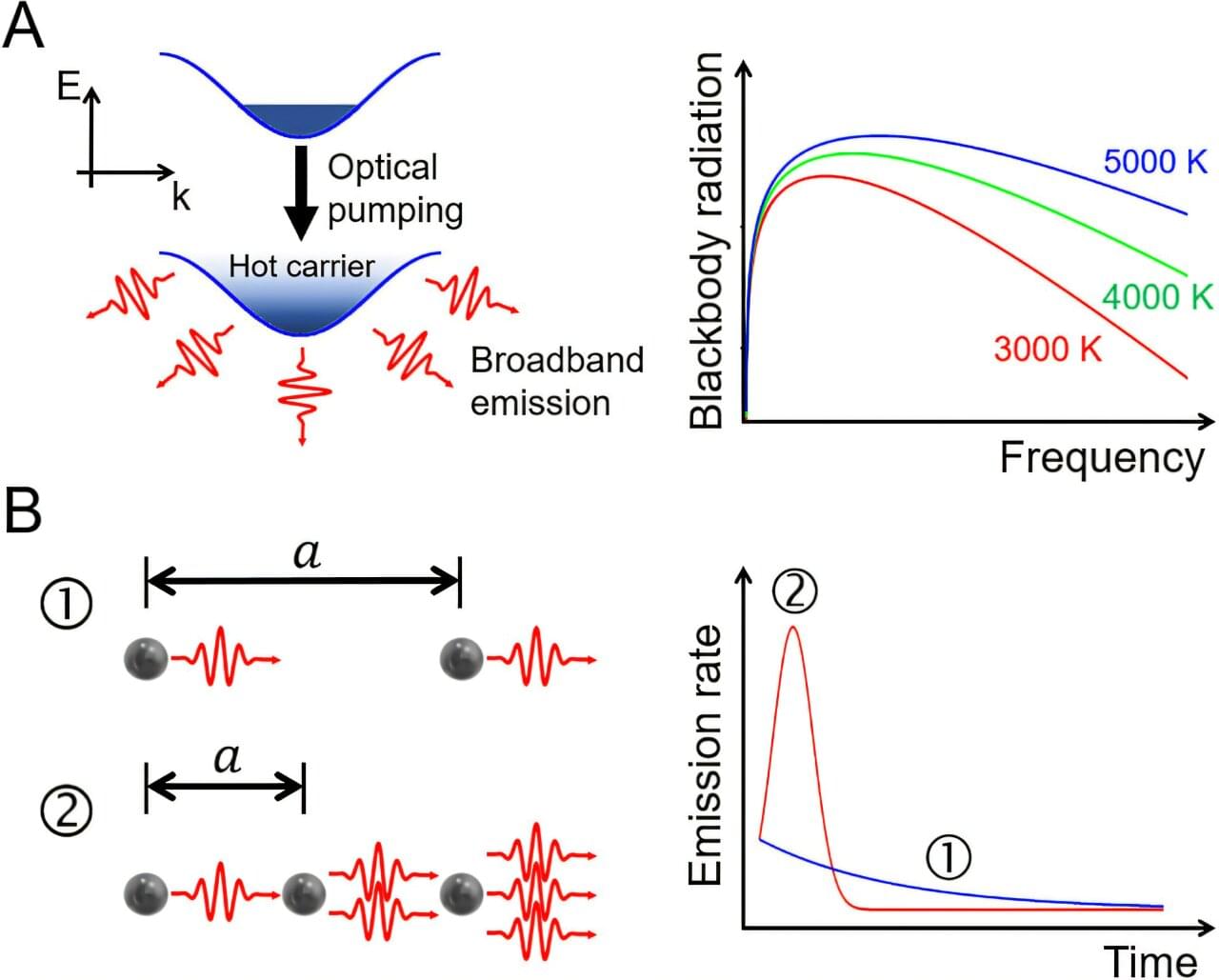
Microscopic mechanism of ‘quantum collapse’ in real-world environments uncovered for the first time
A research team has, for the first time in the world, elucidated the microscopic mechanism by which quantum order is lost and collapses in “open quantum environments” existing in nature. Since perfectly isolated quantum systems cannot exist in reality, this study is expected to provide a decisive breakthrough in bridging the gap between ideal quantum theory and quantum technologies that must operate in real-world environments.
The study is published in the journal Advanced Science. The study was led by Professor JaeDong Lee of the Department of Physics and Chemistry at DGIST.
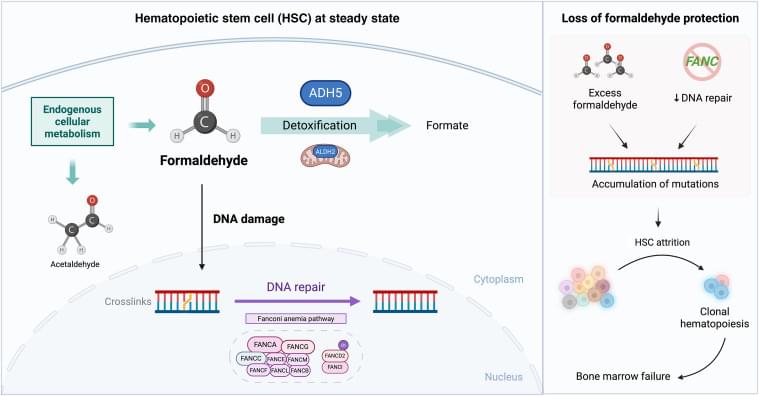
Endogenous aldehydes: A driver of clonal hematopoiesis from within?
Detoxification of endogenous aldehydes is critical for preserving genomic integrity in hematopoietic stem cells. In this issue, Kamimae-Lanning et al. show that excess formaldehyde can drive clonal hematopoiesis through attrition of blood-forming progenitors, accelerating neutral drift in the absence of known genetic drivers of positive selection.
Researchers 3D print robot the size of a single-cell organism — devices move and navigate even without a ‘brain,’ uses their shape and the environment to get going
These robots are smaller than a strand of human hair but can move independently even without a motor and sensors.
MICrONS Explorer: A virtual observatory of the cortex
The Machine Intelligence from Cortical Networks (MICrONS) program seeks to revolutionize machine learning by reverse-engineering the algorithms of the brain. It is an ambitious program to map the function and connectivity of cortical circuits, using high throughput imaging technologies, with the goal of providing insights into the computational principles that underlie cortical function in order to advance the next generation of machine learning algorithms.
This website serves as a data portal to release connectivity and functional imaging data collected by a consortium of laboratories led by groups at the Allen Institute for Brain Science, Princeton University, and Baylor College of Medicine, with support from a broad array of teams, coordinated and funded by the IARPA MICrONS program. These data include large scale electron microscopy based reconstructions of cortical circuitry from mouse visual cortex, with corresponding functional imaging data from those same neurons.
Have a Scientific Request? Check out the Virtual Observatory of the Cortex (VORTEX) project, a BRAIN Initiative funded program to bring the MICrONS dataset to the research community. Access proofreading resources to answer your scientific questions.
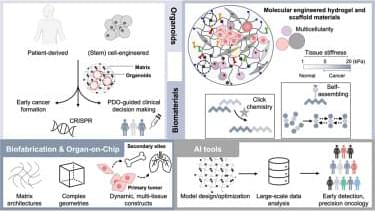
Reconstructing tumor tissues in 3D: From organoids to bioengineered niches
Tumor tissue engineering has opened new avenues for cancer research. With an emphasis on gastrointestinal malignancies, we summarize capabilities and limitations of patient-derived and engineered organoid models. We then discuss how innovations in biomaterial design, biofabrication, microfluidics, benchmarking, and AI converge to better emulate tumor tissues and advance translational modeling.
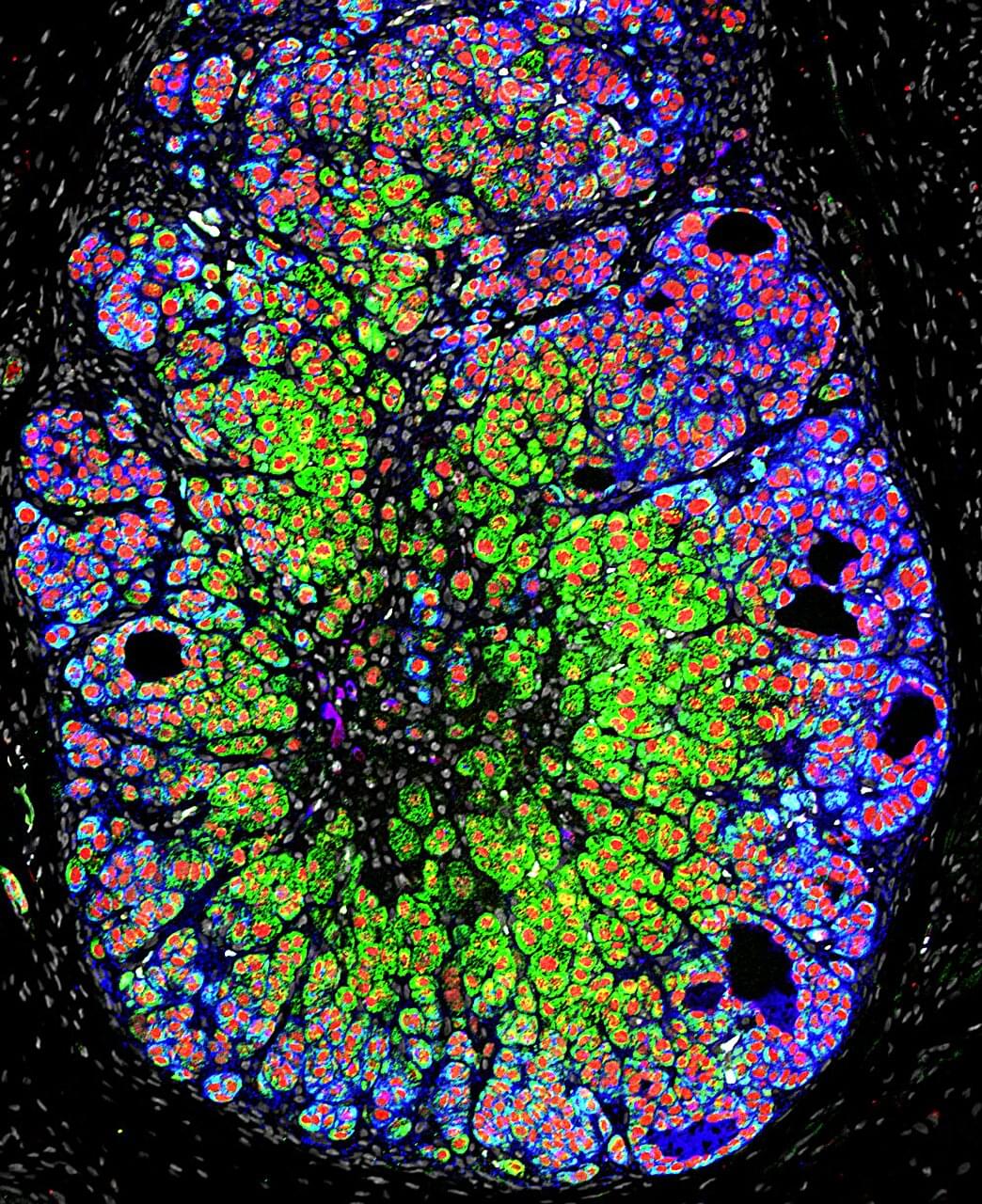
Stress tested, testing stress: Novel organoid models how the adrenal gland develops
Sitting above each kidney are two small endocrine glands about the size of walnuts. These are the adrenal glands, responsible for producing hormones that help control some of the body’s most critical functions. Among these hormones, cortisol is particularly critical for survival. Often referred to as the “stress hormone,” it helps the body adapt to a wide range of challenges—both emotional and physical, such as trauma or infection—by regulating overall metabolism. Despite its central role in stress and endocrine biology, how the adrenal gland is built and how it functions remains poorly understood.
Now, researchers led by Kotaro Sasaki and Michinori Mayama of the School of Veterinary Medicine have developed a lab-grown organoid system that recapitulates the complex tissue structure, development, and function of the developing human adrenal cortex—the outer layer of the adrenal gland—providing a powerful platform to study its biology. These results, published in Cell Stem Cell, help establish a foundation for regenerative therapies targeting adrenal diseases.
“The adrenal cortex is a major endocrine organ and central to our stress response,” says Sasaki, the Richard King Mellon Associate Professor of Biomedical Sciences. “Despite its importance, adrenal biology has lagged behind that of other organs. Our goal was to create a mini adrenal gland in a dish to better understand how the human adrenal forms and begins to function.”
Get access to all the best AI models in one place at Mammouth
Timestamps:
00:00 — New Way Of Computing
06:46 — How It Works
09:39 — Outlook.
My Podcast on Apple: https://podcasts.apple.com/at/podcast… Podcast on Spotify: https://open.spotify.com/show/3drr7A8… Let’s connect on LinkedIn: / anastasiintech Newsletter: https://anastasiintech.substack.com Instagram:
/ anastasi.in.tech Patreon:
/ anastasiintech.
Let’s connect on LinkedIn: / anastasiintech
Newsletter: https://anastasiintech.substack.com
Instagram: / anastasi.in.tech
Patreon: / anastasiintech.
Read more