“The inside story of the AI breakthrough that won a Nobel Prize.
-
The Thinking Game takes you on a journey into the heart of leading AI lab DeepMind, capturing a team striving to unravel the mysteries of intelligence and life itself.
Filmed over five years by the award winning team behind AlphaGo, the documentary examines how DeepMind co-founder Demis Hassabis’s extraordinary beginnings shaped his lifelong pursuit of artificial general intelligence. It chronicles the rigorous process of scientific discovery, documenting how the team moved from mastering complex strategy games to solving the 50-year-old “protein folding problem” with AlphaFold — a breakthrough that would win a Nobel Prize.”
In this episode of the New Earth Entrepreneurs podcast, we sit down with John Cumbers, founder of SynBioBeta, to discuss how synthetic biology is reshaping industries and creating sustainable solutions.
John shares insights into the role of bio-manufacturing in decarbonizing supply chains, government initiatives supporting bio-innovation, and the potential for space applications of synthetic biology.
Learn how SynBioBeta is building a passionate community of changemakers to engineer a better, more sustainable world.
The New Earth Entrepreneurs Podcast explores social entrepreneurship and corporate sustainability through engaging conversations with visionary leaders.
At SciCon 2024, John Cumbers, founder and CEO of SynBioBeta, explores the groundbreaking and controversial potential of synthetic biology and AI in brain and body replacement. He delves into stem cell research and AI’s role in regenerating brain function, while also addressing the provocative idea of gradually replacing parts of the brain and body. Cumbers discusses how these advancements could one day lead to life extension, challenging traditional views on aging, and raising ethical questions about the future of human biology.
SciCon (2024) is ResearchHub’s annual conference, which unites truth-seekers and innovators to push the boundaries of open science.
– ResearchHub’s mission is to accelerate the pace of scientific research. We are building a modern platform where people can collaborate on scientific research more efficiently, much like GitHub has done for software engineering. We believe scientific research should be accessible to everyone, collaborative, and prioritized.
The Intelligence Revolution: Coupling AI and the Human Brain. New videos DAILY: https://bigth.ink. Join Big Think Edge for exclusive video lessons from top thinkers and doers: https://bigth.ink/Edge.
Edward Boyden is a Hertz Foundation Fellow and recipient of the prestigious Hertz Foundation Grant for graduate study in the applications of the physical, biological and engineering sciences. A professor of Biological Engineering and Brain and Cognitive Sciences at MIT, Edward Boyden explains how humanity is only at its infancy in merging with machines. His work is leading him towards the development of a “brain co-processor”, a device that interacts intimately with the brain to upload and download information to and from it, augmenting human capabilities in memory storage, decision making, and cognition. The first step, however, is understanding the brain on a much deeper level. With the support of the Fannie and John Hertz Foundation, Ed Boyden pursued a PhD in neurosciences from Stanford University.
EDWARD BOYDEN:
Edward Boyden is a professor of Biological Engineering and Brain and Cognitive Sciences at the MIT Media Lab and the McGovern Institute for Brain Research at MIT. He leads the Media Lab’s Synthetic Neurobiology group, which develops tools for analyzing and repairing complex biological systems, such as the brain, and applies them systematically both to reveal ground truth principles of biological function and to repair these systems.
These technologies, often created in interdisciplinary collaborations, include expansion microscopy (which enables complex biological systems to be imaged with nanoscale precision) optogenetic tools (which enable the activation and silencing of neural activity with light,) and optical, nanofabricated, and robotic interfaces (which enable recording and control of neural dynamics).
Boyden has launched an award-winning series of classes at MIT, which teach principles of neuroengineering, starting with the basic principles of how to control and observe neural functions, and culminating with strategies for launching companies in the nascent neurotechnology space. He also co-directs the MIT Center for Neurobiological Engineering, which aims to develop new tools to accelerate neuroscience progress.
This is a ~50 minute video on evolution from the perspective of diverse intelligence. I discuss 3 main things: the nature of the mapping between genotype and phenotype (an intelligent, problem-solving process that interprets genomic prompts, not simply a complex mechanical mapping), the implications for evolution of operating over such a multi-scale agential material, and a few recent findings about the origin of the intelligence spiral taking place before differential replication dynamics kick in.
Interior Secretary Doug Burgum and Energy Secretary Chris Wright unveiled the plan at the White House with Maryland Gov. Wes Moore, Pennsylvania Gov. Josh Shapiro and outgoing Virginia Gov. Glenn Youngkin. PJM representatives were not at the event.
“We have to get out from underneath this bureaucratic system that we have in the regional grid operators and we’ve got to allow markets to work,” Burgum said at the White House. “One of the ways markets can work is to have the hyperscalers actually rapidly building power.”
Utility bills are rising in many parts of the U.S. despite Trump’s promise to lower energy prices during his presidential campaign. The issue played a major role in the landslide victories of Democrats Mikie Sherrill and Abigail Spanberger in the governors’ races of New Jersey and Virginia, respectively.
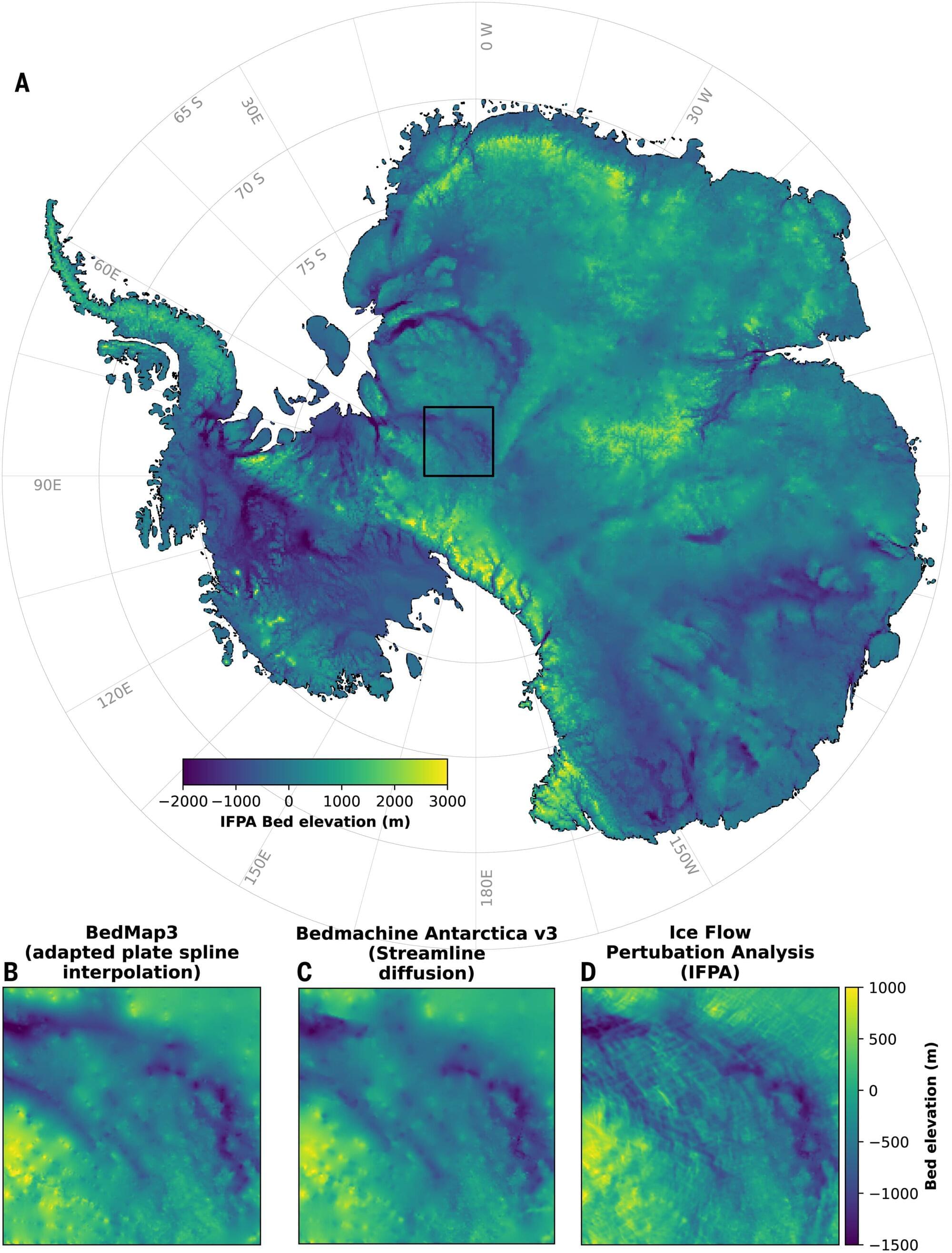
Scientists have discovered there is more to Antarctica than meets the eye. A new map of the landscape beneath the frozen continent’s ice sheet has revealed a previously hidden world of mountains, deep canyons and rugged hills in unprecedented detail.
The Antarctic ice sheet is a vast expanse of ice covering approximately 98% of the continent. While the frozen surface has been fairly well-studied, the ground beneath this two-kilometer-thick layer has remained a mystery. In fact, until now, we knew more about the surface of Mars than what lies beneath the bottom of our own planet.
The ice sheet plays a crucial role in our climate. Not only is it a major freshwater reservoir, but its icy surface reflects sunlight, helping cool Earth. But because our computer models are missing key details about the land it sits on, it is difficult to predict factors such as exactly how fast the ice will melt and how much sea levels will rise.
Researchers at the Department of Materials Science and Engineering within The Grainger College of Engineering have identified the first detailed physical mechanism explaining how magnetic fields slow the movement of carbon atoms inside iron. The study, published in Physical Review Letters, sheds new light on the role carbon plays in shaping the internal grain structure of steel.
Steel, which is made from iron and carbon, is among the most widely used construction materials worldwide. Producing steel with specific internal structures typically requires extreme heat, making the process highly energy intensive.
Decades ago, researchers observed that exposing certain steels to magnetic fields during heat treatment led to improved performance, but the explanations offered at the time remained largely theoretical. Pinpointing the underlying cause of this effect could give engineers more precise control over heat treatment, leading to more efficient processing and lower energy demands.
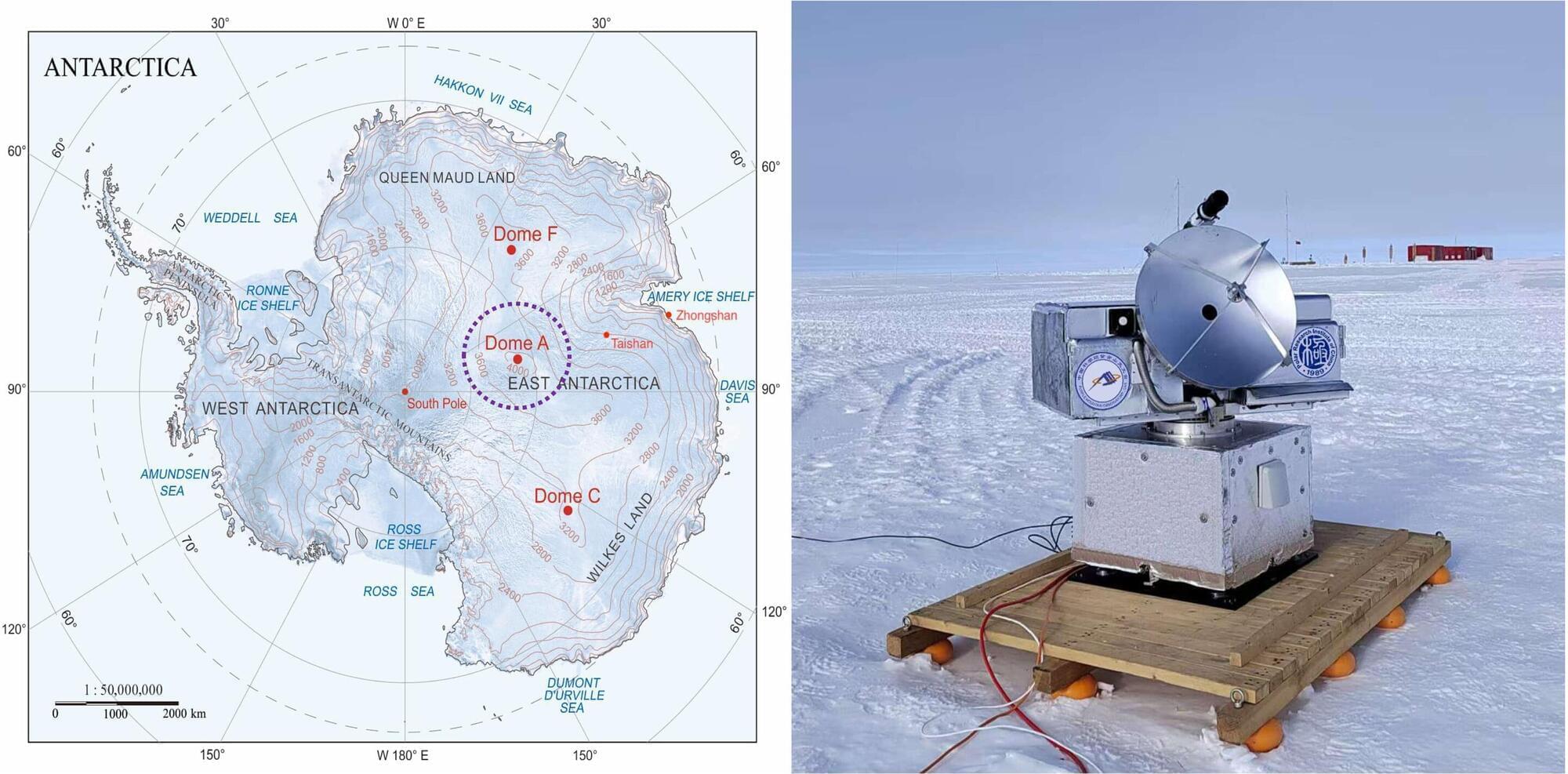
Chinese researchers have braved the cold and harsh environment of Antarctica in order to get a unique view of star formation in the interstellar medium (ISM). The Chinese National Antarctica and Arctic Research Expedition (CHINARE) has managed to complete a study at Dome A—the highest ice dome on the Antarctic Plateau—and successfully collected submillimeter data to form a better understanding of carbon cycling in the ISM. Their research is published in Science Advances.
In most places on Earth, the detection of submillimeter wavelengths (terahertz frequencies) from space is inhibited by water vapor in the atmosphere, which absorbs radiation at these wavelengths. This is a major roadblock to the study of carbon phases in the ISM, as carbon cycles between ionized (C+), atomic (C0), and molecular (CO) forms in the interstellar medium. These transitions produce emissions in submillimeter wavelength bands, making them difficult to detect from most locations.
While prior ground-based telescopes have detected some [CI] emissions, coverage is limited compared to CO surveys, and not all carbon phases have been mapped together. However, Dome A in Antarctica offers the dry, high altitude conditions needed for submillimeter astronomy, but successful observations have been elusive due to the harsh environment and technical challenges.