Toggle light / dark theme

Get the latest international news and world events from around the world.

Log in for authorized contributors

Robust against noise, geometric-phase swap gates bring stability to quantum operations

Researchers at ETH Zurich have realized particularly stable quantum logical operations with qubits made of neutral atoms. Since these operations, called quantum gates, are based on geometric phases, they are extremely robust against experimental noise and can be used in quantum computers in the future.

Quantum bits, or qubits, which are required for building quantum computers, come in different kinds. In recent years, many research institutes and companies have focused on superconducting circuits and trapped ions. However, neutral atoms trapped with laser light also have a lot going for them: since they carry no electric charge, they are less sensitive to disturbances. Moreover, trapping with laser light makes it easy to realize several thousand qubits in a single system—using superconductors or ions this is much more difficult.

Nevertheless, neutral atoms have their own problems. In quantum computers, qubits exist in superposition states of the logic values 0 and 1. To perform calculations with them, one needs to execute quantum logic operations, also known as quantum gates.
Safer sodium battery eliminates thermal runaway with a heat-triggered polymer barrier

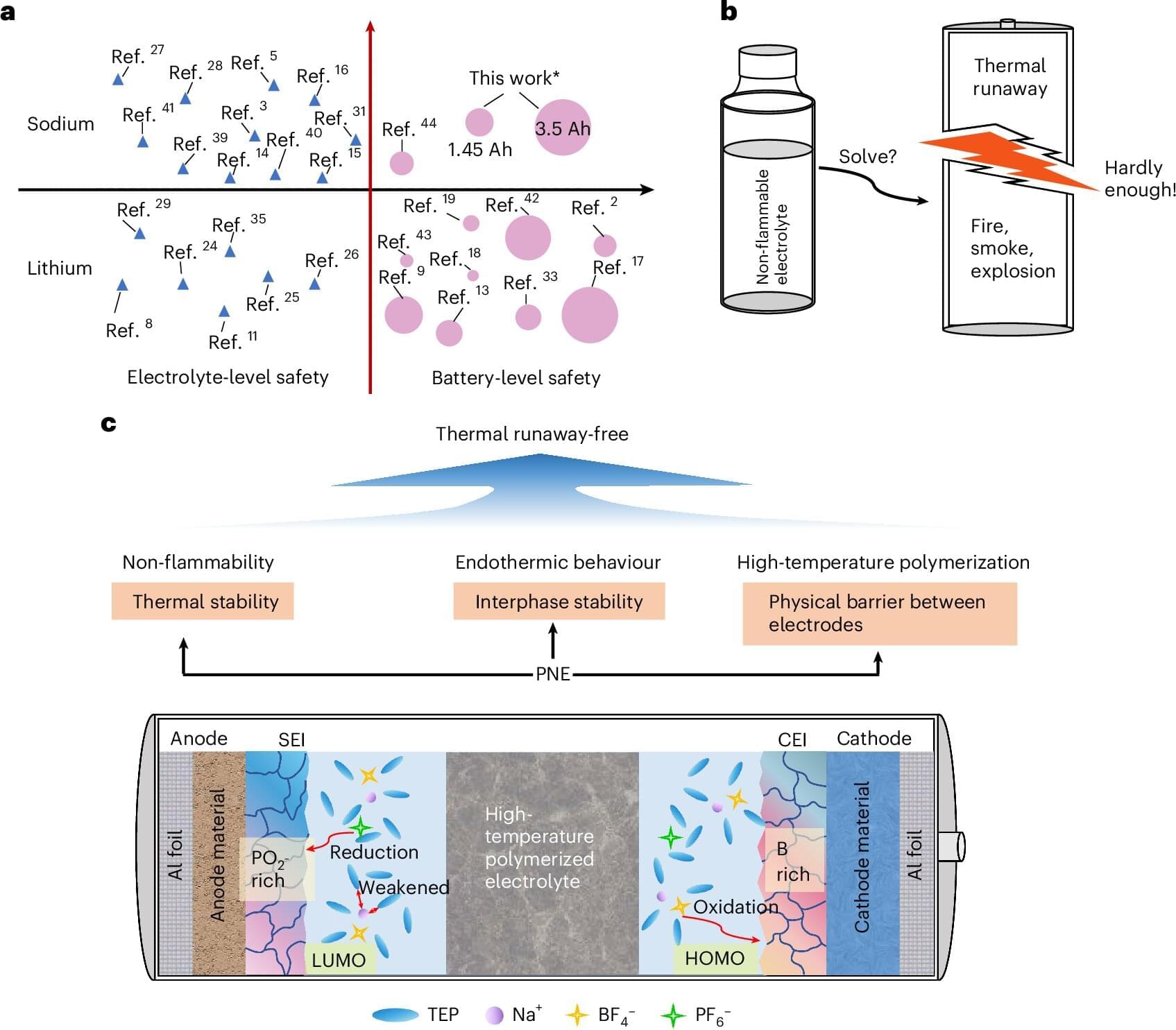
Some batteries have been known to catch fire or explode at high temperatures or when under stress. This safety concern has pushed researchers to experiment with different ways to design safer batteries that can ideally still perform reliably and efficiently. Sodium-ion batteries (NIBs) are considered a promising alternative to lithium-ion batteries, but still face safety risks, especially at high capacities. But now, a team of researchers in China has designed a new type of electrolyte for NIBs that may eliminate these risks, allowing for stable performance across a wide temperature range.

The main risk associated with batteries involves a process called thermal runaway. Thermal runaway is a rapid and uncontrolled increase in temperature that occurs when heat generation exceeds heat dissipation. This can lead to intense, self-sustaining fires or explosions that are exceptionally difficult to extinguish, release toxic gases, and can even reignite after being extinguished.

Some electrolytes are designed to be “nonflammable,” often by using phosphate esters or fluorinated compounds. However, most nonflammable electrolytes only prevent fire, and do not fully eliminate thermal runaway in large batteries. The team involved in the new study notes that the thermal stability of the electrolyte, the stability of the electrode–electrolyte interfaces and the interactions between the anode and cathode at high temperatures must be considered comprehensively when creating a truly safe battery that can resist thermal runaway.

Prototype chip could boost efficiency of power management in data centers

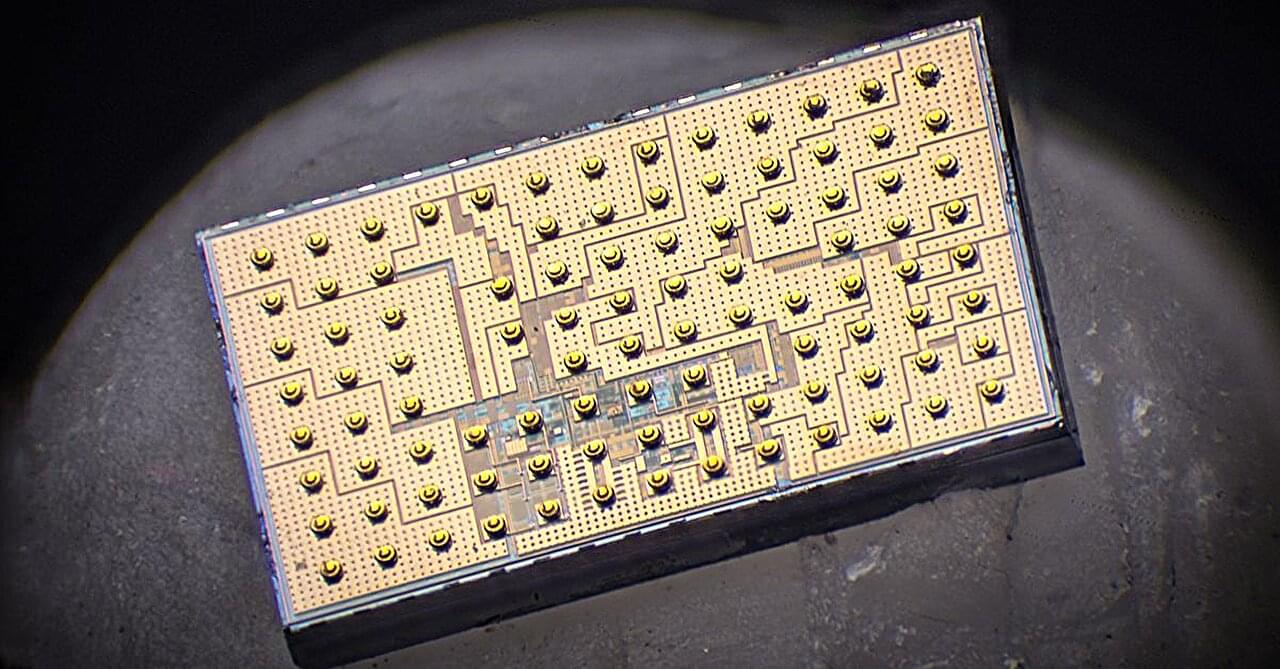
In an effort to meet the rising energy demands of data centers, engineers at the University of California San Diego have developed a new chip design that could improve how graphics processing units (GPUs) convert and manage power. The technology demonstrates a more efficient way to perform a critical task in electronics: converting high voltages into lower levels required by computing hardware. In lab tests, a prototype chip performed the type of voltage conversion used in modern data centers with high efficiency.

The advance, published in Nature Communications, could lead to the development of smaller, more energy-efficient systems for advanced computing.

Leather gets a power upgrade with laser-written microsupercapacitors

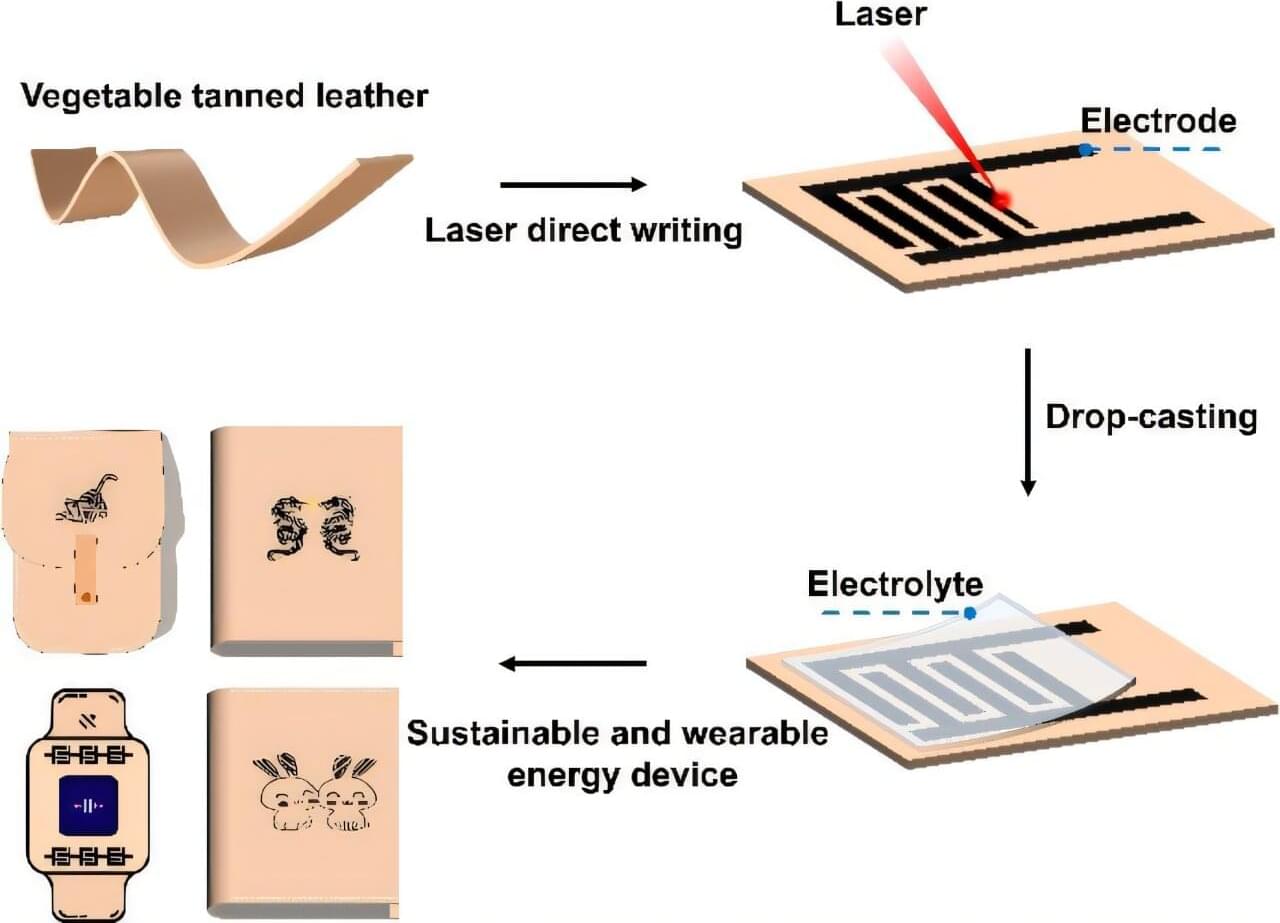
Researchers have developed a simple and eco-friendly way to use a laser to turn natural leather into flexible and wearable energy devices. The new approach could lay the groundwork for more sustainable wearable electronics. In a paper in Optics Letters, the researchers demonstrate the new technique by creating microsupercapacitors on leather in various patterns, including a tiger, dragon and rabbit.

“Using a laser, we directly write conductive patterns onto vegetable-tanned leather to create microsupercapacitors that can store energy and help smooth electrical signals so that wearable electronics run more reliably,” said the research team leader Dong-Dong Han from Jilin University in China.

Unlike conventional devices that rely on synthetic materials and complex, chemical-heavy processes, our approach uses a natural, skin-friendly material and a one-step fabrication method. The microsupercapacitors are well-suited for flexible and comfortable wearable electronics because they are built on soft materials and can be shaped freely and integrated directly into products.

Electron–atom scattering encodes the quantum state of electron wave packets

A new analysis reveals what happens when very short or narrow electron beams encounter a particle. The research is published in the New Journal of Physics. Scientists should be able to achieve a new level of control over high-energy electrons interacting with a particle, according to the theoretical analysis by a RIKEN physicist and two colleagues.

Electrons are particles, but according to quantum mechanics they also behave like waves under certain circumstances.

Electron microscopes exploit this wave-like nature of electrons to obtain high-resolution images of objects by imaging how an electron beam is scattered from an object.

/* */