Toggle light / dark theme

Get the latest international news and world events from around the world.

Log in for authorized contributors

A white dwarf’s cosmic feeding frenzy revealed by NASA

Using NASA’s IXPE, astronomers captured an unprecedented view of a white dwarf star actively feeding on material from a companion. The data revealed giant columns of ultra-hot gas shaped by the star’s magnetic field and glowing in intense X-rays. These features are far too small to image directly, but X-ray polarization allowed scientists to map them with surprising precision. The results open new doors for understanding extreme binary star systems.

Scientists have, for the first time, used NASA’s IXPE (Imaging X-ray Polarization Explorer) to investigate a white dwarf star. The mission’s ability to measure the polarization of X-rays allowed astronomers to closely examine EX Hydrae, a type of system known as an intermediate polar. These observations provided new insight into the physical structure and behavior of powerful binary star systems.

During 2024, IXPE spent nearly a full week observing EX Hydrae. This white dwarf system lies about 200 light-years from Earth in the constellation Hydra. The results of the study were published in the Astrophysical Journal. Researchers from the Massachusetts Institute of Technology in Cambridge led the work, with additional contributors from the University of Iowa, East Tennessee State University, the University of Liége, and Embry Riddle Aeronautical University.

Physicists built a perfect conductor from ultracold atoms

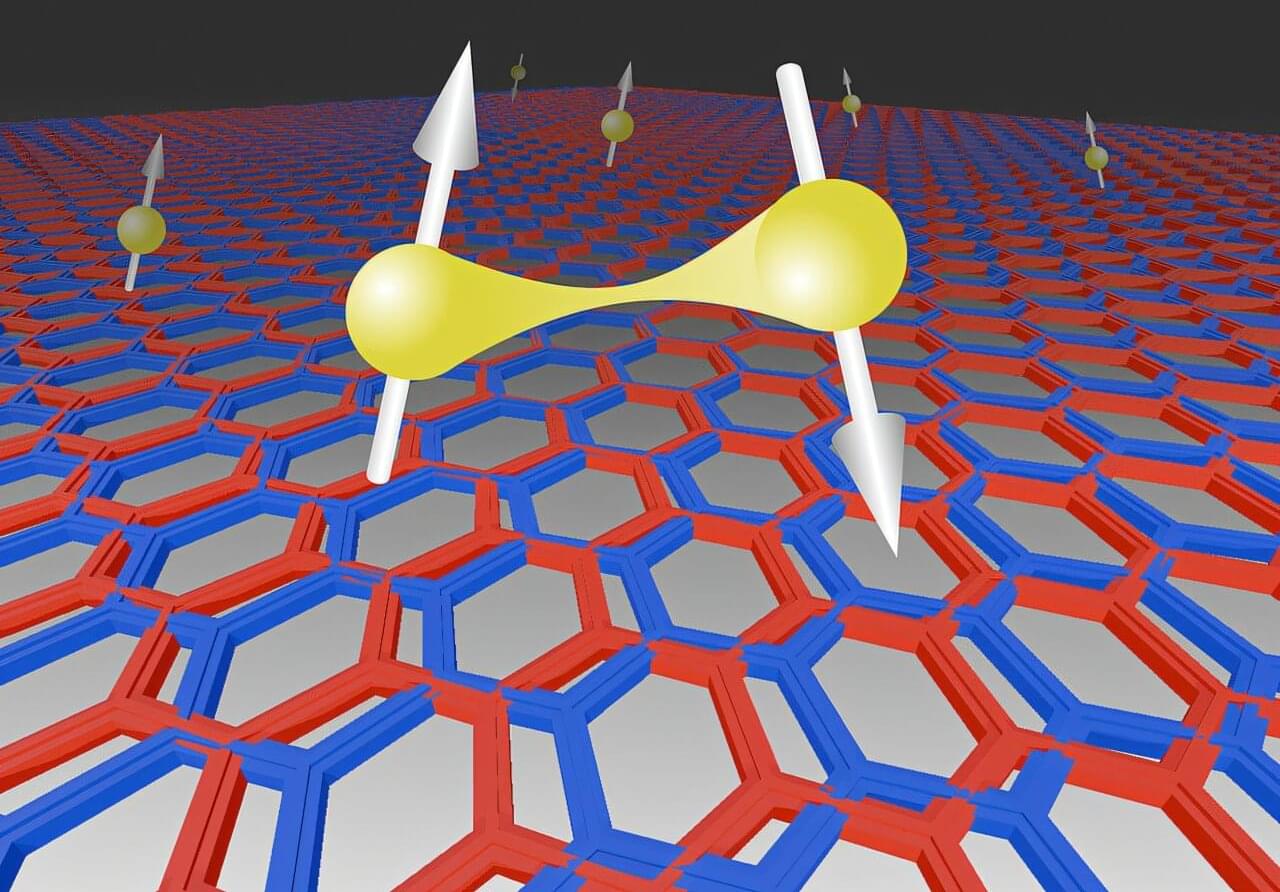
Scientists have built a quantum “wire” where atoms collide endlessly—but energy and motion never slow down. Researchers at TU Wien have discovered a quantum system where energy and mass move with perfect efficiency. In an ultracold gas of atoms confined to a single line, countless collisions occur—but nothing slows down. Instead of diffusing like heat in metal, motion travels cleanly and undiminished, much like a Newton’s cradle. The finding reveals a striking form of transport that breaks the usual rules of resistance.

In everyday physics, transport describes how things move from one place to another. Electric charge flows through wires, heat spreads through metal, and water travels through pipes. In each case, scientists can measure how easily charge, energy, or mass moves through a material. Under normal conditions, that movement is slowed by friction and collisions, creating resistance that weakens or eventually stops the flow.

Researchers at TU Wien have now demonstrated a rare exception. In a carefully designed experiment, they observed a physical system in which transport does not degrade at all.

AI Now Has a Primitive Form of Metacognition

In this video I break down recent research exploring metacognition in large language model ensembles and the growing shift toward System 1 / System 2 style AI architectures.
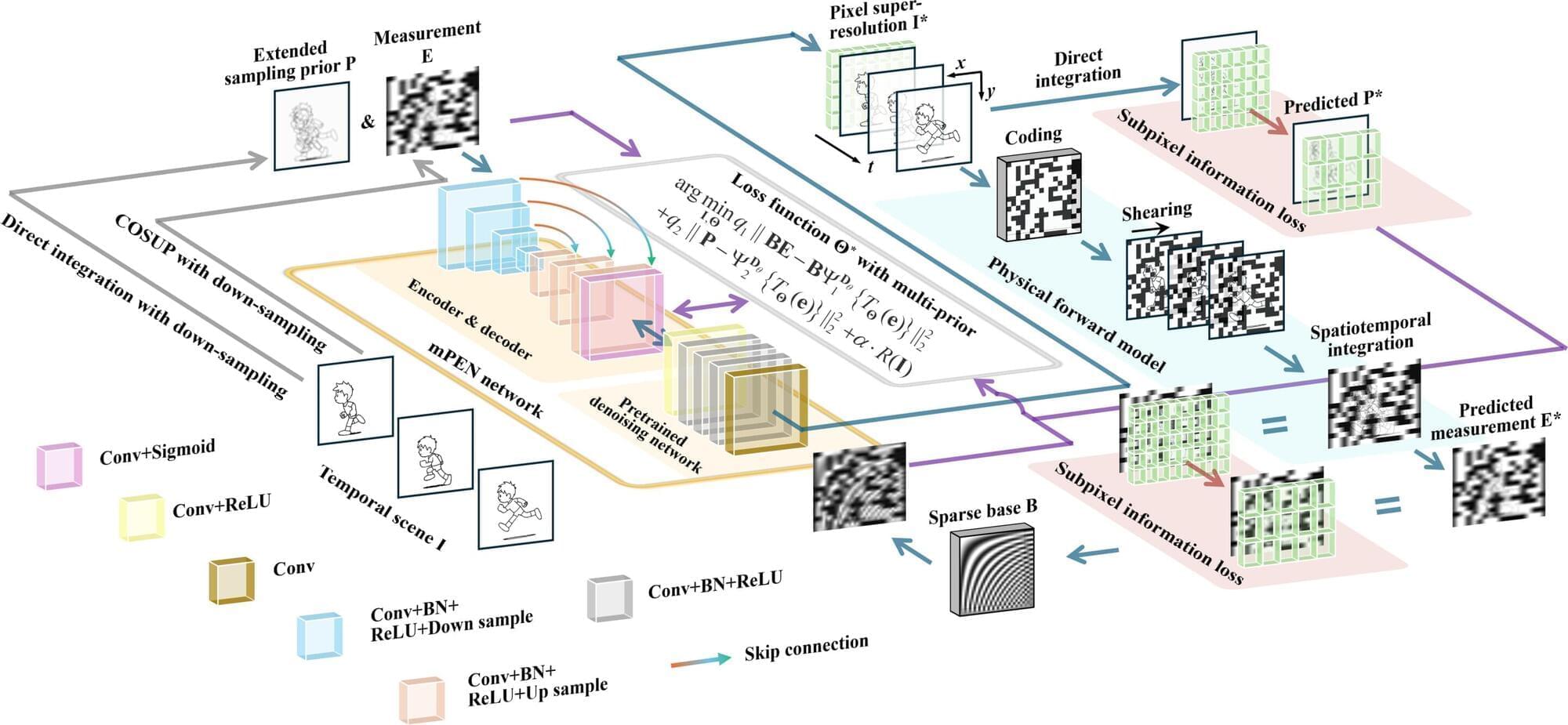
Some researchers are no longer focusing on making single models bigger. Instead, they are building systems where multiple models interact, critique each other, and dynamically switch between fast heuristic reasoning and slower deliberate reasoning. In other words: AI systems that monitor and regulate their own thinking.

Artificial metacognition: Giving an AI the ability to ‘think’ about its ‘thinking’
https://theconversation.com/artificia… System 1 to System 2: A Survey of Reasoning Large Language Models https://arxiv.org/abs/2502.17419 The Illusion of Thinking: Understanding the Strengths and Limitations of Reasoning Models via the Lens of Problem Complexity https://dl.acm.org/doi/10.1145/374625… Emotions? Towards Quantifying Metacognition and Generalizing the Teacher-Student Model Using Ensembles of LLMs https://arxiv.org/abs/2502.17419 Metacognition https://research.sethi.org/metacognit… Robot passes the mirror test by inner speech https://www.sciencedirect.com/science… METIS: Metacognitive Evaluation for Intelligent Systems https://research.sethi.org/metacognit… Distinguishing the reflective, algorithmic, and autonomous minds: Is it time for a tri-process theory? Get access Arrow https://academic.oup.com/book/6923/ch… #science #explained #news #research #sciencenews #ai #robots #artificialintelligence.

From System 1 to System 2: A Survey of Reasoning Large Language Models.
https://arxiv.org/abs/2502.

The Illusion of Thinking: Understanding the Strengths and Limitations of Reasoning Models via the Lens of Problem Complexity.
https://dl.acm.org/doi/10.1145/374625

Emotions? Towards Quantifying Metacognition and Generalizing the Teacher-Student Model Using Ensembles of LLMs.
https://arxiv.org/abs/2502.

A protein ‘tape recorder’ enables scientists to measure and decode cellular processes at scale and over time

Unraveling the mysteries of how biological organisms function begins with understanding the molecular interactions within and across large cell populations. A revolutionary new tool, developed at the University of Michigan, acts as a sort of tape recorder produced and maintained by the cell itself, enabling scientists to rewind back in time and view interactions on a large scale and over long periods of time.

Developed in the lab of Changyang Linghu, Ph.D., Assistant Professor of Cell and Developmental Biology and Biomedical Engineering and Principal Investigator in Michigan Neuroscience Institute, the so-called CytoTape is a flexible, thread-like intracellular protein fiber, designed with the help of AI to act as a tape recorder for large-scale measurement of cellular activities.

The research appears in the journal Nature.

Mapping cell development with mathematics-informed machine learning

The development of humans and other animals unfolds gradually over time, with cells taking on specific roles and functions via a process called cell fate determination. The fate of individual cells, or in other words, what type of cells they will become, is influenced both by predictable biological signals and random physiological fluctuations.

Over the past decades, medical researchers and neuroscientists have been able to study these processes in greater depth, using a technique known as single-cell RNA sequencing (scRNA-seq). This is an experimental tool that can be used to measure the gene activity of individual cells.

To better understand how cells develop over time, researchers also rely on mathematical models. One of these models, dubbed the drift-diffusion equation, describes the evolution of systems as the combination of predictable changes (i.e., drift) and randomness (i.e., diffusion).

High-resolution map shows dark matter’s gravity pulled normal matter into galaxies

Scientists have created the highest resolution map of the dark matter that threads through the universe—showing its influence on the formation of stars, galaxies and planets.

The research, including astronomers from Durham University, UK, tells us more about how this invisible substance helped pull ordinary matter into galaxies like the Milky Way and planets like Earth.

The findings, using new data from NASA’s James Webb Space Telescope (Webb), are published in the journal Nature Astronomy.

Mighty microscopic fibers are the key to cell division and life itself

Every second, millions of cells in your body divide in two. In the space of an hour, they duplicate their DNA and grow a web of protein fibers around it called a spindle. The spindle extends its many fibers from the chromosomes in the center to the edges of the cell. Then, with extraordinary force, it pulls the chromosomes apart.

How the spindle accomplishes this without destroying itself has long been a mystery.

Now, scientists at UC San Francisco have discovered that the spindle can repair itself as it’s pulling on the DNA, replacing weak links while it’s working. This constant reinforcement ensures that the DNA is divided exactly in two. Putting just one extra chromosome in a cell could lead to cancer or birth defects.

/* */