Toggle light / dark theme

Get the latest international news and world events from around the world.

Log in for authorized contributors

How “mindreading” AI detects hidden suicidal thoughts in the brains of young adults

A recent study published in Human Brain Mapping provides evidence that young adults experiencing suicidal thoughts process concepts related to death differently in their brains compared to healthy individuals. The findings indicate that these individuals reflexively associate death-related ideas with their own sense of self. This research suggests that brain imaging combined with artificial intelligence could eventually help identify people at risk for suicide based on how their brains represent specific words.

If you or someone you know is experiencing suicidal thoughts or a mental health crisis, help is available. Call or text 988 to reach the free and confidential Suicide & Crisis Lifeline, or chat live at 988lifeline.org.

While mental health professionals typically rely on patients to report their feelings, people at risk for suicide do not always disclose their struggles. Finding an objective physical measurement in the brain could help identify those in need of support.

Depression is linked to a genuine pessimistic bias rather than a realistic view of the world

A recent study published in the journal Behaviour Research and Therapy provides evidence that people experiencing symptoms of depression hold genuinely pessimistic biases about future positive events, rather than simply viewing the world more realistically. The research suggests that while individuals with depression can update their beliefs when desirable things happen, these hopeful shifts tend to be fragile and easily reversed.

The study was designed to test whether the negative thinking patterns seen in depression reflect a genuine bias or just an absence of normal optimism. For decades, experts have debated the idea of depressive realism, a concept suggesting that depressed individuals actually see the world more accurately than healthy individuals, who tend to be overly optimistic. To test this, the researchers wanted to see how people predict everyday life events and how they adjust those expectations when real life proves them wrong.

“We know that depression involves a generally pessimistic outlook on life. Previous research has shown that people with high depressive symptoms tend to underestimate the likelihood of positive outcomes in their lives,” said study author Joe Maffly-Kipp, a postdoctoral fellow in the Mood & Individual Differences Lab (MIND Lab) at The Ohio State University Wexner Medical Center.

Microsoft pulls KB5079391 Windows update over install issues

Microsoft has pulled a buggy Windows 11 non-security preview update to investigate a known issue that triggers 0×80073712 errors during installation.

KB5079391, the problematic optional cumulative update, started rolling out on Thursday to Windows 11 24H2 and 25H2 systems with 29 changes, including Smart App Control and Display improvements.

This preview update also improved Windows Hello Fingerprint reliability on some devices and Windows Recovery Environment (Windows RE) stability when running x64 apps on ARM64 devices.

Apple adds macOS Terminal warning to block ClickFix attacks

Apple has introduced a security feature in macOS Tahoe 26.4 that blocks pasting and executing potentially harmful commands in Terminal and alerts users to possible risks.

The new mechanism appears to be aimed primarily at blocking ClickFix attacks and has been reported by macOS users since the release candidate version of the operating system. Apple didn’t specifically mention it in macOS Tahoe 26.4 release notes.

ClickFix is a social engineering technique that tricks users into pasting malicious commands into the command line interface under the pretense of fixing a problem or a verification process.

Study of 6 Million People Could Rewrite How We Understand Mental Health

From the article:

The study also identified specific brain cell types associated with the genetic patterns.

For the schizophrenia bipolar group, the strongest genetic signals appeared in genes active in excitatory neurons. These neurons transmit signals that activate other brain cells and help different parts of the brain communicate.

In contrast, genetic risk tied to internalizing disorders such as depression, anxiety, and PTSD showed stronger links to oligodendrocytes. These cells help nerve signals travel more efficiently through the brain.

“The findings suggest these ‘support cells’ might play an important role in those conditions,” said Verhulst, research assistant professor and an expert in quantitative and statistical genetics.”


A massive genetic analysis of more than 6 million people is revealing new clues about why mental health disorders frequently overlap.

Hydrogen atmosphere could keep exomoons habitable for billions of years

Liquid water is considered essential for life. Surprisingly, however, stable conditions that are conducive to life could exist far from any sun. A research team from the Excellence Cluster ORIGINS at LMU and the Max Planck Institute for Extraterrestrial Physics (MPE) has shown that moons around freefloating planets can keep their water oceans liquid for up to 4.3 billion years by virtue of dense hydrogen atmospheres and tidal heating—that is to say, for almost as long as Earth has existed and sufficient time for complex life to develop.

Planetary systems often form under unstable conditions. If young planets come too close, they can fling each other out of their orbits. This creates free-floating planets (FFPs) that wander through the galaxy without a parent star. An earlier study by LMU physicist Dr. Giulia Roccetti had shown that gas giants ejected in this way do not necessarily lose all of their moons in the process. The new study is published in the Monthly Notices of the Royal Astronomical Society.

Tidal heating keeps oceans liquid The ejection does, however, alter the orbits of the moons. They become highly elliptical, such that their distance from the planet constantly changes. The resulting tidal forces rhythmically deform the lunar body, compress its interior, and generate heat through friction. This tidal heating can be sufficient to maintain oceans of liquid water on the surface—even without the energy of a star, and in the cold of interstellar space.

Pitfalls and Potential of Dementia Prevention Trials

💬 Editorial by Holly Elser, MD, PhD, and Jonathan Graff-Radford, MD:

Recent randomized clinical trials on dementia prevention highlight several challenges in interpreting lifestyle intervention studies, including practice and Hawthorne effects, modest changes in cognitive outcomes, and heterogeneity in both trial design and participant baseline risk.

The trial by Zhang et al—evaluating aerobic exercise and intensive vascular risk reduction—showed no significant cognitive benefit over 2 years in older adults at elevated risk, underscoring the potential influence of midlife vs late-life intervention timing and the need for longer trials or biomarker-enriched cohorts to better assess dementia prevention strategies.


Dementia prevention is a global public health priority,1,2 with up to 45% of cases potentially attributable to modifiable risk factors over the life course.3 While recent landmark trials, including FINGER, SPRINT MIND, and POINTER, suggest either single-or multidomain lifestyle interventions can improve cognitive outcomes,4-6 others have shown no clear benefit,7,8 thus highlighting ongoing uncertainty in the field.

In this issue of JAMA Neurol ogy, Zhang and colleagues9 report the results of a single-blind, multicenter randomized clinical trial of the effects of exercise and intensive vascular risk reduction on cognitive function. Eligible study participants were between the ages of 60 and 85 years at baseline with a history of hypertension, family history of dementia, or self-reported cognitive decline. The study used a 2 × 2 factorial design wherein participants were randomized to aerobic exercise training alone, intensive pharmacological reduction of cardiovascular risk factors (IRVR) alone, both aerobic exercise and IRVR, or usual care for a 24-month period. The IRVR protocol lowered systolic blood pressure to less than 130 mm Hg, and participants with baseline serum low-density lipoprotein cholesterol (LDL-C) of 70 mg/dL or higher were also treated with a high-intensity statin.
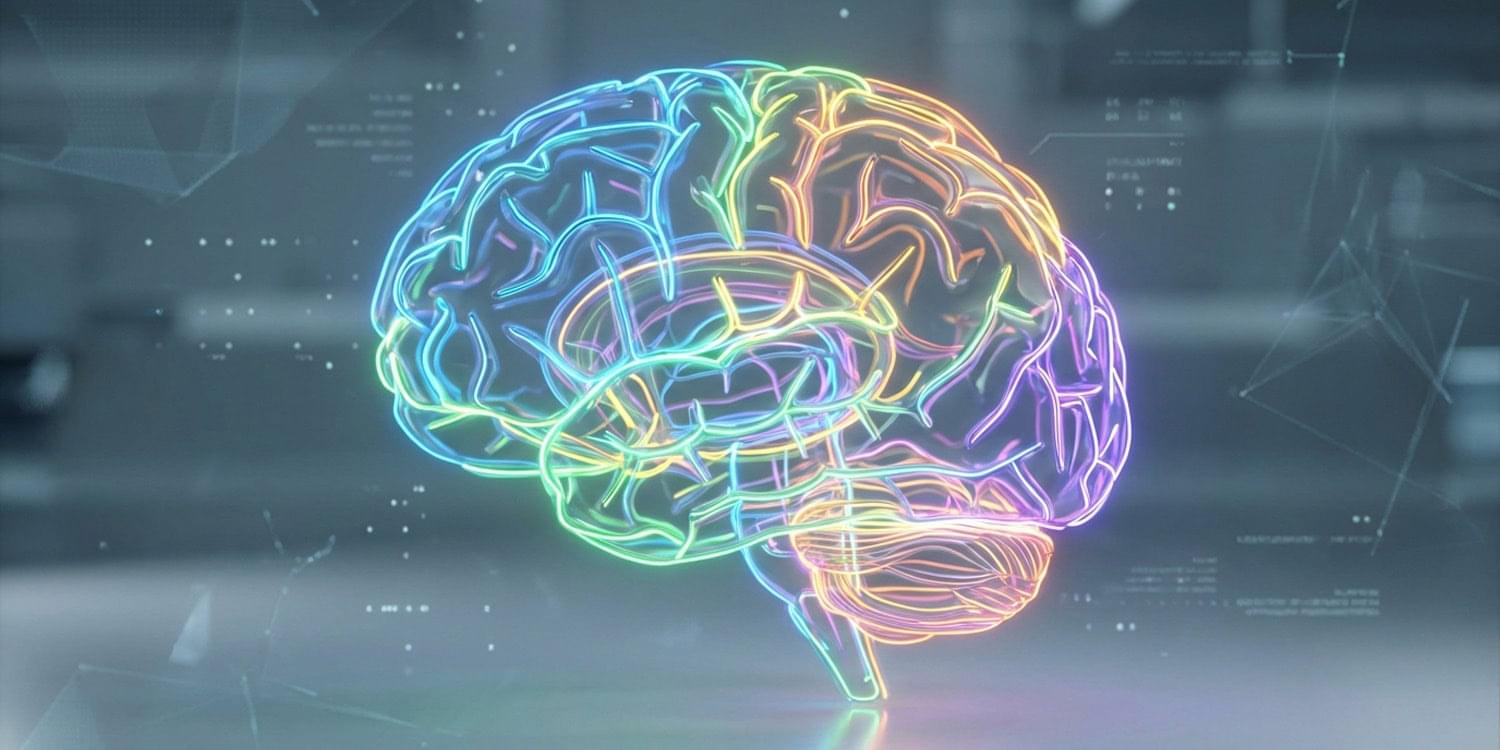

Studying 2 distinct human cohorts with recent exposure to TB

https://doi.org/10.1172/jci.insight.202134 Paul Ogongo & team find different individual Mycobacterium tuberculosis antigens induce distinct T cell responses, with important implications for TB vaccine development.


5Center for Global Health Research, Kenya Medical Research Institute, Kisumu, Kenya.

6Center for Vaccine Innovation, La Jolla Institute for Immunology, La Jolla, California, USA.

7Department of Infectious Disease and Immunology, Center for Vaccine Research, Statens Serum Institut, Copenhagen, Denmark.

/* */