Semi-transparent solar cells that could be added to windows to efficiently harvest energy from indoor light as well as the sun have been developed by an international team led by UCL researchers.
The technology, described in a paper in Advanced Energy Materials, could help turn buildings into power generators at night and on cloudy days, as well as in sunshine.
The researchers engineered solar windows that let in 30% of sunlight—ordinary glass might let in 80% or 90%—while generating a record amount of energy from indoor light and efficiently harvesting energy from sunshine.
An analysis of rare earth-rich mud retrieved from the deep seabed off a remote Pacific Island earlier this year found medium and heavy rare earth elements accounted for about 54% of the total rare earth content, Japan’s government said on Friday.
But it did not disclose the size of the content or the deposits, saying the data was insufficient due to the limited duration and geographic scope of sampling.
The Japanese scientific drilling vessel, Chikyu, completed a monthlong mission in February near Minamitorishima island, about 1,900 kilometers southeast of Tokyo, marking the world’s first successful attempt to continuously lift rare-earth-bearing seabed mud from depths of around 6 km.
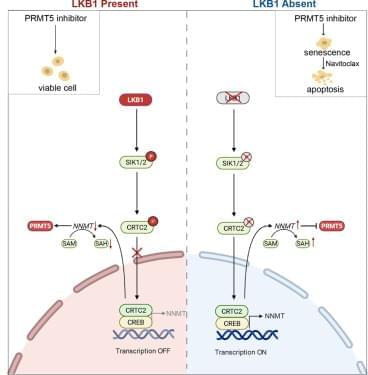
Mi et al. discover that LKB1 deficiency creates a hypomorphic PRMT5 state in lung cancer via NNMT-mediated “methyl sink.” Targeting PRMT5 triggers senescence in LKB1-deficient cancer cells and confers vulnerability to senolytics such as Navitoclax, representing an effective combination cancer therapy.
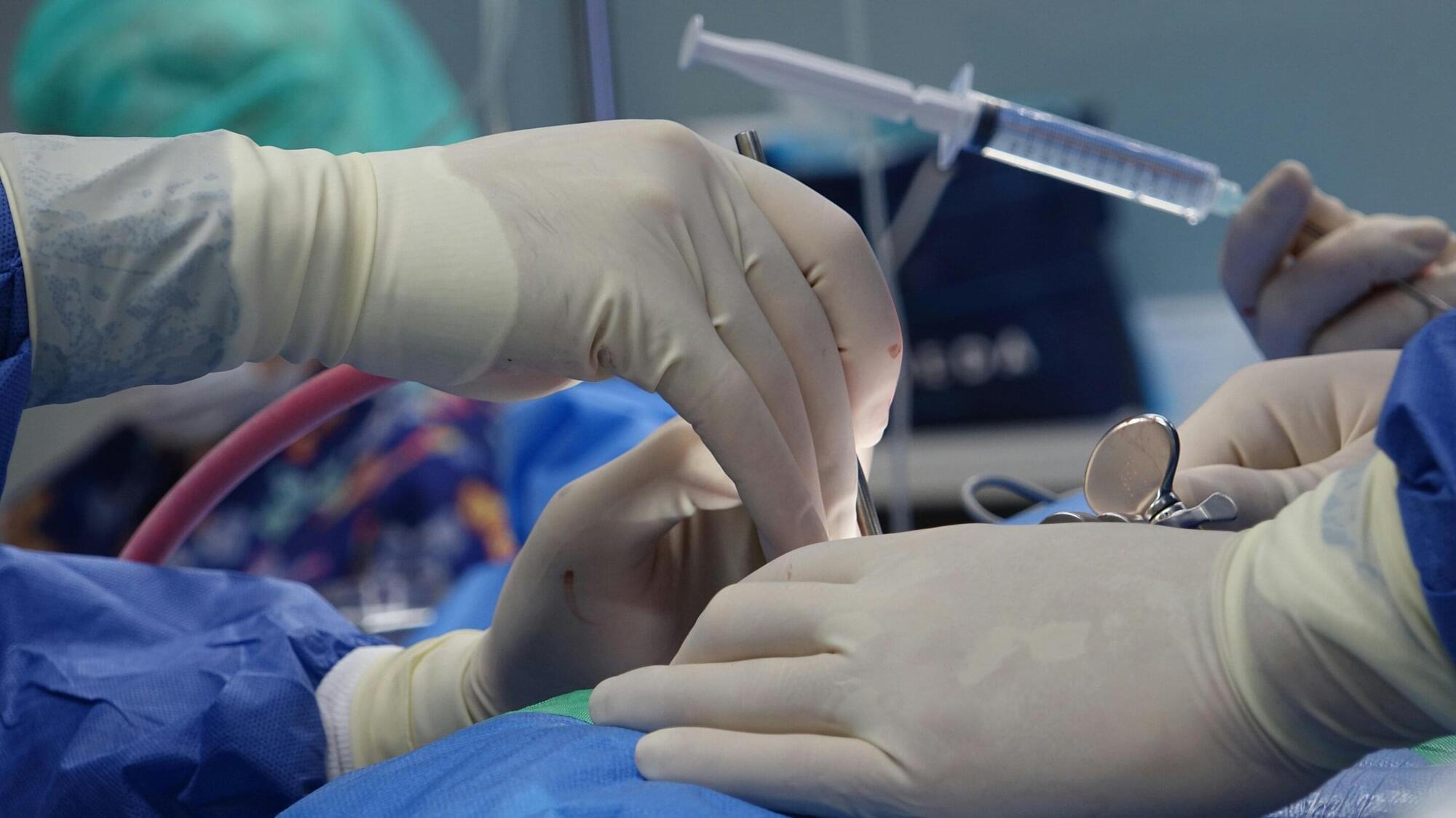
The movements of a surgeon in a procedure—called “surgical gestures”—can be used to predict patient recovery, according to Cedars-Sinai investigators. Their findings, published in npj Digital Medicine, suggest this technology could help surgeons refine their techniques and improve patient outcomes.
The investigators have developed an AI system that analyzes surgeons’ techniques during prostate cancer surgery, helping identify the surgical movements associated with the best patient outcomes while also predicting whether patients are likely to regain sexual function.
The AI system, called Frame-to-Outcome (F2O), analyzes video recorded during the nerve-sparing portion of robot-assisted prostate surgery, when surgeons work to preserve the nerves responsible for sexual function. Rather than relying on experts to manually evaluate each procedure, the system automatically identifies patterns in a surgeon’s movements—called “surgical gestures”—and uses them to predict patient recovery.
The Matrix took its name from a 1984 novel written on a manual typewriter by a man who didn’t own a computer. 42 years later, that novel finally gets its own screen.
William Gibson typed Neuromancer on a 1927 Hermes portable. He coined “cyberspace” before he’d ever logged onto anything. The book swept the Hugo, the Nebula, and the Philip K. Dick award in the same year, the only novel ever to take all three.
Then Hollywood spent four decades strip-mining it while calling it unfilmable. The Wachowskis lifted the matrix, the jacked-in hackers, the AI pulling strings behind a corporate veil. Every razor-girl assassin in sci-fi traces back to Molly. Johnny Mnemonic, an actual Gibson adaptation, flopped so hard in 1995 that studios treated his work as radioactive for a generation.
At least five directors attached and detached over the years. Chris Cunningham in 2000. Vincenzo Natali in 2010. Tim Miller at Fox in 2017. Each attempt died the same death. By the time the technology existed to film Neuromancer, audiences had watched its ideas in a dozen movies that borrowed them first.
The original became unfilmable because it looked like a copy of its own copies.
Now the timing loops back on itself. A story about a rogue AI maneuvering to escape its corporate constraints, written before the web existed, lands in January 2027 as the least speculative thing on television.
Keeping the mRNA at its normal, longer length reduced the amount of SPSB1 protein produced by the cancer cells. This allowed the MHC-1 complex to return.
Once the MHC-1 complex was restored, immune checkpoint therapy became much more effective against the prostate tumors. The researchers also performed a detailed analysis of the results and found no detectable off-target effects from the experimental CRISPR treatment.
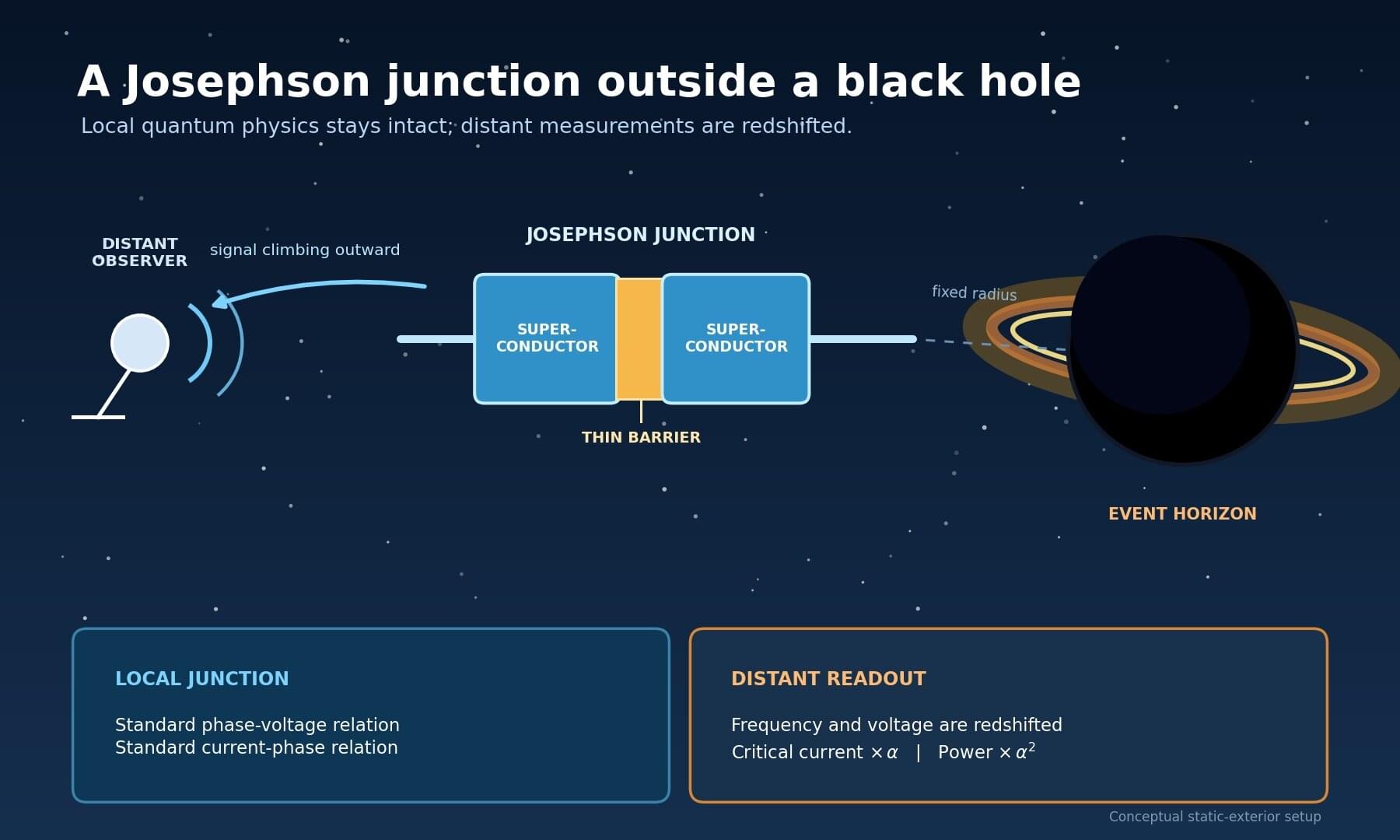
Imagine holding one of our most precise quantum devices at a fixed position outside a black hole. A Josephson junction—two superconductors separated by an ultrathin barrier—can turn a voltage into a quantum oscillation with extraordinary precision. Would intense gravity change that quantum rule, or only change how a faraway observer reads the device?
In our study published in the Journal of High Energy Physics, we found a clean answer. The local Josephson physics remains intact. Gravity instead changes the translation between measurements made beside the circuit and measurements assigned by an observer far from the black hole.
Cancer immunotherapies have transformed treatment for many cancers, but pancreatic cancer remains especially difficult to treat. One major reason is that pancreatic tumors often create a “cold” tumor microenvironment, where the tumor prevents immune cells from mounting a strong attack.
In a new study published in Science Advances, researchers at the University of Chicago report a promising new strategy to overcome this barrier using BifidoSumIL-2, an engineered bacterial strain of Bifidobacterium longum, a probiotic bacterium naturally found in the gut, to deliver an immune-stimulating therapy directly inside tumors.
The treatment suppressed pancreatic tumor growth by selectively activating cancer-fighting T cells. The effects were further enhanced when combined with chemotherapy, radiotherapy or immunotherapy. The study highlights BifidoSumIL-2 as a potentially powerful approach for improving treatment response in pancreatic cancer.
A Cleveland Clinic-led study shows a connection between elevated blood levels of TMAO (trimethylamine N-oxide) — a byproduct of gut bacteria digestion of nutrients found in red meat and other animal products — and a higher risk of atrial fibrillation.
The research team, led by Robert Koeth, M.D., Ph.D., analyzed blood samples from more than 5,000 people undergoing heart procedures. The researchers also conducted laboratory studies in cells to better understand how TMAO may influence the heart. They discovered that gut microbe-produced TMAO changes the heart’s electrical environment, increasing susceptibility to abnormal rhythms. Findings were published today in the Journal of Clinical Investigation.
Atrial fibrillation is the most common type of rhythm disorder that begins in your heart’s upper chambers, with at least 2.7 million Americans living with it. Symptoms include fatigue, heart palpitations, trouble breathing and dizziness. Risk factors include high blood pressure, coronary artery disease and having obesity. Medications and procedures such as an ablation, where scar tissue is created to help the electrical system work better, can lower your risk of a stroke.