Toggle light / dark theme

Get the latest international news and world events from around the world.

Log in for authorized contributors

Plasma rings around M dwarf stars offer new clues to planetary habitability

How does a star affect the makeup of its planets? And what does this mean for the habitability of distant worlds? Carnegie’s Luke Bouma is exploring a new way to probe this critical question—using naturally occurring space weather stations that orbit at least 10% of M dwarf stars during their early lives. He is presenting his work at the 247th American Astronomical Society meeting.

The paper is also published in The Astrophysical Journal Letters.

We know that most M dwarf stars—which are smaller, cooler, and dimmer than our own sun—host at least one Earth-sized rocky planet. Most of them are inhospitable—too hot for liquid water or atmospheres, or hit with frequent stellar flares and intense radiation. But they could still prove to be interesting laboratories for understanding the many ways that stars shape the surroundings in which their planets exist.

THz spectroscopy system bypasses long-standing tradeoff between spectral and spatial resolution

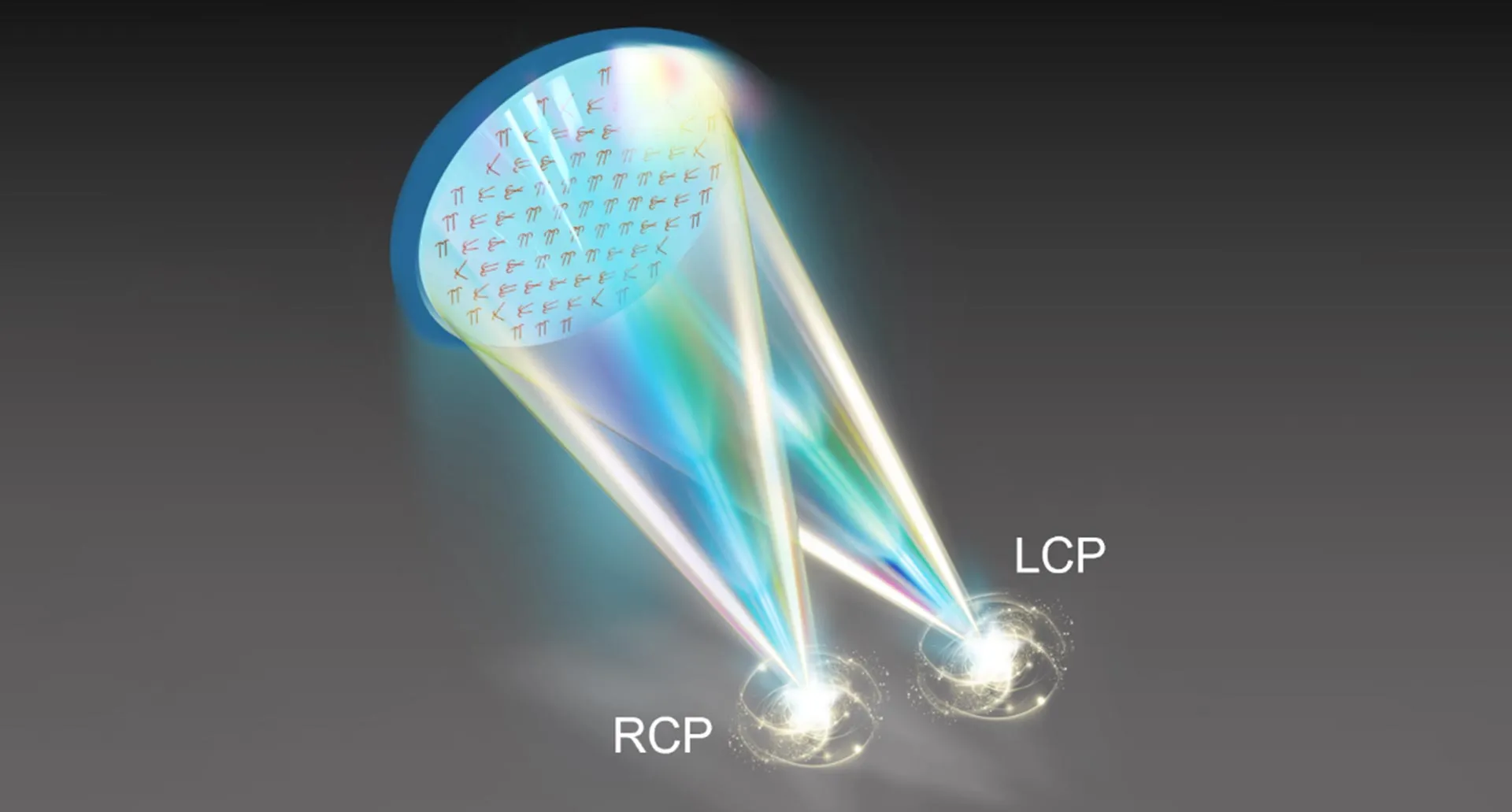
Terahertz (THz) radiation, which occupies the frequency band between microwaves and infrared light, is essential in many next-generation applications, including high-speed wireless communications, chemical sensing, and advanced material analysis.

To harness THz waves, scientists rely on functional devices like metasurfaces and resonant gratings, which exhibit sharp and effective resonance features. Characterizing and optimizing these high-performance devices, however, remains a technical challenge.

The difficulty stems from a fundamental tradeoff when performing THz measurements: achieving high spectral resolution versus high spatial resolution. To accurately capture the narrow spectral fingerprints of certain gases and the features of devices with a high quality factor (Q), researchers need very high spectral resolution.

Language shapes visual processing in both human brains and AI models, study finds

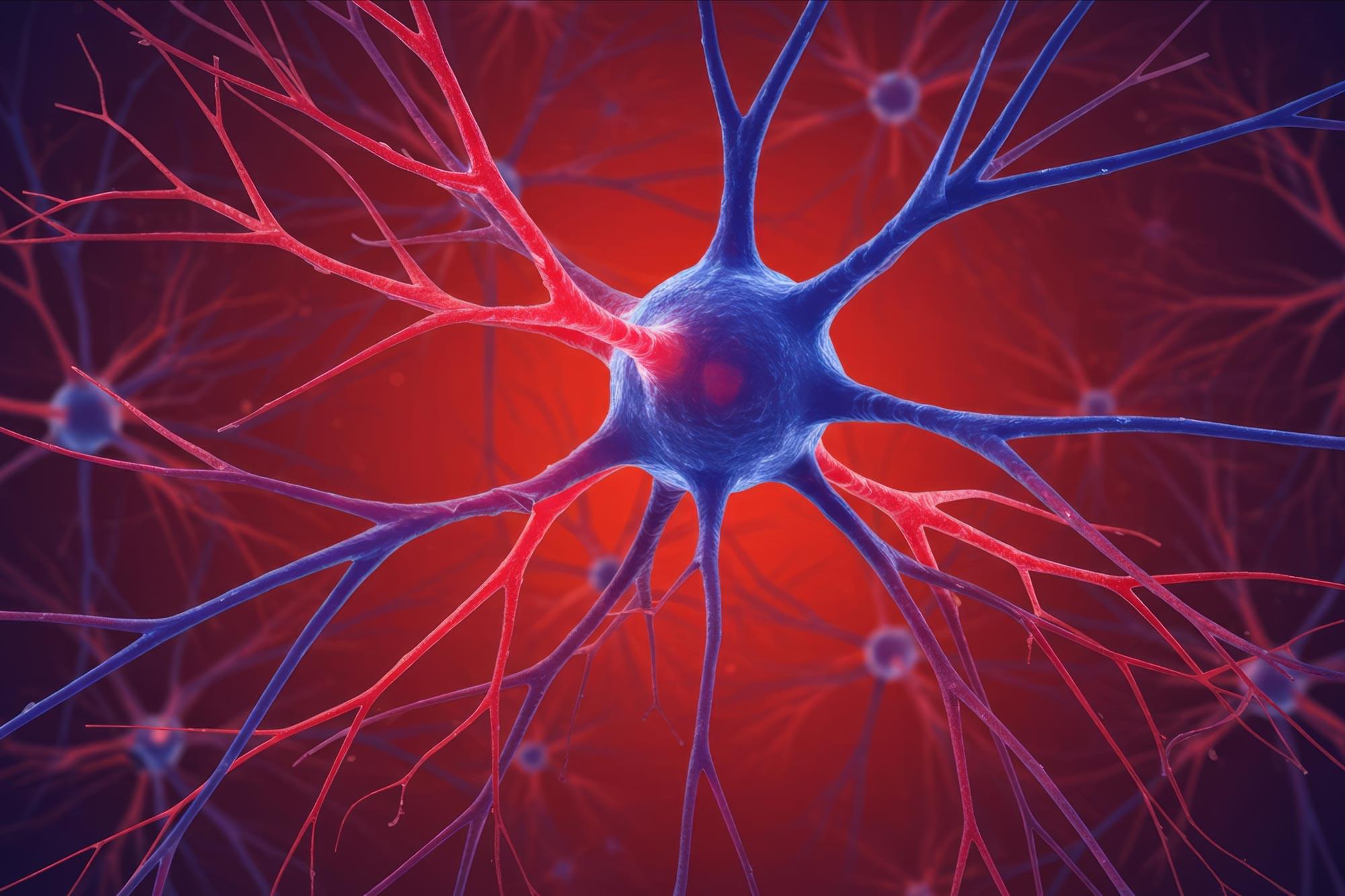
Neuroscientists have been trying to understand how the brain processes visual information for over a century. The development of computational models inspired by the brain’s layered organization, also known as deep neural networks (DNNs), have recently opened new exciting possibilities for research in this area.

By comparing how DNNs and the human brain process information, researchers at Peking University, Beijing Normal University and other institutes in China have shed new light on the underpinnings of visual processing. Their paper, published in Nature Human Behavior, suggests that language actively shapes how both the brain and multi-modal DNNs process visual information.

Synchronizing ultrashort X-ray pulses for attosecond precision

Scientists at the Paul Scherrer Institute PSI have, for the first time, demonstrated a technique that synchronizes ultrashort X-ray pulses at the X-ray free-electron laser SwissFEL. This achievement opens new possibilities for observing ultrafast atomic and molecular processes with attosecond precision.

Scrutinizing fast atomic and molecular processes in action requires bright and short X-ray pulses—a task in which free-electron lasers such as SwissFEL excel. However, within these X-ray pulses the light is internally disordered: its temporal structure is randomly distributed and varies from shot to shot. This limits the accuracy of certain experiments.

To tame this inherent randomness, a team of PSI researchers has succeeded in implementing a technique known as mode-locking to generate trains of pulses that are coherent in time. “We can now obtain fully ordered pulses in time and frequency in a very controlled manner,” says accelerator physicist Eduard Prat, who led the study, published in Physical Review Letters.

Going further with fusion, together

At 4 a.m., while most of New Jersey slept, a Princeton Plasma Physics Laboratory (PPPL) physicist sat at his computer connected to a control room 3,500 miles away in Oxford, England. Years of experience running fusion experiments in the U.S. helped guide the U.K. team through delicate adjustments as they worked together to coax particles of plasma—the fourth state of matter—to temperatures that match those found at the heart of the sun.

This late-night, intercontinental collaboration happened many times from 2019 to 2024 during critical experiments at Tokamak Energy’s ST40 facility. It’s just one example of how PPPL is meeting the moment, leading collaborative efforts with private companies and other public institutions to make fusion power practical.

Fusion, the process of combining atoms to release energy, could be the source of a nearly inexhaustible supply of electricity. But there are still challenging scientific and engineering issues to overcome in the quest for power. That’s why scientists are increasingly working together to take fusion further.

3D-Printed “Light Cages” Could Solve One of Quantum Networking’s Biggest Problems

A new chip-based quantum memory uses 3D-printed “light cages” to store light in atomic vapor with high precision. Quantum information storage plays a central role in the development of the quantum internet and future quantum computers. Today’s quantum communication systems are limited by signal l

Hubble’s Newest Discovery Isn’t a Star, It’s a Window Into the Dark Universe

Scientists have identified a strange cosmic relic called Cloud-9 — a starless, gas-filled object dominated by dark matter.

Detected with Hubble, it appears to be a failed galaxy that never formed stars, preserving a snapshot of the early Universe.

A starless relic revealed by hubble.

/* */