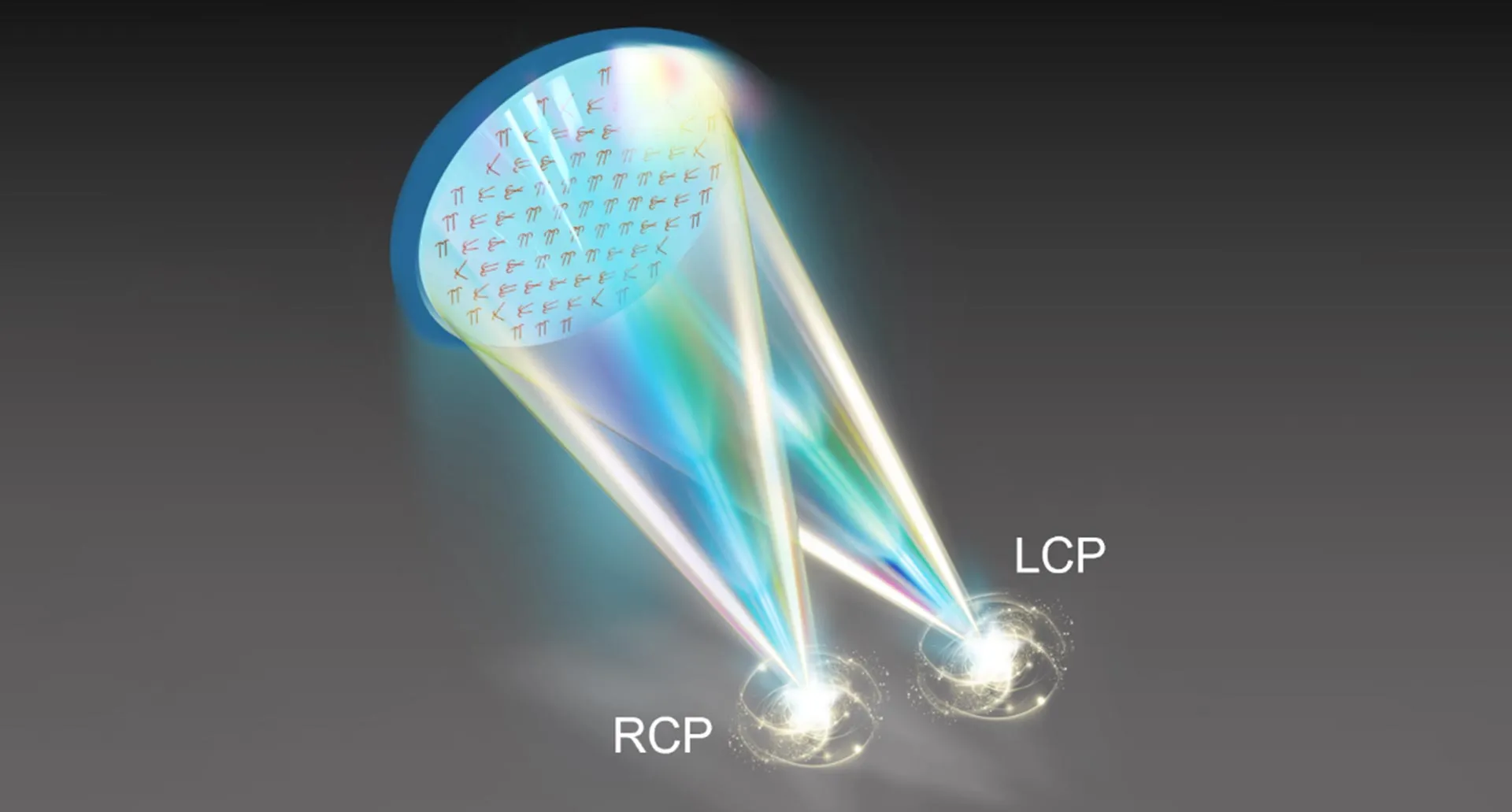
The team then fine-tuned the resonant strength of the meta-atoms to independently adjust the group delay for each spin. At the same time, frequency tuning and local structural rotation were used to set the phase while keeping unwanted crosstalk low. The PB phase, added through global rotation, extends the available phase range toward a full 2π without significantly altering the group delay design. Together, these elements create a practical single-layer design strategy for dual-spin achromatic control.
Experimental Proof Across Multiple Frequency Bands
The researchers demonstrated their approach experimentally using two types of devices operating in the 8–12 GHz range. One class consisted of spin-unlocked achromatic beam deflectors that maintained stable, spin-dependent steering across the band. The other involved achromatic metalenses that assigned different focusing functions to RCP and LCP light while preserving strong performance over a broad frequency range.