Toggle light / dark theme

Get the latest international news and world events from around the world.

Log in for authorized contributors

Cardiovascular risk score identifies risk for ocular disease

The Pooled Cohort Equations (PCE) cardiovascular risk score stratifies risk for multiple ocular diseases, according to a study published online in Ophthalmology.

Deyu Sun, Ph.D., from the David Geffen School of Medicine at the University of California Los Angeles, and colleagues conducted a historical prospective cohort study using electronic health record data from the “All of Us” Research Program to examine whether the PCE cardiovascular risk score is associated with future age-related macular degeneration (AMD), glaucoma, diabetic retinopathy (DR), retinal vein occlusion (RVO), and hypertensive retinopathy (HTR).

A total of 35,909 adults aged 40 to 79 years with complete variables for PCE calculation within a six-month period were included in the study. Individual-level PCE score was classified into four risk categories.
Potential biomarker linked to multiple sclerosis progression and brain inflammation

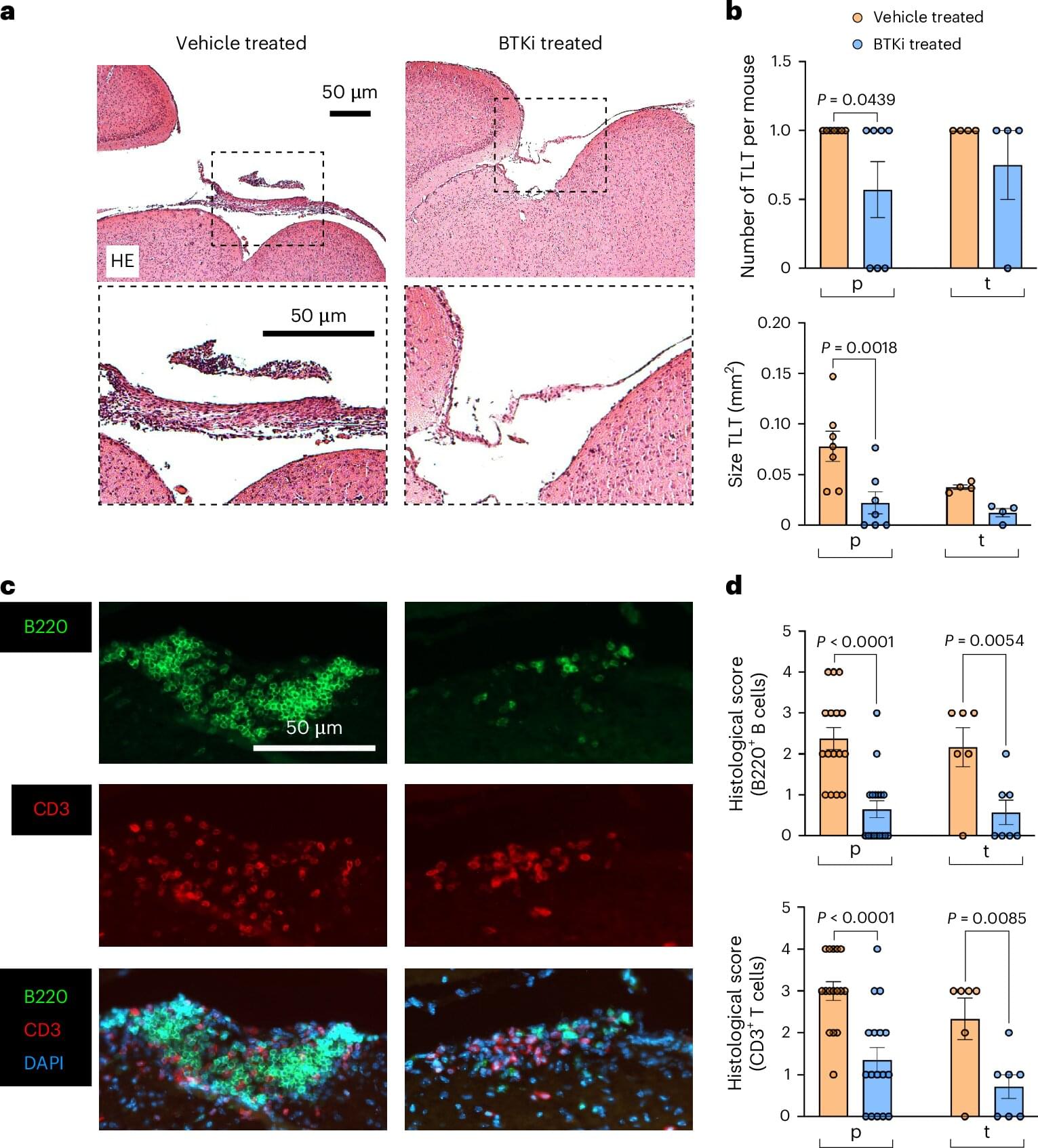
A new University of Toronto-led study has discovered a possible biomarker linked to multiple sclerosis (MS) disease progression that could help identify patients most likely to benefit from new drugs.

The findings were published today in Nature Immunology and validated in both mouse models and humans.

“We think we have uncovered a potential biomarker that signals a patient is experiencing so-called ‘compartmentalized inflammation’ in the central nervous system, a phenomenon which is strongly linked to MS progression,” says Jen Gommerman, a professor and chair of immunology at U of T’s Temerty Faculty of Medicine. “It’s been really hard to know who is progressing and who isn’t.”

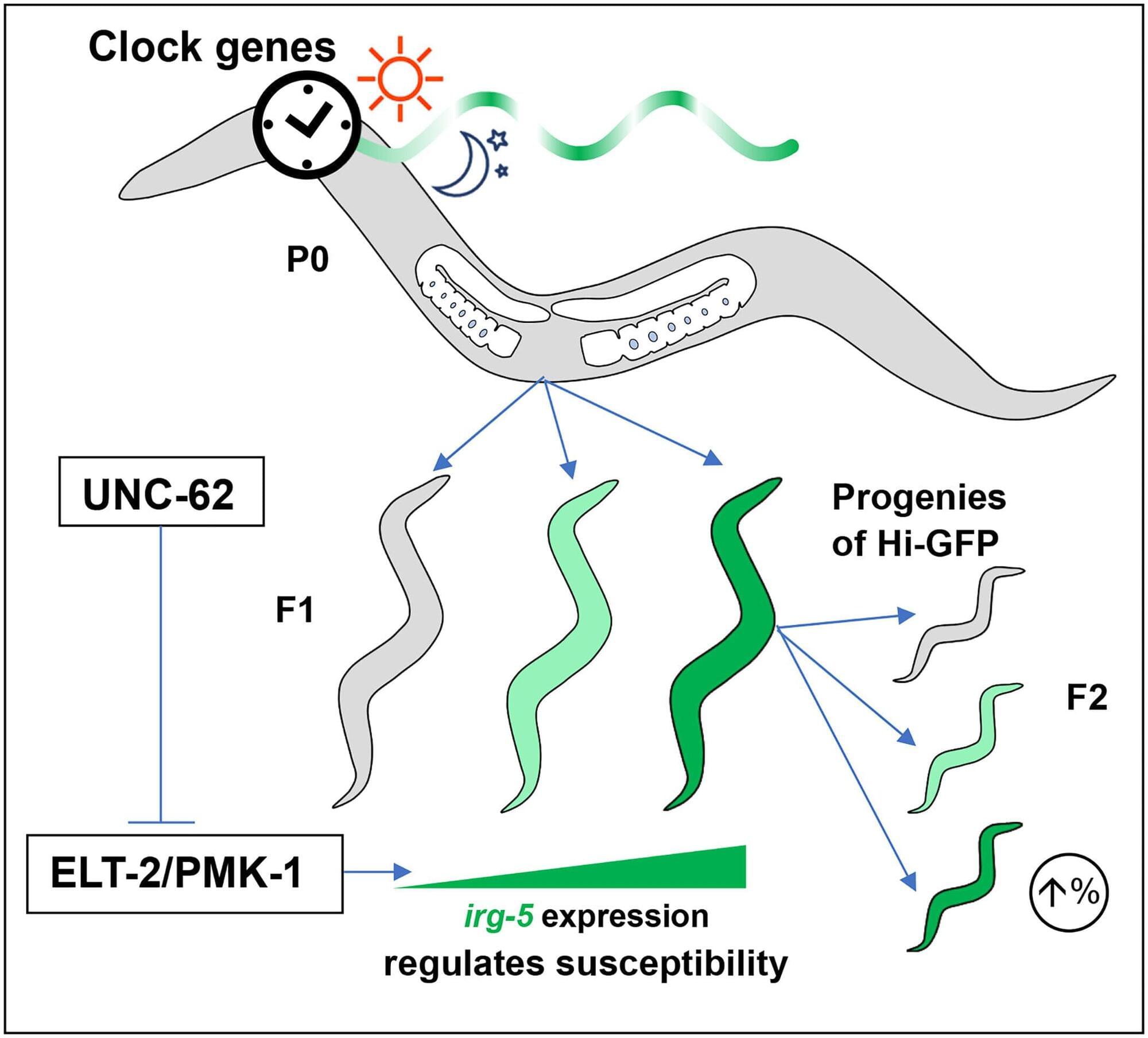
A mother’s circadian rhythm may predict her child’s vulnerability to bacterial infection

In laboratory models, researchers at The University of Texas MD Anderson Cancer Center discovered that a mother’s circadian rhythms, or internal body clock, can influence the immune system states of her offspring, which can accurately predict the risk of bacterial infection.

These findings offer novel insights into non-genetic factors shaping immune defenses and provide a framework to study circadian rhythms as a possible reason why some patients might be more vulnerable to getting infections during disease treatment. The study, published in Science Advances, was led by Alejandro Aballay, Ph.D., professor of Genetics and dean of the UTHealth Houston Graduate School of Biomedical Sciences.

“These findings reveal a circadian mechanism that can create significant differences in infection outcomes even when genetics and environment are similar,” Aballay said. “This circadian control may help explain why patients with comparable risk profiles often experience very different responses to infection.”

Astronomers measure both mass and distance of a rogue planet for the first time

While most planets that we are familiar with stick relatively close to their host star in a predictable orbit, some planets seem to have been knocked out of their orbits, floating through space free of any particular gravitational attachments. Astronomers refer to these lonely planets as “free-floating” or “rogue” planets.

Recently, a new rogue planet was identified, and, unlike previously identified rogue planets, astronomers were able to calculate both its mass and distance from Earth. A new study, published in Science, describes how a few lucky observations from both ground-based and space-based telescopes made these calculations possible.

The Next Great Transformation: How AI Will Reshape Industries—and Itself

#artificialintelligence #ai #technology #futuretech


This change will revolutionize leadership, governance, and workforce development. Successful firms will invest in technology and human capital by reskilling personnel, redefining roles, and fostering a culture of human-machine collaboration.

The Imperative of Strategy Artificial intelligence is not preordained; it is a tool shaped by human choices. How we execute, regulate, and protect AI will determine its impact on industries, economies, and society. I emphasized in Inside Cyber that technology convergence—particularly the amalgamation of AI with 5G, IoT, distributed architectures, and ultimately quantum computing—will augment both potential and hazards.

The issue at hand is not if AI will transform industries—it has already done so. The essential question is whether we can guide this change to enhance security, resilience, and human well-being. Individuals who interact with AI strategically, ethically, and with a long-term perspective will gain a competitive advantage and foster the advancement of a more innovative and secure future.

Artificial neurons mimic complex brain abilities for next-generation

Researchers have created atomically thin artificial neurons capable of processing both light and electric signals for computing. The material enables the simultaneous existence of separate feedforward and feedback paths within a neural network, boosting the ability to solve complex problems.

For decades, scientists have been investigating how to recreate the versatile computational capabilities of biological neurons to develop faster and more energy-efficient machine learning systems. One promising approach involves the use of memristors: electronic components capable of storing a value by modifying their conductance and then utilising that value for in-memory processing.

However, a key challenge to replicating the complex processes of biological neurons and brains using memristors has been the difficulty in integrating both feedforward and feedback neuronal signals. These mechanisms underpin our cognitive ability to learn complex tasks, using rewards and errors.

/* */