Toggle light / dark theme

Get the latest international news and world events from around the world.

Log in for authorized contributors

Quantis QRNG Chips

Quantum smartphone chip.


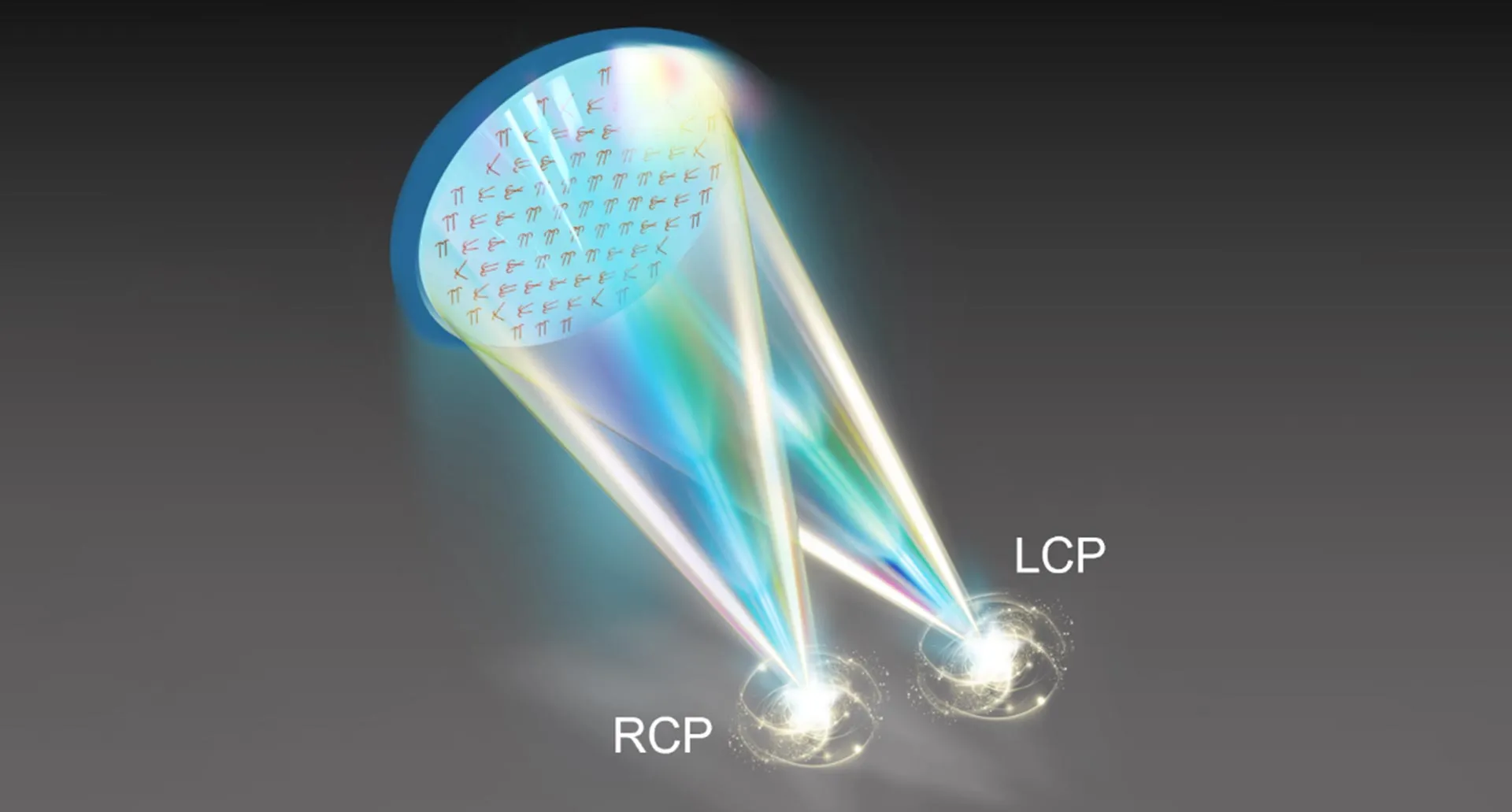
IDQ’s QRNG chip is available in six models, depending on size, performance, power consumption and certifications, in order to fit various industry-specific needs. All IDQ QRNG chips have received NIST Entropy Source Validation (ESV) certification on the independently and identically distributed (IID) entropy estimation track SP 800-90B.

ID Quantique is the first company to achieve an ESV certificate with a quantum entropy source and IID estimation track. Such randomness provides the most trusted random keys for encryption. Since October 2022 it has been mandatory for cryptographic modules aiming for FIPS 140–3 certification to have an ESV validated entropy source. This ESV IID Certificate #63 will also facilitate IDQ’s customers who integrate IDQ’s Chips into their own devices to go through the NIST’s Cryptographic Module Validation Program (CMVP).

Introduction: John Martinis

New cadets. New era. Infinite possibilities. Catch a new episode of Star Trek: Starfleet Academy every Thursday starting Jan. 15th on Paramount+.

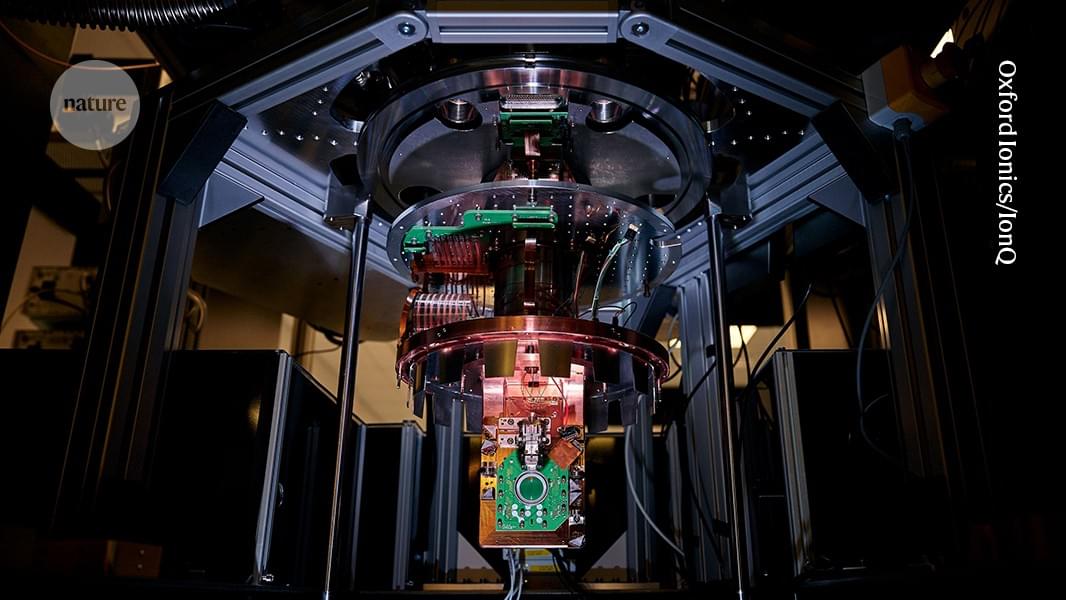
Can quantum tunneling occur at macroscopic scales? Neil deGrasse Tyson and comedian Chuck Nice sit down with John Martinis, UCSB physicist and 2025 Nobel Prize winner in Physics, to explore superconductivity, quantum tunneling, and what this means for the future of quantum computing.

What exactly is macroscopic quantum tunneling, and why did it take decades for its importance to be recognized? We’ve had electrical circuits forever, so what did Martinis discover that no one else saw? If quantum mechanics usually governs tiny particles, why does a superconducting circuit obey the same rules? And what does superconductivity really mean at a quantum level?

How can a system cross an energy barrier it doesn’t have the energy to overcome? What is actually tunneling in a superconducting wire, and what does it mean to tunnel out of superconductivity? We break down Josephson Junctions, Cooper pairs, and other superconducting lingo. Does tunneling happen instantly, or does it take time? And what does that say about wavefunction collapse and our assumptions about instantaneous quantum effects?

Learn what a qubit is and why macroscopic quantum effects are important for quantum computing. Why don’t quantum computers instantly break all encryption? How close are we to that reality, and what replaces today’s cryptography when it happens? Is quantum supremacy a scientific milestone, a geopolitical signal, or both? Plus, we take cosmic queries from our audience: should quantum computing be regulated like nuclear energy? Will qubits ever be stable enough for everyday use? Will quantum computers live in your pocket or on the dark side of the Moon? Can quantum computing supercharge AI, accelerate discovery, or even simulate reality itself? And finally: if we live in a simulation, would it have to be quantum all the way down?

Thanks to our Patrons Fran Rew, Shawn Martin, Kyland Holmes, Samantha McCarroll-Hyne, camille wilson, Bryan, Sammi, Denis Alberti, Csharp111, stephanie woods, Mark Claassen, Joan Tarshis, Abby Powell, Zachary Koelling, JWC, Reese, Fran Ochoa, Bert Berrevoets, Barely A Float Farm, Vasant Shankarling, Michael Rodriguez, DiDTim, Ian Cochrane, Brendan, William Heissenberg Ⅲ, Carl Poole, Ryan McGee, Sean Fullard, Our Story Series, dennis van halderen, Ann Svenson, mi ti, Lawrence Cottone, 123, Patrick Avelino, Daniel Arvay, Bert ten Kate, Kristian Rahbek, Robert Wade, Raul Contreras, Thomas Pring, John, S S, SKiTz0721, Joey, Merhawi Gherezghier, Curtis Lee Zeitelhack, Linda Morris, Samantha Conte, Troy Nethery, Russ Hill, Kathy Woida, Milimber, Nathan Craver, Taylor Anderson, Deland Steedman, Emily Lennox, Daniel Lopez,., DanPeth, Gary, Tony Springer, Kathryn Rhind, jMartin, Isabella Troy Brazoban, Kevin Hobstetter, Linda Pepper, 1701cara, Isaac H, Jonathan Morton, JP, טל אחיטוב Tal Achituv, J. Andrew Medina, Erin Wasser, Evelina Airapetova, Salim Taleb, Logan Sinnett, Catherine Omeara, Andrew Shaw, Lee Senseman, Peter Mattingly, Nick Nordberg, Sam Giffin, LOWERCASEGUY, JoricGaming, Jeffrey Botkin, Ronald Hutchison, and suzie2shoez for supporting us this week.

Substituting stereotactic body radiation therapy boost for brachytherapy in Mayo protocol for peri-hilar cholangiocarcinoma

Blood vessels are less like straight pipes and more like a crowded city road map, with turns, forks, and sudden choke points that can change how traffic moves. For a long time, many lab built vessel models skipped that complexity and relied on simple, straight channels, even though real vessels rarely behave that neatly.

Researchers in the Department of Biomedical Engineering at Texas A&M University are trying to close that gap with a customizable vessel-chip method. The goal is to recreate the kinds of shapes that matter in disease, so experiments on blood flow and potential treatments reflect what happens in the body more closely and can better support drug discovery.

Vessel-chips are engineered microfluidic devices that mimic human vasculature on a microscopic scale. Instead of studying blood flow in animals or oversimplified lab setups, scientists can use these chips to examine how fluid forces move through vessel-like structures in a controlled environment. Because the design can be tailored, the platform can also support patient-focused studies, which is especially useful when small differences in anatomy may affect how disease develops or how a therapy performs.

Affinity-guided labeling reveals P2X7 nanoscale membrane redistribution during BV2 microglial activation

A new chemical labelling tool lets researchers watch the inflammatory receptor P2X7 reorganise and cluster on immune cells at the nanoscale, revealing how inflammatory signals reshape receptor behaviour in real time.


An affinity-guided chemical strategy enabling highly specific biotinylation of P2X7 receptors reveals, by super-resolution microscopy, how the nanoscale organization of endogenous P2X7 in BV2 microglial cells dynamically changes upon activation.

How the Incas Performed Skull Surgery More Successfully Than U.S. Civil War Doctors

Granted access to a time machine, few of us would presumably opt first for the experience of skull surgery by the Incas. Yet our chances of survival would be better than if we underwent the same procedure 400 years later, at least if it took place on a Civil War battlefield.

/* */