Toggle light / dark theme

Get the latest international news and world events from around the world.

Log in for authorized contributors

New AI-based technology offers real-time electric vehicle state estimation for safer driving

A research team led by Professor Kanghyun Nam from the Department of Robotics and Mechanical Engineering at DGIST has developed a physical AI-based vehicle state estimation technology that accurately estimates the driving state of electric vehicles in real time.

This technology is viewed as a key advancement that can improve the core control performance of electric vehicles and greatly enhance the safety of autonomous vehicles. The work was conducted through international joint research with Shanghai Jiao Tong University in China and the University of Tokyo in Japan.

The work is published in the journal IEEE Transactions on Industrial Electronics.

New ultrathin ferroelectric capacitors show promise for compact memory devices

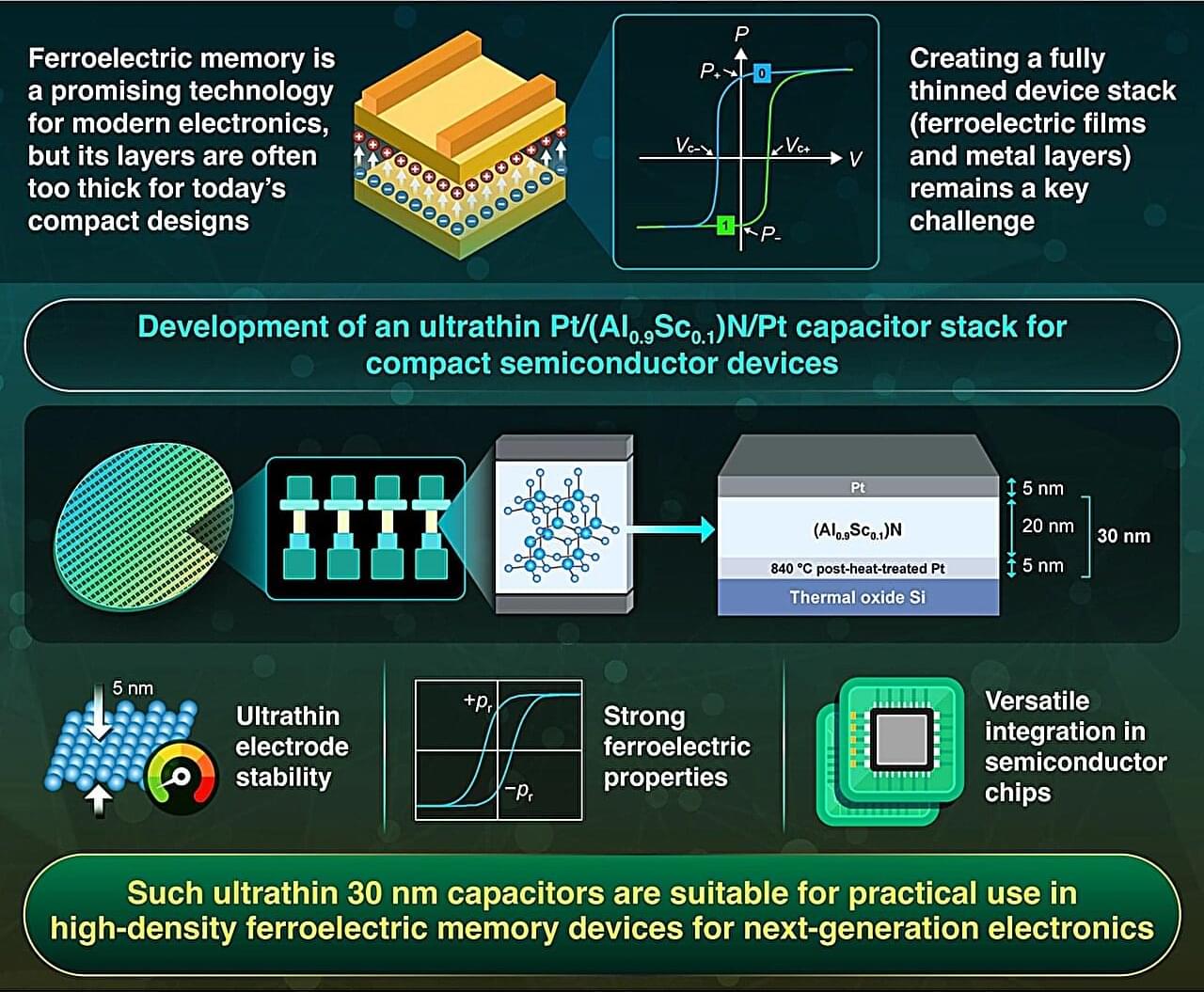
An ultrathin ferroelectric capacitor, designed by researchers from Japan, demonstrates strong electric polarization despite being just 30 nm thick including top and bottom electrodes—making it suitable for high-density electronics. Using a scandium-doped aluminum nitride film as the ferroelectric layer, the team achieved high remanent polarization even at reduced thicknesses. This breakthrough demonstrates good compatibility with semiconductor devices combining logic circuits and memory, paving the way for compact and efficient on-chip memory for future technologies.

Modern electronic technology is rapidly advancing towards miniaturization, creating devices that are increasingly compact yet high-performing. As the devices continue to shrink in size, there is an increasing demand for ultra-small memory materials that can efficiently store data, even in smaller dimensions. Ferroelectric memory devices are promising options for future mobile and compact electronics, as they store information using switchable electric polarization, allowing data retention even without power. However, very few initiatives have reported progress in downscaling of these ferroelectric devices.

Bridging this gap, a research team led by Professor Hiroshi Funakubo from the School of Materials and Chemical Technology, Institute of Science Tokyo (Science Tokyo), Japan, in collaboration with Canon ANELVA Corporation (Canon ANELVA), successfully downscaled a total ferroelectric memory capacitor stack using scandium-substituted aluminum nitride ((Al, Sc)N) thin films with platinum electrodes, reducing the total thickness to just 30 nm including top and bottom electrodes.

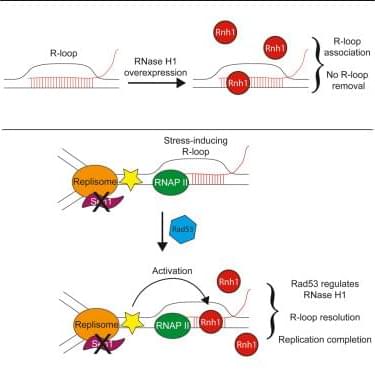
Rad53 regulates RNase H1, which promotes DNA replication through sites of transcription-replication conflict

Wagner et al. demonstrate that RNase H1 only removes a subset of R-loops in vivo. In yeast, overexpressed RNH1 acts more frequently at dysregulated R-loops and infrequently, if at all, at other RNA-DNA hybrids. Endogenous Rnh1 is induced in a Rad53-dependent manner at transcription-replication conflicts to promote replication completion.

Physicists repair flaw of established quantum resource theorem

Quantum information theory is a field of study that examines how quantum technologies store and process information. Over the past decades, researchers have introduced several new quantum information frameworks and theories that are informing the development of quantum computers and other devices that operate leveraging quantum mechanical effects.

These include so-called resource theories, which outline the transformations that can take place in quantum systems when only a limited number of operations are allowed.

In 2008, two scientists at Imperial College London introduced what they termed the generalized quantum Stein’s lemma, a mathematical theorem that describes how well quantum states can be distinguished from one another. In this generalized setting, one typically considers multiple identical copies of a specific state (the null hypothesis) and tests them against a composite alternative hypothesis, i.e., a set of states (e.g., resource-free states).

Mathematicians crack cellular noise puzzle, paving path for better cancer treatment

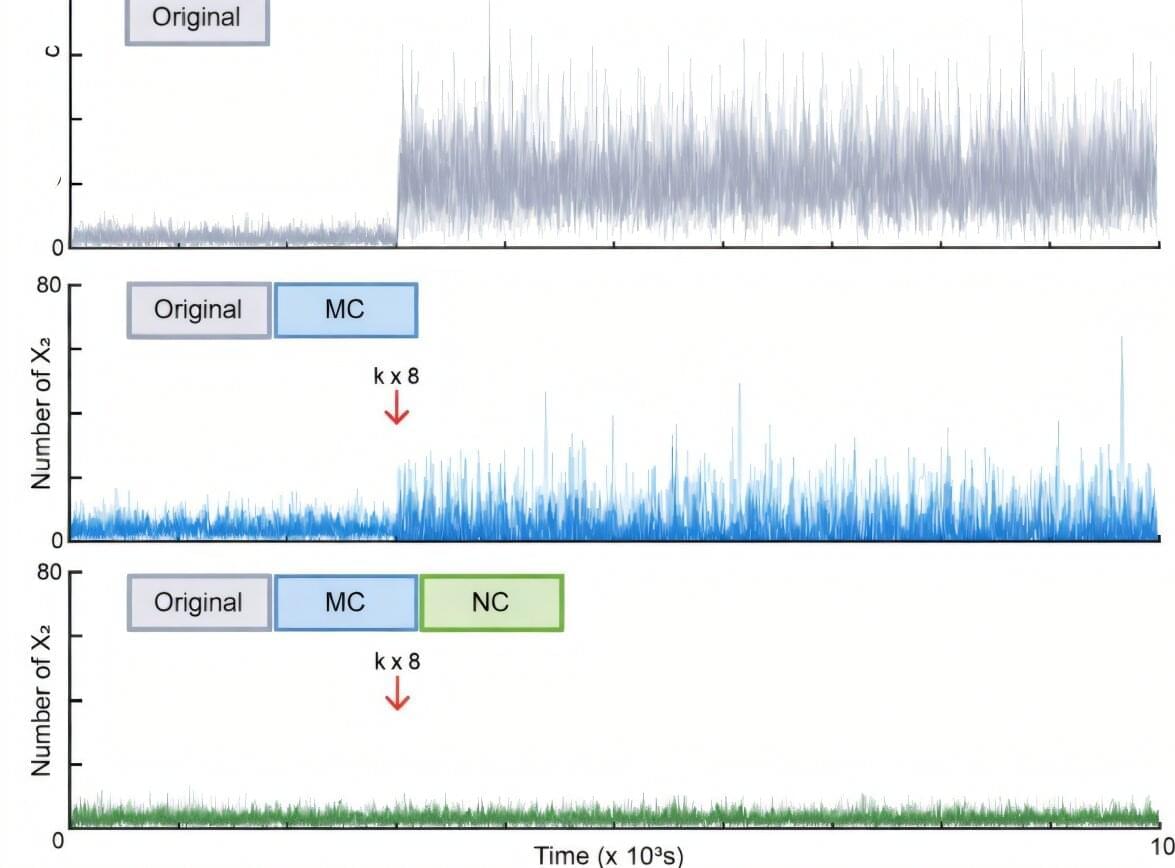
Why does cancer sometimes recur even after successful treatment, or why do some bacteria survive despite the use of powerful antibiotics? One of the key culprits identified is “biological noise”—random fluctuations occurring inside cells.

Even when cells share the same genes, the amount of protein varies in each, creating “outliers” that evade drug treatments and survive. Until now, scientists could only control the average values of cell populations; controlling the irregular variability of individual cells remained a long-standing challenge.

A joint research team—led by Professor Jae Kyoung Kim (Department of Mathematical Sciences, KAIST), Professor Jinsu Kim (Department of Mathematics, POSTECH), and Professor Byung-Kwan Cho (Graduate School of Engineering Biology, KAIST)—has theoretically established a “noise control principle.” Through mathematical modeling, they have found a way to eliminate biological noise and precisely govern cellular destiny.

Low-cost gelators nearly double the performance of aircraft anti-icing fluids, finds new study

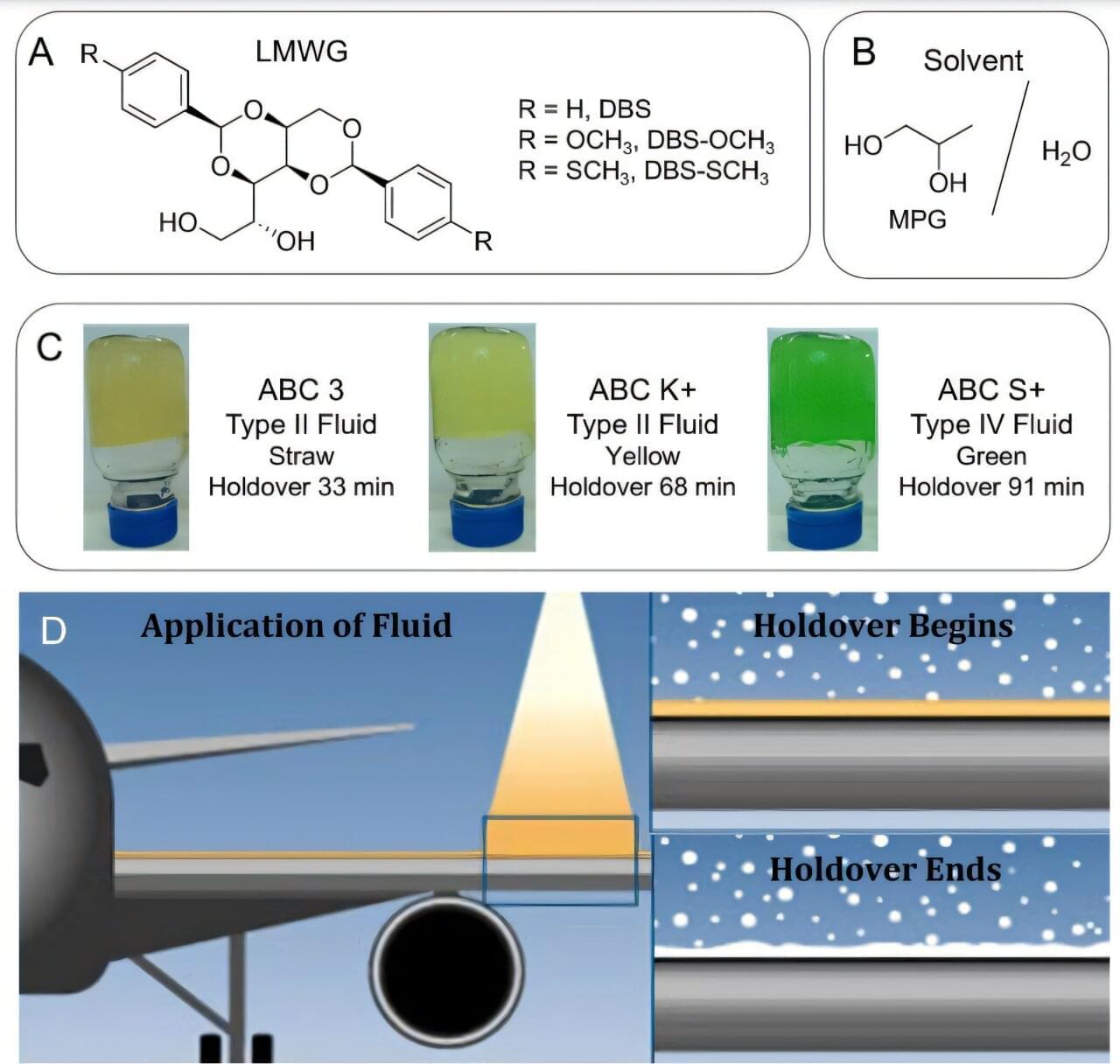
Tiny molecules already used to thicken everyday products like lotions and adhesives may soon help keep aircraft safe in icy conditions. These molecules, known as low-molecular-weight gelators (LMWGs), can self-assemble into soft, gel-like structures and have long been used in industrial formulations.

In a study published in Langmuir, researchers report that adding just small amounts of these molecules can significantly improve the performance of aircraft anti-icing fluids.

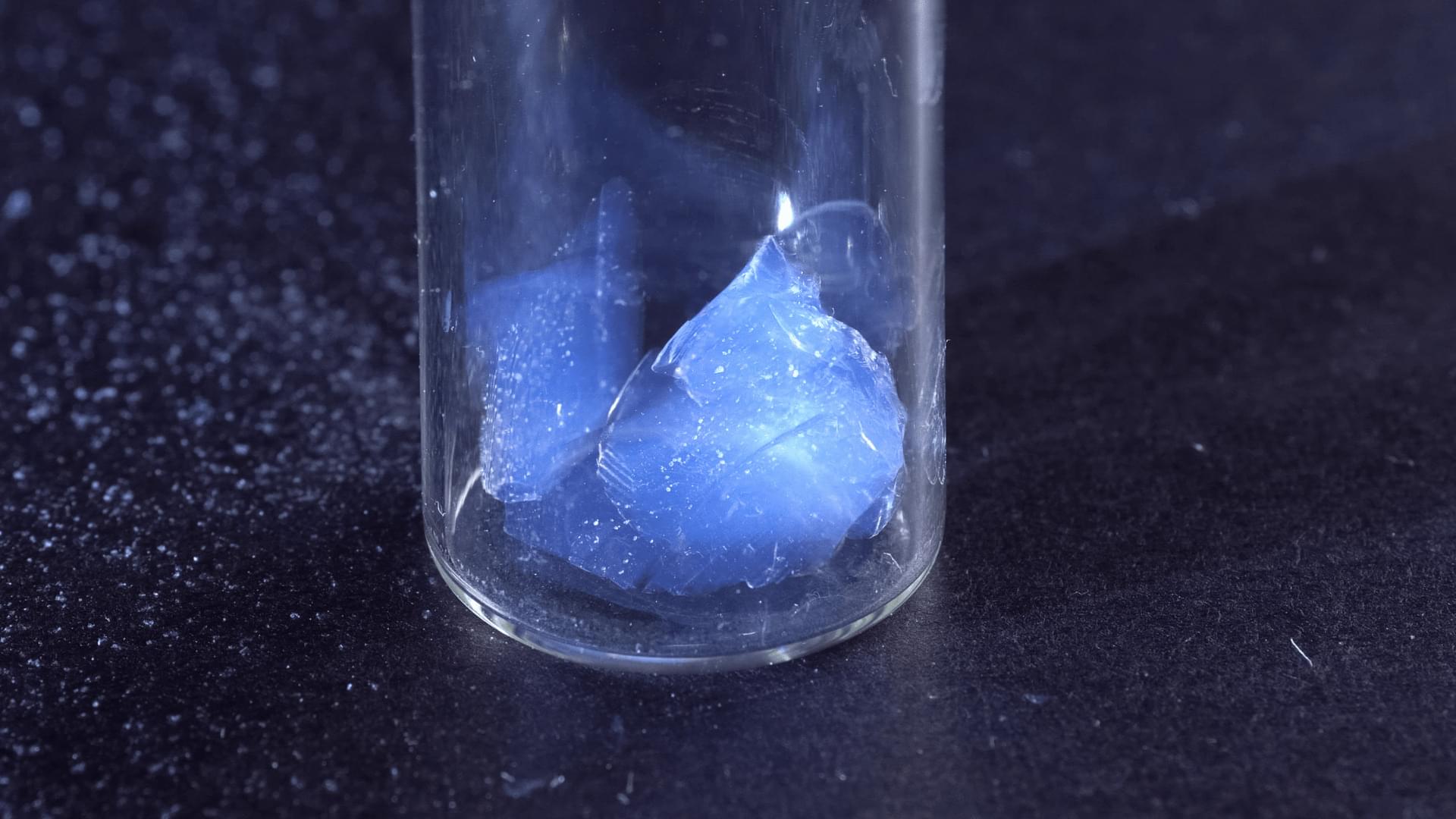
The team modified commercial deicing and anti-icing fluids—which already contain polymers for protective coating—by incorporating LMWG molecules to produce a hybrid gel formulation. They tested three variants of a gelator, known as DBS (1,3:2,4-dibenzylidenesorbitol), at varying levels of aviation-grade agents used to remove existing ice and prevent new ice formation on aircraft surfaces during ground operations.

/* */