Biofilms are biological materials that form as bacteria protect themselves from environmental challenges secreting extracellular matrix and accumulating minerals under specific conditions. To understand biofilm formation and mineralization, we grew Escherichia coli on agar plates containing a nutritive and mineralizing medium. Previous studies showed that the alkaline phosphatase (ALP) present in E. coli biofilms leads to hydroxyapatite precipitation in such conditions. Here, we introduced X-ray fluorescence techniques as powerful tools to analyze the composition of mineralized biofilms in two and three dimensions. In addition to calcium and phosphate, we found that the traces of zinc introduced via the nutrients and bacteria, also accumulates in the mineralized regions.
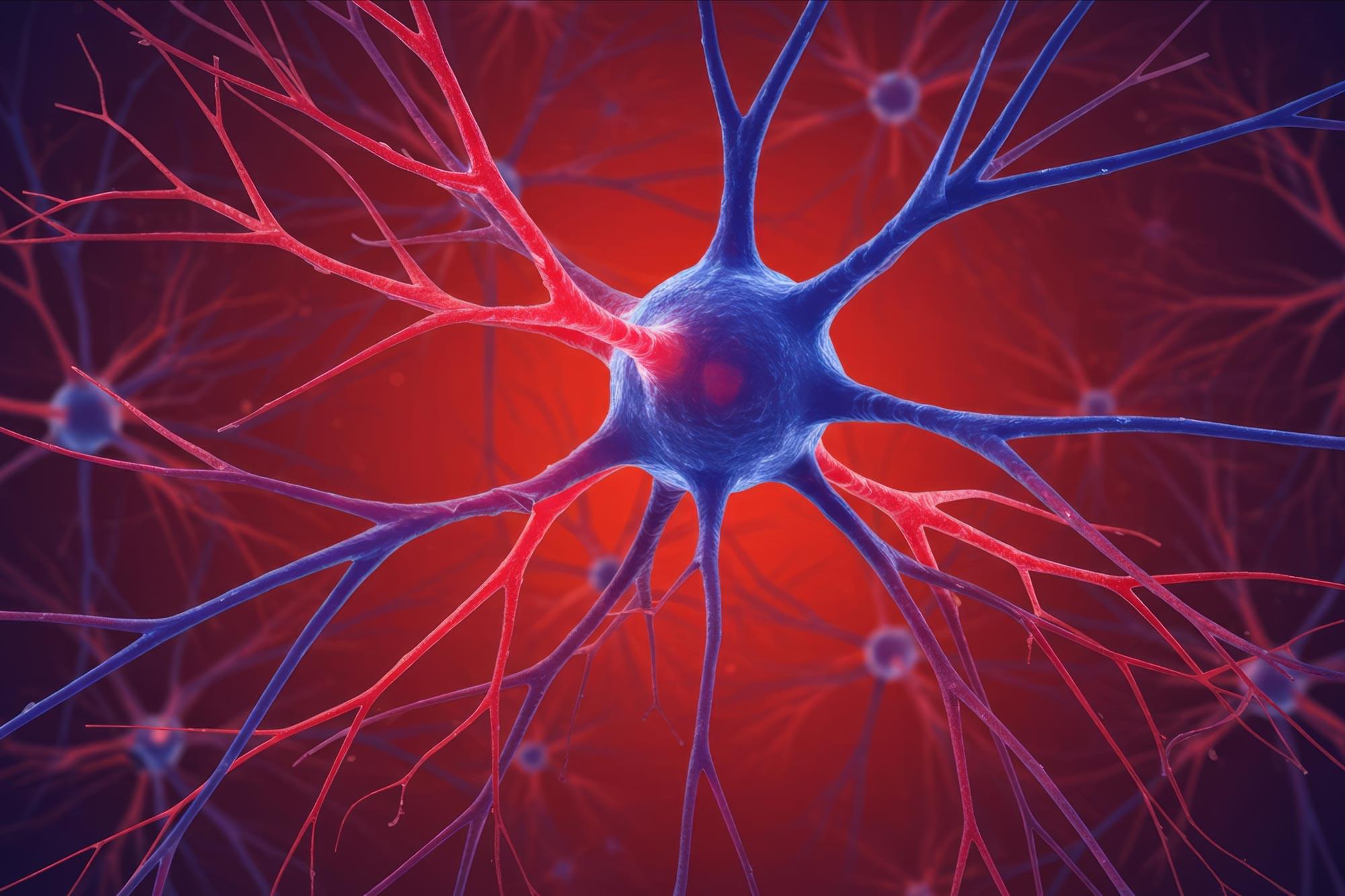
Sleep loss damages the fatty insulation protecting the nerve cells in our brain, according to a paper published in the journal Proceedings of the National Academy of Sciences. The research also explains why we often feel slow and groggy after a bad night’s sleep.
Most of us will experience sleep loss at one time or another and suffer the consequences of tiredness and slower reactions the next day. The biological mechanisms for these are not well understood and often attributed to tired or overworked neurons. Researchers led by scientists at the University of Camerino in Italy thought there might be other factors at play, so they decided to investigate.
Targeting the neuro-immuno-tumor axis in GI cancer👇
✅Recent advances in cancer biology highlight the neuro-immuno-tumor axis as a critical regulatory network within the gastrointestinal (GI) tumor microenvironment (TME). Tumors are closely innervated, and neural signals actively shape immune cell behavior, influencing disease progression and therapeutic response.
✅A key first step toward translational impact is the identification of dominant neuroimmune pathways operating in GI cancers. Understanding how neural inputs interact with tumor cells and infiltrating immune populations provides a mechanistic framework for disrupting pro-tumor signaling circuits.
✅Pharmacological strategies offer promising opportunities for therapeutic repurposing. β-blockers such as propranolol can attenuate stress-related adrenergic signaling, while CGRP antagonists like rimegepant target nociceptor-derived immunosuppressive cues. In parallel, serotonin inhibitors, including selective serotonin reuptake inhibitors (SSRIs), may modulate enteric and immune signaling to rebalance anti-tumor immunity.
✅Beyond drug-based approaches, surgical interventions such as vagotomy illustrate how physical disruption of neural inputs can reshape the tumor ecosystem. These strategies underscore the concept that nerves are not passive bystanders, but active drivers of tumor–immune interactions.
✅Together, these insights position the neuro-immuno-tumor axis as a powerful and underexplored therapeutic target. By integrating neurobiology with cancer immunology, future treatments may unlock more effective and durable anti-tumor responses in GI cancers.
Berkeley researchers have developed a proven mathematical framework for the compression of large reversible Markov chains—probabilistic models used to describe how systems change over time, such as proteins folding for drug discovery, molecular reactions for materials science, or AI algorithms making decisions—while preserving their output probabilities (likelihoods of events) and spectral properties (key dynamical patterns that govern the system’s long-term behavior).
While describing the dynamics of ubiquitous physical systems, Markov chains also allow for rich theoretical and computational investigation. By exploiting the special mathematical structure behind these dynamics, the researchers’ new theory delivers models that are quicker to compute, equally accurate, and easier to interpret, enabling scientists to efficiently explore and understand complex systems. This advance sets a new benchmark for efficient simulation, opening the door to scientific explorations once thought computationally out of reach.
The last few weeks in longevity science have been absolutely unreal. In this episode of Longevity Science News, Emmett Short breaks down 5 bombshell breakthroughs that could reshape the future of human health in 2026 — including an FDA-approved trial aiming to reverse cellular aging, cancer vaccines eliminating brain tumors in days, the regeneration of human teeth, one-shot GLP-1 Ozempic-style gene therapies, and a shocking new discovery linking gut bacteria to multiple sclerosis.
These aren’t sci-fi predictions — these are real developments happening right now in clinical trials, biotech labs, and cutting-edge medical research. If you care about anti-aging, regenerative medicine, epigenetic reprogramming, cancer immunotherapy, GLP-1 weight loss drugs, or the future of human lifespan, this is the episode you don’t want to miss.
Hume Band 20% off with Code LSN20 https://humehealth.com/pages/hume-ban… Huma Band Review: • Best Fitness Tracker For Longevity: Hume B… JOIN LSN Patreon for exclusive access to news, tips and a community of like minded longevity enthusiasts: https://www.patreon.com/user?u=29506604 ✅ Chapters 00:00 – The Longevity Science Explosion 00:48 Hume Band 20% Off 01:02 – Exclusive Interviews 01:43 Bombshell #1: FDA Approves Age Reversal Trial (Yamanaka Factors) 04:40 – Bombshell #2: Cancer’s Worst Month Ever (Vaccines + Immunotherapy) 09:19 – Bombshell #3: The Regeneration Revolution (Cartilage, Teeth, Liver) 11:30 – Bombshell #4: The One-Shot Ozempic Gene Therapy 12:25 – Bombshell #5: Gut Bacteria Linked to Multiple Sclerosis 13:55 – Final Recap + What Breakthrough Comes Next? Links in Script David Sinclair FDA Trial Tweet https://twitter.com/davidasinclair/status/2 … FDA Greenlights Age Reset Trial (Endpoints) https://endpoints.news/exclusive-fda–… Life Biosciences Epigenetic Reprogramming Video • Reprogramming Human Life — Michael Ringel… mRNA Brain Cancer Vaccine Tweet
… ⚠️ Disclaimer: This video is for educational and informational purposes only and does not constitute medical advice. Consult a qualified clinician before making health or treatment decisions. 🔗 EXCLUSIVE INTERVIEWS & BONUS CONTENT Get extended conversations, deep dives, and behind-the-scenes research ans a YouTube Member Patreon: 👉 / u29506604 YT Membership: 👉 / @longevitysciencenews PRODUCTION CREDITS ⎺⎺⎺⎺⎺⎺⎺⎺⎺⎺⎺⎺⎺⎺⎺⎺⎺⎺⎺⎺ Executive Producer – Keith Comito @Retromancers Host, Producer, Writer – Emmett Short @emmettshort
Full huma band review: • best fitness tracker for longevity: hume B…
An outbreak of the deadly Nipah virus in India has put many countries in Asia on high alert, given the fatality rate in humans can be between 40% and 75%.
Several countries, including Thailand, Malaysia, and Singapore, have introduced new screening and testing measures, after at least two people died of Nipah virus in the Indian state of West Bengal this month.
But what is Nipah virus, and how concerned should we be?
Here, Daniel H Cohn & team rescue the skeletal dysplasia phenotype of Trpv4 mutant mice—a new mouse model—using small molecule inhibition:
The figure: Reconstructed micro-CT images from WT and Co2a1-Cre/Trpv4p. R59H mutant mice showing reduction in the cervical angle (dashed red lines). The T1 vertebral body in the mutant was smaller and poorly mineralized.
2Actio Biosciences, San Diego, California, USA.
3Department of Orthopaedic Surgery, UCLA, Los Angeles, California, USA.
4Department of Nutritional Sciences, Dell Pediatric Research Institute, The University of Texas at Austin, Dell Medical School, Austin, Texas, USA.
Screening at an earlier age can help identify risk factors sooner, enabling preventive strategies that reduce long-term risk.
Screening for heart attack risk should be happening earlier for men, according to a new study that found the risk of cardiovascular disease starts climbing when men are in their mid-30s – significantly earlier than a similar trend is seen in women.
The US-based researchers behind the study followed the health of 5,112 people for an average of around 34 years. As the participants were healthy and aged 18–30 when the study started in the mid-1980s, the researchers could chart cases of cardiovascular disease (including strokes and heart failure) over time.
According to the data, 35 is the critical age when disparities between male and female cardiovascular disease risk start to appear. Most of the difference is driven by coronary heart disease (CHD), the most common cause of heart attacks, where fatty deposits clog up arteries, blocking blood flow.