Toggle light / dark theme

Get the latest international news and world events from around the world.

Log in for authorized contributors

North Pacific winter storm tracks shifting poleward much faster than predicted

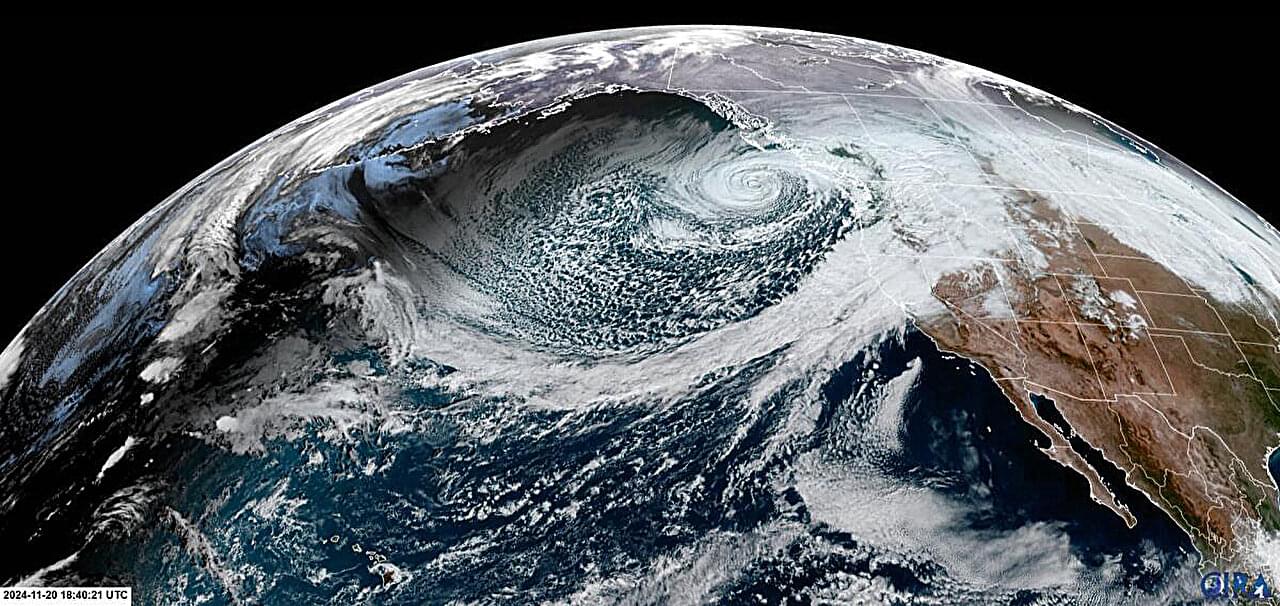
Alaska’s glaciers are melting at an accelerating pace, losing roughly 60 billion tons of ice each year. About 4,000 kilometers to the south, in California and Nevada, records for heat and dryness are being shattered, creating favorable conditions for wildfire events.

One major factor contributing to climate change in both regions is the northward shift of winter storm tracks across the North Pacific Ocean. These storms transport heat and moisture from Earth’s warmer regions toward the pole; when their tracks shift northward, more heat and moisture reach Alaska, while natural ventilation of the southwestern United States is reduced, driving temperatures upward.

In a new study published in Nature, Dr. Rei Chemke of the Weizmann Institute of Science’s Earth and Planetary Sciences Department and Dr. Janni Yuval of Google Research show that the storms’ northward shift is occurring much faster than climate models have predicted. Moreover, using a new metric based on sea-level pressure—a parameter measured consistently for decades—the researchers found that this shift is not part of natural climate variability but rather a clear consequence of climate change.


US CDC Says 2025–26 Flu Season ‘moderately Severe’ as Cases Hit 11 Million

Seasonal influenza activity remained high and increased in late December, prompting the CDC to classify the 2025–26 flu season as “moderately severe.” The agency estimates at least 11 million illnesses, 120,000 hospitalizations, and 5,000 deaths so far—substantially higher than the same point last season. Experts note flu cases are underreported and expect the peak in the coming weeks.


Jan 5 (Reuters) — Seasonal influenza activity remained elevated and rose in the final week of December, U.S. Centers for ‌Disease Control and Prevention data showed on Monday, as the agency for the first time classified the 2025–26 season ⁠as “moderately severe.”

CDC estimates the season’s toll so far at least 11 million illnesses, 120,000 hospitalizations and ‌5,000 deaths.

In the 2024–25 season, CDC estimated at least 5.3 million illnesses, 63,000 hospitalizations and 2,700 deaths in the week ended December 28, 2024.

Statins in Genetic MyopathiesA Retrospective Analysis of Safety and Tolerability

Statins in genetic myopathies: a retrospective analysis of safety and tolerability.


ObjectivesStatins are widely prescribed lipid-lowering agents, but their safety and tolerability in patients with underlying genetic myopathies remain uncertain. We aimed to study statin safety and tolerability in genetic myopathies using a large retrospective cohort.

/* */