Toggle light / dark theme

Get the latest international news and world events from around the world.

Log in for authorized contributors

Self-interacting dark matter may solve three cosmic puzzles

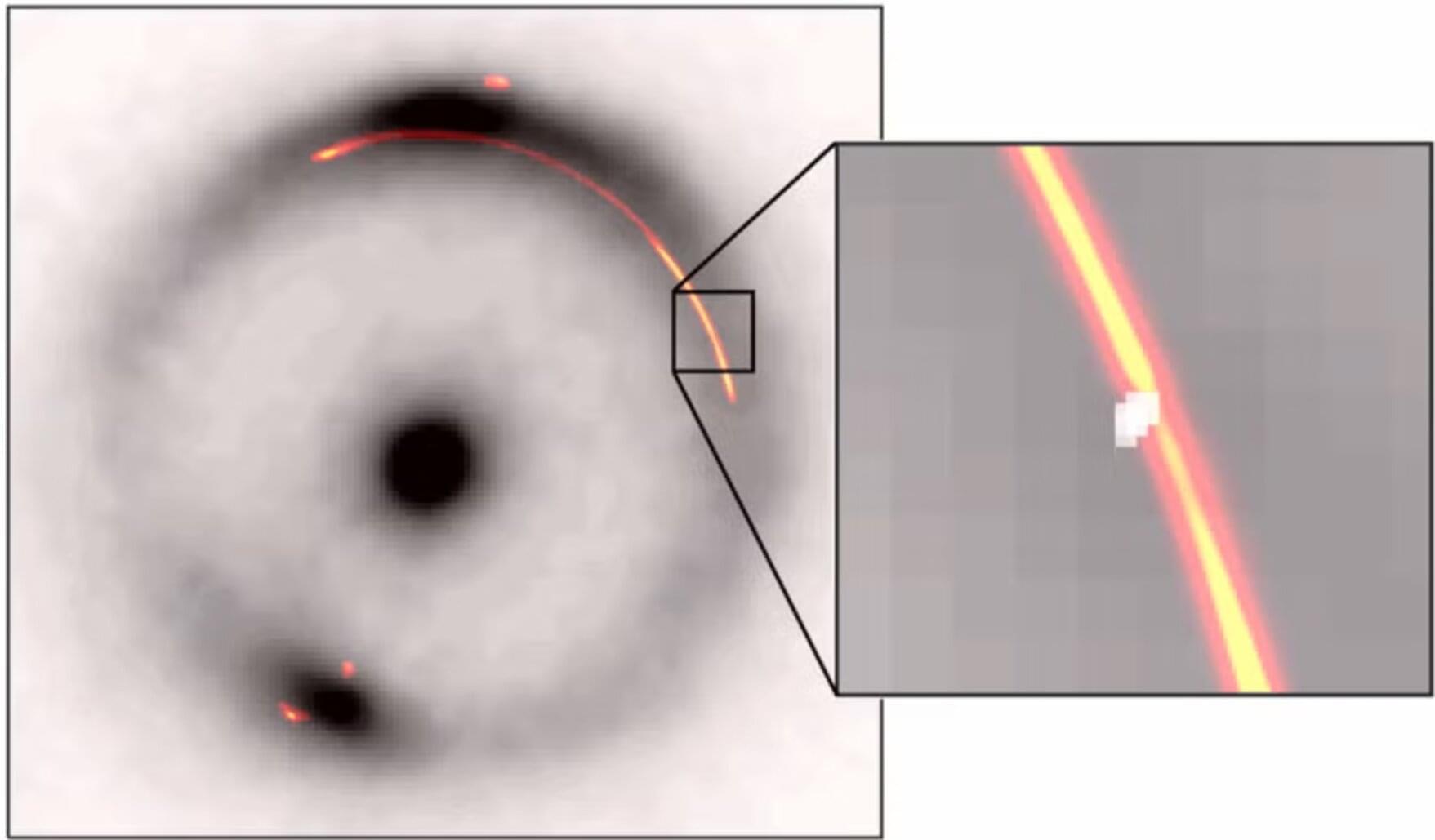
A study led by UC Riverside physicist Hai-Bo Yu suggests that a new type of dark matter could explain three astrophysical puzzles across vastly different environments. Published in Physical Review Letters, the study proposes that dense clumps of self-interacting dark matter (SIDM)—each about a million times the mass of the sun—can account for unusual gravitational effects observed in gravitational lenses, stellar streams, and satellite galaxies.

Dark matter, which makes up about 85% of the universe’s matter, cannot be seen directly. The standard model assumes it is “cold” and collisionless, meaning that particles pass through one another without interacting. This model struggles, however, to explain certain high-density structures observed in the universe.

Yu’s work instead focuses on SIDM, in which dark matter particles collide and exchange energy. These interactions can trigger “gravothermal collapse,” forming extremely dense, compact cores.

Designing better membrane proteins by embracing imperfection

Scientists at the VIB–VUB Center for Structural Biology have uncovered a counterintuitive principle that could reshape how membrane proteins are designed from scratch: Sometimes, making a protein less stable helps it fold correctly. In their study published in the Proceedings of the National Academy of Sciences, the researchers demonstrate that introducing carefully placed “imperfections,” a strategy known as negative design, enables synthetic membrane proteins to fold and assemble efficiently in artificial membranes.

Membrane proteins are essential for life and biotechnology, acting as gateways, sensors, and drug targets. Yet designing them from scratch remains notoriously difficult. Unlike soluble proteins, they must navigate a complex folding process while inserting into lipid membranes and during this step, many designs fail.

Traditional protein design focuses on maximizing the stability of the final folded structure. But the new study shows that, for transmembrane β-barrel proteins, this approach can backfire.

‘Ghost tunnels’ guide sound waves in one direction while staying invisible to others

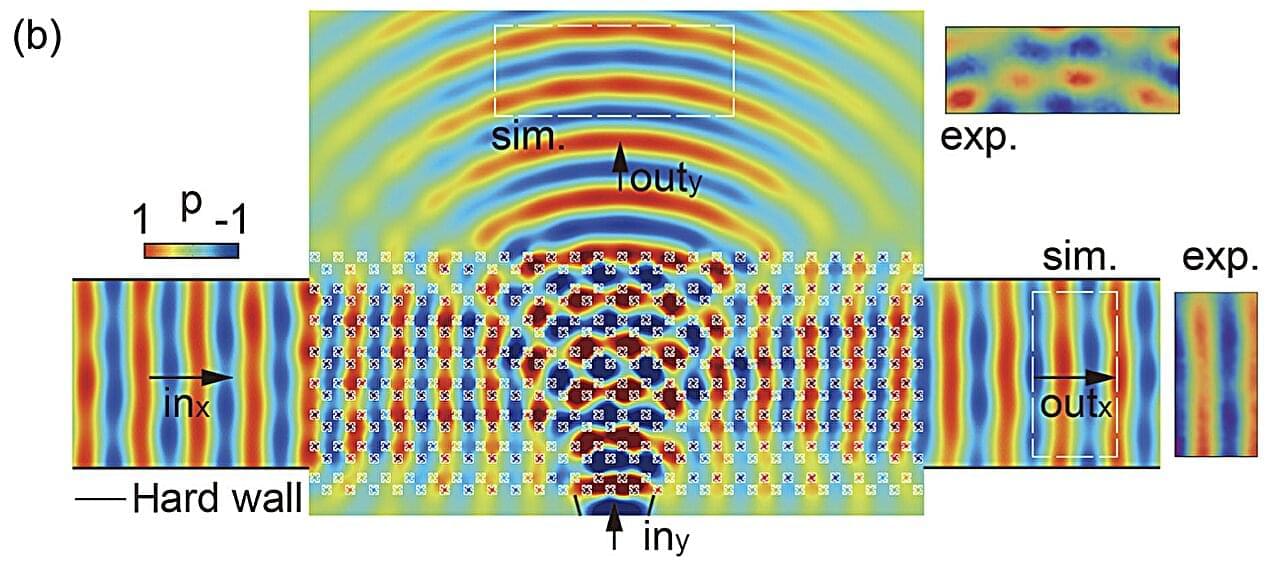
Acoustic metamaterials are a fast-evolving family of materials which manipulate sound waves in ever more advanced ways. Now, a team led by Changqing Xu at Nanjing Normal University in China has engineered an acoustic metamaterial, a “ghost tunnel”: a structure which acts as a near-perfect waveguide for sound entering through its ends, while being essentially invisible to waves incident on its sides. The results, published in Physical Review Letters, could open new avenues for manipulating sound waves in complex signal environments.

Acoustic waveguides work by confining sound within a channel, using boundaries that reflect waves back inward to keep them on track. While this can be achieved with a structure as simple as a hollow pipe, the problem is that those same reflective boundaries inevitably interact with any sound waves approaching from outside the channel.

Rather than passing through undisturbed, external waves scatter off the rigid walls: a significant drawback in technologies where multiple signal channels must coexist in close proximity without interfering with one another.

These nanotweezers grab thousands of tiny cell packets in seconds and expose their hidden cargo

Justus Ndukaife, associate professor of electrical and computer engineering and Chancellor Faculty Fellow, and his team have developed next generation nanotweezers that better analyze extracellular vesicles and aid in unraveling the mysteries of how cells package molecules and interact with one another. The research was published in Light: Science and Applications journal on March 20, 2026. Graduate student Ikjun Hong helped to perform the experimental characterization under Ndukaife’s direction.

Nanosized extracellular vesicles (EVs), though they vary in size and molecular cargo composition, are an important means for cells to communicate with each other. A significant research opportunity involves analyzing EVs individually to discern their biological roles in diverse diseases as well as leverage them for next generation therapeutics.

Studying single, intact EVs often relies on trapping individual particles, but existing methods face significant limitations. For example, optical tweezers —an approach recognized by the 2018 Nobel Prize in Physics—use a tightly focused laser beam to trap microscopic objects. However, the process is slow, as particles must be captured sequentially, and it is difficult to ensure that a new particle is trapped for each measurement. These constraints severely limit throughput and scalability.

Tiny crystal defects solve decades-old mystery in organic light emitters

Materials that emit and manipulate light are at the heart of technologies ranging from solar energy to advanced imaging systems. But even in well-studied materials, some fundamental behaviors remain unexplained. Researchers at Rice University have now solved a long-standing mystery in a widely used organic semiconductor, revealing how tiny structural imperfections can actually improve how these materials work.

In a study published in the Journal of the American Chemical Society, the team investigated 9,10-bis(phenylethynyl)anthracene (BPEA), a model system for studying how light energy moves through materials. For years, scientists have observed unusual optical behavior in BPEA, specifically two distinct absorption and emission signals that did not match existing theories.

“This was a long-standing puzzle in the field,” said Colette Sullivan, a doctoral student in Rice’s Department of Chemistry and co-author of the study. “Once we connected the experimental results with theory, it became clear the two signals were coming from completely different processes.”

A tiny twist and synthetic diamond put superconductivity on a switch, opening a new route to lossless electronics

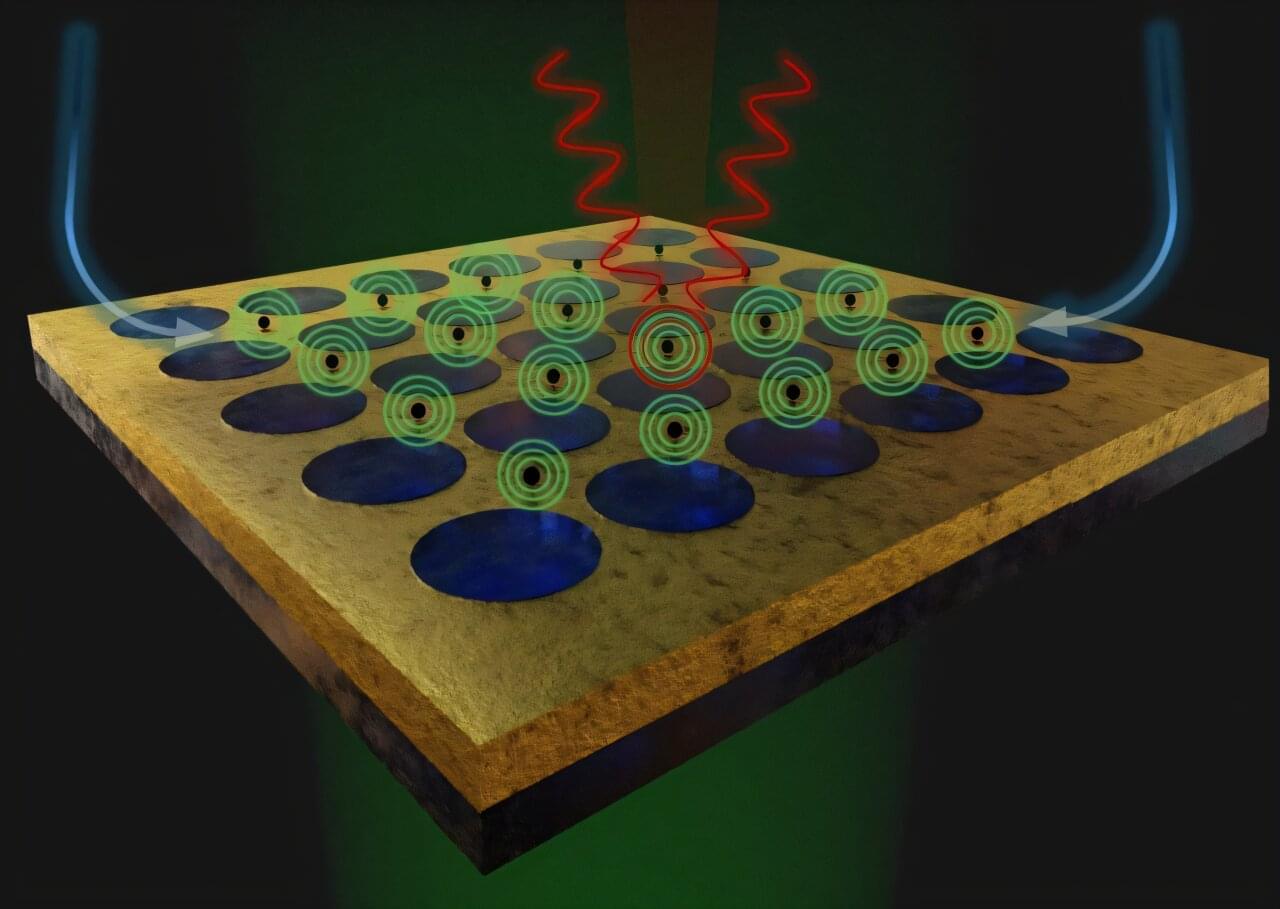
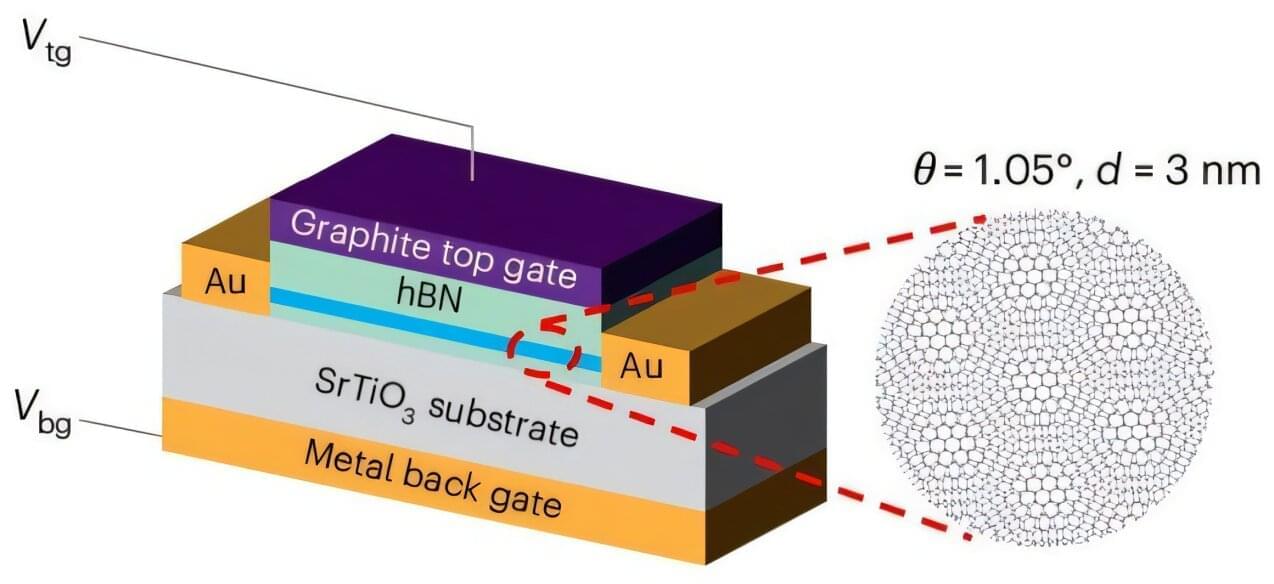
Researchers have discovered evidence that superconductivity can be controlled by influencing the surrounding environment, a finding that may lead to more efficient electronics down the road, according to a new study published in the journal Nature Physics.

Superconductivity, or the ability of certain materials to conduct electric currents without any energy loss when cooled below a critical temperature, is a property still not very well understood. While a major challenge, understanding more about its formation mechanisms could lead to better, more long-lasting materials as well as more powerful quantum devices.

Quantum sensors get a precision boost as 2D defects reveal their hidden timing

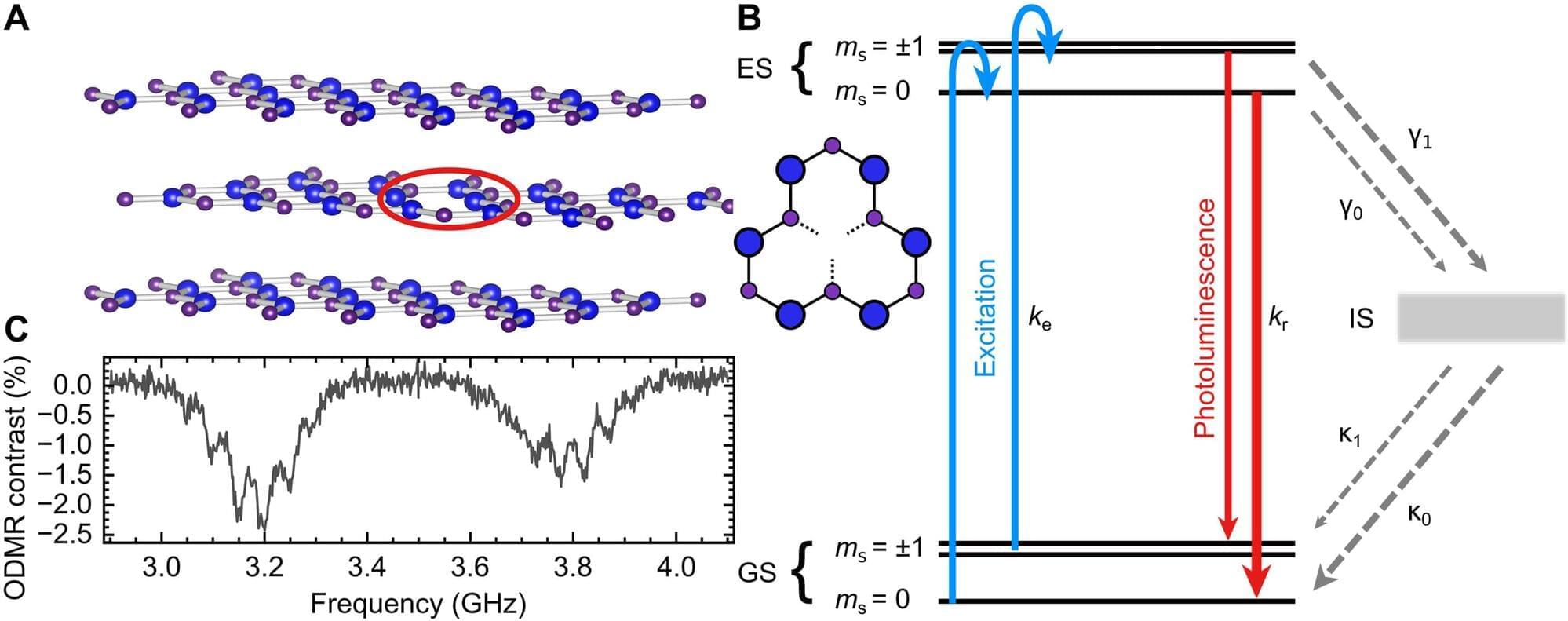
A key factor for the performance of sensors is the speed at which the system returns to its initial state after a disturbance or measurement, similar to the taring of a balance. In the quantum sensor under investigation, this corresponds to the transition of electrons from an energetically excited state to the ground state. However, the electrons remain in a kind of metastable intermediate state for a short time. A team of physicists from Julius-Maximilians-Universität Würzburg (JMU) has now directly measured this waiting time in a two-dimensional material: It lasts exactly 24 billionths of a second.

This knowledge is particularly important for quantum technology. It can be used to significantly increase the accuracy of atomic sensors, paving the way for the medical diagnostics of the future, for example. Professor Vladimir Dyakonov, Head of the Chair of Experimental Physics VI (EPVI), was responsible for the study published in the journal Science Advances.

Unlocking unusual superconductivity in a lightweight element

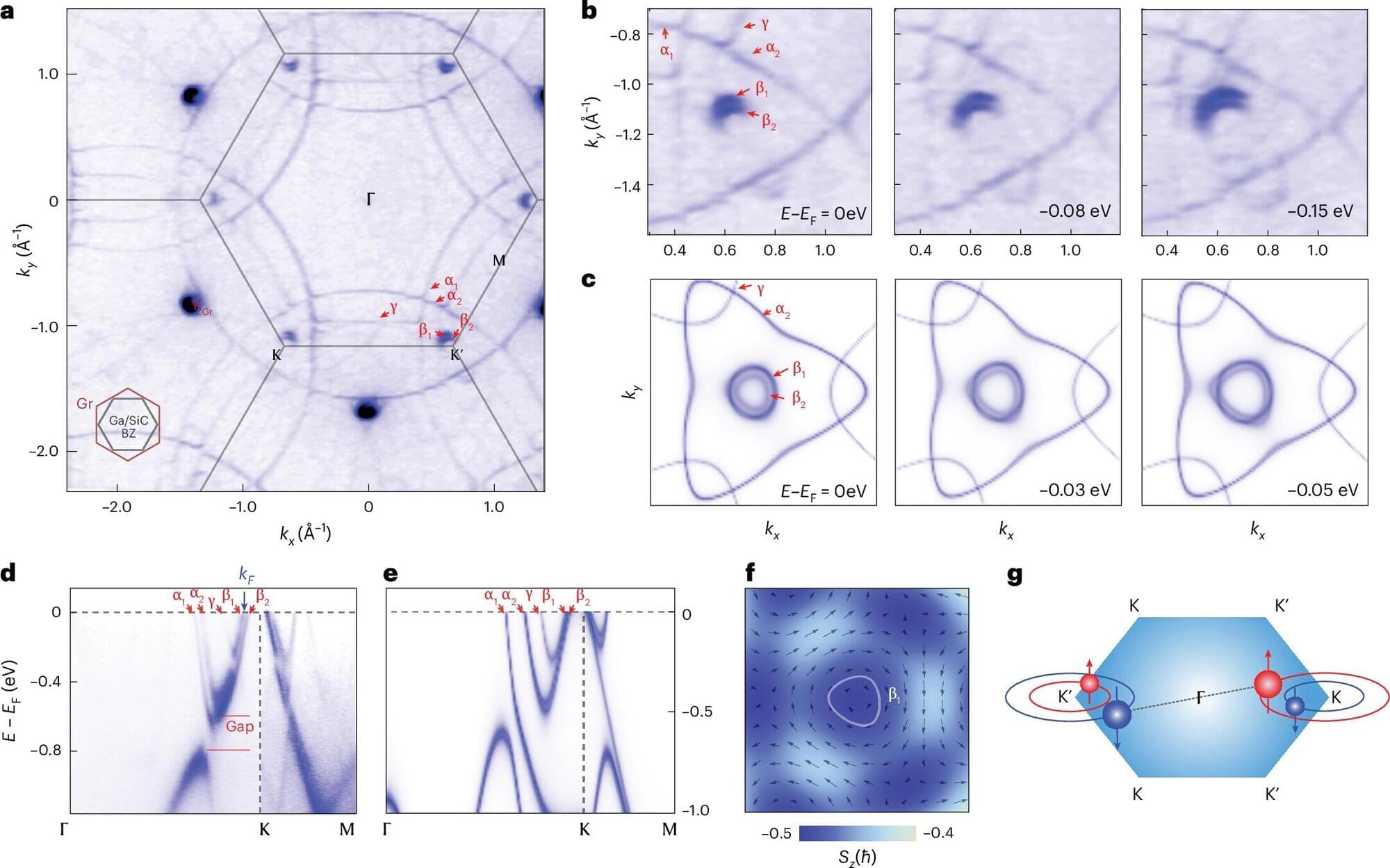
Superconductors—materials that can conduct electricity without energy loss—are crucial for next-generation high-efficiency, ultrafast electronics. However, most superconductors share a critical limitation: they lose their superconducting properties in strong magnetic fields. In contrast, a class of superconductors containing heavy elements can sustain an unusual type of superconductivity in magnetic fields beyond the conventional limit. Now, new research has demonstrated that this limitation can be overcome by sandwiching atomically thin films of a lightweight element called gallium between two other materials to engineer quantum interactions at the interfaces between the layers.

A paper describing the research, led by an interdisciplinary team at Penn State’s Materials Research Science and Engineering Center (MRSEC) for Nanoscale Science, was published in the journal Nature Materials. The team showed that when just three atomic layers of gallium are layered between graphene and a silicon carbide substrate, the resulting structure maintains superconductivity in magnetic fields that are parallel to the surface of the material, or in-plane, well above the expected limit.

“This discovery highlights the strength of collaborative, cross-disciplinary research fostered by the Penn State MRSEC,” said Cui-Zu Chang, professor of physics at Penn State Eberly College of Science and leader of the research team. “By bringing together expertise in materials synthesis, quantum transport and theoretical modeling, we were able to uncover a phenomenon that would have been difficult to realize within a single research group.”

From ship wakes to soft tissues: Exploring fluid and solid surface-wave physics

A new study by scientists in the Harvard John A. Paulson School of Engineering and Applied Sciences (SEAS) shows that when a pressure disturbance moves across an ultrasoft elastic material, such as a gel or a biological tissue, it generates a V-shaped wake that’s strikingly similar to the waves that travel behind a boat.

Published in Physical Review Letters, the study offers a unified perspective, combining experiments and theory, on surface motion that spans fluids, solids, and the soft materials that lie between. It opens the door to new approaches to imaging and understanding the behavior of both natural and engineered soft materials.

The research was led by L. Mahadevan, the Lola England de Valpine Professor of Applied Mathematics, Organismic and Evolutionary Biology, and Physics, in SEAS and FAS, and includes first author and former postdoctoral researcher Aditi Chakrabarti; postdoctoral researcher Divya Jaganathan, and SEAS research associate Robert Haussman.

Physicists discover how reverse to ‘quantum scrambling’

Quantum computers stand to revolutionize research by helping investigators solve certain problems exponentially faster than with conventional computers. Current quantum computers encounter a challenge where they lose stored information in a process known as quantum scrambling. However, scientists at the University of California, Irvine have discovered a method to enable computers to preserve the data that would otherwise be lost during the scrambling process. The research is published in the journal Physical Review Letters.

“My work is on understanding how this scrambling of quantum information works and in understanding how it emerges,” said Thomas Scaffidi, assistant professor of physics and astronomy and lead author of the new study. “We’re trying to determine whether the information is still there in some form and if we can reverse the scrambling process completely.”

The fundamental unit of information in quantum computing is the qubit. Conventional computers use bits, which store information as either a 0 or a 1, while a qubit stores information as either a 0, a 1, or both at the same time.

/* */