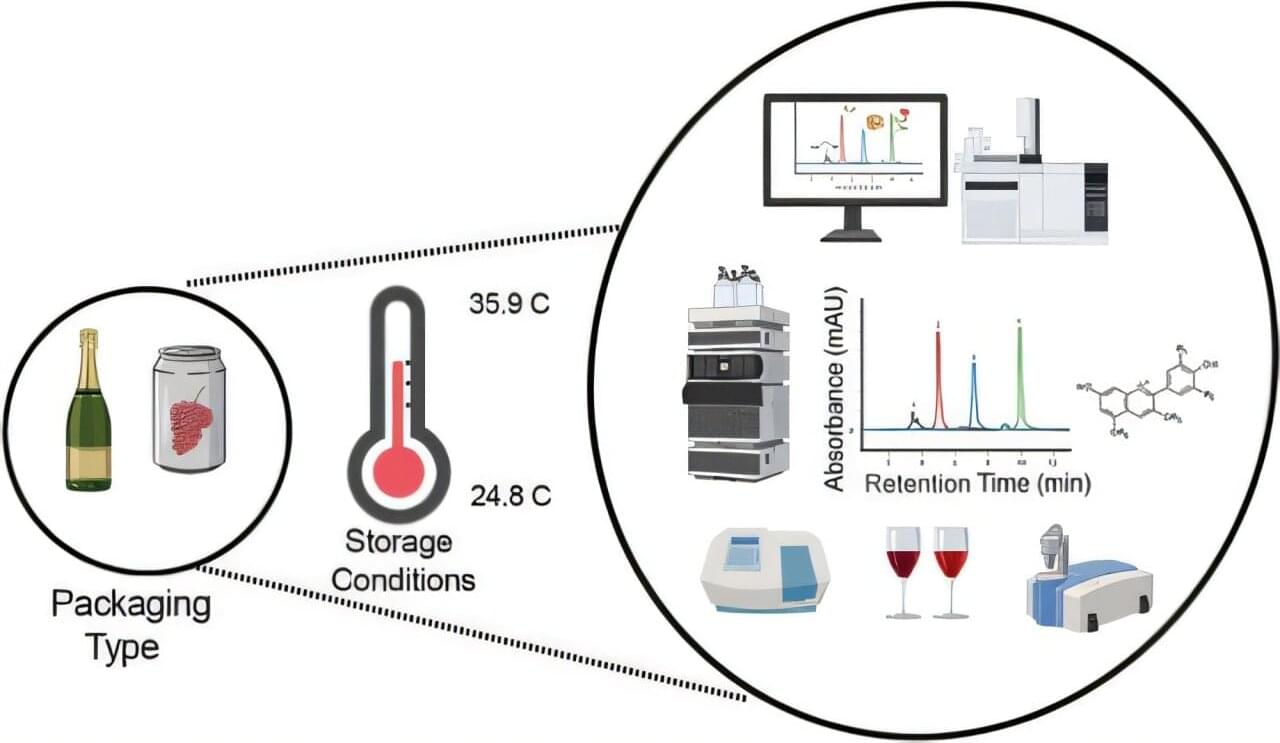
One of the main reasons wine traditionally comes in bottles is to protect its quality. Glass is nonreactive, and the cork or screw cap provides an airtight seal that prevents oxygen from spoiling the liquid. In recent years, a new rival has appeared on the scene—aluminum cans. But there are concerns that the metal may interact with the wine, altering its unique flavor.
However, for red muscadine wine, new research published in ACS Food Science & Technology suggests that cans may be just as effective as glass at keeping the wine fresh.
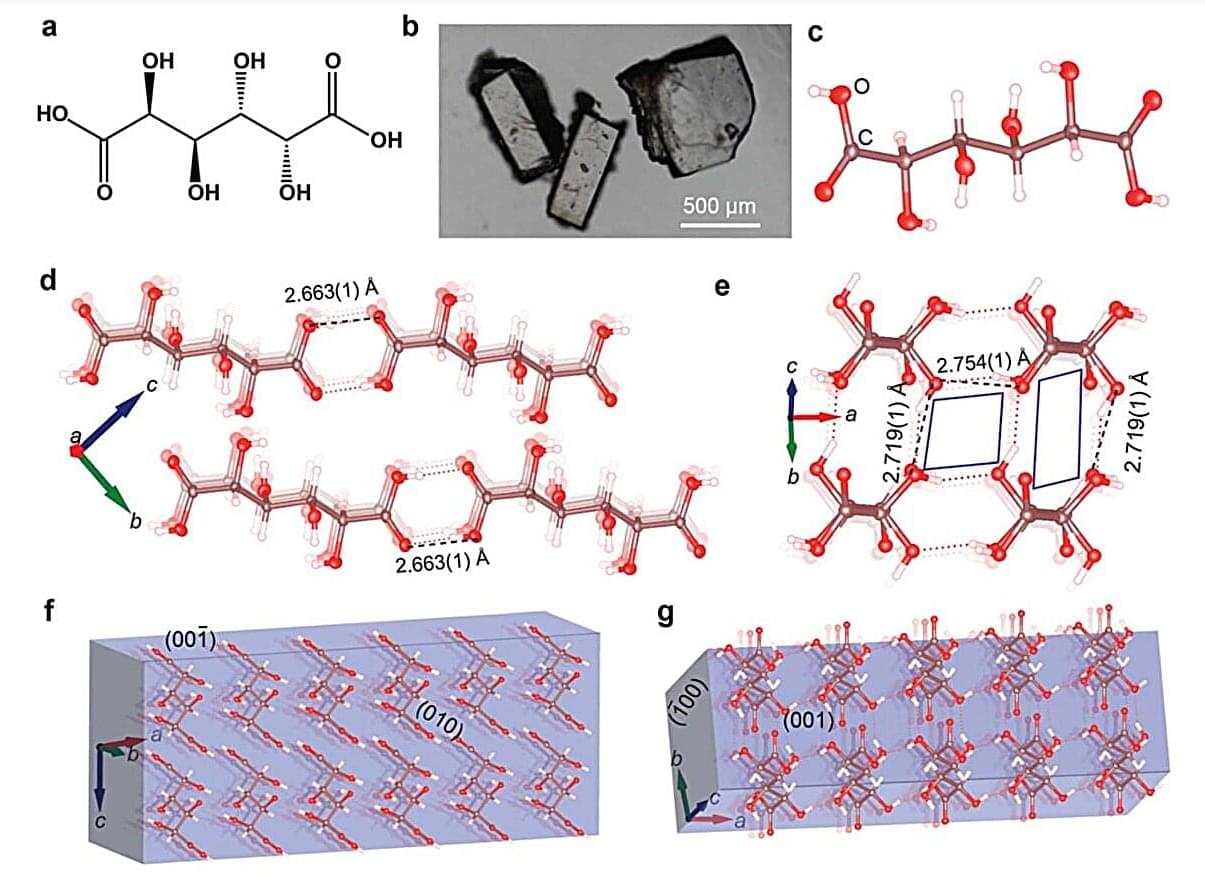
Mucic acid crystals grown from a water-based solution achieved a record-breaking stiffness for an organic crystal.
Stiffness is often described as the measure of resistance to deformation when a material is subjected to an external force. When we think of a stiff material, metals or ceramics usually come to mind, rather than crystals or organic molecules such as sugar or citric acid.
Hydrogen bonds have the ability to make even famously brittle and hard organic crystals ultrastiff.
A research team at Oregon Health & Science University has discovered a promising new drug combination that may help people with acute myeloid leukemia overcome resistance to one of the most common frontline therapies.
In a study published in Cell Reports Medicine, researchers analyzed more than 300 acute myeloid leukemia, or AML, patient samples and found that pairing venetoclax, a standard AML drug, with palbociclib, a cell-cycle inhibitor currently approved for breast cancer, produced significantly stronger and more durable anti-leukemia activity than venetoclax alone. The findings were confirmed in human tissue samples, as well as in mouse models carrying human leukemia cells.
“Of the 25 drug combinations tested, venetoclax plus palbociclib was the most effective. That really motivated us to dig deeper into why it works so well—and why it appears to overcome resistance seen with current therapy,” said Melissa Stewart, Ph.D., research assistant professor at OHSU and lead author of the study.
💰 Q: Which companies are most likely to acquire StarCloud and why? A: Microsoft, Amazon, Google, OpenAI, and Nvidia are prime candidates to acquire StarCloud for billions to gain first-mover advantage in the space data center industry, allowing them to immediately access 20 of the smartest satellite engineers and an operational program to expand rather than building from scratch.
Technical Achievement.
⚡ Q: What technical milestone did StarCloud achieve that validates the space datacenter concept? A: StarCloud’s recent launch demonstrated a space-based NVIDIA H100 data center that is 100 times more powerful than anything previously launched and successfully ran Gemini AI model, marking the dawn of a new era and proving the viability of AI compute power in space.
🛸 Q: What launch advantage does SpaceX have in the space datacenter industry? A: SpaceX currently holds a monopoly on launching data centers into space with competitors like Blue Origin and Rocket Lab still needing to develop capable rockets, while SpaceX’s Starship is expected to remain the cheapest and best option for orbital launches.
A robot revolution, driven by advancements in robotics and AI, is imminent and will drastically transform the economy, labor, and society, leading to a post-labor, post-scarcity system with abundant energy and labor ##
## Questions to inspire discussion.
Investment & National Strategy.
🚀 Q: Why should governments prioritize humanoid robot investment now? A: Governments must treat humanoid robots as a national priority for transforming productivity and defense, with enormous investments justified because there’s no time to lose as both the US and China have already recognized this imperative.
💰 Q: What economic growth rates become possible with early humanoid robot adoption? A: Spinning up the humanoid robot flywheel early enables exponential economic growth rates of 20–100% per year, unlocking unprecedented prosperity and catapulting societies up the curve over the next 15 years.
⚡ Q: Which countries or entities will likely lead the humanoid robot transformation? A: Outsiders rather than incumbents or centers of power will lead the transformation to a new economic paradigm, as history shows leadership typically comes from the edge rather than the status quo.
⚙️ Q: What makes supersonic engines better than subsonic for ground power generation? A: Supersonic engines designed for 160°F operation at 60,000 ft and Mach 1.7 handle high ground temperatures without requiring water cooling, throttling, or water spray that subsonic engines need to avoid melting in hot conditions.
Deployment Timeline.
📅 Q: When will Boom’s engines start powering AI data centers? A: Boom’s supersonic engines are scheduled to begin providing power to AI customers in 2027, becoming the most tested new jet engine ever before carrying passengers.
Business Model.
💰 Q: How does powering data centers benefit Boom’s supersonic aircraft development? A: The symbiotic relationship creates a financial bridge where engines generate revenue from data center operations before deployment in commercial passenger aircraft, funding the experimental-to-commercial transition.
A new battery technology has been developed that delivers significantly higher energy storage—enough to alleviate EV range concerns—while lowering the risk of thermal runaway and explosion.
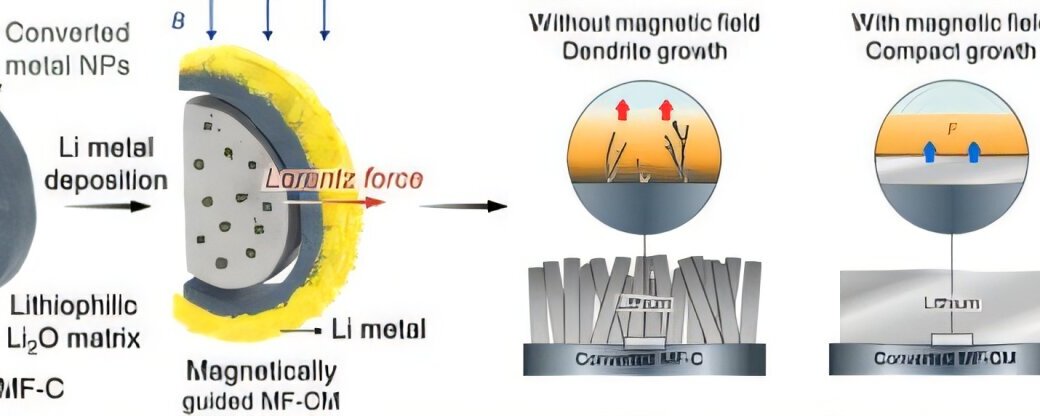
A research team at POSTECH has developed a next-generation hybrid anode that uses an external magnetic field to regulate lithium-ion transport, effectively suppressing dendrite growth in high-energy-density electrodes.
A POSTECH research team—led by Professor Won Bae Kim of the Department of Chemical Engineering and the Graduate School of Battery Engineering, together with Dr. Song Kyu Kang and integrated Ph.D. student Minho Kim—has introduced a “magneto-conversion” strategy that applies an external magnetic field to ferromagnetic manganese ferrite conversion-type anodes.
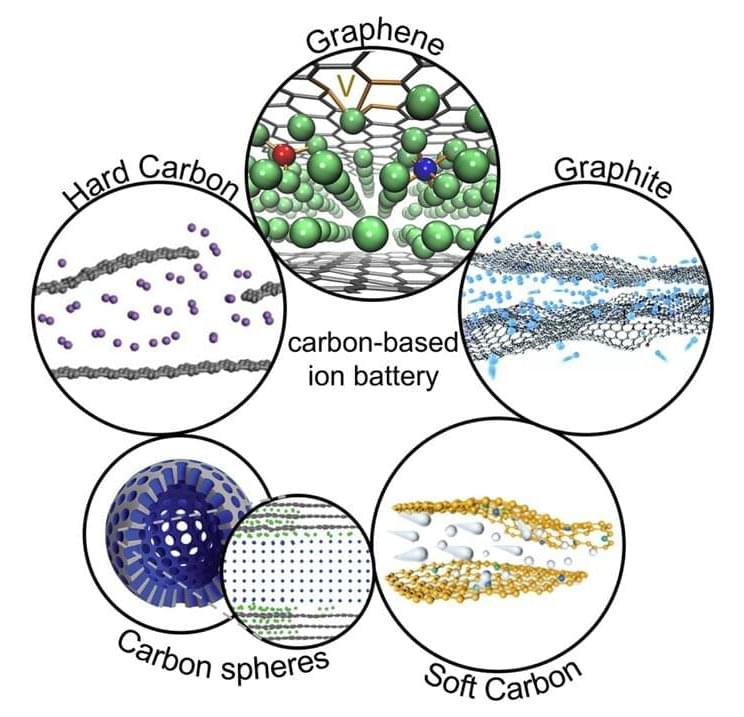
Skoltech scientists conducted a study that advances research on future batteries. Their paper, published in Small, sheds light on recent advances in designing multilayered structures of alkali metals, such as lithium, sodium, and potassium, within carbon anode materials.
This technology has the potential to transform the energy storage market, enabling electric vehicles to charge in minutes and providing green energy with stable, safe, and affordable storage systems.
How multilayered structures improve batteries For years, ions were believed to form only single-atom layers in a battery’s carbon materials, such as graphite. In 2018, researchers used a high-precision electron microscope and discovered a new configuration with ultradense, multiatom layers of lithium forming between two sheets of graphene.
Astronomer Royal Lord Martin Rees predicts AI-Alien discovery in the next 10 years. And he thinks he can figure out whether they’ll let us live or not. Inspired by Elon Musk’s exploits (yep he’s everywhere ain’t he) me and Lord Martin go on a deep dive into the minds of AI-Aliens. Massive thank you to Lord Martin for granting me an interview and massive thanks to Rik for the brilliant soundtrack.
What’s going on? In this video, you’ll see a CA device that is capable of replicating itself. The device creates a child device which creates a child device… and the process continues indefinitely. The CA is a variant of Wireworld which allows genes and construction signals to be sent around the device.