Cisco Talos links UAT-9921 to VoidLink, a modular Zig-based malware targeting Linux cloud systems with stealth plugins and C2 control.


Cybersecurity researchers have discovered a malicious Google Chrome extension that’s designed to steal data associated with Meta Business Suite and Facebook Business Manager.
The extension, named CL Suite by @CLMasters (ID: jkphinfhmfkckkcnifhjiplhfoiefffl), is marketed as a way to scrape Meta Business Suite data, remove verification pop-ups, and generate two-factor authentication (2FA) codes. The extension has 33 users as of writing. It was first uploaded to the Chrome Web Store on March 1, 2025.
However, the browser add-on also exfiltrates TOTP codes for Facebook and Meta Business accounts, Business Manager contact lists, and analytics data to infrastructure controlled by the threat actor, Socket said.




CISA ordered U.S. government agencies on Thursday to secure their systems against a critical Microsoft Configuration Manager vulnerability patched in October 2024 and now exploited in attacks.
Microsoft Configuration Manager (also known as ConfigMgr and formerly System Center Configuration Manager, or SCCM) is an IT administration tool for managing large groups of Windows servers and workstations.
Tracked as CVE-2024–43468 and reported by offensive security company Synacktiv, this SQL injection vulnerability allows remote attackers with no privileges to gain code execution and run arbitrary commands with the highest level of privileges on the server and/or the underlying Microsoft Configuration Manager site database.

This multicenter case series highlights 5 cases of enterovirus encephalitis among people with MS receiving ocrelizumab, presenting with fever, encephalopathy, and gait changes, as well as myocarditis in 1 case.
ObjectivesAnti-CD20 therapies for multiple sclerosis (MS) are highly effective at preventing disease activity. Recognizing infectious complications of these therapies is essential. MethodsThree MS centers shared deidentified clinical data on persons with MS (pwMS) receiving ocrelizumab who developed enterovirus encephalitis.

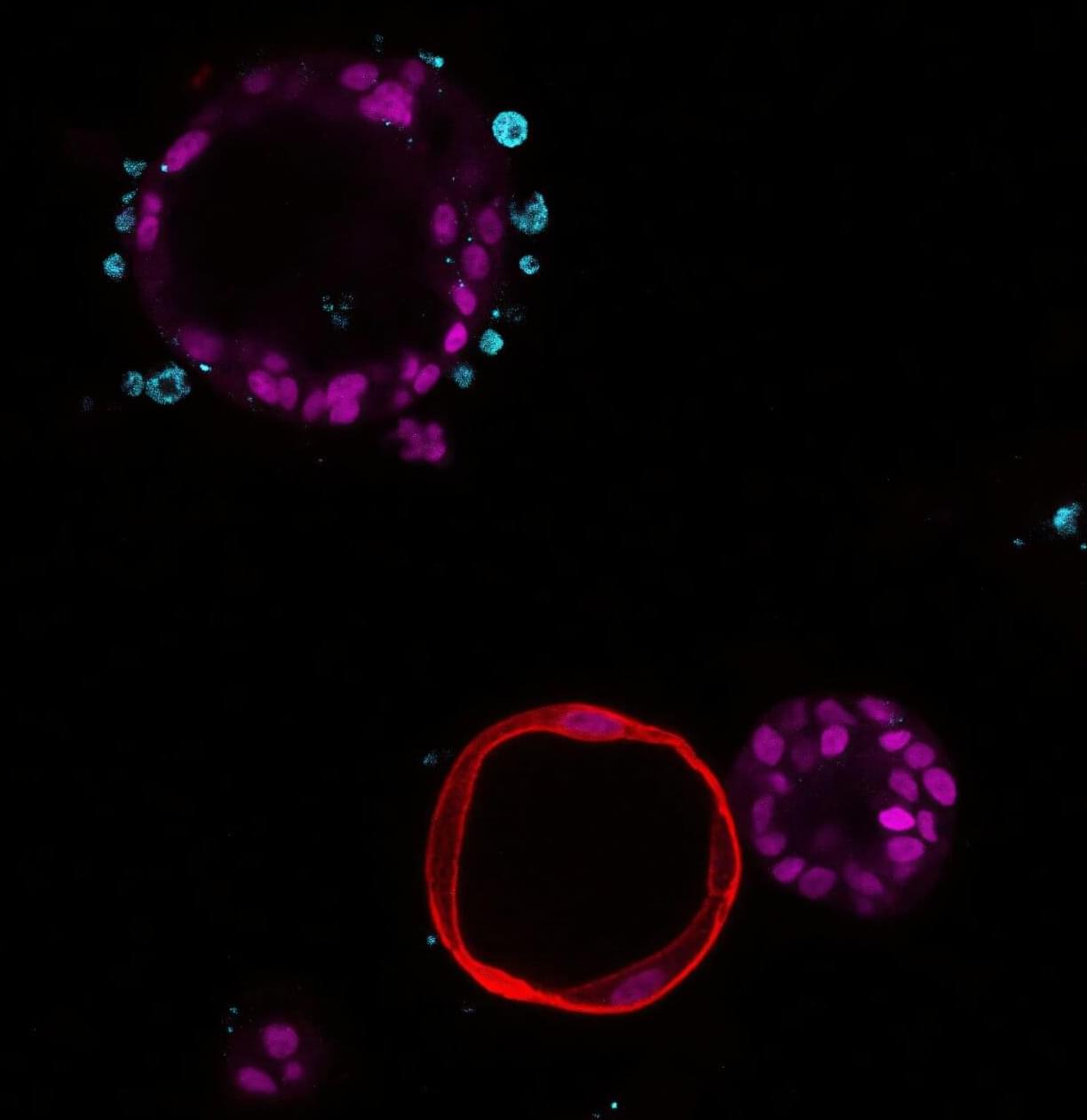
Even before a tumor in the pancreas becomes discernible, an activated cancer gene actively remodels its future environment and creates an inflammatory and immune-defensive microenvironment in which the carcinoma can grow. This has been shown by an international research team led by Ulm University in a pioneering study. The scientists’ study opens up new possibilities for developing personalized intervention strategies—before a difficult-to-treat tumor even develops.
It is one of the most aggressive forms of cancer: Pancreatic cancer is usually diagnosed late because it initially causes no symptoms and therefore goes unnoticed. In addition, it is highly metastasizing. Once pancreatic cancer is finally identified, a cure is often no longer possible.
A research team from the Institute of Molecular Oncology and Stem Cell Biology (IMOS) at Ulm University, together with national and international partners, has made a ground-breaking discovery that could pave the way for a much earlier diagnosis: The oncogene KRAS —the main driver of pancreatic cancer—creates its own environment, providing best growth conditions for the carcinoma and in which immune defense T-cells cannot penetrate. The results of the study have now been published in the journal Molecular Cancer.
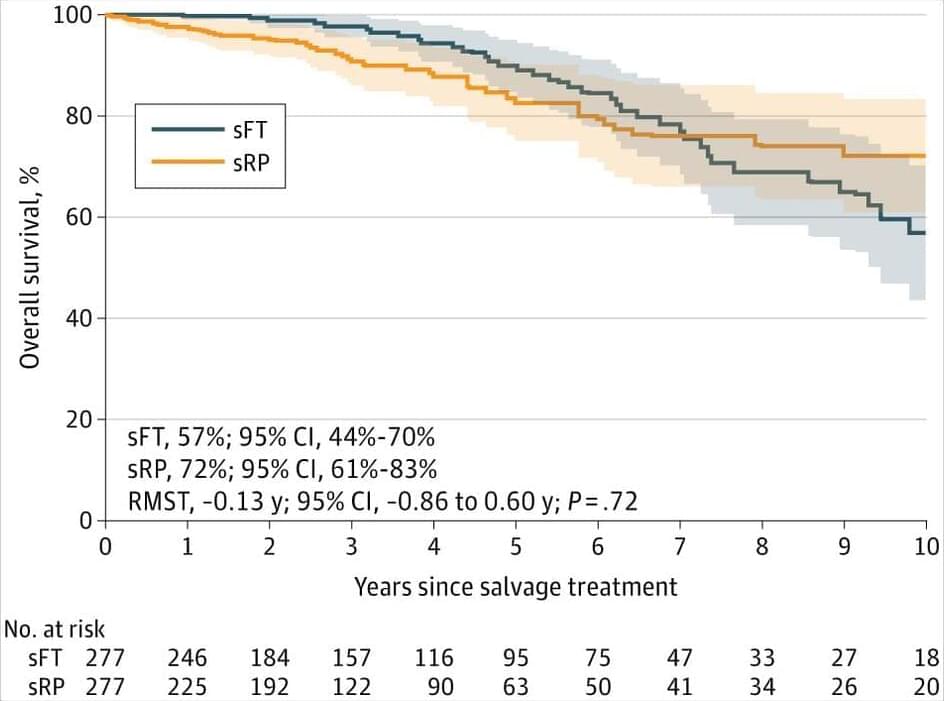
In localized radiorecurrent ProstateCancer, salvage focal therapy provided similar 10-year survival outcomes as radical prostatectomy but resulted in substantially fewer perioperative complications.
Question How do cancer control and perioperative complications compare after salvage focal therapy vs salvage radical prostatectomy for localized radiorecurrent prostate cancer?
Findings In this cohort study with a mean matched cohort size of 554 patients with biopsy-confirmed, localized recurrent prostate cancer, 10-year cancer-specific survival and overall survival were not meaningfully different between salvage focal therapy and salvage radical prostatectomy. The adjusted odds of any and major complications were approximately 24 and 9 times higher, respectively, following salvage radical prostatectomy.
Meaning Salvage focal therapy and salvage radical prostatectomy are both effective for treating localized radiorecurrent prostate cancer, though salvage focal therapy confers fewer perioperative complications.