Toggle light / dark theme

South Korea fines Tesla $2.2 million for exaggerating driving range of EVs

SEOUL (Reuters) — South Korea’s antitrust regulator said it would impose a 2.85 billion won ($2.2 million) fine on Tesla Inc for failing to tell its customers about the shorter driving range of its electric vehicles (EVs) in low temperatures.

The Korea Fair Trade Commission (KFTC) said that Tesla had exaggerated the “driving ranges of its cars on a single charge, their fuel cost-effectiveness compared to gasoline vehicles as well as the performance of its Superchargers” on its official local website since August 2019 until recently.

The driving range of the U.S. EV manufacturer’s cars plunge in cold weather by up to 50.5% versus how they are advertised online, the KFTC said in a statement on Tuesday.

New radar allows cars to spot hazards around corners

Using radar commonly deployed to track speeders and fastballs, researchers have developed an automated system that will allow cars to peer around corners and spot oncoming traffic and pedestrians.

The system, easily integrated into today’s vehicles, uses Doppler radar to bounce radio waves off surfaces such as buildings and parked automobiles. The radar signal hits the surface at an angle, so its reflection rebounds off like a cue ball hitting the wall of a pool table. The signal goes on to strike objects hidden around the corner. Some of the radar signal bounces back to detectors mounted on the car, allowing the system to see objects around the corner and tell whether they are moving or stationary.

“This will enable cars to see occluded objects that today’s lidar and camera sensors cannot record, for example, allowing a self-driving vehicle to see around a dangerous intersection” said Felix Heide, an assistant professor of computer science at Princeton University and one of researchers. “The radar sensors are also relatively low-cost, especially compared to lidar sensors, and scale to mass production.”

What Luminar’s acquisition of startup Civil Maps means for its lidar future

As lidar company Luminar pushed ahead to meet its goals for 2022 — milestones that included locking in new commercial contracts with unnamed automakers and shipping production-ready sensors to SAIC — it also snapped up a small HD mapping startup called Civil Maps.

The acquisition, which was disclosed Wednesday during Luminar founder and CEO Austin Russell’s presentation at CES 2023, is more than just a large publicly traded company taking advantage of a consolidating industry. Although the timing couldn’t have been better due to the current economic environment, according to Russell.

For Russell, the acquisition is part of Luminar’s longer term vision to be more than just a lidar supplier. Mapping, specifically the mapping tech that Civil Maps created, is foundational to that goal, Russell said.

2 adults and 2 children survive after Tesla plunges 250 feet off California cliff: “An absolute miracle”

250 feet down a cliff. Notice many of the Musk bashing news outlets are not reporting this. #PleaseShare


Montara, Calif. — A 4-year-old girl, a 9-year-old boy and two adults survived Monday after their car plunged off a Northern California cliff along the Pacific Coast Highway near an area known as Devil’s Slide that’s known for fatal wrecks, officials said.

The Tesla sedan plummeted more than 250 feet from the highway and crashed into a rocky outcropping. It appears to have flipped a few times before landing on its wheels, wedged against the cliff just feet from the surf, according to Brian Pottenger, a battalion chief for Coastside Fire Protection District/Cal Fire.

Crashes along Devil’s Slide, a steep, rocky and winding coastal area about 15 miles south of San Francisco between Pacifica and Montara, rarely end with survivors. On Monday, the victims were initially listed in critical condition but all four were conscious and alert when rescuers arrived.

Intelligent programmable meta-imagers: A timely approach to task-specific, noise-adaptive sensing

Sensing systems are becoming prevalent in many areas of our lives, such as in ambient-assisted health care, autonomous vehicles, and touchless human-computer interaction. However, these systems often lack intelligence: they tend to gather all available information, even if it is not relevant. This can lead not only to privacy infringements but also to wasted time, energy, and computational resources during data processing.

To address this problem, researchers from the French CNRS came up with a concept for intelligent electromagnetic sensing, which uses machine-learning techniques to generate learned illumination patterns so as to pre-select relevant details during the measurement process. A programmable metasurface is configured to generate the learned patterns, performing high-accuracy sensing (e.g., posture recognition) with a remarkably reduced number of measurements.

But measurement processes in realistic applications are inevitably subject to a variety of . Noise fundamentally accompanies any measurement. The signal-to– can be particularly low in indoor environments where the radiated electromagnetic signals must be kept weak.

Automated Source Code Generation and Auto-Completion Using Deep Learning: Comparing and Discussing Current Language Model-Related Approaches

Year 2021 face_with_colon_three


In recent years, the use of deep learning in language models has gained much attention. Some research projects claim that they can generate text that can be interpreted as human writing, enabling new possibilities in many application areas. Among the different areas related to language processing, one of the most notable in applying this type of modeling is programming languages. For years, the machine learning community has been research ing this software engineering area, pursuing goals like applying different approaches to auto-complete, generate, fix, or evaluate code programmed by humans. Considering the increasing popularity of the deep learning-enabled language models approach, we found a lack of empirical papers that compare different deep learning architectures to create and use language models based on programming code.

Tesla stock concerns lie around ‘brand damage’ from Elon Musk, Twitter: Analyst

This segment originally aired on December 28, 2022.
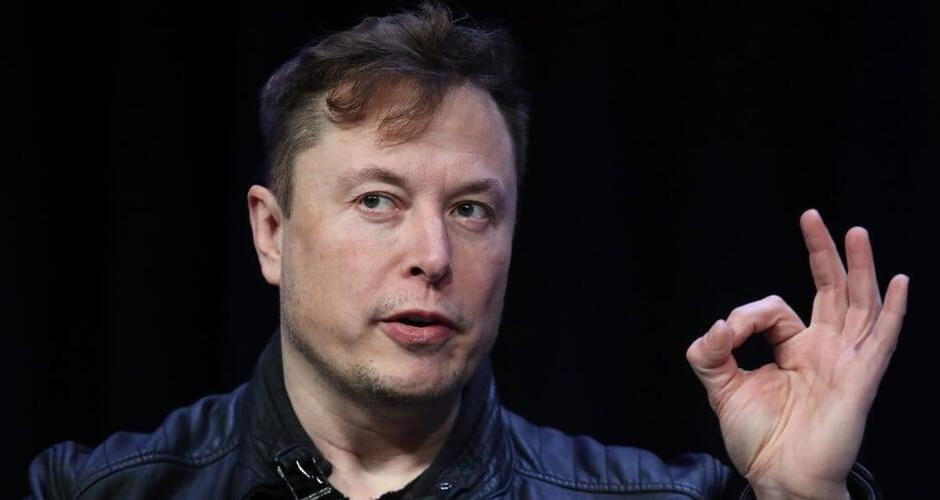
Colin Rusch, Oppenheimer & Co. Managing Director and Senior Research Analyst, sits down with Yahoo Finance Live anchors Seana Smith and Jared Blikre to talk about Tesla’s stock outlook in 2023 following Elon Musk’s invested interest in managing Twitter this past year.
Don’t Miss: Valley of Hype: The culture that built Elizabeth Holmes.
WATCH HERE:

About Yahoo Finance:
At Yahoo Finance, you get free stock quotes, up-to-date news, portfolio management resources, international market data, social interaction and mortgage rates that help you manage your financial life.

Yahoo Finance Plus: With a subscription to Yahoo Finance Plus get the tools you need to invest with confidence. Discover new opportunities with expert research and investment ideas backed by technical and fundamental analysis. Optimize your trades with advanced portfolio insights, fundamental analysis, enhanced charting, and more.
To learn more about Yahoo Finance Plus please visit: https://yhoo.it/33jXYBp.

Connect with Yahoo Finance:
Get the latest news: https://yhoo.it/2fGu5Bb.
Find Yahoo Finance on Facebook: http://bit.ly/2A9u5Zq.
Follow Yahoo Finance on Twitter: http://bit.ly/2LMgloP
Follow Yahoo Finance on Instagram: http://bit.ly/2LOpNYz.
Follow Yahoo Finance Premium on Twitter: https://bit.ly/3hhcnmV

/* */