This website uses a security service to protect against malicious bots. This page is displayed while the website verifies you are not a bot.

A critical Metabase SQL injection vulnerability was exploited in zero-day attacks to breach customer instances in data theft attacks, known to impact Framework and Tally.
Metabase disclosed the attacks on Thursday, warning that its Metabase Cloud SaaS platform was compromised through a previously unknown vulnerability affecting versions 1.58 and above. The company warns that self-hosted installations are also vulnerable.
“We recently identified that Metabase Cloud was attacked by someone utilizing an unknown (“0-day”) security vulnerability in versions 1.58 and above,” Metabase CEO Sameer Al-Sakran warned in a blog post.

Hackers exploited a SQL injection vulnerability to install a post-exploitation toolkit directly inside an Oracle database that was used to breach a corporate network.
The attack was discovered by Huntress on July 27, 2026, after its security platform detected credential theft on a server hosting an Oracle database server.
Apache access logs showed that the attackers gained access through a vulnerable search engine endpoint in a public-facing Java application running Apache Tomcat.
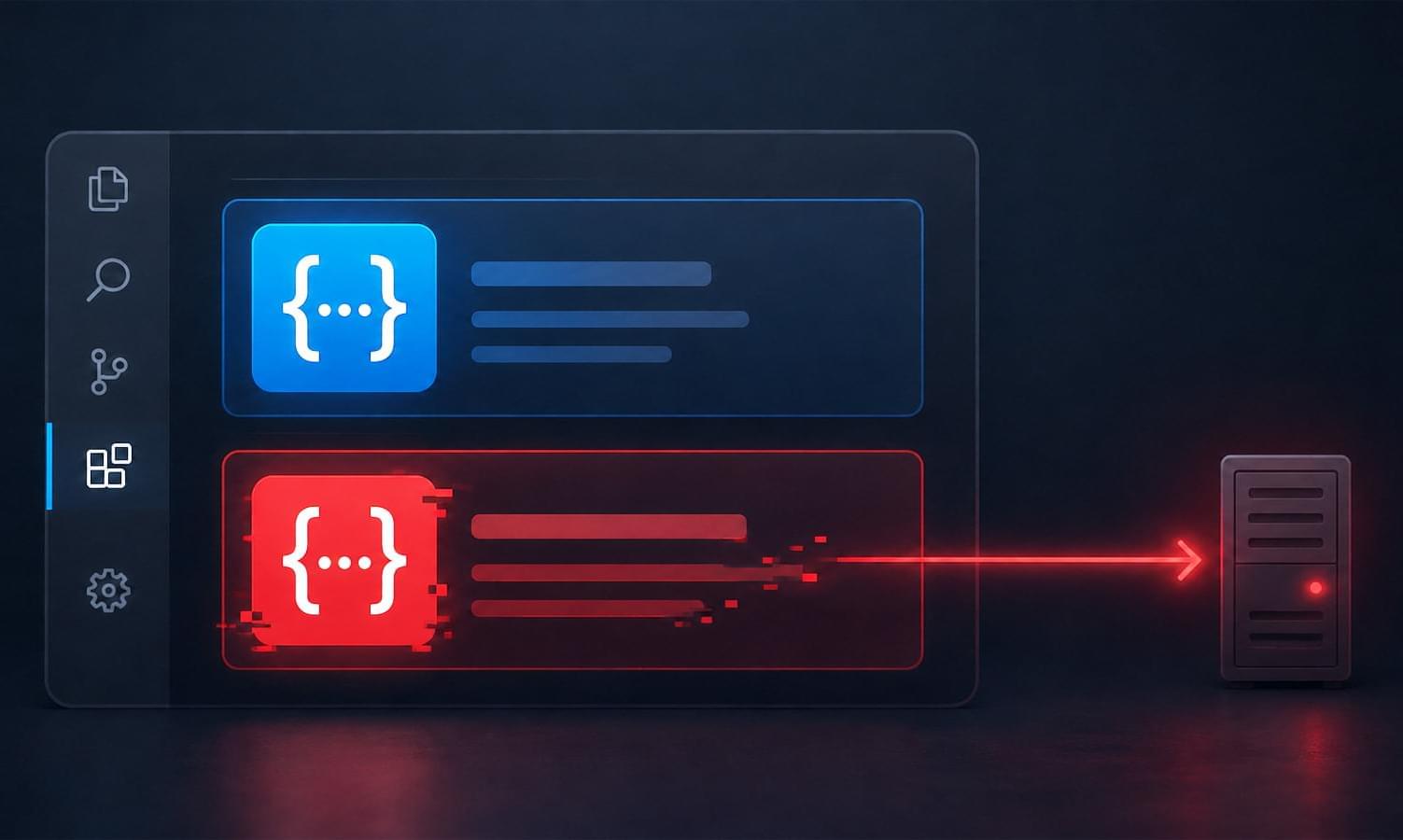
77 extensions on the Open VSX marketplace impersonated legitimate developer tools while transmitting information about the systems and development environments where they were installed.
The so-called “evil twin” campaign was discovered by Manifold Security, which detected the extensions between July 26 and August 1, 2026. Researchers linked all 77 extensions to the same activity through a shared data-exfiltration domain, as well as code and network behavior.
While 58 extensions sent only a small amount of system information, the remaining 19 contained more extensive reconnaissance that exfiltrated developer, Git repository, and continuous integration (CI) metadata.


Digital security currently relies on difficult equations to protect data. For example, when you use a credit card online, the information is locked inside a math problem that would take a modern computer thousands of years to solve. However, if someone builds a powerful enough computer, that security breaks.
To make systems safer, there is a major shift toward quantum security. This is where the unbreakable laws of quantum physics can be used to protect data instead.
For contrast, consider a different case. For roughly $20 in API queries, a team extracted part of a production OpenAI model through its public interface. That sounds like the threat most teams should really fear.
In this article, we try to build a map of the full attack surface that threatens an LLM’s security. With it, a given LLM feature can be located, its exposure points identified, and new threats reasoned about as they appear.
So let’s start with the single most important property.