Toggle light / dark theme

Physics Experiments Take Images ‘Back in Time’

BLOOMINGTON, Ill.— An international team of physicists including Illinois Wesleyan University Professor of Physics Gabe Spalding has shown waves of light can seem to travel back in time.

It may seem like science fiction, but the experiment did not violate the laws of physics. Spalding, his physics student Joseph Richards ’16 and a team of scientists tackled a century-old intuition from Lord Rayleigh regarding the speed of sound. Rayleigh theorized that music being played on an object traveling faster than the speed of sound, a supersonic jet for example, would result in a listener hearing the music playing in reverse. The Spalding team simulated what an observer standing still would see when looking at a superluminal (faster than the speed of light) occurrence. The results of the scientists’ experiment, conducted last summer at Heriot-Watt University in Edinburgh, Scotland, have been published in Science Advances.

“The existence of an absolute limit, the speed of light, is the natural source of the question: what would happen if we cross this limit?” lead author Mattero Clerici told a writer for a post on IFLScience. “Light sources, however, may move faster than the speed of light when their speed is not associated with the physical motion of matter. Following this line of thought, we devised a way to experimentally investigate the [effects] of superluminal motion.”

Finishing What Einstein Started

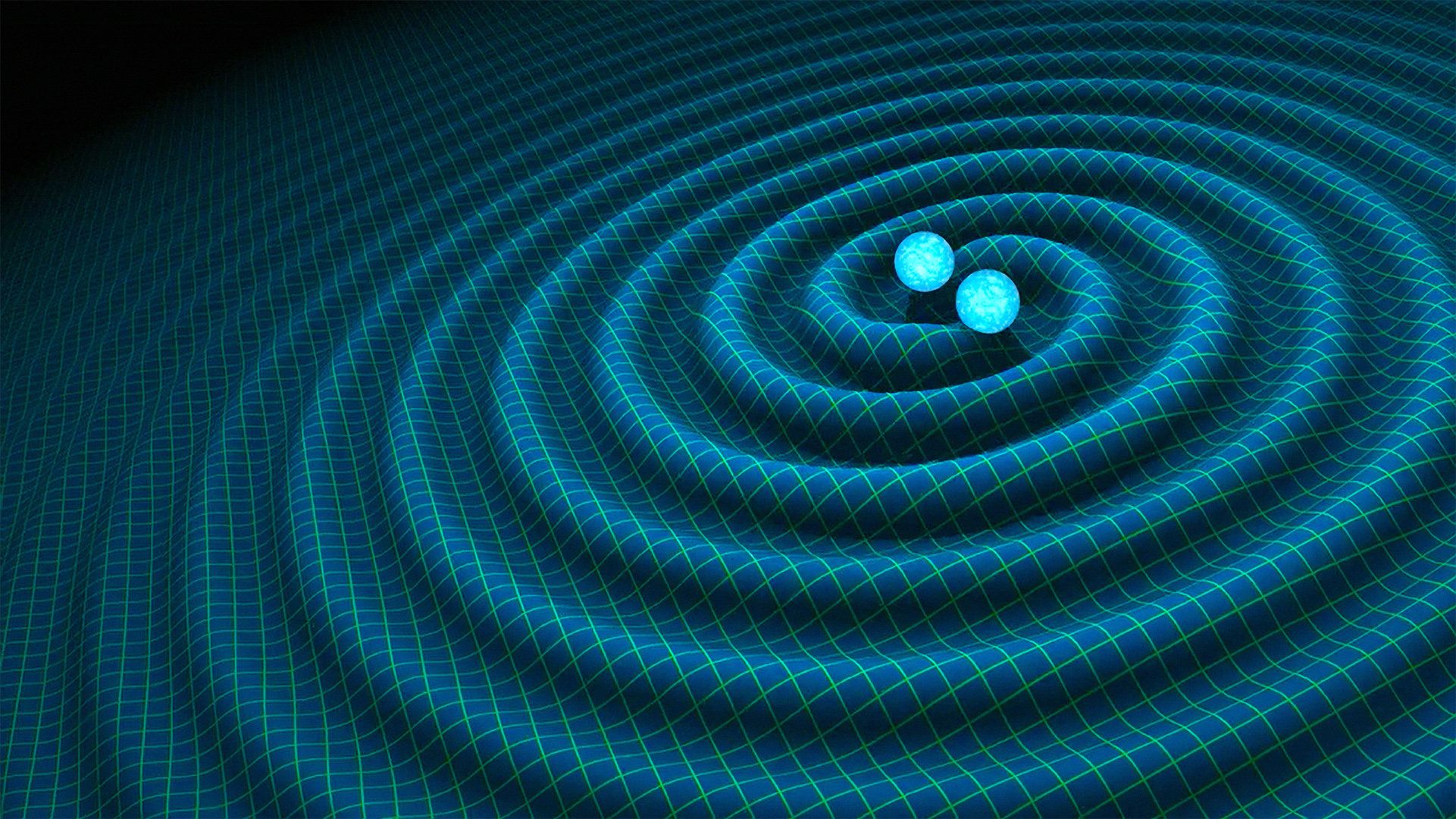
Last September, researchers detected an exceptionally weak signal that lasted for about a tenth of a second: the gentle chirp of a gravitational wave. This feat, which confirmed a prediction made by Albert Einstein 100 years ago, is worthy of the Nobel prize.

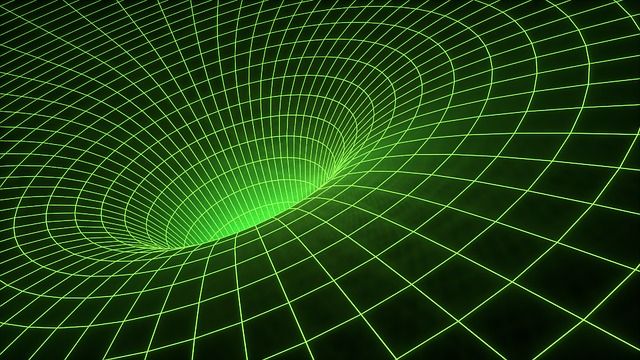
Why is space three-dimensional?

(Phys.org)—The question of why space is three-dimensional (3D) and not some other number of dimensions has puzzled philosophers and scientists since ancient Greece. Space-time overall is four-dimensional, or (3 + 1)-dimensional, where time is the fourth dimension. It’s well-known that the time dimension is related to the second law of thermodynamics: time has one direction (forward) because entropy (a measure of disorder) never decreases in a closed system such as the universe.

In a new paper published in EPL, researchers have proposed that the second law of thermodynamics may also explain why is 3D.

“A number of researchers in the fields of science and philosophy have addressed the problem of the (3+1)-dimensional nature of space-time by justifying the suitable choice of its dimensionality in order to maintain life, stability and complexity,” coauthor Julian Gonzalez-Ayala, at the National Polytechnic Institute in Mexico and the University of Salamanca in Spain, told Phys.org.

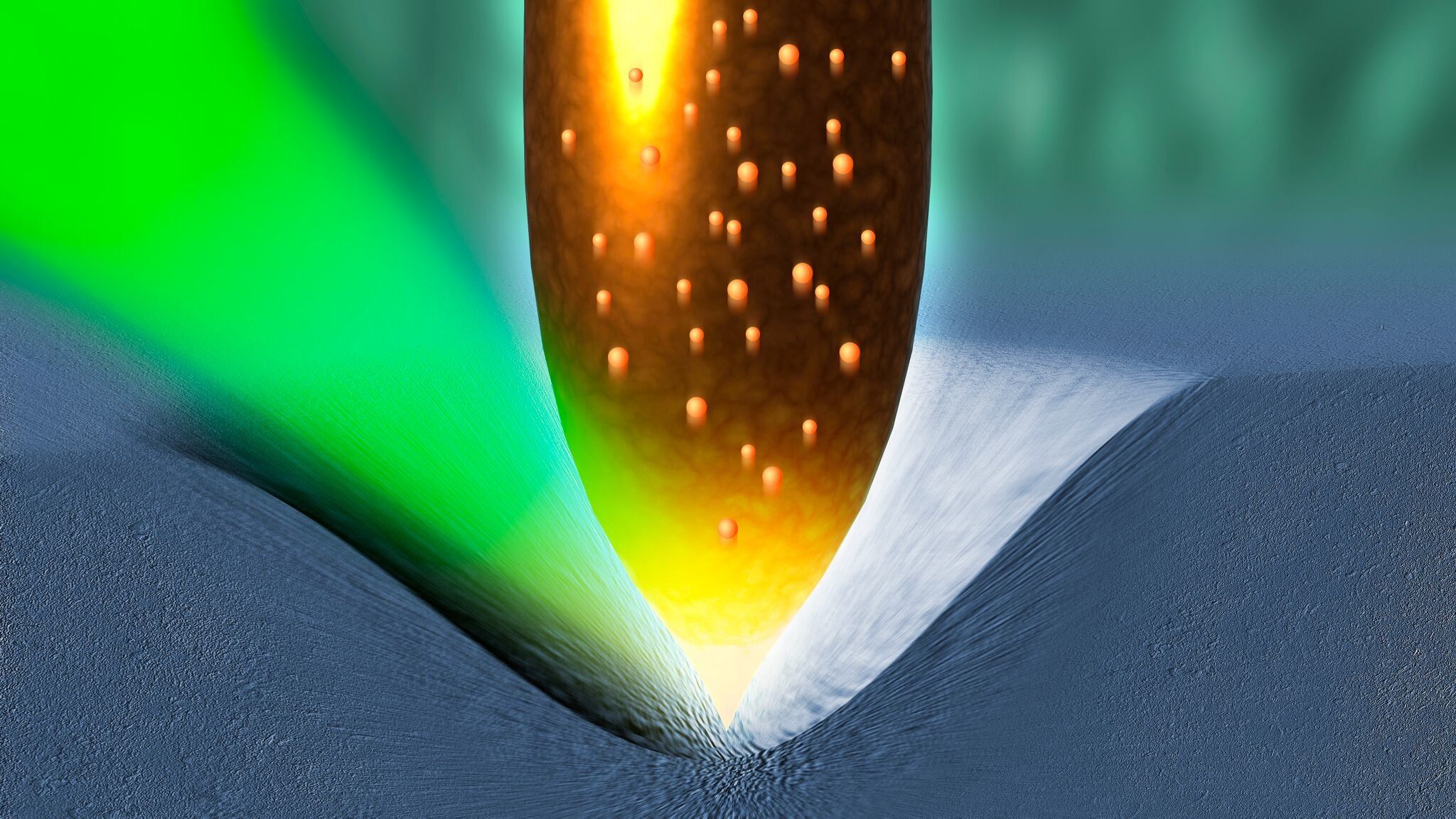
Consortium sets out to build European laser plasma accelerator

The result is a compact accelerator that is not much larger than the laser used to create the plasma. That means that a laser plasma accelerator can be housed in a small building, rather than stretching over hundreds of metres or even several kilometres.

High-quality beam

While laser plasma accelerators exist at several laboratories around the world, EuPRAXIA steering-committee member Carsten Welsch says that “no infrastructure exists where the quality of the accelerated beam satisfies the requirements of industry”. Welsch, who is at the UK’s Cockcroft Institute of Accelerator Science and Technology, adds that “creating such a facility would be a major breakthrough and would attract users from many different sectors”.

Welsch told physicsworld.com that an important goal of EuPRAXIA is to develop technology to “sharpen” the energy spectrum of the electron beam produced by laser plasma accelerators. Today’s accelerators produce electrons with a very wide range of energies, and this spread would have to be reduced significantly before a facility could be used as a source of electrons for scientific and industrial applications.

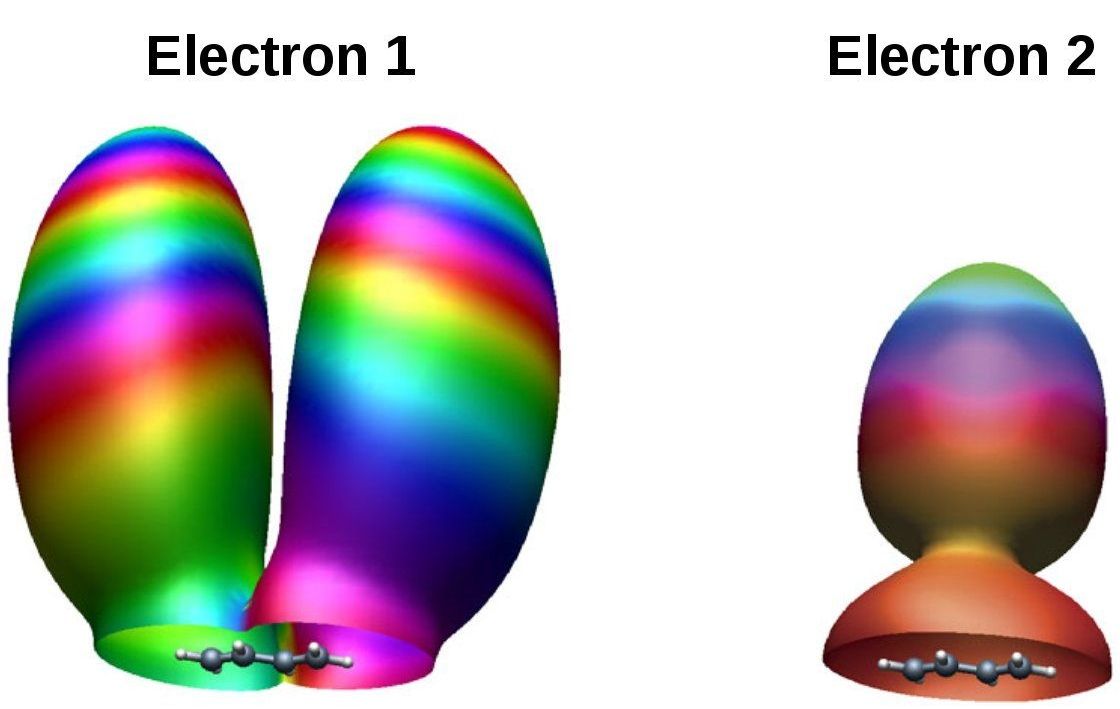
Physicists detect the enigmatic spin momentum of light

Ever since Kepler’s observation in the 17th century that sunlight is one of the reasons that the tails of comets to always face away from the sun, it has been understood that light exerts pressure in the direction it propagates. Radiation pressure is produced by the momentum carried by light, and it plays a crucial role in a variety of systems, from atomic to astronomical scales.

In a recent theoretical paper, a group from the RIKEN Center for Emergent Matter Science in Japan showed that density in non-uniform optical fields has an unusual component, which is orthogonal to the propagation direction of and is proportional to the optical spin, which means the degree of circular polarization. They predicted that this spin momentum would produce a transverse spin-dependent optical force, a few orders of magnitude weaker than the usual .

Now, based on the theoretical work, a group from RIKEN, the University of Bristol, and other institutions have used an extremely precise technique to experimentally verify that light does in fact exert the extraordinary perpendicular force, which is determined by the polarization of the light. The research has been published in Nature Physics.

Photon Propulsion Could Launch Spacecraft To Mars In Days

Scientists say recent advances in laser propulsion technology could make it possible for spacecrafts to reach Mars in as little as 3 days using photon propulsion.

The concept was shared by Philip Lubin, a physics professor at the University of California, Santa Barbara at the NASA Innovative Advanced Concepts (NIAC) symposium. Ultimately, the method seeks to place an ultra-powerful laser in Earth’s orbit, that would use photon pressure to power a “sail-equipped” spacecraft. [ESA To Build “Moon Village” by 2030].

/* */