Toggle light / dark theme

Womb-to-Tomb Management!

Womb-to-Tomb Management! By Mr. Andres Agostini

This is an excerpt from the presentation, “…Womb-to-Tomb Management!…” that discusses some management theories and practices. To read the entire piece, just click the link at the end of article:

Please see the graphic at http://lnkd.in/dbD4G7e

NASA’s Managerial and Leadership Methodology

This is an excerpt from the conclusion section of, “…NASA’s Managerial and Leadership Methodology, Now Unveiled!..!” by Mr. Andres Agostini, that discusses some management theories and practices. To read the entire piece, just click the link at the end of this illustrated article and presentation:


In addition to being aware and adaptable and resilient before the driving forces reshaping the current present and the as-of-now future, there are some extra management suggestions that I concurrently practice:

1. Given the vast amount of insidious risks, futures, challenges, principles, processes, contents, practices, tools, techniques, benefits and opportunities, there needs to be a full-bodied practical and applicable methodology (methodologies are utilized and implemented to solve complex problems and to facilitate the decision-making and anticipatory process).

The manager must always address issues with a Panoramic View and must also exercise the envisioning of both the Whole and the Granularity of Details, along with the embedded (corresponding) interrelationships and dynamics (that is, [i] interrelationships and dynamics of the subtle, [ii] interrelationships and dynamics of the overt and [iii] interrelationships and dynamics of the covert).

DETAIL    DETAIL    DETAILBoth dynamic complexity and detail complexity, along with fuzzy logic, must be pervasively considered, as well.

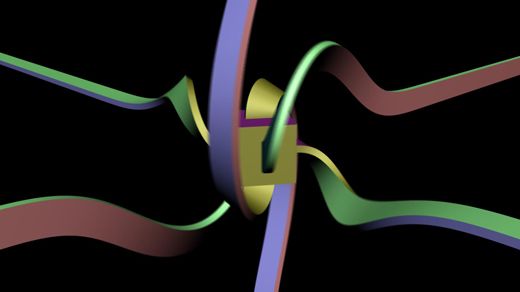
To this end, it is wisely argued, “…You can’t understand the knot without understanding the strands, but in the future, the strands need not remain tied up in the same way as they are today…”

For instance, disparate skills, talents, dexterities and expertise won’t suffice ever. A cohesive and congruent, yet proven methodology (see the one above) must be optimally implemented.

Subsequently, the Chinese proverb indicates, “…Don’t look at the waves but the currents underneath…”

2. One must always be futurewise and technologically fluent. Don’t fight these extreme forces, just use them! One must use counter-intuitiveness (geometrically non-linearly so), insight, hindsight, foresight and far-sight in every day of the present and future (all of this in the most staggeringly exponential mode). To shed some light, I will share two quotes.

The Panchatantra (body of Eastern philosophical knowledge) establishes, “…Knowledge is the true organ of sight, not the eyes.…” And Antonio Machado argues, “… An eye is not an eye because you see it; an eye is an eye because it sees you …”

Managers always need a clear, knowledgeable vision. Did you already connect the dots stemming from the Panchatantra and Machado? Did you already integrate those dots into your big-picture vista?

As side effect, British Prime Minister W. E. Gladstone considered, “…You cannot fight against the future…”

PARALLEL     PARALLEL      PARALLEL
3. In all the Manager does, he / she must observe and apply, at all times, a sine qua non maxim, “…everything is related to everything else…”

4. Always manage as if it were a “project.” Use, at all times, the “…Project Management…” approach.

5. Always use the systems methodology with the applied omniscience perspective.

In this case, David, I mean to assert: The term “Science” equates to about a 90% of “…Exact Sciences…” and to about 10% of “…Social Sciences…” All science must be instituted with the engineering view.

6. Always institute beyond-insurance risk management as you boldly integrate it with your futuring skill / expertise.

BEYOND     BEYOND       BEYOND
7. In my firmest opinion, the following must be complied this way (verbatim): the corporate strategic planning and execution (performing) are a function of a grander application of beyond-insurance risk management. It will never work well the other way around. Transformative and Integrative Risk Management (TAIRM) is the optimal mode to do advanced strategic planning and execution (performing).

TAIRM is not only focused on terminating, mitigating and modulating risks (expenses of treasure and losses of life), but also concentrated on bringing under control fiscally-sound, sustainable organizations and initiatives.

TAIRM underpins sensible business prosperity and sustainable growth and progress.

8. I also believe that we must pragmatically apply the scientific method in all we manage to the best of our capacities.

If we are “…MANAGERS…” in a Knowledge Economy and Knowledge Era (not a knowledge-driven eon because of superficial and hollow caprices of the follies and simpletons), we must do therefore extensive and intensive learning and un-learning for Life if we want to succeed and be sustainable.

As a consequence, Dr. Noel M. Tichy, PhD. argues, “…Today, intellectual assets trump physical assets in nearly every industry…”

Consequently, Alvin Toffler indicates, “…In the world of the future, THE NEW ILLITERATE WILL BE THE PERSON WHO HAS NOT LEARNED TO LEARN…”

We don’t need to be scientists to learn some basic principles of advanced science.

Accordingly, Dr. Carl Sagan, PhD. expressed, “…We live in a society exquisitely dependent on science and technology, in which hardly anyone knows about science and technology…” And Edward Teller stated, “…The science of today is the technology of tomorrow …”

And it is also crucial this quotation by Winston Churchill, “…If we are to bring the broad masses of the people in every land to the table of abundance, IT CAN ONLY BE BY THE TIRELESS IMPROVEMENT OF ALL OF OUR MEANS OF TECHNICAL PRODUCTION…”

I am not a scientist but I tirelessly support responsible scientists and science. I like scientific and technological knowledge and methodologies a great deal.

Chiefly, I am a college autodidact made by his own self and engaged into extreme practical and theoretical world-class learning for Life.

APPROACH    APPROACH     APPROACH9. In any management undertaking, and given the universal volatility and rampant and uninterrupted rate of change, one must think and operate in a fluid womb-to-tomb mode.

The manager must think and operate holistically (both systematically and systemically) at all times.

The manager must also be: i) Multidimensional, ii) Interdisciplinary, iii) Multifaceted, iv) Cross-functional, and v) Multitasking.

That is, the manager must now be an expert state-of-the-art generalist and erudite. ERGO, THIS IS THE NEWEST SPECIALIST AND SPECIALIZATION.

Managers must never manage elements, components or subsystems separately or disparately (that is, they mustn’t ever manage in series).

Managers must always manage all of the entire system at the time (that is, managing in parallel or simultaneously the totality of the whole at once).

10. In any profession, beginning with management, one must always and cleverly upgrade his / her learning and education until the last exhale.

An African proverb argues, “…Tomorrow belongs to the people who prepare for it…” And Winston Churchill established, “…The empires of the future are the empires of the mind…” And an ancient Chinese Proverb: “…It is not our feet that move us along — it is our minds…”
DESTINY       DESTINY       DESTINY
And Malcolm X observed, “…The future belongs to those who prepare for it today…” And Leonard I. Sweet considered, “…The future is not something we enter. The future is something we create…”

And finally, James Thomson argued, “…Great trials seem to be a necessary preparation for great duties …”

AGE       AGE         AGE
Consequently, Dr. Gary Hamel, PhD. indicates, “…What distinguishes our age from every other is not the world-flattening impact of communications, not the economic ascendance of China and India, not the degradation of our climate, and not the resurgence of ancient religious animosities. RATHER, IT IS A FRANTICALLY ACCELERATING PACE OF CHANGE…”

Please see the full presentation at http://goo.gl/8fdwUP

Futuretronium Book

This is an excerpt from, “Futuretronium Book” by Mr. Andres Agostini, that discusses some management theories and practices with the future-ready perspective. To read the entire piece, just click the link at the end of article:

“…#1 Futuretronium ® and the administration and application of the scientific method without innuendos and in crescendo as fluid points of inflections ascertain that the morrow is a thing of the past…”


”…#2 Futuretronium ®, subsequently, there is now and here available the unabridged, authoritative eclictation and elucidation of actionable knowledge from and for the incessantly arrhythmic, abrupt, antagonistic, mordant, caustic, and anarchistic future, as well as the contentious interrelationship between such future and the present…”

“…#3 Futuretronium ®, a radical yet rigorous strong-sense and critico-creative «Futures Thinking», systems approach to quintessential understanding of the complexities, subtleties, and intricacies, as well as the opportunities to be exploited out of the driving forces instilling and inflicting perpetual change into twenty-first century…”

Read the full book at http://lnkd.in/ZxV3Sz to further explore these topics and experience future-ready management practices and theories.

NASA Working on Faster-Than-Light Space Travel

By

warp drive

Well, maybe Star Trek isn’t really that far away. An announcement a few months ago from physicist Harold White surprised many in the space community. White claimed that he and a NASA team were working on developing faster than light warp drive.

White spoke to website io9 last month to explain the project, which combines Einstein’s theory of relativity, the latest in science and a touch of science fiction.

The idea came out of a 1994 paper White wrote regarding an equation proposed by physicist Miguel Alcubierre. Alcubierre suggested that space-time could be warped both in front of and behind a spacecraft.

“Remember, nothing locally exceeds the speed of light, but space can expand and contract at any speed,” White says to io9. “However, space-time is really stiff, so to create the expansion and contraction effect in a useful manner in order for us to reach interstellar destinations in reasonable time periods would require a lot of energy.”

Read more

Supermanagement!

Supermanagement! by Mr. Andres Agostini (Excerpt)

“…What distinguishes our age from every other is not the world-flattening impact of communications, not the economic ascendance of China and India, not the degradation of our climate, and not the resurgence of ancient religious animosities. Rather, it is a frantically accelerating pace of change…”

Read the entire piece at http://lnkd.in/bYP2nDC

The Disruptional Singularity

(Excerpt)

Beyond the managerial challenges (downside risks) presented by the exponential technologies as it is understood in the Technological Singularity and its inherent futuristic forces impacting the present and the future now, there are also some grave global risks that many forms of management have to tackle with immediately.

These grave global risks have nothing to do with advanced science or technology. Many of these hazards stem from nature and some are, as well, man made.

For instance, these grave global risks ─ embodying the Disruptional Singularity ─ are geological, climatological, political, geopolitical, demographic, social, economic, financial, legal and environmental, among others. The Disruptional Singularity’s major risks are gravely threatening us right now, not later.

Read the full document at http://lnkd.in/bYP2nDC

100YSS A Success

I am very pleased to say that the 2013 100YSS conference held in Houston, TX, was a success. I met a lot of like minded people — people who want to make interstellar travel a reality — though we differ in our opinions of when.

I was especially pleased to be able to visit with Mae Jemison, Jill Tarter and Pamela Contag. These three are amazing, shepherding us along. Shepherding us? Yes, are a loose collection of visionaries going every which way.

Mae Jemison
Jill Tarter
Pamela Contag

There is this wonderful German-language Report on the Higgs Boson and the LHC

http://www.ardmediathek.de/wdr-fernsehen/quarks-und-co/quark…d=17482362

I learned from it about the unfathomable degree of social coherence among the many thousand scientists and engineers whose synergy makes this largest constructive effort of humankind since the pyramids possible. And it also revealed the wonderful spirit of Peter Higgs who is a loving mind in the old sense of a devout scientist.

Ranga Yogeshwar here made it clear to me for the first time WHY this brave community could not respond to a novelty that would have destroyed their cohesion. The effort was too big to be disturbed even for a few days of “second thoughts.” For that it was too late from the beginning.

So CERN’s public refusal to update its “safety report” for more than 5 years is part and parcel of the beauty of the new pyramid (the word means “immortality”). Imagine the pyramids’ construction having been disturbed by a news that interfered with its political and divine purpose: This would have meant the end of the whole effort and the civilization behind it.

So I apologize to CERN: “Dear admired colleagues, please, forgive me that I tried to disturb your super-human effort by insisting on a safety update!”

Ordinary mortals have no right to interfere with a divine project. If the devotion behind it implies accepting a harsh fate for the community at large, the Egyptian/Aztec rationality of a large number of dedicated individuals cannot possibly be tampered with. It is not religion: it is collective dynamics – chaos theory – or as my colleague Hermann Haken calls it, Synergetics. “When the flag is flying the brain is in the trumpet.” The rules of rationality are suspended in this case according to the Bible.

Poor Einstein, poor dear Peter Higgs, poor humankind. Hopefully, someone jumps upon the 5 years.
.

Space-Mining For Our Fastest Depleting Resource: Helium

Most of us know helium as that cheap inert lighter-than-air gas we use to fill party balloons and inhale to increase voice-pitch as a party trick for kids. However, helium has much more important uses to humanity — from medical (e.g. MRIs), military and defense (submarine detectors use liquid helium to clean up noisy signals), next-generation nuclear reactors, space shuttles, solar telescopes, infra-red equipment, diving, arc welding, particle physics research (the super-magnets in particle colliders rely on liquid helium), the manufacture of many digital devices, growing silicon crystals, the production of LCDs and optical fibers [1].

The principal reason helium is so important is due to its ultra-low boiling-point and inert nature making it the ultimate coolant of the human race. As the isotope helium-3, helium is also used in nuclear fusion research [2]. However, our Earth supplies of helium are being used at an unprecedented rate and could be depleted within a generation [4] and at the current rate of consumption we will run out within 25 to 30 years. As the gas is often thought of as a cheap gas it is often wasted. However, those who understand the situation, such as Prof Richardson, co-chair of a recent US National Research Council inquiry into the coming helium shortage, warn that the gas is not cheap due to the supply being inexhaustible, but because of the Helium Privatisation Act passed in 1996 by the US Congress.

Helium only accounts for 0.00052% of the Earth’s atmosphere and the majority of the helium harvested comes from beneath the ground being extracted from minerals or tapped gas deposits. This makes it one of the rarest elements of any form on the planet. However, the Act required the helium stores [4] held underground near Amarillo in Texas to be sold off at a fixed rate by 2015 regardless of the market value, to pay off the original cost of the reserve. The Amarillo storage facility holds around half the Earth’s stocks of helium: around a billion cubic meters of the gas. The US currently supplies around 80 percent of the world’s helium supplies, and once this supply is exhausted one can expect the cost of the remaining helium on Earth to increase rapidly — as this is in all practicality quite a non-renewable resource.

There is no chemical way of manufacturing helium, and the supplies we have originated in the very slow radioactive alpha decay that occurs in rocks. It has taken 4.7 billion years for the Earth to accumulate our helium reserves, which we will have exhausted within about a hundred years of the US’s National Helium Reserve having been established in 1925. When this helium is released to the atmosphere, in helium balloons for example, it is lost forever — eventually escaping into space [5][6]. So what shall we do when this crucial resource runs out? Well, in some cases liquid nitrogen (−195°C) may be adopted as a replacement — but in many cases liquid nitrogen cannot be used as a stand alone coolant as tends to be trickier to work with (triple point and melting point at around −210°C) — so the liquid helium is used because it is capable of staying liquid at the extreme cool temperatures required. No more helium means no more helium liquid (−269°C) that is used to cool the NMR (nuclear magnetic resonance apparels), and in other machines such as MRI scanners. One wonders therefore must we look towards space exploration to replenish our most rare of resources on Earth?

Helium is actually the second most abundant resource in the Universe, accounting for as much as 24 percent of the Universe’s mass [7] — mostly in stars and the interstellar medium. Mining gas giants for helium has been proposed in a NASA memorandum on the topic [8] which have also have great abundance of this gas, and it has been suggested that such atmospheric mining may be easier than mining on the surfaces of outer-planet moons. While this had focused on the possibility of mining Helium-3 from the atmosphere of Jupiter, with inherent complications of delta-V and radiation exposure, a more appropriate destination for mining regular helium may rest with the more placid ice-giant Uranus (not considered in the memorandum as the predicted concentration of Helium-3 in the helium portion of the atmosphere of Uranus is quite small). Leaving aside specific needs for Helium-3 which can be mined in sufficient volume much closer — on our Moon [9], a large-scale mining mission to Uranus for the more common non-radioactive isotope could ensure the Earth does not have to compromise so many important sectors of modern technology in the near future due to an exhaustion of our helium stock. A relatively lower wind speed (900 km/h, comparing favorably to 2,100 km/h on Neptune), with a lower G-force (surface gravity 0.886 g, escape velocity 21.3 km/s) [10] and an abundance of helium in its atmosphere (15 ± 3%) could make it a more attractive option, despite the distances (approx 20 AU), extreme cold (50-70K) and radiation belts involved. Rationalising complexities in radiation, distance, time and temperatures involved for human piloting of such a cargo craft, it could be considered more suited to an automated mission, remote-controlled under robotics similar to orbiter probes — even though this would introduce an additional set of challenges — in AI and remote control.

However, we have a Catch 22 — NASA space programs use the gas to aid their shuttles [12]. Liquid fuels are volatile. They are packed with corrosive material that could destroy a spacecraft’s casing. To avoid this problem, a craft is filled with helium gas. If this could be replaced in such shuttles with some alternative, and advances in space transportation made to significantly increase the cargo of such ships over interplanetary-distances, perhaps a case could be made for such ambitious gas mining missions, though at present given current NASA expenditure, this would seem like fantasy [13]. Realistic proposals for exploration of Uranus [14] fall far short of these requirements. Helium is a rare and unique element we need for many industrial purposes, but if we don’t conserve and recycle our helium, we are dooming mankind to a future shortage of helium, with little helium left for future generations here on Earth [15] — as for now, replenishing such from space seems like a rather long shot.

————————————————

[1] 8 Surprising High-Tech Uses for Helium — TechNewsDaily
http://www.technewsdaily.com/5769-8-surprising-high-tech-helium.html
[2] Helium-3 as used in Nuclear Fusion Research
http://en.wikipedia.org/wiki/Helium-3
[3] The world is running out of helium — Nobel prize winner Prof Robert Richardson.
http://phys.org/news201853523.html#jCp
[4] The Federal Helium Reserve
http://www.blm.gov/nm/st/en/prog/energy/helium/federal_helium_program.html
[5] Why the World Will Run Out of Helium
http://scienceblogs.com/startswithabang/2012/12/12/why-the-w…of-helium/
[6] Will We Run Out of Helium?
http://chemistry.about.com/b/2012/11/11/will-we-run-out-of-helium.htm
[7] Where Is Helium Found — Universe Today

Where is Helium Found


[8] Bryan Palaszewski. “Atmospheric Mining in the Outer Solar System“
http://www.grc.nasa.gov/WWW/RT/2005/RT/RTB-palaszewski1.html
[9] Mining the Moon for Helium-3 — RocketCitySpacePioneers
http://www.rocketcityspacepioneers.com/space/mining-the-moon-for-helium-3
[10] Uranus — Physical characteristics
http://en.wikipedia.org/wiki/Uranus
[11] Uranus’s Magnetosphere — NASA Voyager VPL
http://voyager.jpl.nasa.gov/science/uranus_magnetosphere.html
[12] Space shuttle use of propellants and fluids — NASA KSC
http://www-pao.ksc.nasa.gov/kscpao/nasafact/pdf/ssp.pdf
[13] Project Icarus: The Gas Mines of Uranus
http://news.discovery.com/space/project-icarus-helium-3-mining-uranus-110531.htm
[14] The case for a Uranus orbiter, Mark Hofstadter et al.
http://www.lpi.usra.edu/decadal/opag/UranusOrbiter_v7.pdf
[15] Why the World Will Run Out of Helium
http://scienceblogs.com/startswithabang/2012/12/12/why-the-w…of-helium/

From New Physics to New Weapons Technologies

My paper “New Evidence, Conditions, Instruments & Experiments for Gravitational Theories” was finally published by the Journal of Modern Physics, Vol. 8A, 2013. That is today Aug 26, 2013.

Over the last several years I had been compiling a list of inconsistencies in modern contemporary physics. This paper documents 12 inconsistencies. If I’m correct there will sooner or later, be a massive rewrite of modern physical theories, because I do not just criticize contemporary theories but critique them, i.e. provide positive suggestions based on empirical data, on how our theories need to be modified.

The upshot of all this is that I was able to propose two original, new experiments, never before contemplated in physics journals. Both involve new experimental devices, and one is so radically new that it is unthinkable. This is the gravity wave *telescope*.

The new physics lends itself to a new and different forms of weaponizations achievable within the next few decades, with technologies *not* predicted in science fiction. How about that?

I have deliberately left this weaponization part vague because I want to focus on the propulsion technologies. Definitely not something string or quantum-gravity theories can even broach.

We will achieve interstellar travel in my lifetime, and my paper points to where to research this new physics and new technologies.

Paper Details:

Title: New Evidence, Conditions, Instruments & Experiments for Gravitational Theories

Author: Benjamin T Solomon

Journal: Journal of Modern Physics, 2013, Vol 8A

Journal Link (2013, Vol 8A): http://www.scirp.org/journal/JMP/

Paper Links: http://www.scirp.org/journal/PaperDownload.aspx?paperID=36276

Notes: Down load count is displayed at the paper link on the journal web page, so you can see how many people are interested in this topic.

——————————————

Benjamin T Solomon is the author of the 12-year study An Introduction to Gravity Modification

/* */