Toggle light / dark theme

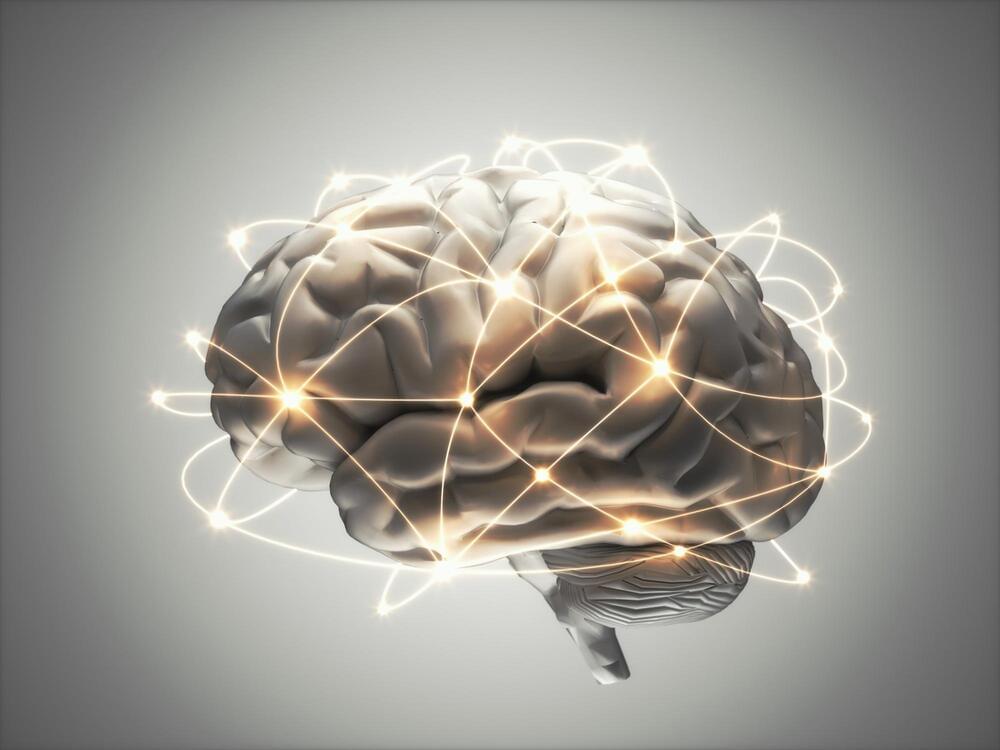
New Research: Talking Faster Is Linked to Better Brain Health As We Age

As we age, we might begin to observe that it takes more time to recall the exact words we want to use. This situation can raise worries about cognitive deterioration and the risk of dementia.

However, a new study by Baycrest and the University of Toronto suggests that talking speed is a more important indicator of brain health than difficulty finding words, which appears to be a normal part of aging. This is one of the first studies to look at both differences in natural speech and brain health among healthy adults.

“Our results indicate that changes in general talking speed may reflect changes in the brain,” says Dr. Jed Meltzer, Baycrest’s Canada Research Chair in Interventional Cognitive Neuroscience and the lead author on this study. “This suggests that talking speed should be tested as part of standard cognitive assessments to help clinicians detect cognitive decline faster and help older adults support their brain health as they age.”

This soft brain implant unfurls its arms under the skull

A soft brain implant that unfurls under the skull could give doctors a less invasive way to monitor patients’ brain activity — and maybe allow people to directly control technology with their minds.

The challenge: Placing an electrode array on the surface of the brain allows scientists to see neural activity in far more detail than is possible with electrodes outside of the skull.

Known as “electrocorticography,” this technology was initially developed to treat people with epilepsy, but it’s also been used in research for other types of neurological disorders and in the development of brain-computer interfaces.

Extreme treatment for alcoholism slashes drinking by 90% in monkeys

According to the CDC, more than 140,000 Americans are dying each year from alcohol-related causes, and the rate of deaths has been rising for years, especially during the pandemic.

The idea: For occasional drinkers, alcohol causes the brain to release more dopamine, a chemical that makes you feel good. Chronic alcohol use, however, causes the brain to produce, and process, less dopamine, and this persistent dopamine deficit has been linked to alcohol relapse.

There is currently no way to reverse the changes in the brain brought about by AUD, but a team of US researchers suspected that an in-development gene therapy for Parkinson’s disease might work as a dopamine-replenishing treatment for alcoholism, too.

Abnormal brain structure identified in children with developmental language problems

A rigorous analysis of numerous studies concludes that a part of the brain traditionally associated with movement is abnormal in children with developmental language impairments, according to Georgetown University Medical Center neuroscientists. The discovery has the potential to improve both the diagnosis and treatment of the language difficulties.

The researchers investigated in developmental language disorder. This condition, which impacts the development of various aspects of language, is about as common as attention-deficit/ (ADHD) and dyslexia, and more prevalent than autism. The scientists found that abnormalities occurred specifically in the anterior neostriatum within the basal ganglia, a structure found deep in the brain.

They describe their findings in Nature Human Behaviour on March 15.

Incredible cancer breakthrough sees woman’s brain tumor almost disappear in just five days

They treated three patients with recurrent glioblastoma using a variant of an existing CAR-T therapy, adding additional antibodies to the treatment — and the results were truly astounding.

According to the paper published in The New England Journal of Medicine, one patient saw their tumor decrease in size by 18.5% two days after the treatment, and by day 69, the tumor had decreased by 60.7%, while another saw their ‘tumor regress rapidly’, according to Mass General Brigham.

After the third patient was treated, an MRI showed that a single infusion had led to a ‘near-complete tumor regression’ in just five days.

Scientists demonstrate how individual differences in ‘whole-brain’ activity are generated in roundworms

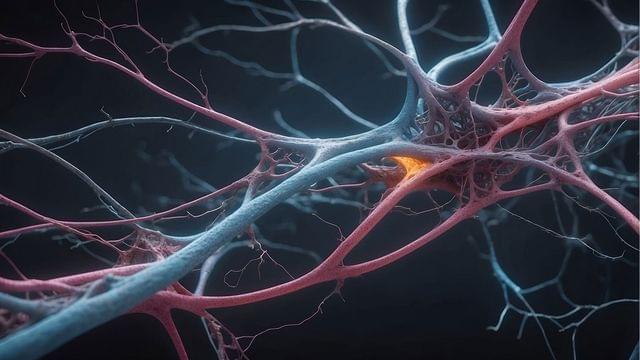
Joint research led by Yu Toyoshima and Yuichi Iino of the University of Tokyo has demonstrated individual differences in, and successfully extracted commonalities from, the whole-brain activity of roundworms. The researchers also found that computer simulations based on the whole-brain activity of roundworms more accurately reflect real-brain activity when they include so-called “noise,” or probabilistic elements. The findings were published in the journal PLOS Computational Biology.

The Caenorhabditis elegans is a favorite among neuroscientists because its 302 neurons are completely mapped. This gives a fantastic opportunity to reveal their neural mechanism at a systems level. Thus far, scientists have been making progress in revealing the different states and patterns of each neuron and the assemblies they form. However, how these states and patterns are generated has been a less explored frontier.

First, the team of scientists measured the neural activity of each cell that makes up a primitive brain in the roundworms’ head area. To achieve this, the worms were placed in a , a tiny device designed for worms to be able to “wiggle” backward and forward while keeping them within the field of view of the objective lens. Then, using a , the scientists filmed how the neurons reacted to changes in salt concentrations.

‘Dramatic’ inroads against aggressive brain cancer

A collaborative project to bring the promise of cell therapy to patients with a deadly form of brain cancer has shown dramatic results among the first patients to receive the novel treatment.

In a paper published Wednesday in The New England Journal of Medicine, researchers from Mass General Cancer…


Cutting-edge therapy shrinks tumors in early glioblastoma trial.

/* */