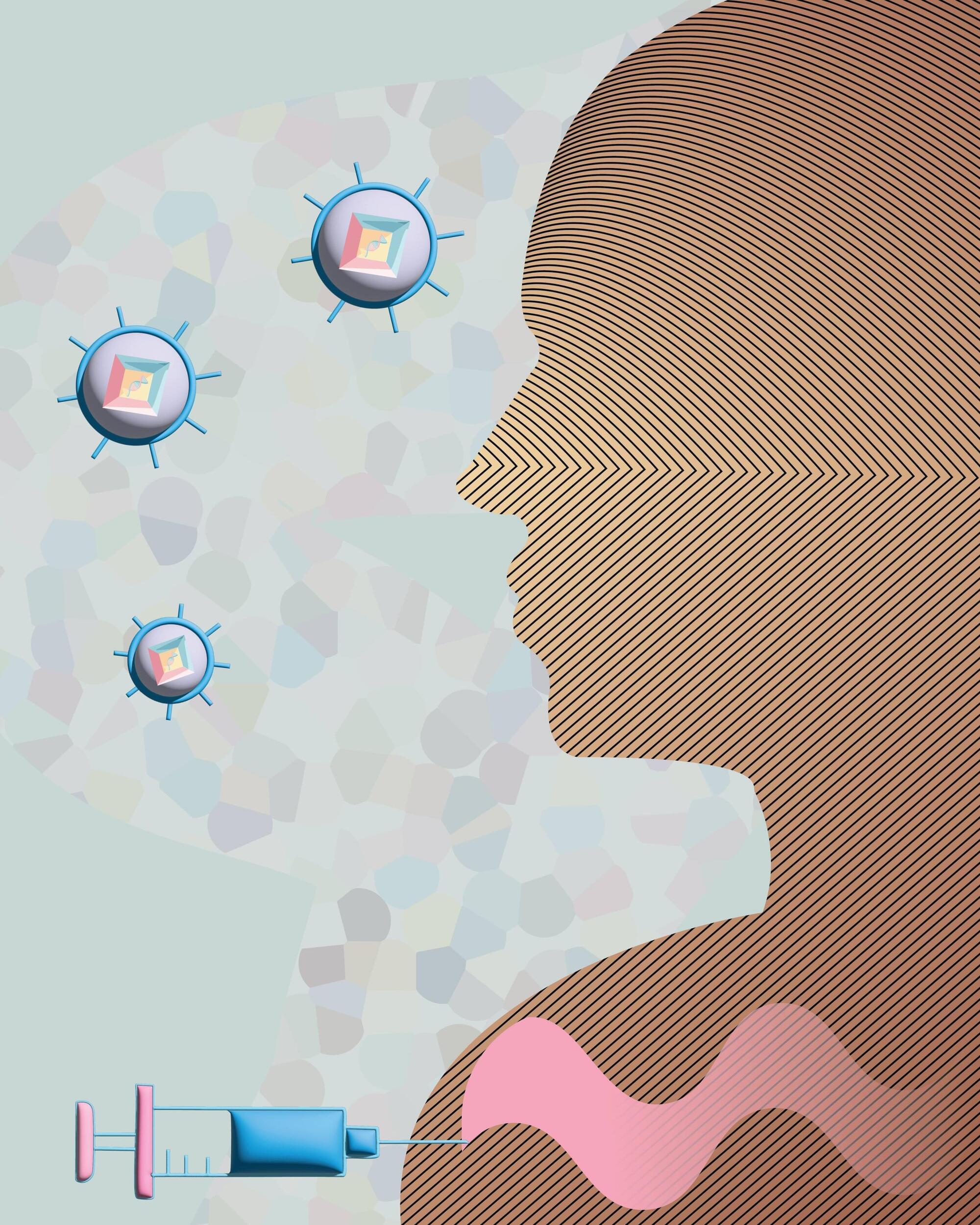
Artificial Intelligence (AI) and Neuroscience are two fields, but they are closely related to each other. Artificial intelligence can provide powerful tools for neuroscience research, and its application in neurological diseases is of great importance. The convergence of AI and neuroscience has sparked a paradigm shift in our understanding of the brain and its intricate mechanisms.
Here, Creative Biolabs explores the remarkable impact of AI in neuroscience research, highlighting its potential to unlock new frontiers in our quest to unravel the mysteries of the brain.
Neuroscience research generates vast amounts of complex data, ranging from molecular and cellular information to data generated by large-scale brain activity. For researchers, analyzing and decoding this wealth of data is a major challenge. AI technology steps in to address just this problem.
In this episode, we welcome Prof. Dr.-Ing. Maurits Ortmanns, a leading expert in ASIC design and professor at the University of Ulm, Germany. With a distinguished career in microelectronics, Dr. Ortmanns has contributed extensively to the development of integrated circuits for biomedical applications. He shares insights into the critical role of ASIC (Application-Specific Integrated Circuit) design in advancing neurotech implants, focusing on low-power, high-speed circuits that are essential for optimizing the performance and reliability of these devices. Dr. Ortmanns also discusses the challenges and future of circuit integration in neurotechnology.
Top 3 Takeaways:
“Each ASIC is very low in cost because the development cost is spread across millions of units. The actual production cost is minimal; the primary expense lies in the development time until the first chips are produced and ready for manufacturing.” “For an inexperienced engineer, it typically takes about six months to a year to design the blueprint for the chip. Then, depending on the manufacturer, it takes an additional four to six months for the actual fabrication of the ASIC. Finally, you would need another one to two months for testing, so the total turnaround time for a small chip is approximately one and a half years.” “Let’s take the example of a neuromodulator. You need recordings or data from neurons and stimulation data going to the neurons, so you essentially have these two components. Then, you encounter challenges like stimulation artifacts. One person might focus on eliminating the stimulation artifact in the recording channel. That requires additional algorithms or hardware, and the data needs to be digitized, which is another task. You may also have someone working on a compression algorithm and building digital circuitry to compress the raw input data. Then, there’s the data interface, power management, and wireless energy delivery. Each person works on their specific innovation, and if everything is well-planned and lucky, all these pieces can come together to create a complete system. However, sometimes you simply don’t have a breakthrough idea for power management or communication.” 0:45 Do you want to introduce yourself better than I just did?
3:15 What is integrated circuit design?
7:30 What are ASIC’s? How are they used in neurotech?
10:15 How does the million dollar fab cost get split into each chip?
Main episode with Garry Nolan: https://youtu.be/g3bk1UXjKLIAs a listener of TOE you can get a special 20% off discount to The Economist and all it has to off…
An unusual public health policy in Wales may have produced the strongest evidence yet that a vaccine can reduce the risk of dementia. In a new study led by Stanford Medicine, researchers analyzing the health records of Welsh older adults discovered that those who received the shingles vaccine were 20% less likely to develop dementia over the next seven years than those who did not receive the vaccine.
The remarkable findings, published in Nature, support an emerging theory that viruses that affect the nervous system can increase the risk of dementia. If further confirmed, the new findings suggest that a preventive intervention for dementia is already close at hand.
This talk by Professor Thomas Polger (Professor of Philosophy at the Department of Philosophy University of Cincinnati) was given on Thursday 24 March 2022 as part of the Dutch Distinguished Lecture Series in Philosophy and Neuroscience (#DDLS).
Title: Thomas Polger “The Puzzling Resilience of Multiple Realization” (#DDLS).
Caption.
Abstract.
According to the multiple realization argument, mental states or processes can be realized in diverse and heterogeneous physical systems; and that fact implies that mental states or processes can not be identified with any one particular kind of physical state or process. In particular, mental processes can not be identified with of brain processes. Moreover, the argument provides a general model for the autonomy of the “special” sciences. The multiple realization argument is widely influential. But over the last thirty years it has also faced serious objections. Despite those objections, most philosophers regard that fact of multiple realization and the cogency of the multiple realization argument as obviously correct. Why is that? What is it about the multiple realization argument that makes it so resilient? One reason that the multiple realization argument is deeply intertwined with a view that minds are, in some sense, computational. But I argue that the sense in which minds are computational does not support the conclusion that they are obviously multiply realized. I argue that the sense in which brains compute does not imply that brains implement computational processes that are multiply realizable, and it does not provide a general model for the autonomy of the special sciences.
The mind is a lot like a computer — but what if this metaphor was more than just a metaphor? According to the philosopher Andy Clark, human minds aren’t just like computers, human minds are computers! In this video, we’ll get into the consequences of this seemingly radical framework and what it means for cognitive science as a whole.
What does it mean to claim that the mind extends beyond the brain in some meaningful way? Can objects in the external environment, such as a computer or even a notebook, combine with the traditional mind to create a cognitive \.
EPFL’s Blue Brain Project deployed its powerful brain simulation technology and expertise in cellular and molecular biology to try and answer this question.