Toggle light / dark theme

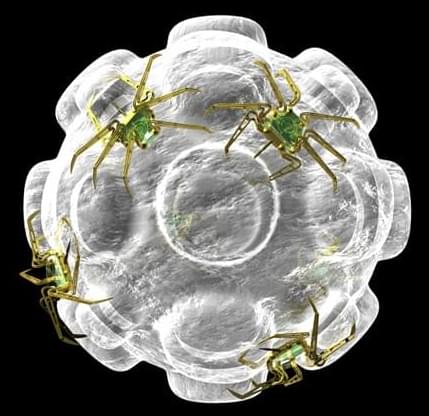
Cancer Research & Nanotech: The Power of Nanobiotechnology|Role of nanotechnology in Cancer

Revolutionizing Cancer Research: The Power of Nanobiotechnology|Role of nanotechnology in Cancer.

#cancer #biotechnology #nanotechnology #nanobiotechnology #cancerbiology #cancerresearch #biology #molecularbiology #molelixirinformatics.

✓Discover the exciting advancements in Nanobiotechnology and its role in transforming cancer research.

✓This groundbreaking field is using tiny nanotechnology to make a big impact in the fight against cancer. From early detection to targeted treatments, Nanobiotechnology is providing new hope for a future free from the disease.

✓ Join us in this informative and educational video as we take you on a journey to understand the power of nanotechnology in cancer research.
Learn about the latest innovations, the potential benefits, and the impact it could have on our lives.
✓Get ready to be inspired and informed about this amazing field.

For more details:
Retina cell breakthrough could help treat blindness

When the scaffold is treated with a steroid called fluocinolone acetonide, which protects against inflammation, the resilience of the cells appears to increase, promoting growth of eye cells. These findings are important in the future development of ocular tissue for transplantation into the patient’s eye.


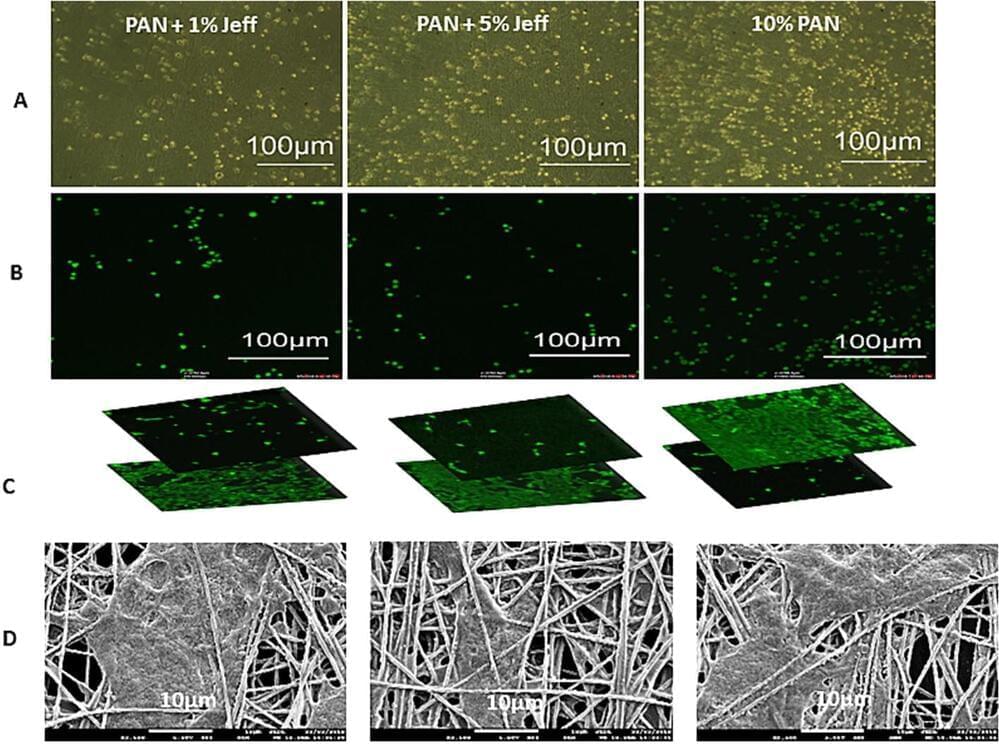
Scientists have found a way to use nanotechnology to create a 3D ‘scaffold’ to grow cells from the retina-paving the way for potential new ways of treating a common cause of blindness.

Researchers, led by Professor Barbara Pierscionek from Anglia Ruskin University (ARU), have been working on a way to successfully grow retinal pigment epithelial (RPE) cells that stay healthy and viable for up to 150 days. RPE cells sit just outside the neural part of the retina and, when damaged, can cause vision to deteriorate.

It is the first time this technology, called ‘electrospinning’, has been used to create a scaffold on which the RPE cells could grow, and could revolutionise treatment for one of age-related macular degeneration, one of the world’s most common vision complaints.

These super strong nanostructures are made of glass-coated DNA

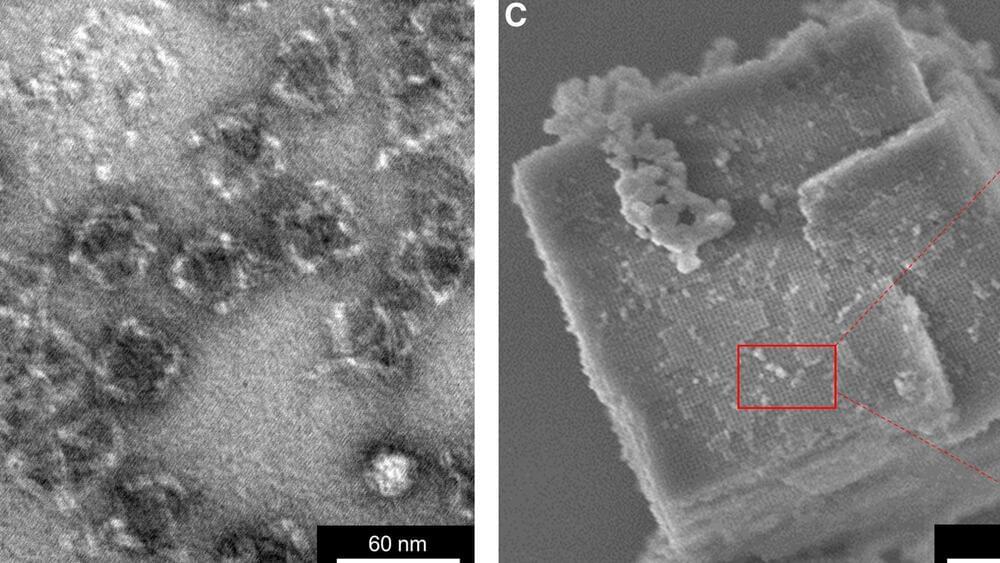
One of the world’s strongest structures could be one of its smallest: Collaborators from University of Connecticut, Columbia University, and Brookhaven National Lab have developed a new nanomaterial composed of DNA strands coated in flawless glass. At proportionally four times stronger and five times lighter than steel, the minuscule latticework structures could provide a template for a new wave of extremely durable and lightweight vehicles, body armor, and countless other products.

As detailed recently in Cell Reports Physical Science, the team first connected multiple portions of self-assembling DNA to form a nanostructure framework akin to a building’s support beams. They then coated the enjoined DNA strands with a glass-like material only a few hundred atoms thick, leaving relatively large empty spaces akin to rooms in a house. These spaces allowed the resulting nanomaterial to remain extremely lightweight, while the glass reinforced its durability.

[Related: Microscopic mesh could be the key to lighter, stronger body armor.].

Light enhancement in nanoscale structures could aid cancer detection

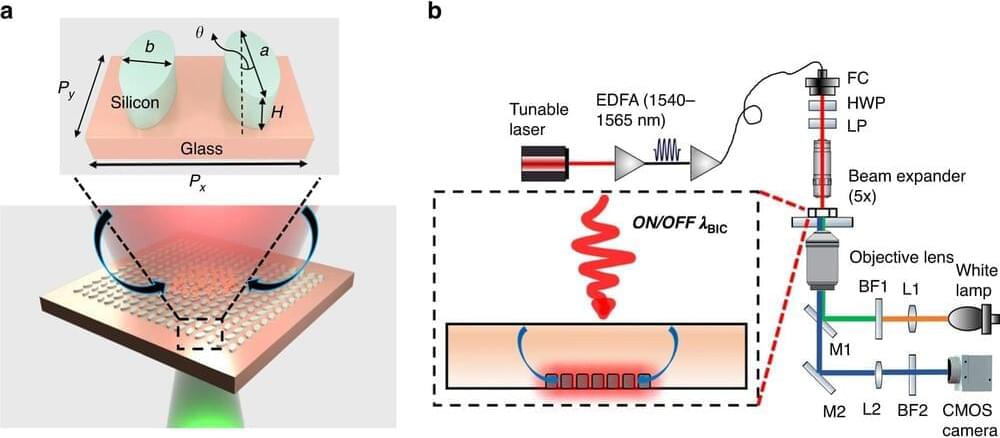
A cutting-edge practice by two Vanderbilt researchers that enhances light in nanoscale structures could help in the detection of diseases like cancer.

The work by Justus Ndukaife, assistant professor of electrical engineering, and Sen Yang, a recent Ph.D. graduate from Ndukaife’s lab in Interdisciplinary Materials Science under Ndukaife, was published in Light: Science & Applications.

In their paper, they show how an engineered nanostructured surface—quasi-BIC dielectric metasurface—can be used to trap micro and sub-micron particles within seconds, which they say helps in the transport of analytes to biosensing surfaces. The metasurface can also serve as a sensor to detect the aggregated particles or molecules, and can be used to enhance fluorescence or Raman signals from the , thereby boosting detection sensitivity, according to the researchers.

New protein-based nano-switches could lead to faster, more accurate diagnostic tests

QUT researchers have developed a new approach for designing molecular ON-OFF switches based on proteins which can be used in a multitude of biotechnological, biomedical and bioengineering applications.

The research team demonstrated that this novel approach allows them to design and build faster and more accurate diagnostic tests for detecting diseases, monitoring water quality and detecting environmental pollutants.

Professor Kirill Alexandrov, of the QUT School of Biology and Environmental Science, lead scientist on the CSIRO-QUT Synthetic Biology Alliance and a researcher with the ARC Centre of Excellence in Synthetic Biology, said that the new technique published in the prestigious scientific journal Nature Nanotechnology demonstrated that protein switches could be engineered in a predictable way.

Retina cells cultured on nanofiber scaffolds could help treat blindness

Scientists have found a way to use nanotechnology to create a 3D “scaffold” to grow cells from the retina—paving the way for potential new ways of treating a common cause of blindness.

Researchers, led by Professor Barbara Pierscionek from Anglia Ruskin University (ARU), have been working on a way to successfully grow epithelial (RPE) cells that stay healthy and viable for up to 150 days. RPE cells sit just outside the neural part of the retina, and when damaged, can cause vision to deteriorate. Their work is published in Materials & Design.

It is the first time this technology, called “electrospinning,” has been used to create a scaffold on which the RPE cells could grow, and could revolutionize treatment for one of age-related macular degeneration, one of the world’s most common vision complaints.

Researchers demonstrate scaling of aligned carbon nanotube transistors to below sub-10 nm nodes

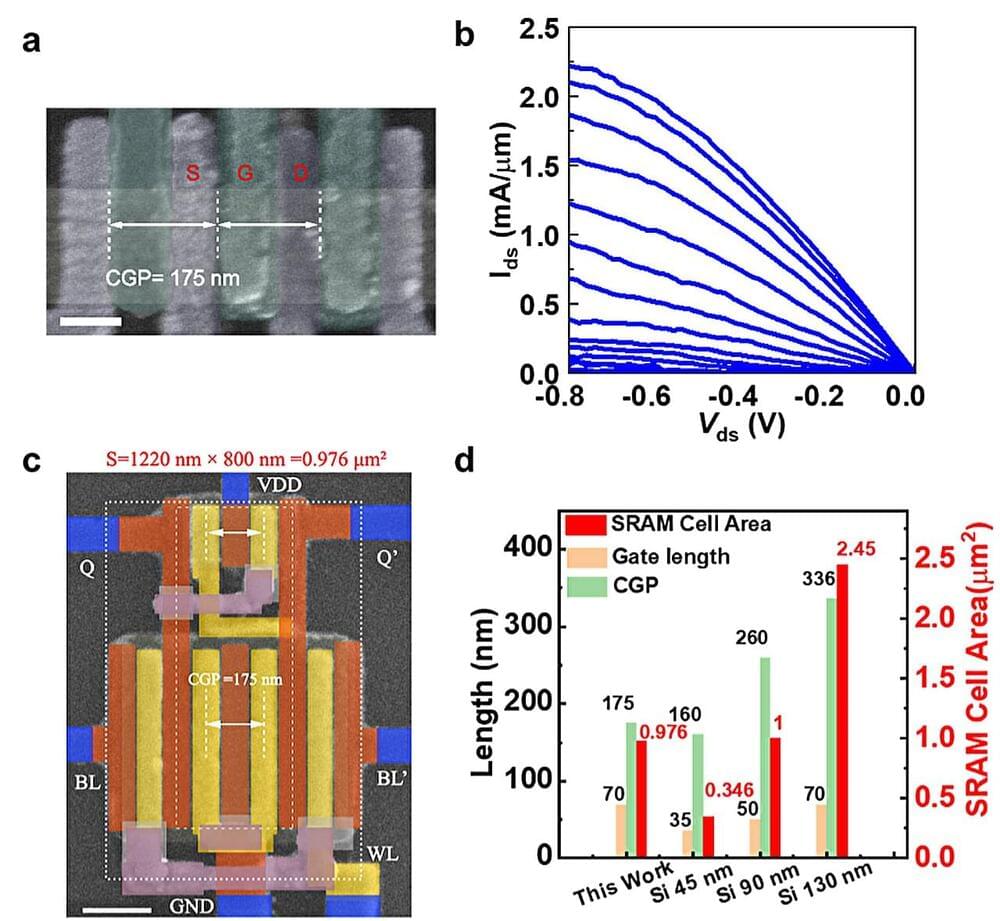
Carbon nanotubes, large cylindrical molecules composed of hybridized carbon atoms arranged in a hexagonal structure, recently attracted significant attention among electronics engineers. Due to their geometric configuration and advantageous electronic properties, these unique molecules could be used to create smaller field-effect transistors (FETs) that exhibit high energy efficiencies.

FETs based on carbon nanotubes have the potential to outperform smaller transistors based on silicon, yet their advantage in real-world implementations has yet to be conclusively demonstrated. A recent paper by researchers at Peking University and other institutes in China, published in Nature Electronics, outlines the realization of FETs based on carbon nanotubes that can be scaled to the same size of a 10 nm silicon technology node.

“Recent progress in achieving wafer-scale high density semiconducting carbon nanotube arrays brough us one step closer to the practical use of carbon nanotubes in CMOS circuits,” Zhiyong Zhang, one of the researchers who carried out the study, told Phys.org. “However, previous research efforts have mainly focused on the scaling of channel or gate length of carbon nanotube transistors while keeping large contact dimensions, which cannot be accepted for high density CMOS circuits in practical applications.

New study reveals spin in quantum dots’ carrier multiplication

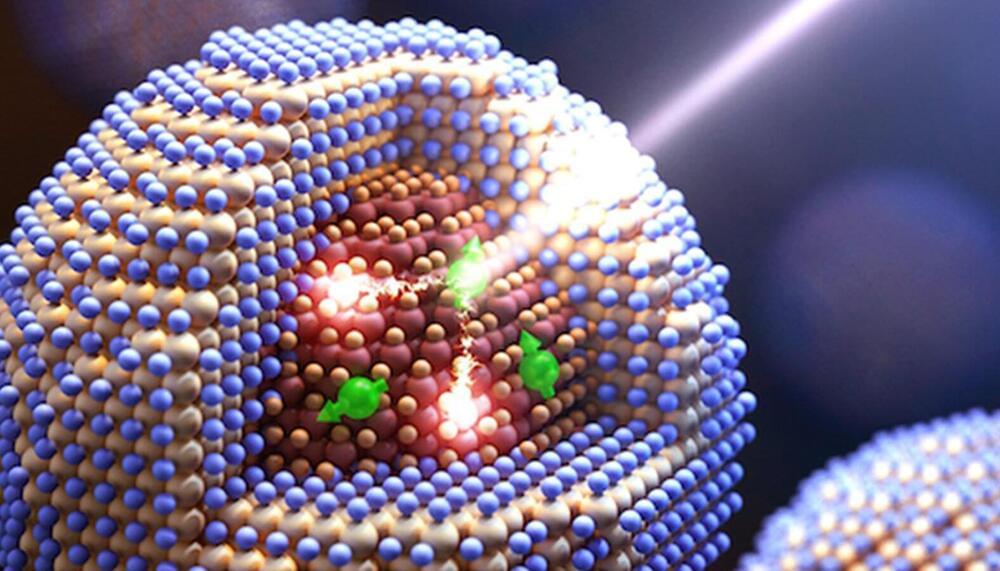
A new approach to developing semiconductor materials at tiny scales could help boost applications that rely on converting light to energy. A Los Alamos-led research team incorporated magnetic dopants into specially engineered colloidal quantum dots—nanoscale-size semiconductor crystals—and was able to achieve effects that may power solar cell technology, photo detectors and applications that depend on light to drive chemical reactions.

“In quantum dots comprising a lead-selenide core and a cadmium-selenide shell, manganese ions act as tiny magnets whose magnetic spins strongly interact with both the core and the shell of the quantum dot,” said Victor Klimov, leader of the Los Alamos nanotechnology team and the project’s principal investigator. “In the course of these interactions, energy can be transferred to and from the manganese ion by flipping its spin—a process commonly termed spin exchange.”

In spin-exchange multiplication, a single absorbed photon generates not one but two , also known as excitons, which occur as a result of spin-flip relaxation of an excited manganese ion.

Research team develops a washable, transparent, and flexible OLED with MXene nanotechnology

Transparent and flexible displays, which have received a lot of attention in various fields including automobile displays, bio–health care, military, and fashion, are in fact known to break easily when experiencing small deformations. To solve this problem, active research is being conducted on many transparent and flexible conductive materials such as carbon nanotubes, graphene, silver nanowires, and conductive polymers.

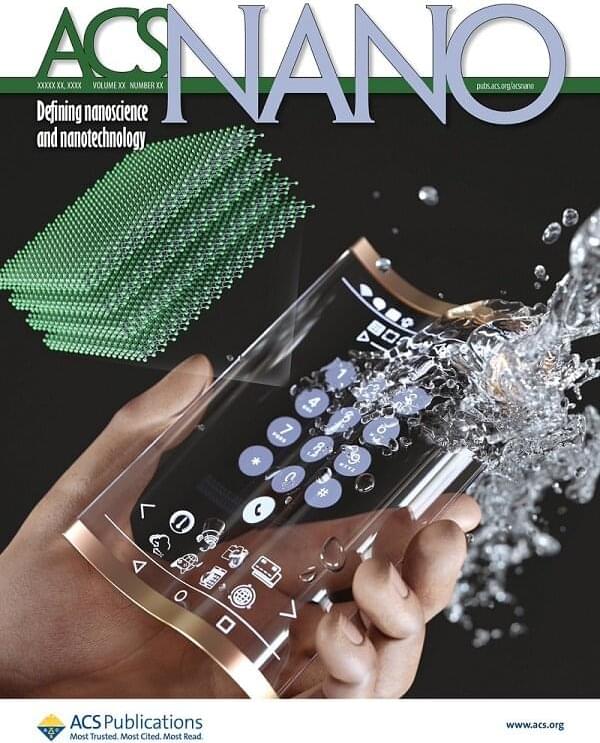
A joint research team led by Professor Kyung Cheol Choi from the KAIST School of Electrical Engineering and Dr. Yonghee Lee from the National Nano Fab Center (NNFC) announced the successful development of a water-resistant, transparent, and flexible OLED using MXene nanotechnology. The material can emit and transmit light even when exposed to water.

This research was published as a front cover story of ACS Nano under the title “Highly Air-Stable, Flexible, and Water-Resistive 2D Titanium Carbide MXene-Based RGB Organic Light-Emitting Diode Displays for Transparent Free-Form Electronics.”

A new type of quantum bit in semiconductor nanostructures

Researchers have created a quantum superposition state in a semiconductor nanostructure that might serve as a basis for quantum computing. The trick: two optical laser pulses that act as a single terahertz laser pulse.

A German-Chinese research team has successfully created a quantum bit in a semiconductor nanostructure. Using a special energy transition, the researchers created a state in a quantum dot—a tiny area of the semiconductor—in which an electron hole simultaneously possessed two different energy levels. Such superposition states are fundamental for quantum computing.

However, excitation of the state would require a large-scale free-electron that can emit light in the terahertz range. Additionally, this wavelength is too long to focus the beam on the tiny quantum dot. The German-Chinese team has now achieved the excitation with two finely tuned short-wavelength optical .

/* */