Nothing lasts forever. Humans, planets, stars, galaxies, maybe even the Universe itself, everything has an expiration date. But things in the quantum realm don’t always follow the rules. Scientists have found that quasiparticles in quantum systems could be effectively immortal.
That doesn’t mean they don’t decay, which is reassuring. But once these quasiparticles have decayed, they are able to reorganise themselves back into existence, possibly ad infinitum.
This seemingly flies right in the face of the second law of thermodynamics, which asserts that entropy in an isolated system can only move in an increasing direction: things can only break down, not build back up again.
This technology may one day be used to revive patient suspended in cryonics.
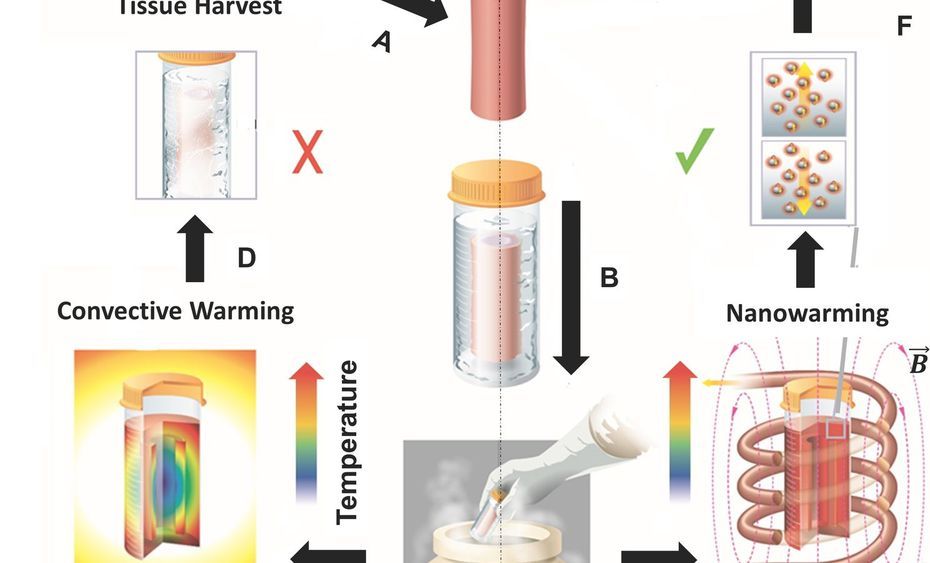
A new way to warm up frozen tissue using tiny vibrating particles could one day help with the problem of organ shortages.
We know how to cool organs to cryogenic temperatures, which is usually below 320 degrees Fahrenheit. But the organs can’t be stored for long — sometimes only four hours for heart and lungs — because they get damaged when you try to warm them up. As a result, more than 60 percent of donor hearts and lungs aren’t transplanted. In a study published today in Science Translational Medicine, scientists used nanoparticles to warm up frozen tissue quickly and without damaging the organs. Within a decade, this could lead to being able to store entire organs in organ banks for a long period of time, the authors say.
For today’s study, the team rewarmed 50 milliliters of tissue and solution with magnetic nanoparticles. Magnetic particles create heat in electromagnetic fields, says study co-author Zhe Gao, an post-doc studying nanotechnology at the University of Minnesota. Basically, the scientists infused a tissue with a special kind of nanoparticle made of silica-coated iron oxide. Then, they expose it to a magnetic field. Think of the nanoparticles as antennae. Once they get pick up the “signal” from the magnetic fields, they start to vibrate, and this creates the heat that warms up the organ quickly.
VITAMINS-Nutrients have long been described as healers-Life extending amino acids-chemicals… As has been done in the past holds true presently. There are trained professionals who for one reason or another attack the vitamin industry.
(Many claiming that vitamins do nothing and are washed from the body???)
How then did niacin extraction and synthesizing and being put into foods help end many sicknesses??? Yes Niacin is listed as a vitamin and a medicine…
So why is so much done and said against supplements??? Snake oil salesman and Big Pharma. I hate the term snake oil but it has been used against me and many others such as Doctor Aubrey de Grey…
SADLY There are those minds that have lied and harmed many down through the years by conartist-snake oil salesman… BUT For every bad product in nutrients there are 5 and more that are not so… WHAT SAY YE??? AEWR gerevivify.blogspot.com/
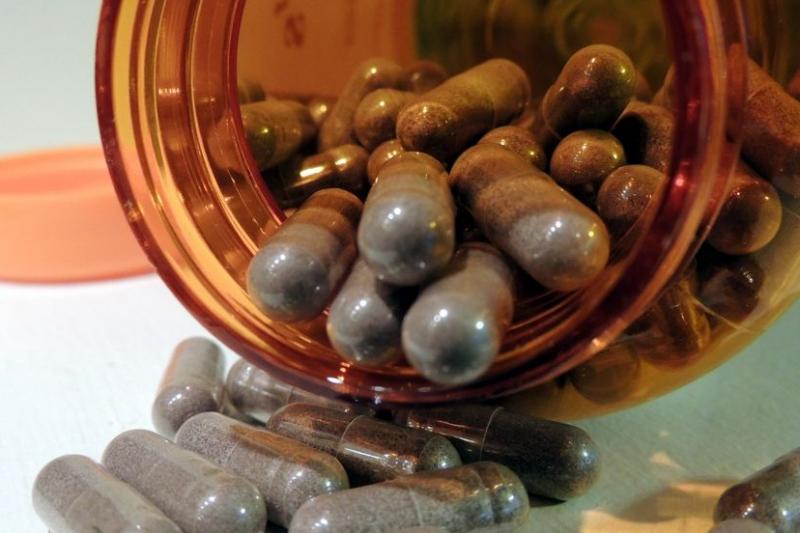
Jan. 2 (UPI) — While the vast majority of over-the-counter nutritional and herbal supplements are safe — unless they are consumed in large quantities — not all of them deliver on their promised benefits.
The great Elizabeth Parrish on ageing the most sinister disease on earth… I hate it when words are used to make aging sound like a normal sickness or a great sickness, Such as grandest??? Or most Important disease??? The decomposer disease that Woman-man has called natural aging all these years has been in reality a clandestine plague so complicated yet so easily seen by the naked eye if certain scholars-textbooks do not get in the way…
Aging is The Eukaryotic Cellular pandemic plague AEWR has named the Senesonic-Sensonic plague. A disease that causes all of our cells to age nearly at the same rate causing our cells to have to regenerate the day long or the body drops.
WHEN without the Plague our cells individually would live decades instead of mere hours. Causing a bodily effect of Super Longevity-truly Immortality living into millennia once the plague is ended. SO IT IS NOT Liz’s fault, {I met her at RAADFEST 2018 she is a very special mind} but it is the pioneers of biology’s fault that the Human being has died needlessly for now centuries.
Aging could have been cured 200 and more years ago… I search for strong willed men and Women to now join AEWR as investors-partners in agings now end. We have found the causes and yes a very expensive cure we named the Gerevivify Algorithm… gerevivify.blogspot.com/ WE HAVE MUCH TO DO… r.p.berry & AEWR.
The English philosopher Thomas Hobbes correctly identified the historical state of humans when he said “Life in the state of nature is nasty, brutish and short.” For most of history the average human rarely lived beyond 35 years, but today the average Briton lives beyond 85 years. In this video, Liz argues that this luxury of time helps us realise that we must live with the consequences of our actions — which facilitates caring about our environment and each other. Liz’s organisation, BioViva, intend to accelerate this trend by using advanced medicine to increase health and longevity beyond 100 years for everyone.
2019 is quite a milestone for LEAF; this will be our fourth year of bringing you the latest industry news, organizing online events, hosting our annual conference in New York, and crowdsourcing important research projects over at Lifespan.io. We have been incredibly busy and, as has been customary in previous years, we will be taking a look back at the year.
YouGov conducted a survey determining that younger Americans are more interested in longer lives, and indefinite lifespans, than their older counterparts.
When researchers gave mice drugs that fight brain inflammation, senile rodents showed fewer signs of cognitive decline and could better learn new things.
Epigenetic reprogramming. “We are very radical life extensionists, neither healthspan increase no morbidity compression are enough, we would like to add decades if not centuries to the human lifespan.”
Yuri Deigin Founder of Youthereum, speaking at Master Investor’s Investing in the Age of Longevity 2019 event.
Master Investor is an investment media and events company that delivers independent, financial commentary and analysis to UK private investors and traders through events, magazines, news, blogs, podcasts and daily/weekly newsletters.
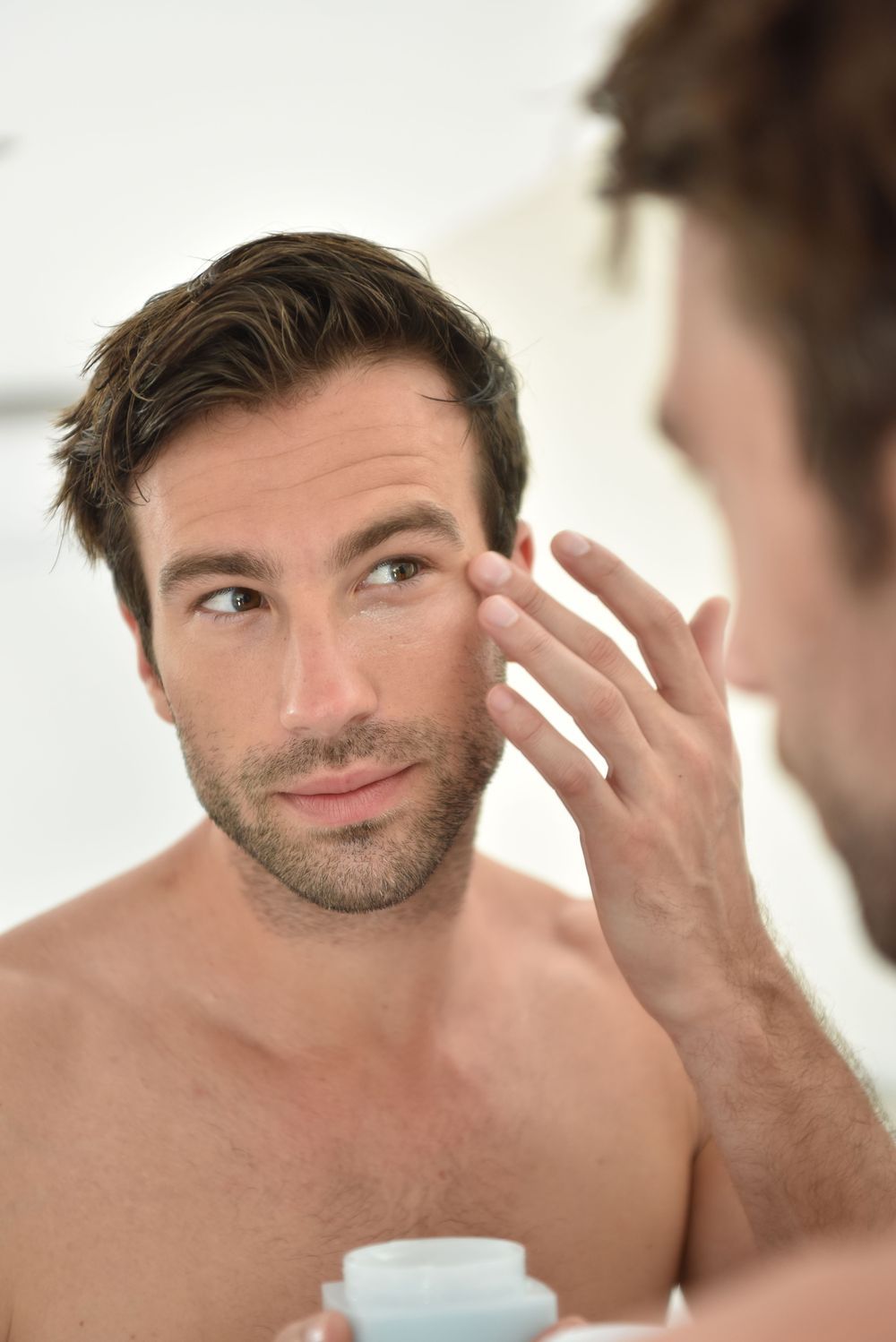
Once you hit a certain age you start to see subtle changes and many begin to search for options to hold onto the appearance of youthfulness for as long as they can in the form of lotions, potions, creams, supplements, serums, diets, and concoctions among others.
Soon there may be a new addition to the anti-aging lineup, that being rapamycin which is an FDA approved drug that is normally used to prevent organ rejection after transplant, the drug may also be helpful in slowing in aging skin according to a recent study published in Geroscience.
Studies have used rapamycin to effectively slow aging in worms, flies, and mice but this study from Drexel University College of Medicine is the first to show an effect on aging in human tissues, specifically the skin; findings showed signs of aging to be reduced including decreases in wrinkles, reduced sagging, and more even skin tone when delivered to humans topically.
How can we live longer? How do we live healthily to extend our lifespans? How do we feel younger than our age? These are among the many questions scientists have been trying to answer about aging.