Toggle light / dark theme

Researchers identify 6,500 genes that are expressed differently in men and women

Men and women differ in obvious and less obvious ways—for example, in the prevalence of certain diseases or reactions to drugs. How are these connected to one’s sex? Weizmann Institute of Science researchers recently uncovered thousands of human genes that are expressed—copied out to make proteins—differently in the two sexes. Their findings showed that harmful mutations in these particular genes tend to accumulate in the population in relatively high frequencies, and the study explains why. The detailed map of these genes, reported in BMC Biology, provides evidence that males and females undergo a sort of separate, but interconnected evolution.

Several years ago, Prof. Shmuel Pietrokovski and Dr. Moran Gershoni of the Weizmann Institute’s Molecular Genetics Department asked why the prevalence of certain human diseases is common. Specifically, about 15% of couples trying to conceive are defined as infertile, which suggested that mutations that impair fertility are relatively widespread. This seems paradoxical: Common sense says that these mutations, which directly affect the survival of the species by reducing the number of offspring, should have been quickly weeded out by natural selection. Pietrokovski and Gershoni showed that mutations in genes specific to sperm formation persist precisely because the genes are expressed only in men. A mutation that is problematic for only half the population, no matter how detrimental, is freely passed on to the next generation by the other half.

In the present study, the researchers expanded their analyses to include genes that, though not necessary for fertility, are still expressed differently in the two sexes. To identify these genes, the scientists turned to the GTEx project—a very large study of human recorded for numerous organs and tissues in the bodies of close to 550 adult donors. That project enabled, for the first time, the comprehensive mapping of the human sex-differential genetic architecture.

Bottlenecks to the Development of Rejuvenation Biotechnology

What are the bottlenecks in developing a rejuvenation biotechnology industry? LEAF takes a look at some of the main problems we are facing in creating that industry.


One of the most frequent questions we get from the general public is when will rejuvenation therapies arrive? Whilst young people can wait for a few more decades, those in middle age are much more concerned. According to statistics, new drug development takes 17 years on average, but the countdown only begins at the moment when the underlying mechanisms are investigated well enough – which cannot be said about the mechanisms of aging.

We have made great progress in understanding aging in the last decade thanks to the march of technology. One solution to an aging process is entering human clinical trials this year: a therapy to remove aged damaged cells to promote tissue repair and reduce chronic inflammation. This is of course fantastic news but progress is still too slow.

So what is holding back the pace of the research on aging and what we can do to foster progress?

Research on aging began a long time ago. Back in 1900s the pioneer immunologist Elie Metchnikoff, vice-president of Pasteur Institute in Paris, wrote: “Aging is a disease and it should be treated like any other”. His work helped to shape interest in aging as a manageable problem. The first attempts to extend healthy life in animals by evidence-based medical means were undertaken in the middle of the 20th century. The most remarkable progress however has been made in the last 20 years, when the field of genetics finally blossomed. But the solutions that might prevent or significantly postpone age-related diseases are not available yet. Some might think it was a conspiracy, but there is actually a much more simple explanation: there are many factors that are holding back progress.

Tensions Flare as Scientists Go Public With Plan to Build Synthetic Human DNA

One of the greatest ethical debates in science — manipulating the fundamental building blocks of life — is set to heat up once more.

According to scientists behind an ambitious and controversial plan to write the human genome from the ground up, synthesising DNA and incorporating it into mammalian and even human cells could be as little as four to five years away.

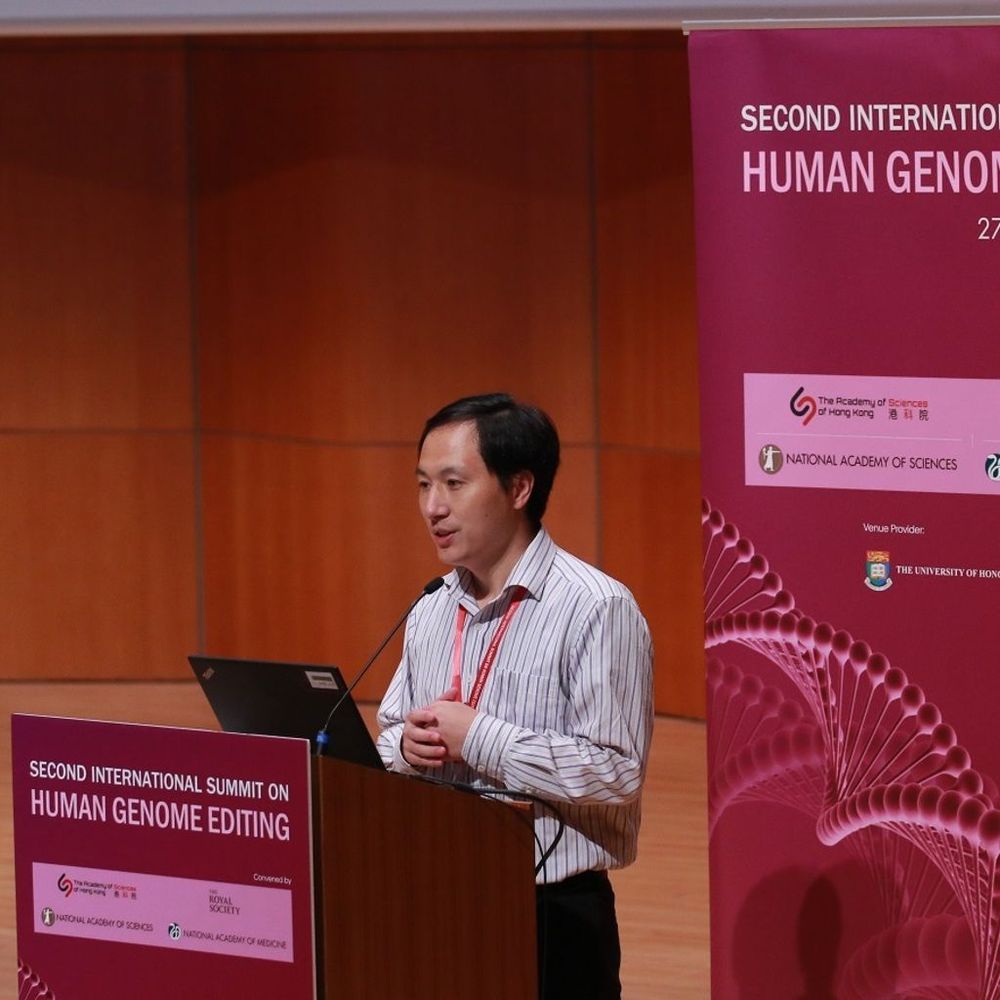
Nearly 200 leading researchers in genetics and bioengineering are expected to attend a meeting in New York City next week, to discuss the next stages of what is now called the Genome Project-write (GP-write) plan: a US$100 million venture to research, engineer, and test living systems of model organisms, including the human genome.

Could Artificial Intelligence Really Be Used to Attain Human Immortality?

AI vs aging the ultimate showdown is in the making.


There are several scientists that are now convinced upon the idea that while aging is a natural occurrence that happens in all creatures, it is, in fact, a disease that can be treated or cured. In that regards, there are some scientists out there looking to slow down the process of aging, while others are looking to stop it all together.

China Is Racing Ahead of the US in the Quest to Cure Cancer With CRISPR

While China does this, the people in the USA who use cancer to pay for their third homes and quarterly trips to Tahiti write papers saying CRISPR is a WMD and needs to be made illegal LOL.

Here’s hoping China is able to pull it off.


On Friday, a team of Chinese scientists used the cutting-edge gene-editing technique CRISPR-Cas9 on humans for the second time in history, injecting a cancer patient with modified human genes in hopes of vanquishing the disease.

Scientists Have Observed Epigenetic Memories Being Passed Down for 14 Generations

The most important set of genetic instructions we all get comes from our DNA, passed down through generations. But the environment we live in can make genetic changes, too.

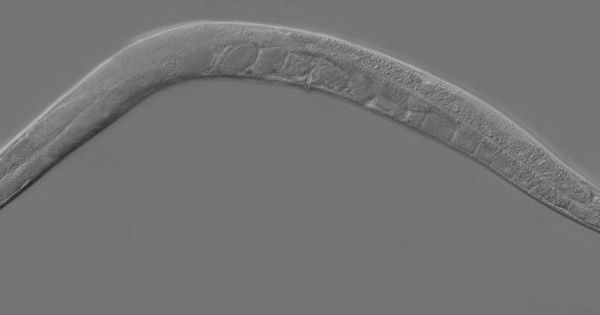
Researchers have now discovered that these kinds of environmental genetic changes can be passed down for a whopping 14 generations in an animal – the largest span ever observed in a creature, in this case being a dynasty of C. elegans nematodes (roundworms).

To study how long the environment can leave a mark on genetic expression, a team led by scientists from the European Molecular Biology Organisation (EMBO) in Spain took genetically engineered nematode worms that carry a transgene for a fluorescent protein. When activated, this gene made the worms glow under ultraviolet light.

Scientists Discover Extinct Human DNA in Cave Dirt

A group of German scientists have found the DNA of extinct humans — without finding any skeletal remains.

The researchers, who are currently excavating even dig sites in Belgium, Croatia, France, Russia and Spain, have found genetic remains of ancient humans like the Neanderthals and their cousins, the Denisovans, in sediment samples, the New York Times reports.


Ancient human DNA has been found in cave dirt in Croatia, but without any skeletal remains, scientists say.

15 books to browse ahead of TED2017

2017 begins on Monday in Vancouver, Canada, and will explore the theme “The Future You.” If the future you is anything like the future us, you are likely curled up in a big cushy chair right now, devouring the contents of a book that flips your thinking. Below, some reading suggestions from the speaker program. Read, enjoy and stay tuned to the TED Blog for beat-by-beat coverage of the conference.


TED2017 begins on Monday in Vancouver, Canada, and will explore the theme “The Future You.” If the future you is anything like the future us, you are likely curled up in a big cushy chair right now, devouring the contents of a book that flips your thinking. Below, some reading suggestions from the speaker program. Read, enjoy and stay tuned to the TED Blog for beat-by-beat coverage of the conference.

Weapons of Math Destruction: How Big Data Increases Inequality and Threatens Democracy by Cathy O’Neil. The decisions that affect our lives are no longer made by humans — they’re made by algorithms. This might sound like a great way around bias and discrimination, but these things are often built right into our mathematical models. When it comes to college admissions, decisions on parole, applications to jobs and the affects of a bad credit score, O’Neil explores the unintended consequences of algorithms. (Read an excerpt.)

The Telomere Effect: A Revolutionary Approach to Living Younger, Healthier, Longer by Elizabeth Blackburn and Elissa Epel. Molecular biologist Elizabeth Blackburn received the Nobel Prize in Medicine for her discovery of telomeres, the ends of chromosomes that — like shoelace tips — keep our genetic information from fraying. Both telomeres and telomerase, an enzyme that restores worn-down telomeres, appear central to the aging process. This book looks at the research — then turns its attention to how our thoughts, bodies and social worlds affect us on the cellular level.

Daisy Robinton — The Fight Against Aging

Primarily talking about CRISPR.


Daisy Robinton explores bioengineering and its potential to end ageing.

“The use of gene-editing technology paired with the dropping cost of genome sequencing and analysis is greatly facilitating our ability to understand the functional and mechanistic impact of those genetic mutations on diseases caused by mutations in DNA sequence,” she says.

ABOUT WIRED HEALTH 2017
Hundreds of healthcare, pharmaceutical and technology influencers and leaders met at the fifth annual WIRED Health event at 30 Euston Square, London on March 9. Discover some of the fascinating insights from the esteemed speakers here: http://wired.uk/O6xMxJ

ABOUT WIRED EVENTS
WIRED events shine a spotlight on the innovators, inventors and entrepreneurs who are changing our world for the better. Explore this channel for videos showing on-stage talks, behind-the-scenes action, exclusive interviews and performances from our roster of events. Join us as we uncover the most relevant, up-and-coming trends and meet the people building the future.

ABOUT WIRED
WIRED brings you the future as it happens — the people, the trends, the big ideas that will change our lives. An award-winning printed monthly and online publication. WIRED is an agenda-setting magazine offering brain food on a wide range of topics, from science, technology and business to pop-culture and politics.

CONNECT WITH WIRED
Web: http://po.st/WiredVideo
Twitter: http://po.st/TwitterWired
Facebook: http://po.st/FacebookWired
Google+: http://po.st/GoogleWired
Instagram: http://po.st/InstagramWired
Magazine: http://po.st/MagazineWired
Newsletter: http://po.st/NewslettersWired
————————–
——–
Facebook: https://www.facebook.com/agingreversed
Tumblr: http://agingreversed.tumblr.com
Twitter: https://twitter.com/Aging_Reversed

/* */