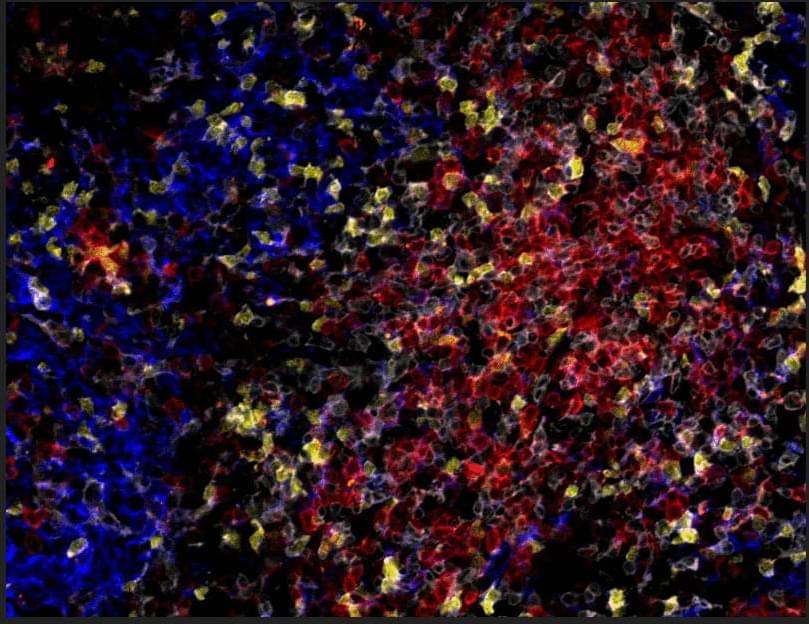
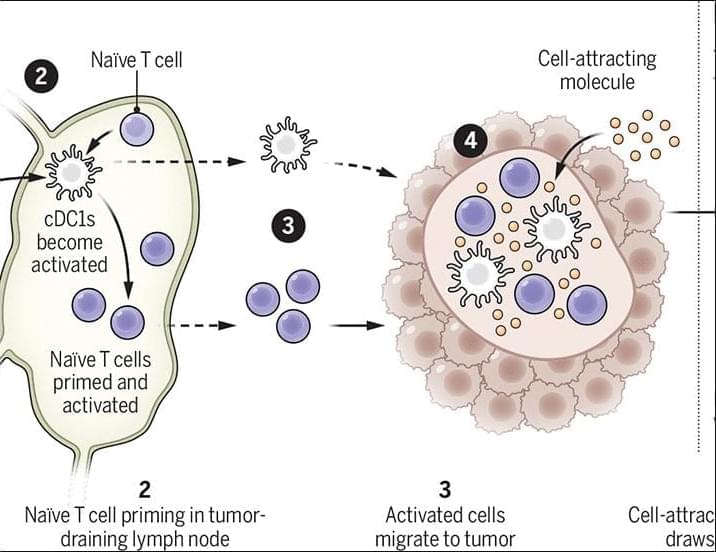
A subset of dendritic cells orchestrates the formation of tertiary lymphoid structures in tumor tissues

The fact that you, or I, or any living creature, is here at all is a series of astonishing strokes of luck stretching back more than 4 billion years.
One of the biggest hurdles was the very first one: How did life emerge from a primordial soup of stuff that very much wasn’t alive?
A radical new study, published in Science Advances, suggests that this unlikely threshold may actually have been crossed not once, but twice.

A flowering plant has been confirmed as a new carnivorous lineage, according to research published in Nature Communications. The findings show that Saxifraga candelabrum can attract, trap, digest and absorb nitrogen from insects, supporting a prediction made by Charles Darwin more than 150 years ago.
While many plants exhibit carnivorous traits such as prey capture, to be formally classified as carnivorous, they must show adaptations for attracting and catching, digesting and absorbing nutrients from prey. In 1875, Charles Darwin posited that some species from the genus Saxifraga—a group of flowering plants typically found in alpine environments—may be carnivorous because of their sticky glandular hairs, which can trap insects. However, there has been a lack of conclusive evidence to support this hypothesis.
Hang Sun and colleagues studied S. candelabrum, which grows in alpine areas of the Qinghai–Tibet Plateau–Hengduan Mountains in China. Field observations and surveys of existing plant samples showed that insect prey were present on the glandular hairs of 43 out of 45 surveyed specimens, with mature plants displaying an average of 71 trapped insects in total (predominantly found on these hairs). The authors then looked for evidence of digestion and nutrient absorption to support their hypothesis.
Researchers treated male high-fat-fed mice with liraglutide for 14 days, then tracked fecal bacterial communities after a 7-day washout using 16S rRNA sequencing. Liraglutide shifted the microbiome toward Lactobacillus- and Leptogranulimonas-related taxa while reducing several fermentative taxa, but most changes moved back toward baseline after treatment stopped.