Toggle light / dark theme

Engineers give new meaning to the phrase ‘cool clothes’

Cannot wait for this material so that I can finally enjoy my run in the park near my US home in August.


WASHINGTON — Engineers have created clothing for a warming world — a fabric that allows your body heat to escape far better than other materials do.

It hasn’t been worn or tested by humans, so outside experts caution this is far from a sure thing, but a team at Stanford University engineered a fabric using nano technology that not only allows moisture to leave the body better, but helps infrared radiation escape better. As a result, they say in Thursday’s journal Science, the body should feel around 4.8 degrees (2.7 degrees Celsius) cooler than cotton and 3.8 degrees (2.1 degrees Celsius) chillier than commercially available synthetics.

This is designed for a warmer world — not just because climate change is making temperatures hotter, but because it takes a lot of energy to heat and cool people’s offices and homes, said study lead author Yi Cui, a professor of materials and engineering.

Hacking microbes

Biology is the world’s greatest manufacturing platform, according to MIT spinout Ginkgo Bioworks.

The synthetic-biology startup is re-engineering yeast to act as tiny organic “factories” that produce chemicals for the flavor, fragrance, and food industries, with aims of making products more quickly, cheaply, and efficiently than traditional methods.

“We see biology as a transformative technology,” says Ginkgo co-founder Reshma Shetty PhD ’08, who co-invented the technology at MIT. “It is the most powerful and sophisticated manufacturing platform on the planet, able to self-assemble incredible structures at a scale that is far out of reach of the most cutting-edge human technology.”

Journey to Mars in Less than Two Days Onboard this Radical Train Concept

As for the maximum distance the train could journey, “There is no limit,” Bombardier asserts. He reckons the first ship would shuttle cargo and travelers between Earth and the Moon—a trip that would take roughly seven hours to complete at the ideal speed of 15 km/s. “The Moon will serve as a launching pad for other projects, because it is easier to assemble and build this kind of train in the absence of gravity,” he says. “And Mars seems to be a good candidate for the next phase, especially if we can terraform it.”

Though intriguing, the notion begs many questions, and likely won’t be viable for eons. “Obviously there is a lot to consider,” the designer admits. “The general purpose here is to devise a system to transport minerals, materials, and humans from one place to the other in our solar system. Solar Express is a basic idea, and we would like to know how we could improve it.”

China’s Race to Space Domination: To Try to Gain an Edge Here on Earth, China is Pushing Ahead in Space

More on China’s race on Space. Last Tuesday, China launched the 1st Quantum Satellite. In 2017, China is planning to be the dominant force in mining of Space. First stop — mining the dark side of the moon. Given China’s own history with environmental pollution plus mining’s damaging effects to the environment when not properly managed; etc. one must ponder how will space and Earth itself be impacted by such mining.


Before this decade is out, humanity will go where it’s never gone before: the far side of the moon. This dark side — forever facing away from us — has long been a mystery. No human-made object has ever touched its surface. The mission will be a marvel of engineering. It will involve a rocket that weighs hundreds of tons (traveling almost 250,000 miles), a robot lander, and an unmanned lunar rover that will use sensors, cameras, and an infrared spectrometer to uncover billion-year-old secrets from the soil. The mission also might scout the moon’s supply of helium-3 — a promising material for fusion energy. And the nation planting its starry flag on this historic trip will be the People’s Republic of China.

HKUST Develops Tiny Lasers that Opens New Era for Light-based Computing

Congrats Hong Kong Univ.


Researchers at The Hong Kong University of Science and Technology (HKUST) have fabricated microscopically-small lasers directly on silicon, enabling the future-generation microprocessors to run faster and less power-hungry – a significant step towards light-based computing.

The innovation, made by Prof Kei-may Lau, Fang Professor of Engineering and Chair Professor of the Department of Electronic and Computer Engineering, in collaboration with the University of California, Santa Barbara; Sandia National Laboratories and Harvard University, marks a major breakthrough for the semiconductor industry and well beyond.

Silicon forms the basis of everything from solar cells to the integrated circuits at the heart of our modern electronic gadgets. However, the crystal lattice of silicon and of typical laser materials could not match up, making it impossible to integrate the two materials until now, when Prof Lau’s group managed to integrate subwavelength cavities — the essential building blocks of their tiny lasers — onto silicon, allowing them to create and demonstrate high-density on-chip light-emitting elements. The finding was recently published as the cover story on Applied Physics Letters.

Farewell Remote Controllers, Hello Brain Controlled UAV’s

When the Holiday season kicks off next fall (2017); I have a feeling that I may end up buying a Penny Robot or a BMI controlled drone for my niece & nephews.


The post is also available in: Hebrew :הכתבה זמינה גם ב

A new research out of Arizona State University with DARPA funding.

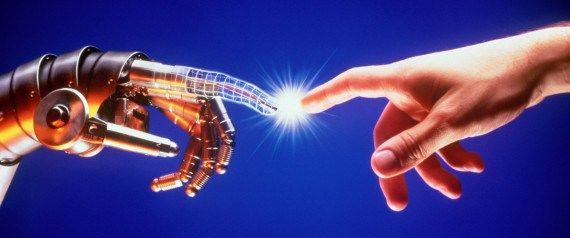
Using a skullcap fitted with 128 electrodes wired to a computer, researchers are able to control multiple drones using human thought and vision to guide the quadcopters wirelessly. The device records electrical brain activity and measures the movement of the drones based on parts of the brain that light up. This signal is monitored and sent to another computer that transmits a signal to the drones, making them move. Panagiotis Artemiadis, director of the Human-Oriented Robotics and Control Lab and an assistant professor of mechanical and aerospace engineering at the School for Engineering of Matter, Transport and Energy in the Ira A. Fulton Schools of Engineering, has been working with funding from the Defense Advanced Research Projects Agency (DARPA) and U.S. Air Force to develop this technology. Artemiadis has been working on brain-to-machine interfaces since 2009, but only recently made the leap to controlling more than one device.

Biohybrid Robots Built From Living Tissue Start To Take Shape

Think of a traditional robot and you probably imagine something made from metal and plastic. Such “nuts-and-bolts” robots are made of hard materials. As robots take on more roles beyond the lab, such rigid systems can present safety risks to the people they interact with. For example, if an industrial robot swings into a person, there is the risk of bruises or bone damage.

Researchers are increasingly looking for solutions to make robots softer or more compliant – less like rigid machines, more like animals. With traditional actuators – such as motors – this can mean using air muscles or adding springs in parallel with motors. For example, on a Whegs robot, having a spring between a motor and the wheel leg (Wheg) means that if the robot runs into something (like a person), the spring absorbs some of the energy so the person isn’t hurt. The bumper on a Roomba vacuuming robot is another example; it’s spring-loaded so the Roomba doesn’t damage the things it bumps into.

But there’s a growing area of research that’s taking a different approach. By combining robotics with tissue engineering, we’re starting to build robots powered by living muscle tissue or cells. These devices can be stimulated electrically or with light to make the cells contract to bend their skeletons, causing the robot to swim or crawl. The resulting biobots can move around and are soft like animals. They’re safer around people and typically less harmful to the environment they work in than a traditional robot might be. And since, like animals, they need nutrients to power their muscles, not batteries, biohybrid robots tend to be lighter too.

China’s Scientists Propose the Human ‘Quantum Brain’ –“The Source of Our Dominance on the Planet: More Complex Than a Galaxy”

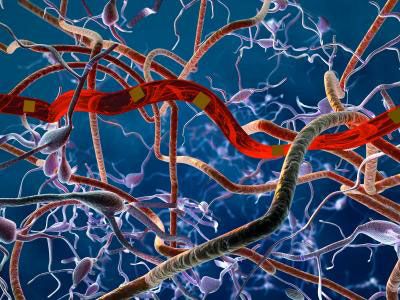
The human brain has Quantum consciousness according to China. Why a cogitative thinking system that truly mimics the human brain will require QC.


Chinese scientists have proposed a new theory that explains why humans are so much more intelligent than animals even though our brains are often much smaller than those of other species. Researchers at the Wuhan Institute of Neuroscience and Neuro-engineering have previously carried out studies backing the theory that the brain not only processes and passes on information not only through electrical and chemical signals, but also with photons of light.

Video: The Coming Quantum Computing Revolution

In this video, D-Wave Systems Founder Eric Ladizinsky presents: The Coming Quantum Computing Revolution.

“Despite the incredible power of today’s supercomputers, there are many complex computing problems that can’t be addressed by conventional systems. Our need to better understand everything, from the universe to our own DNA, leads us to seek new approaches to answer the most difficult questions. While we are only at the beginning of this journey, quantum computing has the potential to help solve some of the most complex technical, commercial, scientific, and national defense problems that organizations face. We expect that quantum computing will lead to breakthroughs in science, engineering, modeling and simulation, financial analysis, optimization, logistics, and national defense applications.”

Eric Ladizinsky is a senior scientific management executive with a strong background in physics, engineering, materials, manufacturing and team building. Mr. Ladizinsky leads D-Wave’s technical effort to develop the superconducting integrated circuit fabrication process and is often called upon to evangelize on all aspects of quantum computing. At Northrop Grumman Space Technology (formerly TRW, Inc.), he ran a multi-million dollar DARPA program in Quantum Computing using superconducting integrated circuit technology. Mr. Ladizinsky has a BSc. Physics and Mathematics degree from the University of California, Los Angeles and is an Adjunct Professor of Physics at Loyola Marymount University.

/* */