Category: energy – Page 427

Time crystals might exist after all
(Phys.org)—Are time crystals just a mathematical curiosity, or could they actually physically exist? Physicists have been debating this question since 2012, when Nobel laureate Frank Wilczek first proposed the idea of time crystals. He argued that these hypothetical objects can exhibit periodic motion, such as moving in a circular orbit, in their state of lowest energy, or their “ground state.” Theoretically, objects in their ground states don’t have enough energy to move at all.
In the years since, other physicists have proposed various arguments for why the physical existence of time crystals is impossible—and most physicists do seem to think that time crystals are physically impossible because of their odd properties. Even though time crystals couldn’t be used to generate useful energy (since disturbing them makes them stop moving), and don’t violate the second law of thermodynamics, they do violate a fundamental symmetry of the laws of physics.
However, now in a new paper published in Physical Review Letters, physicists from the University of California, Santa Barbara (UCSB) and Microsoft Station Q (a Microsoft research lab located on the UCSB campus) have demonstrated that it may be possible for time crystals to physically exist.

3 Big Trends Shaking Up the Energy Industry
We are at the cusp of an energy revolution.
This post is a look at how three technologies — solar, batteries, and electric vehicles (EVs) — are poised to disrupt a $6 trillion energy industry over the next two decades.
I had the chance to sit down with Ramez Naam, chair of Energy and Environmental Systems at Singularity University and acclaimed author of the Nexus series, to discuss these major forces and their implications.
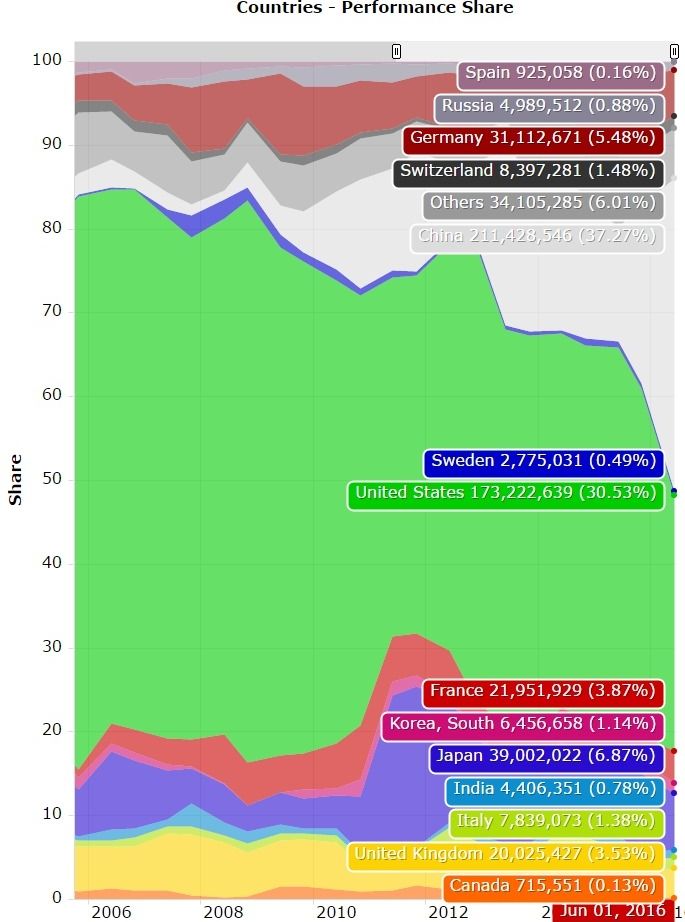
China Overtakes US in Scientific Articles, Robots, Supercomputers
http://www.unz.com/akarlin/sinotriumph/
Nothing illustrates China’s meteoric rise as some well chosen numbers.
By the end of the 1990s, China had come to dominate the mainstays of geopolitical power in the 20th century – coal and steel production. As a consequence, it leapt to the top of the Compositive Index of National Capability, which uses military expenditure, military personnel, energy consumption, iron and steel production, urban population, and total population as a proxy of national power. Still, one could legitimately argue that all of these factors are hardly relevant today. While Germany’s fourfold preponderance in steel production over Russia may have been a critical number in 1914, China’s eightfold advantage in steel production over the US by 2014 is all but meaningless in any relevant comparison of national power. The world has moved on.
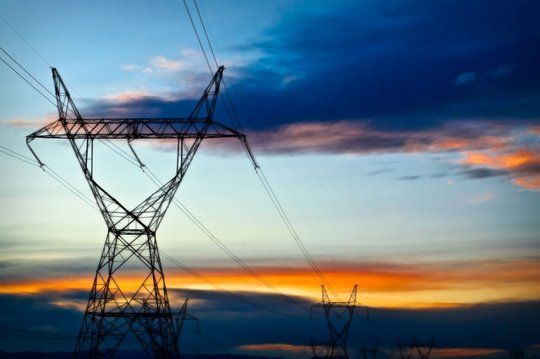
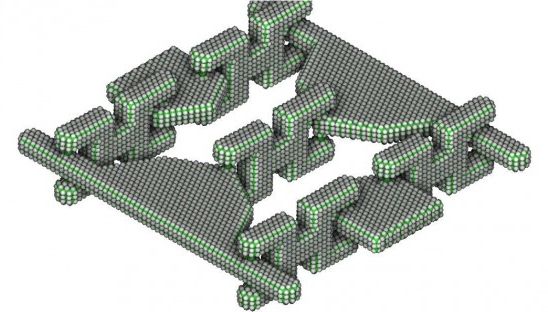
New Molecular Mechanical Computer Design is 100 Billion Times More Energy Efficient
This new computer system is 100 billion times more energy efficient than the most energy efficient conventional green supercomputer. Using only links and rotary joints, this “molecular mechanical computer” removes the need for parts that create friction and generate heat.
The trend for computing, and for technology in general, really consists of just one word: Smaller. Previously, technology that could fit on your desk was the rage. Then it became tech that fit in your bag. Then the palm of your hand. Now, scientists are playing with even smaller technology, down to the molecular size.
Scientists have developed a computer system that can, theoretically, be 100 billion times more energy efficient than the most energy efficient conventional green supercomputer. Using only links and rotary joints, this “molecular mechanical computer” removes the need for gears, clutches, switches, springs, and other parts that create friction and generate heat.
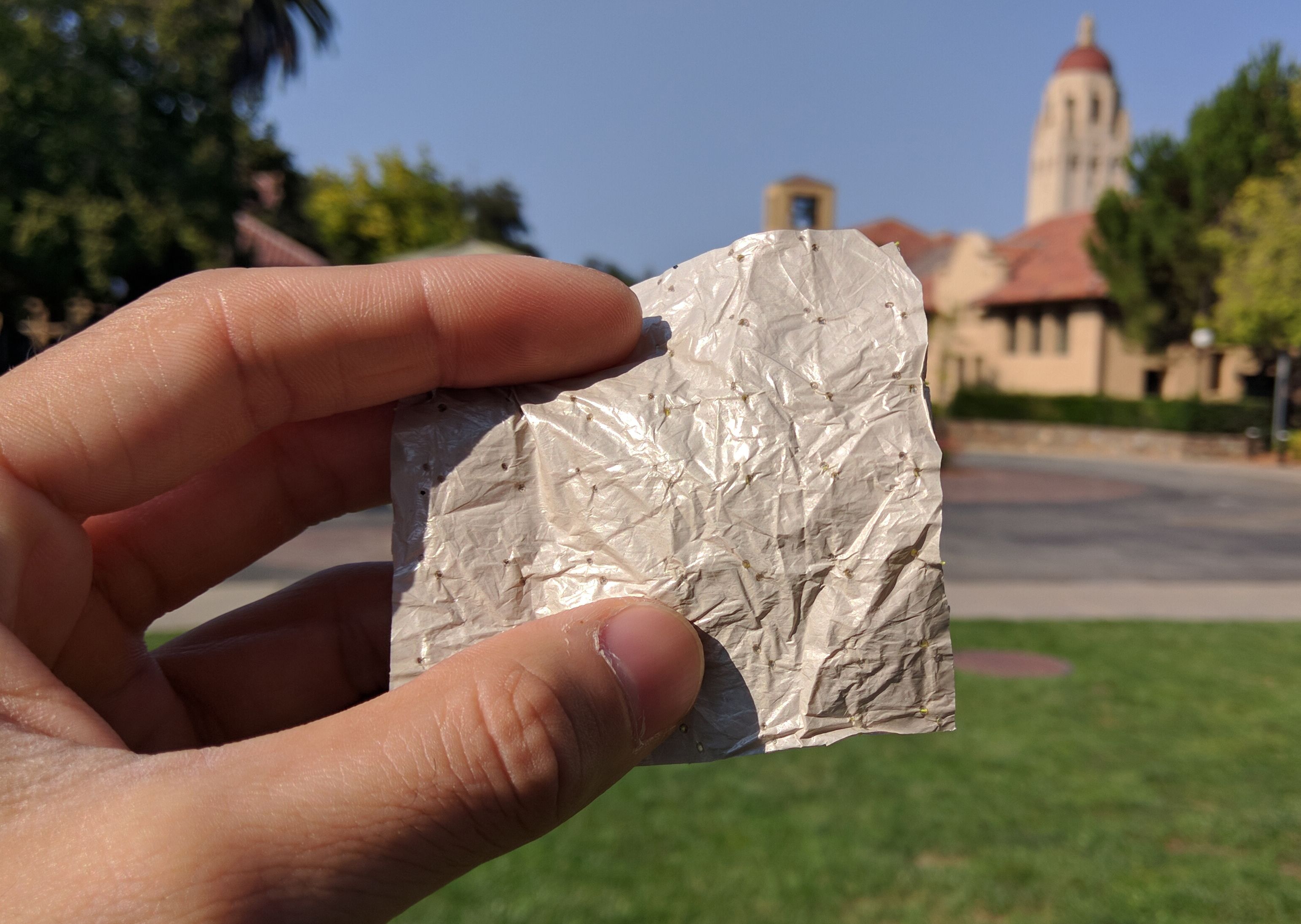
Engineers give new meaning to the phrase ‘cool clothes’
Cannot wait for this material so that I can finally enjoy my run in the park near my US home in August.
WASHINGTON — Engineers have created clothing for a warming world — a fabric that allows your body heat to escape far better than other materials do.
It hasn’t been worn or tested by humans, so outside experts caution this is far from a sure thing, but a team at Stanford University engineered a fabric using nano technology that not only allows moisture to leave the body better, but helps infrared radiation escape better. As a result, they say in Thursday’s journal Science, the body should feel around 4.8 degrees (2.7 degrees Celsius) cooler than cotton and 3.8 degrees (2.1 degrees Celsius) chillier than commercially available synthetics.
This is designed for a warmer world — not just because climate change is making temperatures hotter, but because it takes a lot of energy to heat and cool people’s offices and homes, said study lead author Yi Cui, a professor of materials and engineering.

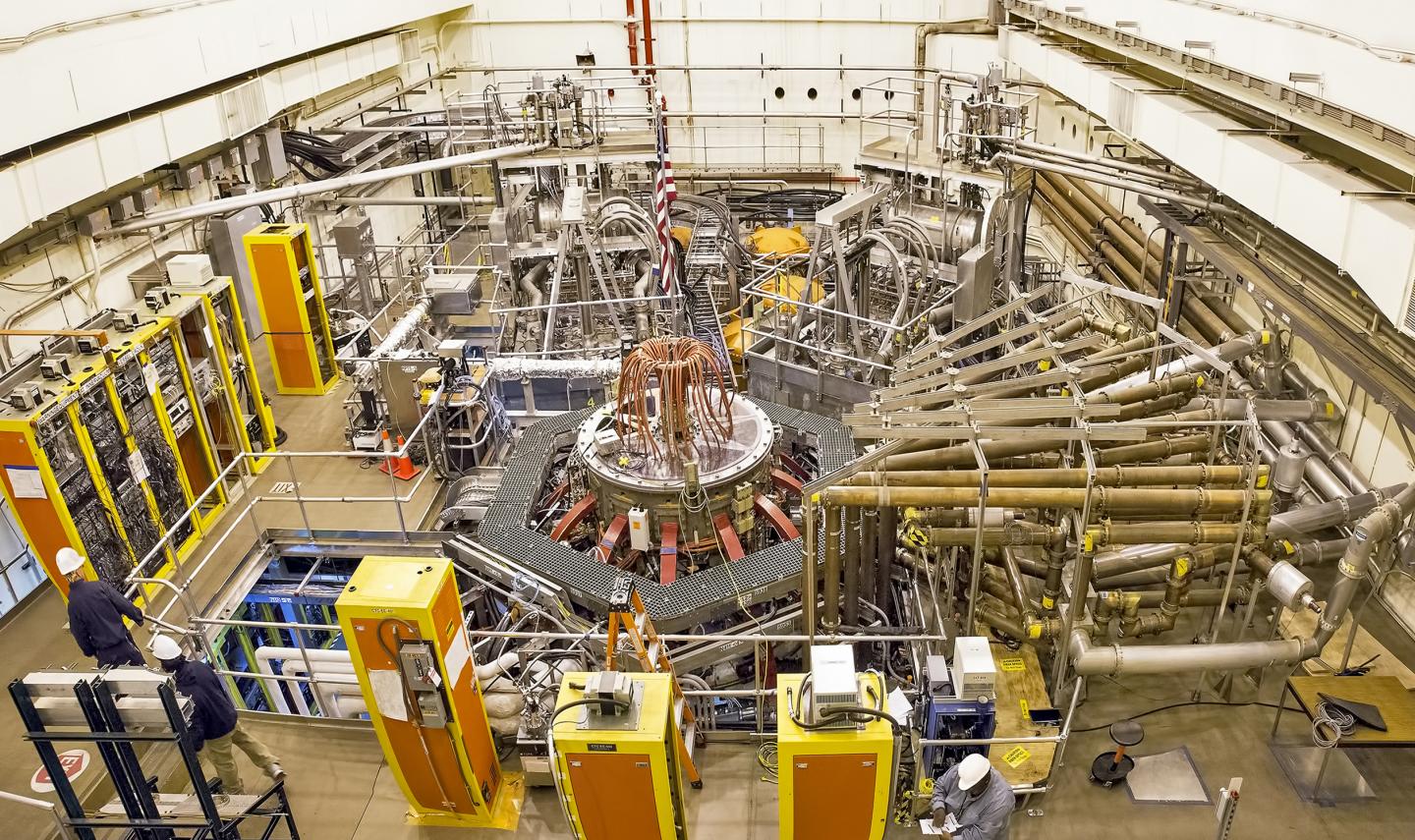
‘Star in a jar’ could lead to limitless fusion energy
Physicists at the U.S. Department of Energy’s Princeton Plasma Physics Laboratory (PPPL) are building a “star in a jar” — a miniature version of the how our Sun creates energy through fusion. It could provide humankind with near limitless energy, ending dependence on fossil fuels for generating electricity — without contributing greenhouse gases that warm the Earth, and with no long-term radioactive waste.
But that requires a “jar” that can contain superhot plasma — and is low-cost enough to be built around the world. A model for such a “jar,” or fusion device, already exists in experimental form: the tokamak, or fusion reactor. Invented in the 1950s by Soviet physicists, it’s a device that uses a powerful magnetic field to confine plasma (superhot charged gas) in the shape of a torus.