Nice
Mark L. Clifford on China, renewable energy, and economic growth.
By young china watchers for the diplomat.
April 29, 2016.


Blockchaining coming to healthcare digital services.
Blockchain and digital health services could be a perfect match for each other across a variety of applications. From distributed interoperable health records to proof of adherence for medication, the healthcare industry is ripe for digital innovation. More generally, technology is a hyper-deflationary force, and this could be particularly effective in delivering quality health care through more effective channels such as mobile apps.
Investments in the digital health space have increased significantly in the past two years. This is largely possible because of improved low-power sensors and user-friendly cloud platforms that interface with those hardware devices. The Rock Health Funding Database shows a $4.5 billion increase in venture funding in digital health from 2014 to 2015.
Smart contract technology is built on top of virtual currencies such as Bitcoin and is a hallmark of “Bitcoin 2.0” platforms. Blockchain is the fundamental infrastructure needed for Bitcoin transactions to work, and an enabling technology for the next generation of asset-based platforms.
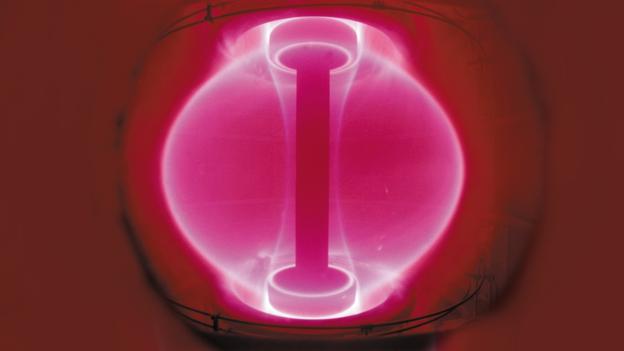
Unencumbered by red tape, these venture-backed companies believe that they can find a faster, cheaper way to fusion than government-sponsored projects, and some very influential people agree: besides Bezos, Microsoft cofounder Paul Allen and PayPal cofounder Peter Thiel are also backing firms at the forefront of fusion development.
The founders of Amazon and Microsoft are putting their fortunes into little-known fusion energy companies. Jonathan Frochtzwajg digs into a story that has strange parallels with fiction.

My new Vice Motherboard article on environmentalism and why going green isn’t enough. Only radical technology can restore the world to a pristine condition—and that requires politicians not afraid of the future:
I’m worried that conservatives like Cruz will try to stop new technologies that will change our battle in combating a degrading Earth
But there are people who can save the endangered species on the planet. And they will soon dramatically change the nature of animal protection. Those people may have little to do with wildlife, but their genetics work holds the answer to stable animal population levels in the wild. In as little as five years, we may begin stocking endangered wildlife in places where poachers have hunted animals to extinction. We’ll do this like we stock trout streams in America. Why spend resources in a losing battle to save endangered wildlife from being poached when you can spend the same amount to boost animal population levels ten-fold? Maye even 100-fold. This type of thinking is especially important in our oceans, which we’ve bloody well fished to near death.
As a US Presidential candidate who believes that all problems can be solved by science, I believe the best way to fix all of our environmental dilemmas is via technological innovation—not attempting to reverse our carbon footprint, recycle more, or go green.
As noted earlier, the obvious reason going green doesn’t work—even though I still think it’s a good disciplinary policy for humans—is the sheer impossibility of getting the developed world to stop… well, developing. You simply cannot tell an upcoming Chinese family not to drive cars. And you can’t tell a burgeoning Indian city to only use renewable resources when it’s cheaper to use fossil fuels. You also can’t tell indigenous Brazilian parents to stop poaching when their children are hungry. These people will not listen. They want what they want, and are willing to partially destroy the planet to get it—especially when they know the developed world already possesses it.
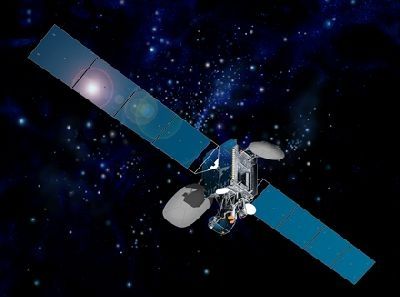
Satellites operators have been longing for it for decades, and DARPA (once again?) is turning their dream into reality: on March 25, one of America’s most futuristic agency announced it would launch a public-private partnership to provide in-orbit servicing to geosynchronous satellites, both commercial and military.
The program dubbed Robotic Servicing of Geosynchronous Satellites (RSGS) will be a major breakthrough for the satellite industry world. Since Sputnik’s launch, the biggest weakness of satellites was that, once on orbit, nothing could be done if something went wrong or once the fuel tank ran dry. A rather embarrassing issue when considering how pricey such platforms are. The only maintenance and repair operations performed to date were manned (Hubble telescope, ISS). The agency announced that it would allocate RSGS $500mn over the next few years, supplemented by commercial partner investment.
DARPA’s RSGS is composed of two elements: the arm that will dock and manipulate the satellite, and the space ship carrying it. Regarding the first element, the agency will provide its Front-end Robotics Enabling Near-term Demonstration (FREND) technology. The prototype of the FREND arm was built for the agency by the California-based company Alliance Space Systems. The robotic arm will enable it to dock with satellites and carry out maintenance.

Ralph Merkle, Robert Freitas and others have a theoretical design for a molecular mechanical computer that would be 100 billion times more energy efficient than the most energy efficient conventional green supercomputer. Removing the need for gears, clutches, switches, springs makes the design easier to build.
Existing designs for mechanical computing can be vastly improved upon in terms of the number of parts required to implement a complete computational system. Only two types of parts are required: Links, and rotary joints. Links are simply stiff, beam-like structures. Rotary joints are joints that allow rotational movement in a single plane.
Simple logic and conditional routing can be accomplished using only links and rotary joints, which are solidly connected at all times. No gears, clutches, switches, springs, or any other mechanisms are required. An actual system does not require linear slides.

Air Force Research Laboratory is working on key technologies in hypersonic air vehicles, directed-energy weapons and autonomy, or human-machine teaming, that will be “game-changers”
Air Force Research Laboratory scientists and engineers have developed an unarmed “cruise missile-like vehicle” that reached five times the speed of sound in tests, and have explored pairing drones with combat fighters in latest realm of technological advances.
Pentagon futurists envision a third-offset strategy to leapfrog U.S. technological capabilities to stay ahead of Russia and China.
This power station can harvest kinetic wave energy and turn it into electricity. (Correction: 10 m = 33 ft)

Been a while since I’ve written a new article. Include my love for the Lifeboat Foundation in it!
Are we alone in the universe? Are we the first to witness the stellar bursts amongst the skies of old? Is it foretold that we were the ones destined for the stars, beginning at the Moon and then Mars? Once driving cars, do we venture far, beyond the horizon of antiquated liveliness, a surreal vibrancy-but-a-tranquillity to the origins of chaos? Without science, these imaginary realities are but dreams shuttered away in the subconscious mind. But, with this magical and logical element of human society, we are gifted with the power to envision the sleeping mind’s abstract impossibilities, transforming them into possible realities… So that we may morph the series of footsteps in waking life.
Like evolution is the guardian of change, time dictates discovery. We advance, and the nuances past become more prevalent; a new precedent set forth in every dedicated shard of time engulfed in the sublime, and rhythmic confines, of the mind. Interlinked by their commonality, the totality of the world’s abilities lays not in the futility of complacency, but in the eulogy of peaceful unity. Once we as species see the far reaches of harnessing all pieces of this puzzle [that is the international intellect], each passing day will become more perfect.