Working remotely, attackers conducted “extensive reconnaissance” of the Ukraine power system’s networks, stole the credentials of operators and learned how to switch off the breakers, plunging more than 225,000 Ukrainians into darkness.

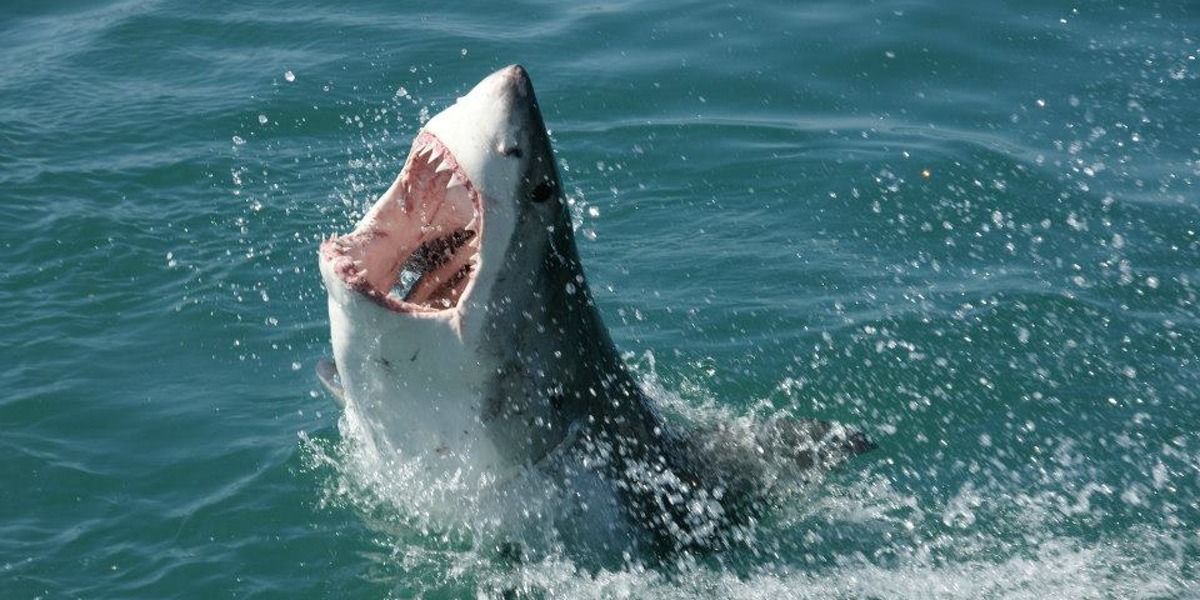
Australia’s coast, being both great surf territory as well as a primo shark habitat, is getting a technological upgrade to keep the swimmer-fish twain from meeting: A shark-spotting drone nicknamed the “Little Ripper.”
A joint venture between Aussie philanthropist Ken Weldon and Aussie bank Westpac, the $250,000 battery-powered unmanned helicopter will be deployed in the skies above New South Wales. On Sunday, New South Wales Premier Mike Baird heralded the drone as the future of oceanic search and rescue.
The Little Ripper will be able to monitor the shore for an hour before its battery kaputs, according to the Sydney Morning Herald. It’s part of a push for non-lethal, greener shark attack deterrents in Australia, where encounters are reportedly rising. They’re still fairly rare — as of November, there were 14 shark attacks off the Australian coast in 2015, reports The Guardian — but that’s a spike from the typical average of five or so. A separate $16 million shark detection initiative in New South Wales also includes buoys with advanced sonar that can, according to its creators, detect sharks 90 percent of the time.
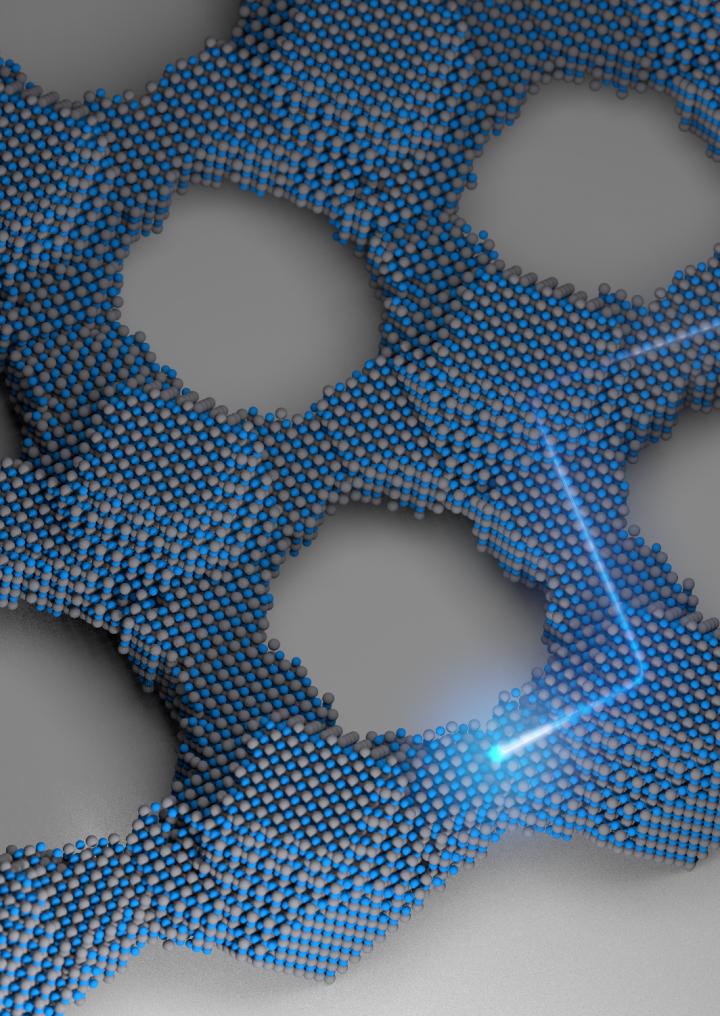
Just as the single-crystal silicon wafer forever changed the nature of communication 60 years ago, Cornell researchers hope their work with quantum dot solids — crystals made out of crystals — can help usher in a new era in electronics.
The team has fashioned two-dimensional superstructures out of single-crystal building blocks. Using a pair of chemical processes, the lead-selenium nanocrystals are synthesized into larger crystals, then fused together to form atomically coherent square superlattices.
Cornell University | Quantum dot solids
The difference between these and previous crystalline structures is the atomic coherence of each 5-nanometer crystal (a nanometer is one-billionth of a meter). They’re not connected by a substance between each crystal — they’re connected to each other directly. The electrical properties of these superstructures are potentially superior to existing semiconductor nanocrystals, with anticipated applications in energy absorption and light emission.
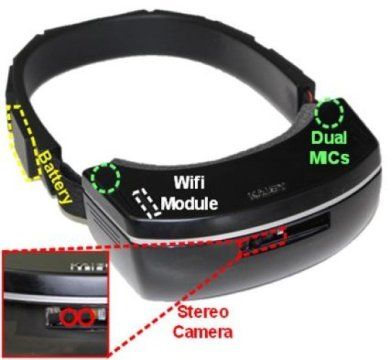
K-Glass, smart glasses reinforced with augmented reality (AR) that were first developed by the Korea Advanced Institute of Science and Technology (KAIST) in 2014, with the second version released in 2015, is back with an even stronger model. The latest version, which KAIST researchers are calling K-Glass 3, allows users to text a message or type in key words for Internet surfing by offering a virtual keyboard for text and even one for a piano.
Currently, most wearable head-mounted displays (HMDs) suffer from a lack of rich user interfaces, short battery lives, and heavy weight. Some HMDs, such as Google Glass, use a touch panel and voice commands as an interface, but they are considered merely an extension of smartphones and are not optimized for wearable smart glasses. Recently, gaze recognition was proposed for HMDs including K-Glass 2, but gaze is insufficient to realize a natural user interface (UI) and experience (UX), such as user’s gesture recognition, due to its limited interactivity and lengthy gaze-calibration time, which can be up to several minutes.
As a solution, Professor Hoi-Jun Yoo and his team from the Electrical Engineering Department recently developed K-Glass 3 with a low-power natural UI and UX processor to enable convenient typing and screen pointing on HMDs with just bare hands. This processor is composed of a pre-processing core to implement stereo vision, seven deep-learning cores to accelerate real-time scene recognition within 33 milliseconds, and one rendering engine for the display.

European turboprop aircraft manufacturer ATR said a prototype ATR 72 conducted a demonstration flight to test an all-electrical energy management system that aims to optimize electrical power distribution.
The flight is the second the ATR 72 demonstration aircraft has flown as part of the European Union’s “Clean Sky Joint Undertaking” program. The first test flight by the ATR 72 prototype, conducted in July 2015, trialed “new and more effective composite insulation materials and new vibro-acoustic sensors integrated into a large panel of the ATR aircraft fuselage,” ATR said in a statement.
The manufacturer said the two demonstration flights “also tested new generation optical fibers for improved identification of micro-cracks and easier maintenance.”

The substance that provides energy to all the cells in our bodies, Adenosine triphosphate (ATP), may also be able to power the next generation of supercomputers. The discovery opens doors to the creation of biological supercomputers that are about the size of a book. That is what an international team of researchers led by Prof. Nicolau, the Chair of the Department of Bioengineering at McGill, believe. They’ve published an article on the subject earlier this week in the Proceedings of the National Academy of Sciences (PNAS), in which they describe a model of a biological computer that they have created that is able to process information very quickly and accurately using parallel networks in the same way that massive electronic super computers do.
Except that the model bio supercomputer they have created is a whole lot smaller than current supercomputers, uses much less energy, and uses proteins present in all living cells to function.
Doodling on the back of an envelope
“We’ve managed to create a very complex network in a very small area,” says Dan Nicolau, Sr. with a laugh. He began working on the idea with his son, Dan Jr., more than a decade ago and was then joined by colleagues from Germany, Sweden and The Netherlands, some 7 years ago. “This started as a back of an envelope idea, after too much rum I think, with drawings of what looked like small worms exploring mazes.”
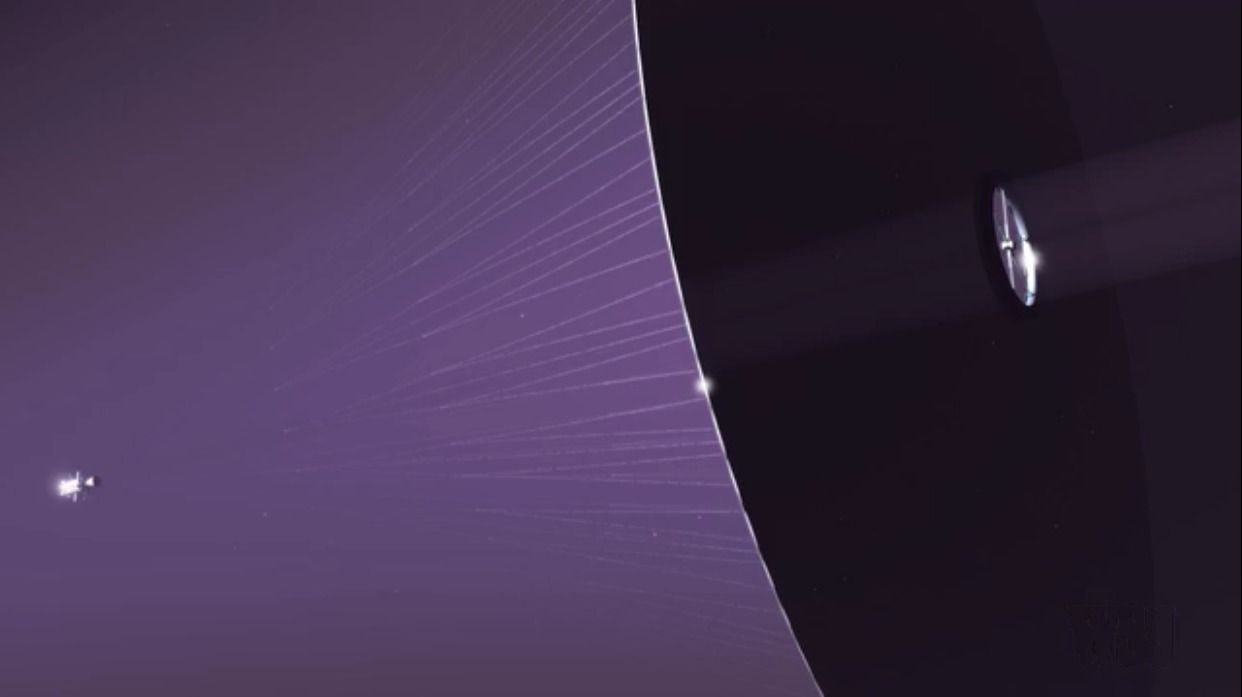
Recent advances in lasers suggest that we may see rockets propelled by light earlier than we had imagined. NASA scientist Philip Lubin and his team are working on a system that would use Earth-based lasers to allow space travel to far-away places in just a fraction of the time needed with current technology.
Using earth based lasers to push along a spacecraft instead of on board hydrocarbon-based fuel could dramatically reduce travel time to Mars, within our lifetime. Currently, it takes five months for a space craft to reach Mars. But, with photonic propulsion, it is likely that small crafts filled with experiments will reach Mars in just 3 days. Large spaceships with astronauts and life support systems will take only one month, which is about 20% of the duration of a current trip.
What’s next? Lubin believes that we may be able to send small crafts with scientific experiments to exoplanets as fast as 5% light speed in, perhaps, 30 years. Eventually, he claims that the technology will carry humans at speeds up to 20% light speed.
Read about it here.
Boston Dynamics, a robotics company that Google bought back in 2013, has routinely wowed the world by releasing videos of robots that are growing ever closer to resembling the humanoid robots we see in science fiction movies. The company this week released what might be its craziest robot video yet that shows its next-generation Atlas robot opening doors on its own, walking through snowy terrains, and picking up 10-pound boxes. This is the move impressive robot design I’ve seen from Boston Dynamics yet, which is really saying something.
FROM EARLIER: Man buys $700 battery, discovers it’s just $30 worth of batteries stuffed in a big case
The robot starts out the video by coming to life and exiting Boston Dynamics’ headquarters on its own by opening up the front door…
The first home battery system you simply plug in to install.
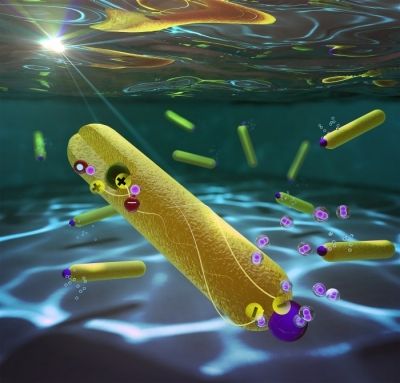
A major goal in renewable energy research is to harvest the energy of the sun to convert water into hydrogen gas, a storable fuel. Now, with a nanoparticle-based system, researchers have set a record for one of the half-reactions in this process, reporting 100% efficiency for the reduction of water to hydrogen (Nano Lett. 2016, DOI: 10.1021/acs.nanolett.5b04813).
To make such water-splitting systems, researchers must find the right materials to absorb light and catalyze the splitting of water into hydrogen and oxygen. The two half-reactions in this process—the reduction of water to hydrogen gas, and the oxidation of water to oxygen gas—must be isolated from each other so their products don’t react and explode. “Completing the cycle in an efficient, stable, safe fashion with earth-abundant elements is an ongoing challenge,” says chemist Nathan S. Lewis of Caltech, who was not involved in this study.
Until recently, the efficiency of the reduction step had maxed out at 60%. One challenge is that electrons and positive charges formed in the light absorption process can rapidly recombine, preventing the electrons from reducing water molecules to form hydrogen. To overcome this problem, several years ago, Lilac Amirav of Technion–Israel Institute of Technology and her colleagues designed a nanoparticle-based system (J. Phys. Chem. Lett. 2010, DOI: 10.1021/jz100075c) that would physically separate the charges formed during photocatalysis.