Toggle light / dark theme

James Webb releases sharpest IR image ever taken from space

JWST recently snapped this infrared test image of a star, which also shows fainter background stars and galaxies — a testament to the telescope’s power.


In early February, NASA engineers began to remotely align the 18 hexagonal segments of the James Webb Space Telescope’s primary mirror, which had been folded away for launch. The goal of this meticulous, three-month-long process is to perfectly position the mirror segments relative to each other, creating a single, smooth, 6.5-meter-wide surface that can gather and focus light from the distant cosmos.

You may recall earlier snapshots that marked previous milestones. For example, the second of seven milestones was punctuated with a shot taken before the mirrors were fully aligned; it featured multiple images of a single star. Now, NASA has announced the fifth major alignment milestone is complete. Called fine phasing, this step helped to identify and correct small differences between individual mirror segments to bring the infrared universe into sharp, clear focus.
GE begins testing industry’s first adaptive cycle engine for F-35

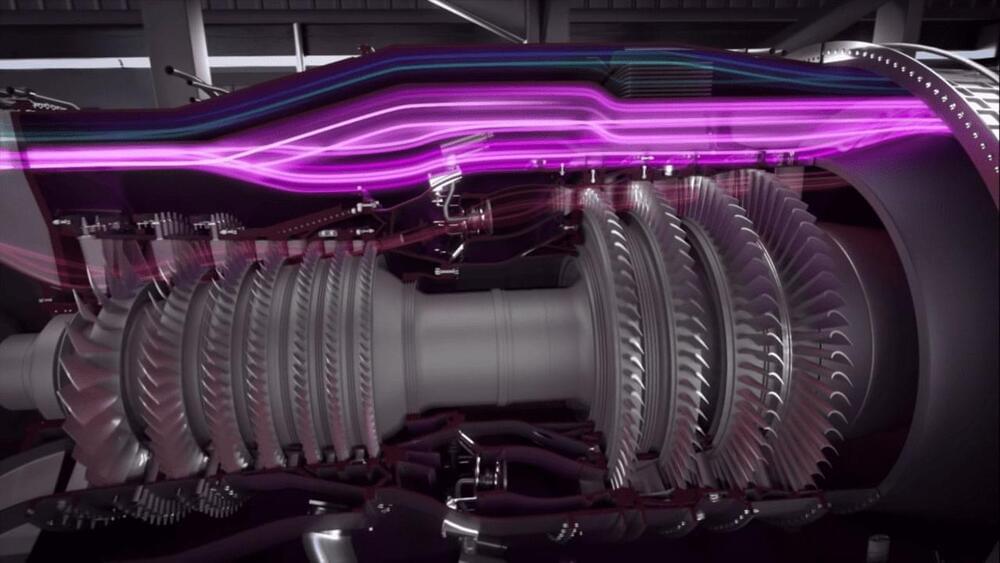
The U.S. Air Force and General Electric (GE) have begun the Phase 2 testing of GE’s second XA100 adaptive cycle engine at the Air Force’s Arnold Engineering Development Complex (AEDC) in Tennessee.

The Phase 1 testing of this XA100 engine was completed in November 2021 in Evendale, Ohio. Developed by GE Edison Works advanced program unit, the XA100 is a three-stream adaptive cycle engine demonstrator that can direct air to the bypass third stream for increased fuel efficiency and cooling or to the core and fan streams for additional thrust and performance.

GE’s XA100 engine is uniquely designed to fit both the F-35A and F-35C without any structural modifications to either airframe, enabling better aircraft range, acceleration, and cooling power to accommodate next-generation mission systems, while also ensuring durability and enhanced readiness.

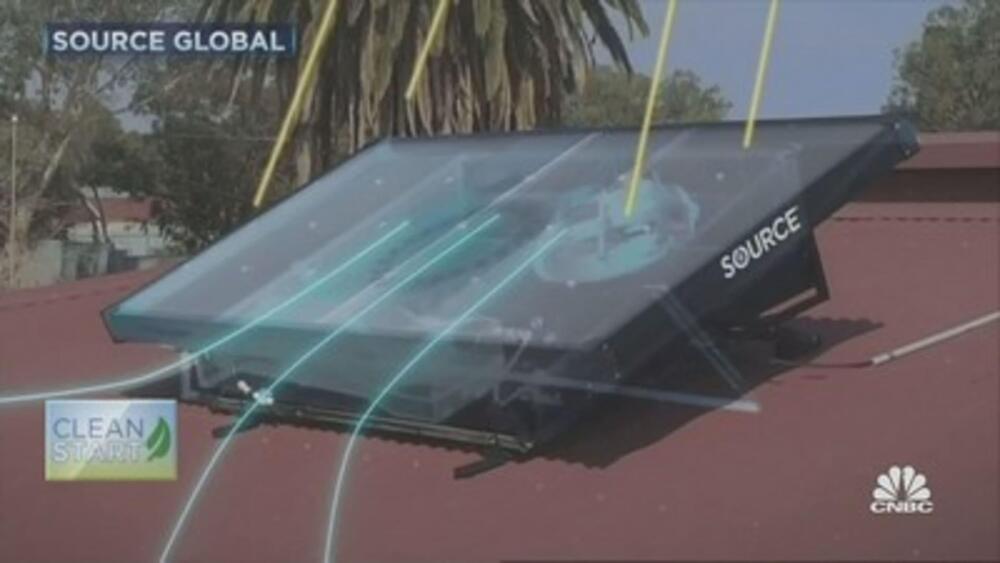
Bill Gates and Blackrock are backing the start-up behind hydropanels that make water out of thin air

Source’s hydropanels are installed in 52 countries in 450 separate projects. The company has raised $150 million from investors including Bill Gates’ Breakthrough Energy Ventures, BlackRock, Duke Energy and the Lightsmith Group.

This type of technology is desperately needed in places like India, where an estimated 800,000 villages don’t have clean drinking water. Friesen cited World Health Organization, showing that by 2025 “half the world’s population will be in water stressed areas.”

There’s a domestic need as well. In the U.S, there are 1.5 million miles of lead pipes still in the ground, and about 750 water main breaks a day, according to Friesen. The business opportunity, he said, is enormous.

Sodium-Based Material Yields Stable Alternative to Lithium-Ion Batteries

University of Texas at Austin (UT Austin) researchers have created a new sodium-based battery material that is highly stable, capable of recharging as quickly as a traditional lithium-ion battery, and able to pave the way toward delivering more energy than current battery technologies.

For about a decade, scientists and engineers have been developing sodium batteries, which replace both lithium and cobalt used in current lithium-ion batteries with cheaper, more environmentally friendly sodium. Unfortunately, in earlier sodium batteries, a component called the anode would tend to grow needle-like filaments called dendrites that can cause the battery to electrically short and even catch fire or explode.

In one of two recent sodium battery advances from UT Austin, the new material solves the dendrite problem and recharges as quickly as a lithium-ion battery. The team published their results in the journal Advanced Materials.

Eliminating the bottlenecks in performance of lithium-sulfur batteries

Energy storage in lithium-sulfur batteries is potentially higher than in lithium-ion batteries but they are hampered by a short life. Researchers from Uppsala University in Sweden have now identified the main bottlenecks in performance.

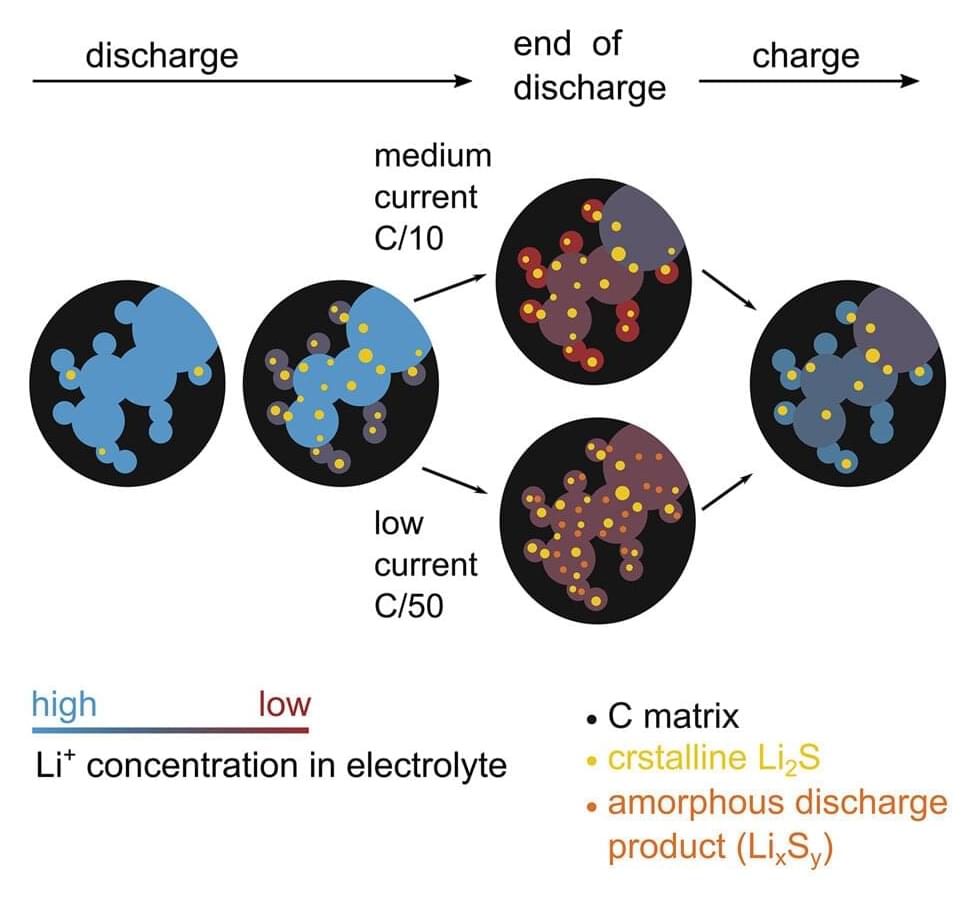
Lithium-sulfur batteries are high on the wish-list for future batteries as they are made from cheaper and more environmentally friendly materials than . They also have higher capacity and work well at much lower temperatures. However, they suffer from short lifetimes and . An article just published in the journal Chem by a research group from Uppsala University has now identified the processes that are limiting the performance of the sulfur electrodes that in turn reduces the current that can be delivered. Various different materials are formed during the discharge/charge cycles and these cause various problems. Often a localized shortage of lithium causes a bottleneck.

“Learning about problems allows us to develop new strategies and materials to improve battery performance. Identifying the real bottlenecks is needed to take the next steps. This is big research challenge in a system as complex as lithium-sulfur,” says Daniel Brandell, Professor of Materials Chemistry at Uppsala University who works at the Ångström Advanced Battery Centre.

/* */