Toggle light / dark theme

Scientists develop way to upsize nanostructures into light, flexible 3D printed materials

For years, scientists and engineers have synthesized materials at the nanoscale level to take advantage of their mechanical, optical, and energy properties, but efforts to scale these materials to larger sizes have resulted in diminished performance and structural integrity.

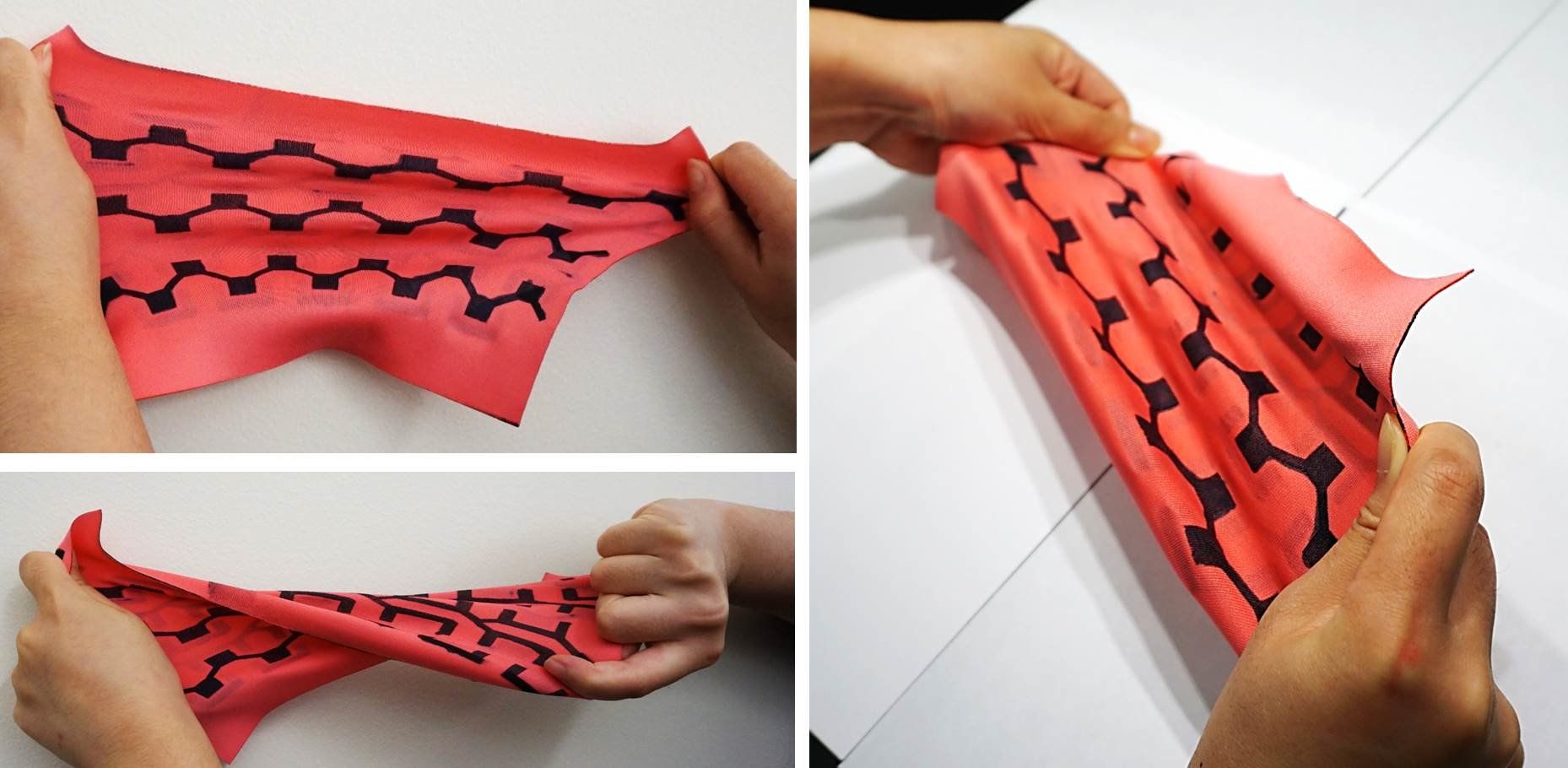
Now, researchers led by Xiaoyu “Rayne” Zheng, an assistant professor of mechanical engineering at Virginia Tech have published a study in the journal Nature Materials that describes a new process to create lightweight, strong and super elastic 3D printed metallic nanostructured with unprecedented scalability, a full seven orders of magnitude control of arbitrary 3D architectures.

Strikingly, these multiscale metallic materials have displayed super elasticity because of their designed hierarchical 3D architectural arrangement and nanoscale hollow tubes, resulting in more than a 400 percent increase of tensile elasticity over conventional lightweight metals and ceramic foams.

This Tablet-Toting Military Vest Is Actually a Giant Battery

Smartphones and tablets are being used more frequently in the battlefield, and that means that battery power is more important than ever. Soldiers often carry spare battery chargers in the 90-pound combat packs they carry into war zones, but the batteries are often lost or broken. BAE Systems wants to help lighten the load with its new system that lets soldiers plug electronics directly into their clothing.

The BAE Systems Broadsword Spine is a harness that can be sewn into a soldiers vest, jacket, or belt that carries a battery pack and hides charging wires. The harness places the battery pack on the small of a soldier’s back and includes eight conductive fabric conduits that can be used to connect to a USB port.

Reaction Engines secures €10 million funding to enable development of SABRE demonstrator engine

Reaction Engines Ltd. announces today the signing of a €10m Development Contract with the European Space Agency, finalizing the UK Government’s £60m commitment.

Reaction Engines Ltd., today announces the signing of a €10m European Space Agency (ESA) contract which will enable the development of a ground based demonstrator of SABRE, a new class of aerospace engine which is highly scalable with multiple potential applications in hypersonic travel and space access.

SABRE is at heart a rocket engine designed to power aircraft directly into space (single-stage to orbit) to allow reliable, responsive and cost effective space access, and in a different configuration to allow aircraft to cruise at high speeds (five times the speed of sound) within the atmosphere.

A Sci-Fi Short Film: “THE SIGNAL”

Enjoy this VFX Sci-Fi Short Film… 2046. A new energy source, created to solve the world’s energy crisis, is believed to have deadly side effects. When The Signal’s inventor chooses to help a girl warn the public, he gains an unlikely ally to save the world from his own creation. Starring Michael Ealy and Grace Phipps, Written and Directed by Marcus Stokes!

On the web — http://www.thesignalmovie.com

This live action short film was shot in downtown Los Angeles over a weekend. The post production and visual effects took considerably longer and were done by the writer/director Marcus Stokes and a few additional VFX artists.

Starring: michael ealy, grace phipps, doc duhame, casey adams, zack duhame, brian buccellato, ciera payton, and gonzalo escudero.

Writer/director/vfx supervisor: marcus stokes executive producer: tim story producer: chris harding cinematographer: larry blanford editor: melissa lawson sound editor: stephen hunter flick music producer: bear mccreary composer: michael beach, jonathan ortega stunt coordinator: casey adams

SUBSCRIBE — to TheCGBros for more inspiring content!

How Nikola Tesla Used ‘Spirituality’ & Philosophy To Learn About Reality, ‘Limitless’ Energy & Science

I will say that many great innovators and inventors had some sort of spiritualism that they drew from to provide another angle on how to see/ perfect an idea or innovation. Jobs, Tesla, Edison, Bell, da Vinci, Carver, etc.


The Properties of Space.

Science works best when in harmony with nature. If we put these two together, we can discover great technologies that can only come about when the consciousness of the planet is ready to embrace them. One example is “free energy,” also known as “zero-point energy,” which utilizes the substance that exists all around us and converts it into usable energy. This would give us a limitless source of energy, and would practically wipe out all poverty on the planet. (more on this later in the article)

The properties of space have been postulated by many, from ancient Vedic philosophy, Eastern Mystics, various ancient civilizations throughout human history all the way to Descartes, Einstein, Newton and more. Humans are curious beings, and our quest to discover “what is” will never end.

Sweden debuts the world’s first ‘electric highway’

Underground wireless charging will be a better idea!


Fossil fuels are bad for the planet, and freight haulage is one of the more carbon-intensive activities that operate today. That’s why Siemens and Scania have teamed up to trial what’s being called the world’s first “electric highway.” Much like an electrified railroad, the 1.2 mile stretch has a series of wires hanging overhead that a pantograph-equipped truck can connect to. Then, the vehicle can deactivate its fuel-burning engine and coast along on that delicious, dirt-cheap electricity, switching back when the wires stop.

Scania official Claes Erixon has said that the project is “one important milestone on the journey towards fossil-free transport.” Cleantech Canada quotes an unnamed Siemens representative, who says the move could cut energy consumption in half. As it stands, this is the culmination of a two-year project to develop this test track, with more work to be done to determine if it could be rolled out across the country. That is, unless, an alternative freight-transport network that’s even more energy-efficient and speedy, can make its case to governments across the world.

Terrifying Laser Bazooka Is Like a Handheld Death Star

Ah, science. wink


In the right hands, broken electronics can be turned into something useful again. But useful isn’t the best way to describe Drake Anthony’s 200-watt laser bazooka made from a bunch of old DLP projectors he bought off eBay. Words like incredibly dangerous, do-not-try-this-at-home, or “are you crazy?” seem more appropriate.

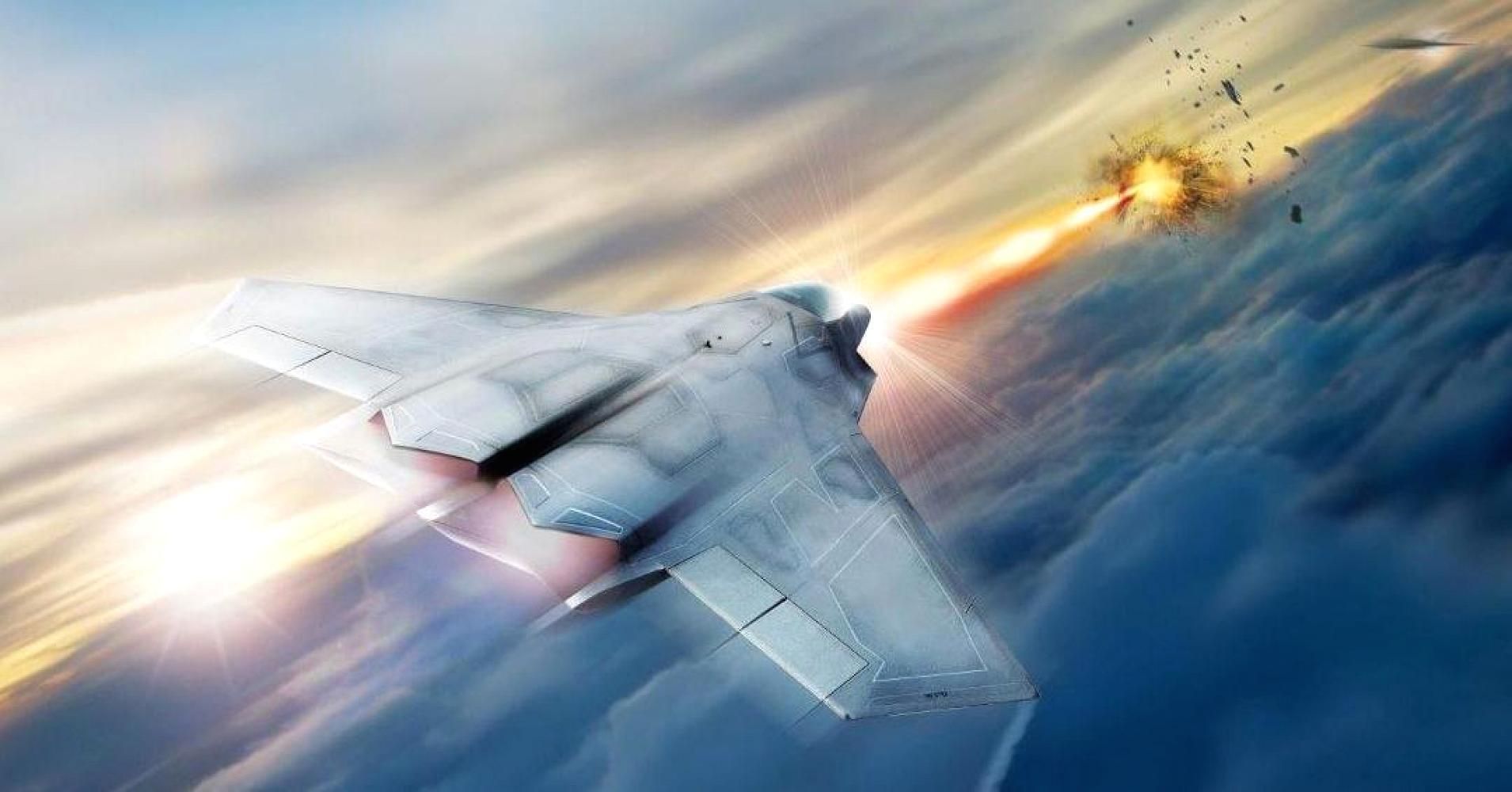
For comparison, the handheld laser pointers used during PowerPoint presentations measure in at a measly 0.005-watts, while the FDA limits the lasers that most consumers can buy to a maximum power rating of 0.5-watts. That means that Drake’s creation, which focuses four 50-watt lasers through a massive lens—is 400 times more powerful than what the FDA will let you play with. And those rules are there for a good reason. Lasers can be deadly!

/* */