Toggle light / dark theme

High-power biological wheels and motors imaged for first time

Behold – the only known example of a biological wheel. Loved by creationists, who falsely think they are examples of “intelligent design”, the bacterial flagellum is a long tail that is spun like a propeller by nano-sized protein motors.

Now these wheels and their gearing have been imaged in high resolution and three dimensions for the first time. Morgan Beeby and his colleagues at Imperial College London used an electron microscope to resolve the mechanisms that provide different amounts of torque to the motors.

The motors are diverse, coming in a wide variety of shapes, sizes and power outputs. Indeed, the diversity of the motors and the fact that they have evolved many times in different bacterial lineages, scuppers the creationist view that the machinery is “irreducibly complex”.

Qualcomm brings virtual reality software development kit

Chipset maker Qualcomm Technologies has introduced a virtual reality (VR) software development kit (SDK) targeting VR-capable Android smartphone and headset makers.

The Snapdragon VR SDK offers access to optimized VR features, to simplify development and to help developers with attain improved VR performance and power efficiency with the Snapdragon 820 for Android smartphones and upcoming VR headsets.

Qualcomm will be offering the SDK in the second quarter of 2016 through the Qualcomm Developer Network.

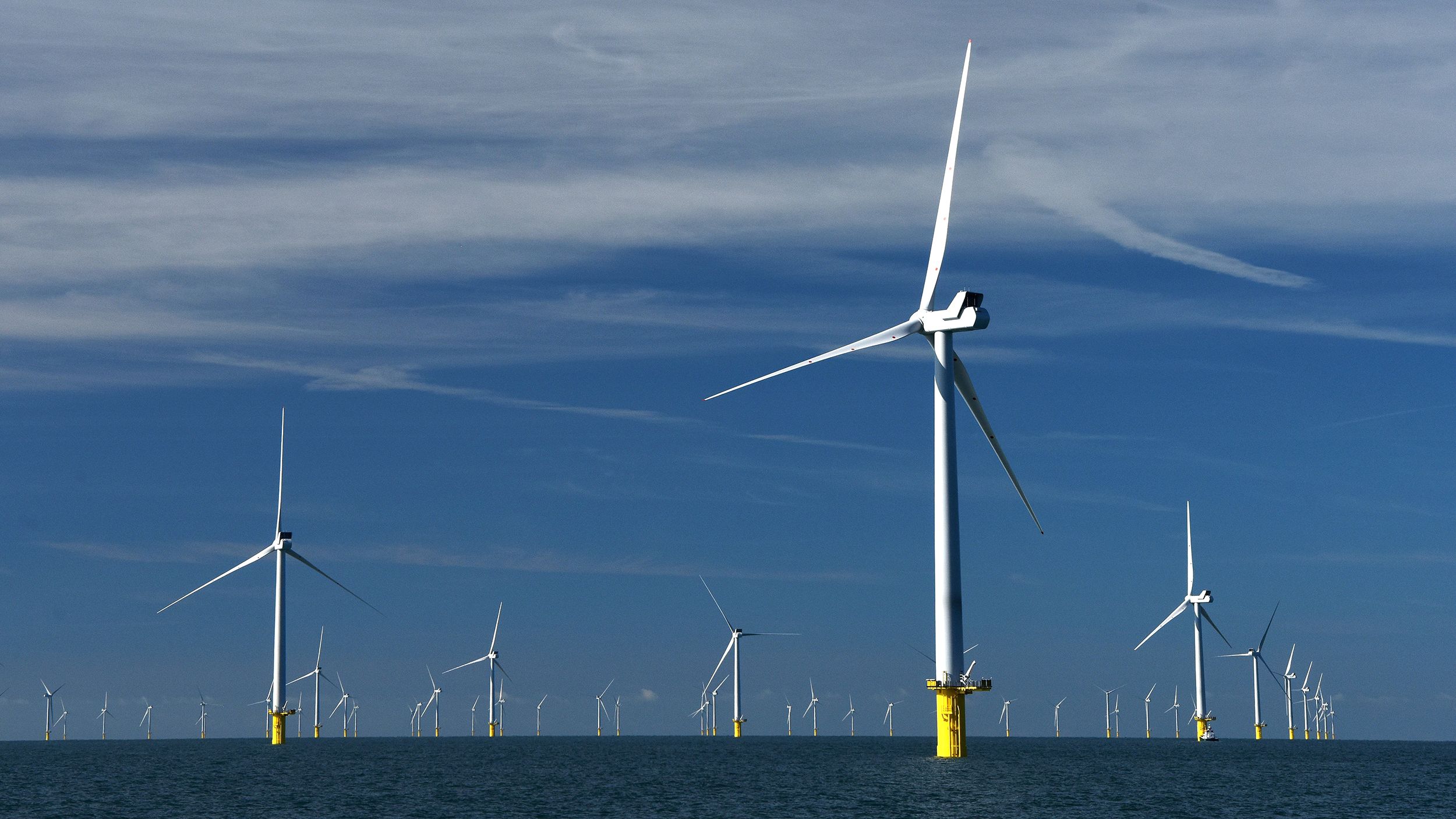
Tiny, artificial trees could form the next generation of windmills

Researchers in the US have proposed a new form of wind power: small, artificial, mechanical trees capable of producing energy from their vibrations. Working with the natural breeze, or small movements caused by other factors, the scientists hope that new forms of renewable energy can be developed in the future.

The idea is to create a device that can convert random forces – whether that’s from the footfall of pedestrians on a bridge, or a passing gust of wind – into electricity that can be used to power devices. And the researchers have found that tree-like structures made from electromechanical materials are perfect for the task.

“Buildings sway ever so slightly in the wind, bridges oscillate when we drive on them and car suspensions absorb bumps in the road,” said project leader Ryan Harne from Ohio State University. “In fact, there’s a massive amount of kinetic energy associated with those motions that is otherwise lost. We want to recover and recycle some of that energy.”

We Are From the Future Let There Be Light

“We are from the future. Everything is going to be alright. The future is a beautiful place. But you will need some training in order to get there…” More: http://WeAreFromTheFuture.com

Words, Voice & Editing by Garret John LoPorto.
Connect on Facebook: http://on.fb.me/GarretJohn
& on Twitter: http://twitter.com/garretloporto
Music: “Time” by Hans Zimmer
Hans Zimmer feat. Satellite Empire — Time (The Machinist Remix)

Science:
“Quantum mechanics explains efficiency of photosynthesis”
“Energy transfer in light-harvesting macromolecules is assisted by specific vibrational motions of the chromophores,” said Alexandra Olaya-Castro (UCL Physics & Astronomy), supervisor and co-author of the research. “We found that the properties of some of the chromophore vibrations that assist energy transfer during photosynthesis can never be described with classical laws, and moreover, this non-classical behaviour enhances the efficiency of the energy transfer.”

“The negative values in these probability distributions are a manifestation of a truly quantum feature, that is, the coherent exchange of a single quantum of energy,” explained Edward O’Reilly (UCL Physics & Astronomy), first author of the study. “When this happens electronic and vibrational degrees of freedom are jointly and transiently in a superposition of quantum states, a feature that can never be predicted with classical physics.”

http://www.ucl.ac.uk/news/news-articl

Text from video:
“Greetings… We are from the future. Everything is going to be alright. The future is a beautiful place … But you will need some training in order to inhabit it.

ARPA-E Funding Personal Climate Control Systems with Robots, Foot Coolers, and More

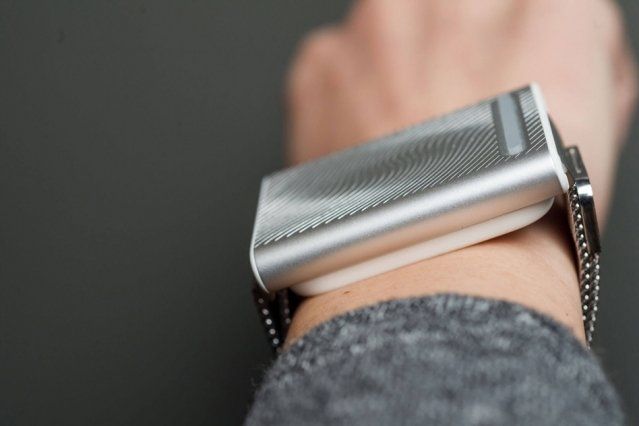
Government’s other big NextGen Program “Advanced Research Projects Agency-EnergyAdvanced Research Projects Agency-Energy” (ARPA) is funding a personal climate change solution with robots, foot coolers, etc. There is one fact; US Government does love their acronyms.


Why heat or cool a whole building when you could heat or cool individual people instead?

Russian officials again talk about a working lab prototype megawatt class nuclear propulsion system

A Russian Megawatt-class nuclear propulsion system for long-range manned spacecraft must be ready by 2017, Skolkovo Foundation’s Nuclear Cluster head Denis Kovalevich said on Wednesday.

“At present we are testing several types of fuel and later we will start drafting the design,” Kovalevich said. “The first parts [of the nuclear engine] should be built in 2013, and the engine is expected to be ready by 2017.”

The engine is being developed for interplanetary manned spacecraft to ensure that Russia maintains a competitive edge in the space race, including the exploration of the Moon and Mars.

/* */