Laptops & PC News: Sandisk has launched the SANDISK Extreme Fit USB-C Flash Drive in India, the world’s smallest 1TB USB-C flash drive. The tiny drive is aimed at profes.

In 2017, headlines around the world declared the simulation hypothesis dead. Physicists had debunked it, the articles said. We could all move on. There was one problem. The paper they cited never mentioned the simulation hypothesis. The debunking was invented by journalists who never read the research. And in the years since, the actual physics has gotten significantly worse.
This documentary follows that physics all the way down.
We begin with what really happened in 2017 — the Ringel-Kovrizhin paper, what it actually proved, and Scott Aaronson’s correction that nobody shared. Then we examine Nick Bostrom’s original 2003 trilemma, the real math behind it, and why two decades of attacks from Sean Carroll, Lisa Randall, and Sabine Hossenfelder have failed to break it. Every critique concedes something. Every attempted kill shot narrows the escape routes.
From there, we trace the physics of information through three remarkable lives. Konrad Zuse, who built the first programmable computer in his parents’ living room during the bombing of Berlin, then proposed in 1967 that the universe itself is a computation — and was ignored. John Archibald Wheeler, who lost his brother in World War Two and spent the rest of his life asking whether reality is built from information, condensing it into three words that changed physics: \.
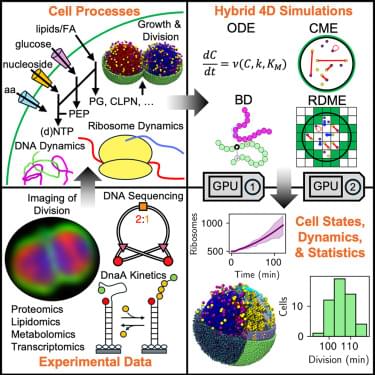
This work represents a fundamental advance in understanding life’s basic principles. By building a cell from the bottom up—specifying every gene, protein, and reaction—researchers can test how life functions with minimal complexity. The simulation serves as a “digital twin” that allows scientists to probe questions impossible to address experimentally, such as how spatial organization affects cellular processes or how subtle parameter changes alter cell cycle timing.
Simulating the complete cell cycle of the minimal cell provides a platform to understand the progression of complete states over time. The spatial heterogeneity of the intracellular environment can strongly affect biochemical reactions that control phenotypes.
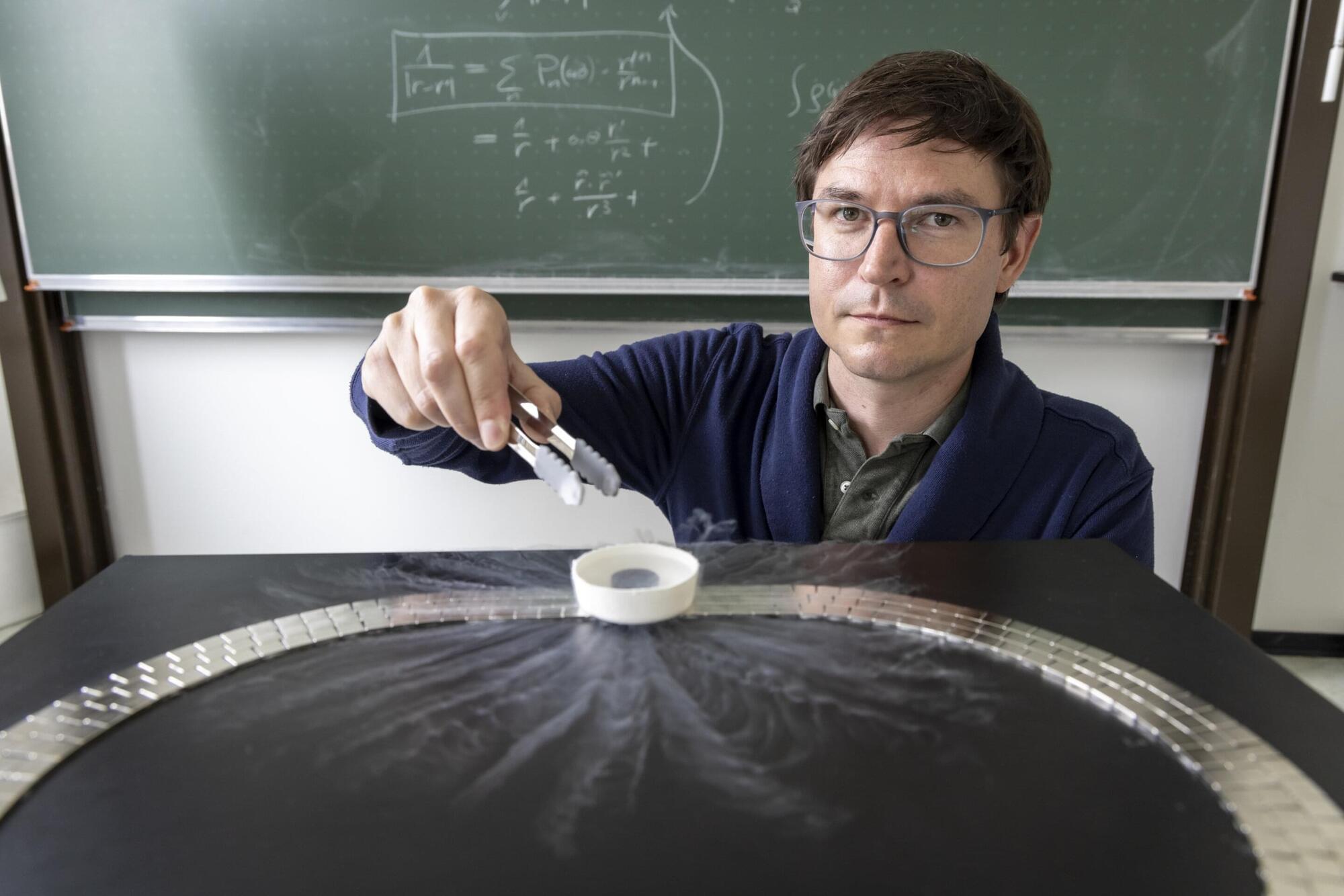
The search for materials that can conduct electricity at room temperature without losing energy is one of the greatest and most consequential challenges of modern physics: loss-free power transmission, more efficient motors and generators, more powerful quantum computers, cheaper MRI devices. Hardly any other material discovery has the potential to change so many areas of technology and everyday life at the same time.
An international research team, with the participation of Christoph Heil from the Institute of Theoretical and Computational Physics at Graz University of Technology (TU Graz) is now presenting a systematic approach to finding such materials. In a perspective article in the journal Proceedings of the National Academy of Sciences, a strategy paper that assesses the current state of research and sets out future directions, the 16 authors state that there are no fundamental physical laws that rule out superconductivity at ambient temperature.
Controlling light with light is a long-sought goal for computing and communication technologies. Achieving this capability would allow optical signals to be processed without converting them into electrical signals, potentially enabling faster and more energy-efficient devices. In recent years, researchers have begun exploring an unexpected platform for this purpose: soft matter.
Soft-matter photonics investigates how materials such as liquids, liquid crystals, gels, and polymers can self-organize into structures that manipulate light. Unlike conventional solid-state photonic components, which require precise nanofabrication, soft materials can spontaneously form functional optical geometries. Some soft materials also exhibit nonlinear optical behavior. For example, through the Kerr effect, their refractive index can change in response to intense light, enabling one beam to influence another and allowing ultrafast optical switching on picosecond timescales.
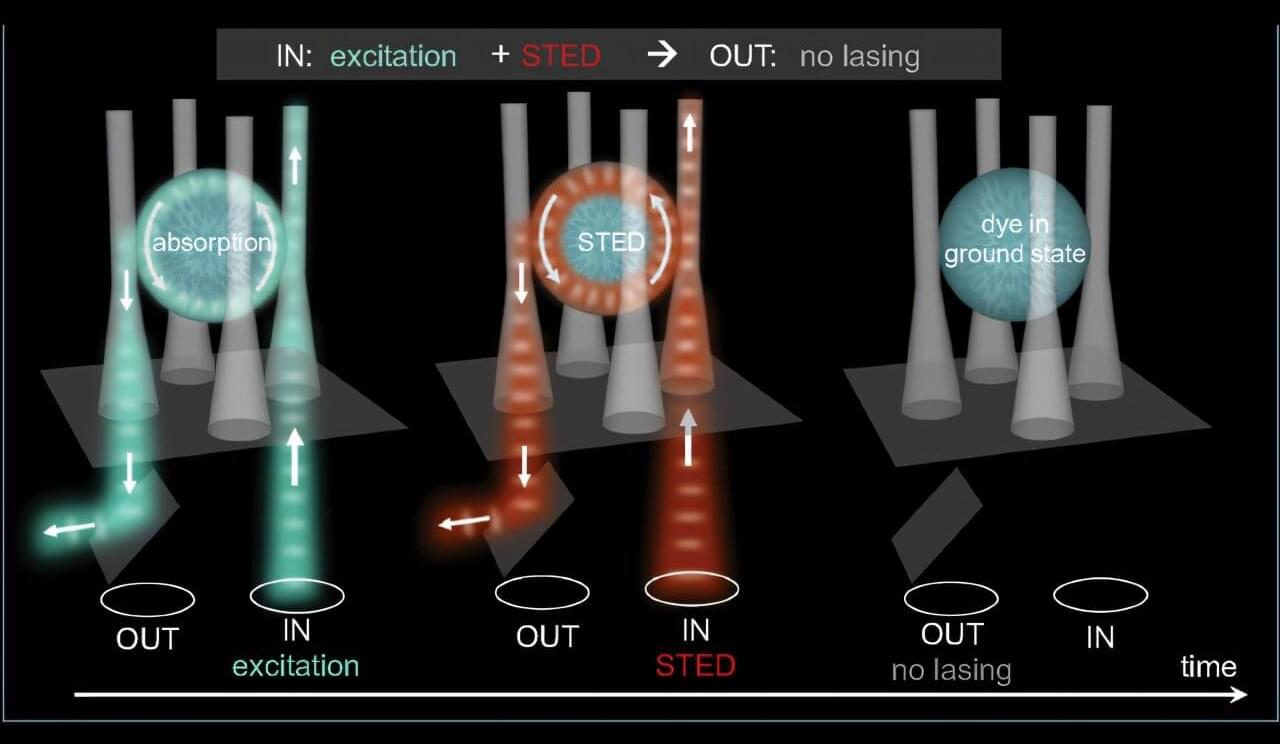
As reported in Advanced Photonics, an international team of researchers introduced a different approach: a nanosecond optical switch based on resonant stimulated-emission depletion (STED) in a liquid crystal cavity. Rather than relying on refractive index changes, this method manipulates the stored optical energy inside a resonant structure.
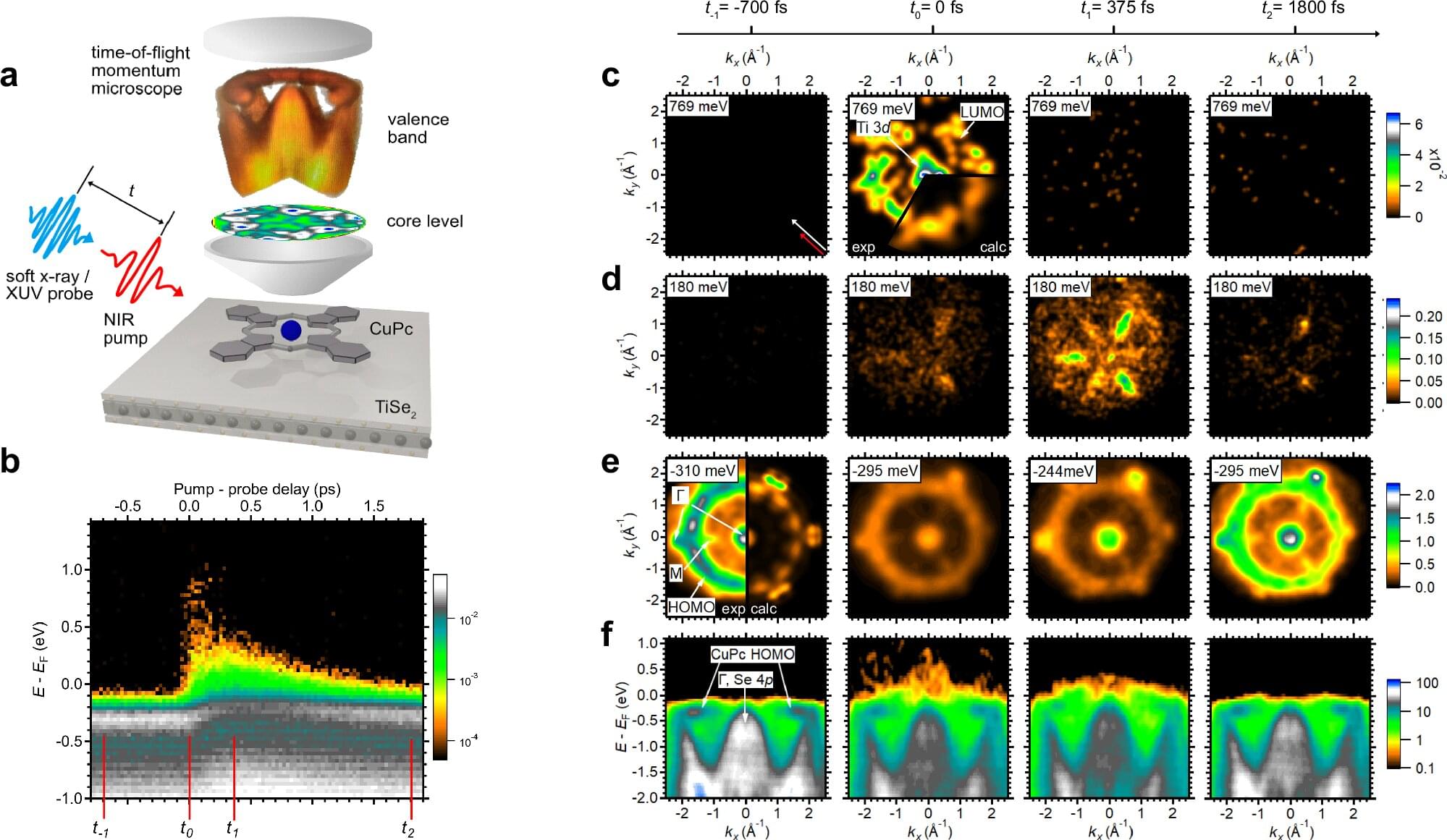
Researchers from Germany, Japan and India, led by scientists from DESY and the Universities of Kiel and Hamburg, have found a way to collectively make molecules on a flat surface rotate by exposing them to light using ultrafast light pulses from DESY’s free-electron laser FLASH and a high-harmonic generation source. However, making those molecules dance is not the ultimate goal: this result could have an impact on next-generation quantum and energy materials for electronics, data storage and energy conversion.
Molecules sitting on a material surface usually do just that—they sit on the surface without changing. If you send energy their way, however—for example, in the form of light—they can become dynamic and move. If this movement could be controlled, it could have a massive influence on all sorts of nanomaterials that are being investigated for a variety of applications from health to data storage.
DESY scientist Markus Scholz, leader of a study now published in Nature Communications, points out that this is particularly interesting in hybrid systems where organic molecules are placed on atomically thin, two-dimensional quantum materials. Examples of these hybrid systems are molecular electronics or energy-driven functional surfaces.
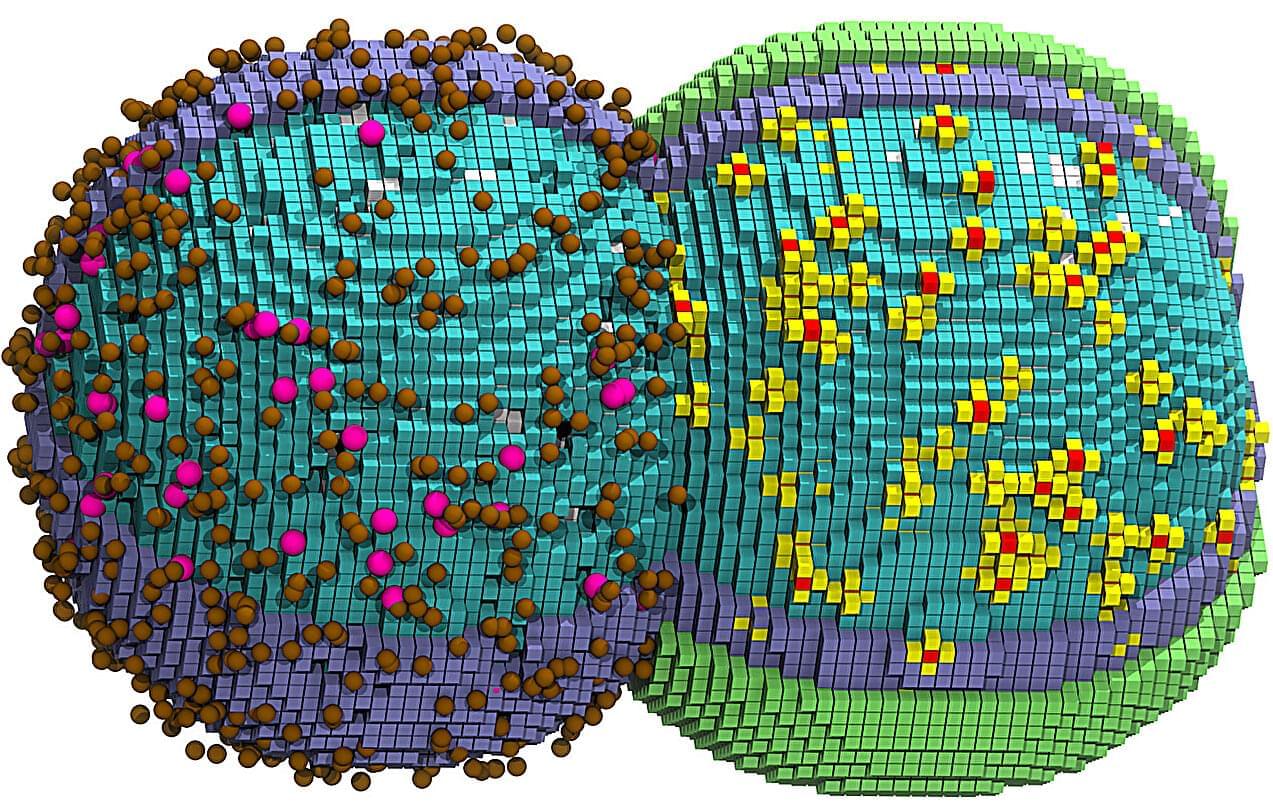
By simulating the life cycle of a minimal bacterial cell—from DNA replication to protein translation to metabolism and cell division—scientists have opened a new frontier of computer vision into the essential processes of life. The researchers, led by chemistry professor Zan Luthey-Schulten at the University of Illinois Urbana-Champaign, present their findings in the journal Cell.
The team simulated a living cell at nanoscale resolution and recapitulated how every molecule within that cell behaved over the course of a full cell cycle. The work took many years: vast computer resources, large experimental datasets, a suite of experimental and computational techniques and an understanding of the roles, behaviors and physical interactions of thousands of molecular players.
The researchers had to account for every gene, protein, RNA molecule and chemical reaction occurring within the cell to recreate the timing of cellular events. For example, their model had to accurately reflect the processes that allow the cell to double in size prior to cell division.
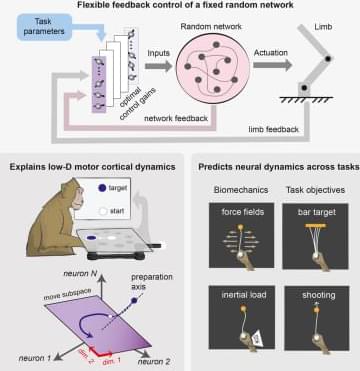
Kalidindi and Crevecoeur develop a computational framework linking feedback-controlled networks to limb dynamics. They demonstrate that optimal control of fixed network reproduces key motor cortical dynamics and predicts neural activity across tasks. Analytical results show low-dimensional patterns emerge from task and biomechanical complexity, thereby bridging neural dynamics with control theory.
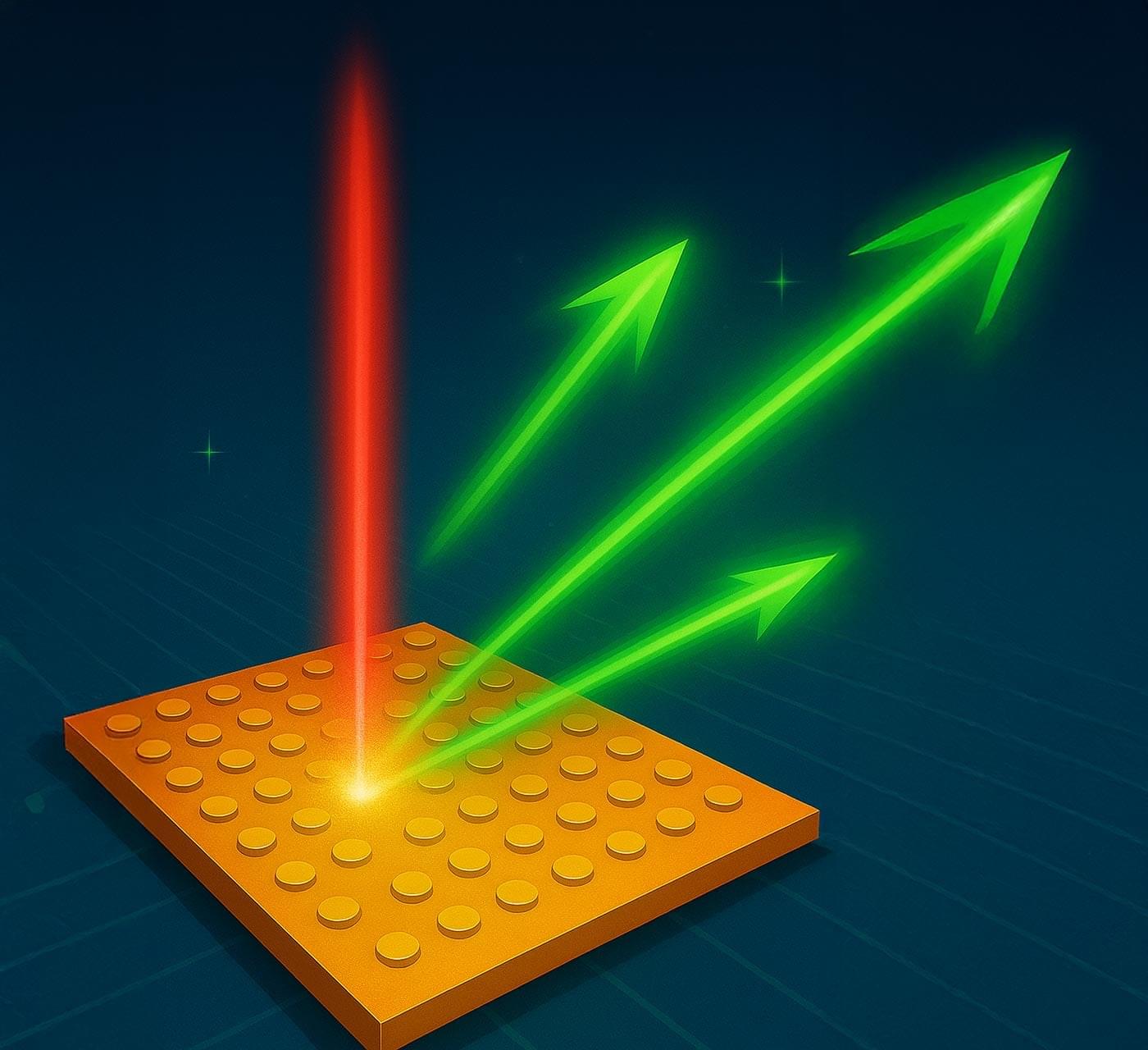
A tiny metasurface chip can turn invisible infrared light into steerable visible beams, opening the door to powerful new optical technologies.
Developing extremely small devices that can precisely guide and manipulate light is critical for many emerging technologies. Scientists at the Advanced Science Research Center at the CUNY Graduate Center (CUNY ASRC) have now demonstrated an important advance by creating a metasurface that can transform invisible infrared light into visible light and send it in different directions—without any moving parts. Their results are described in a study published in the journal eLight.
How the ultra-thin metasurface chip works.
Thousands of years from now, what will remain of our digital era? The ever-growing vastness of human knowledge is no longer stored in libraries, but on hard drives that struggle to last decades, let alone millennia.
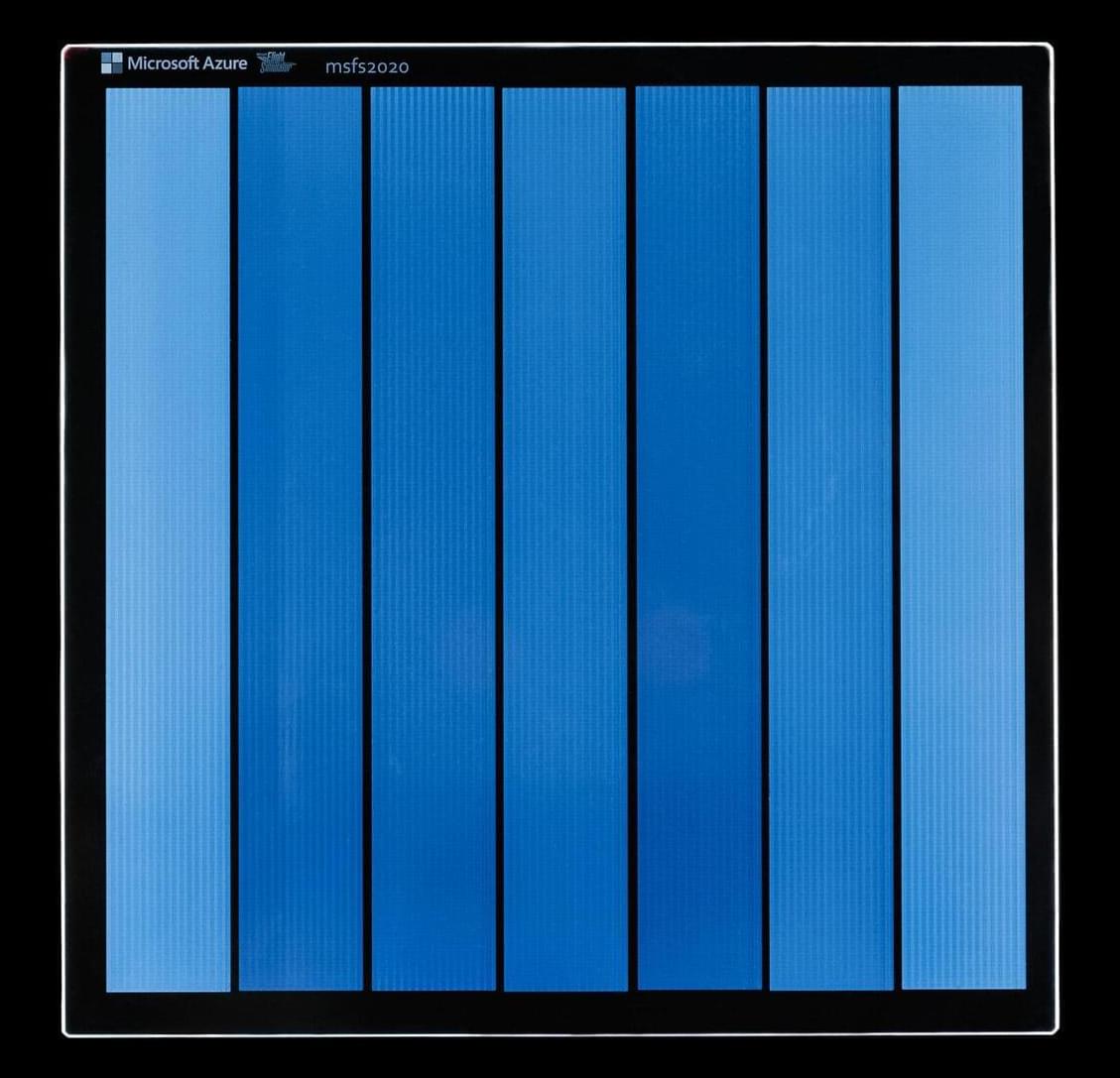
However, information written into glass by lasers could allow data to be preserved for more than 10,000 years, Microsoft announced in a study on Wednesday.
Since 2019, Microsoft’s Silica project has been trying to encode data on glass plates, in a throwback to the early days of photography, when negatives were also stored on glass.