“What does it mean for a business to get things done? How does it channel the energy and activities of all its knowledge workers as they work?”

“What does it mean for a business to get things done? How does it channel the energy and activities of all its knowledge workers as they work?”

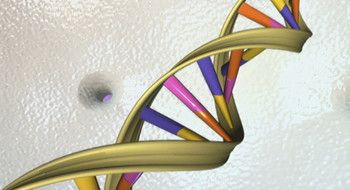
Using the CRISPR gene-editing tool, scientists from Harvard University have developed a technique that permanently records data into living cells. Incredibly, the information imprinted onto these microorganisms can be passed down to the next generation.
CRISPR/Cas9 is turning into an incredibly versatile tool. The cheap and easy-to-use molecular editing system that burst onto the biotech scene only a few years ago is being used for a host of applications, including genetic engineering, RNA editing, disease modeling, and fighting retroviruses like HIV. And now, as described in a new Science paper, it can also be used to turn lowly microorganisms into veritable hard drives.
http://io9.gizmodo.com/5935415/why-dna-is-the-future-of-data-storage
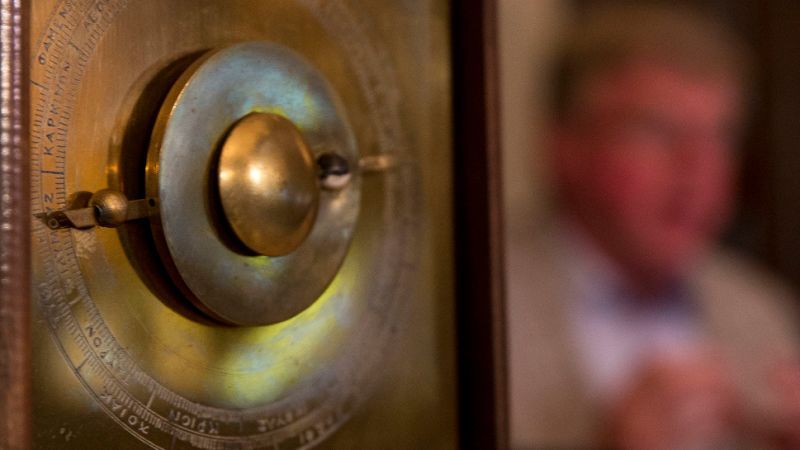
Discovered in an ancient shipwreck near Crete in 1901, the freakishly advanced Antikythera Mechanism has been called the world’s first computer. A decades-long investigation into the 2,000 year-old-device is shedding new light onto this mysterious device, including the revelation that it may have been used for more than just astronomy.
The Antikythera Mechanism is one of the most fascinating and important archaeological discoveries ever made, one that reveals the remarkable technological and engineering capacities of the ancient Greeks as well as their excellent grasp of astronomy. This clock-like assembly of bronze gears and displays was used to predict lunar and solar eclipses, along with the positions of the sun, moon, and planets. It wasn’t programmable in the modern sense, but it’s considered the world’s first analog computer. Dating to around 60 BC, nothing quite like it would appear for another millennium.
Check this out!
UChicago hasthis been able for the first time conduct an experiment shows the behavior of quantum materials in curved space. In their own words, “We are beginning to make our photons interact with each other. This opens up many possibilities, such as making crystalline or exotic quantum liquid states of light. We can then see how they respond to spatial curvature.”
Interplay of light, matter is of potential technological interest
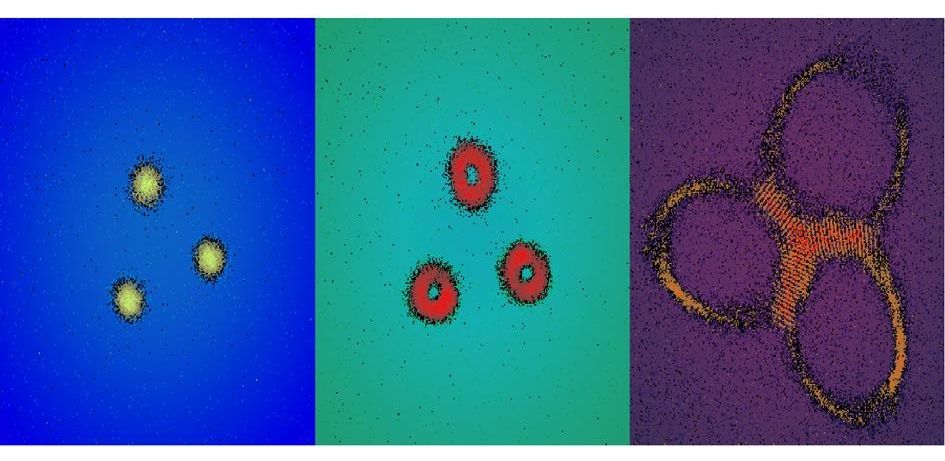
These false-color images represent the quantum Hall state that UChicago physicists created by shining infrared laser light at specially configured mirrors. Achieving this state with light instead of matter was an important step in developing computing and other applications from quantum phenomena. Courtesy of Nathan Schine, Albert Ryou, Andrey Gromov, Ariel Sommer, and Jonathan Simon.
CHICAGO–(ENEWSPF)–June 10, 2016. Light and matter are typically viewed as distinct entities that follow their own, unique rules. Matter has mass and typically exhibits interactions with other matter, while light is massless and does not interact with itself. Yet, wave-particle duality tells us that matter and light both act sometimes like particles, and sometimes like waves.
Harnessing the shared wave nature of light and matter, researchers at the University of Chicago, led by Jonathan Simon, the Neubauer Family Assistant Professor of Physics, have used light to explore some of the most intriguing questions in the quantum mechanics of materials. The topic encompasses complex and non-intuitive phenomena that are often difficult to explain in non-technical language, but which carry important implications to specialists in the field.
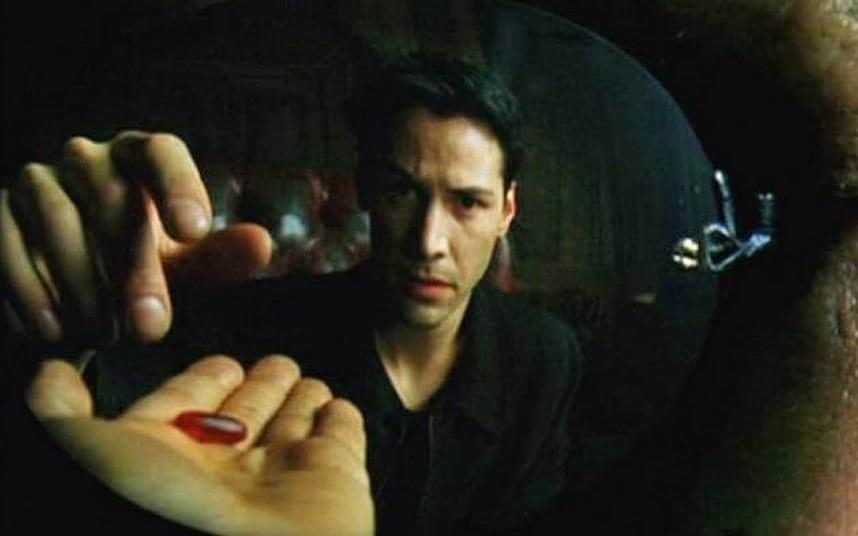
Elon Musk, the billionaire entrepreneur and founder of Space X, Tesla and Paypal, has told an interviewer there is only a “one in billions” chance that we’re not living in a computer simulation.
Speaking at San Francisco’s Code Conference this week, Musk said that he has had “so many simulation discussions it’s crazy”, and that it got to the point where “every conversation [he had] was the AI/simulation conversation”.
He also claimed that, if we’re not living in a simulation, we could be approaching the end of the world.
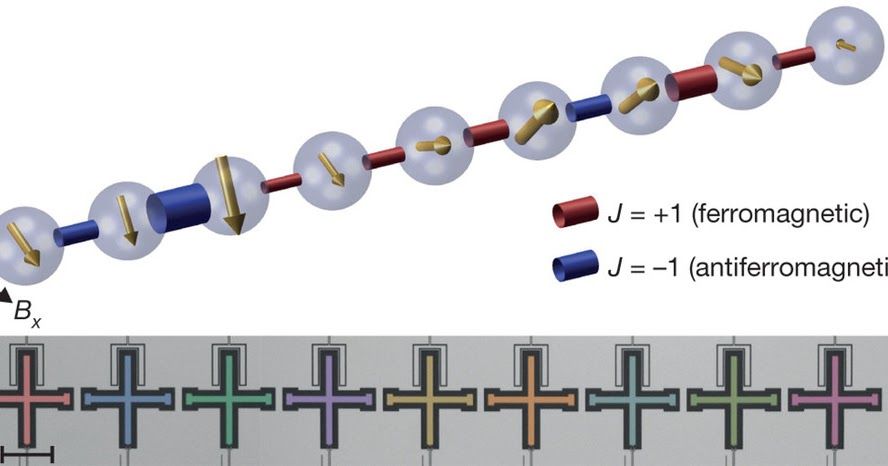
The Google team uses a row of nine solid-state qubits, fashioned from cross-shaped films of aluminium about 400 micrometres from tip to tip. These are deposited onto a sapphire surface. The researchers cool the aluminium to 0.02 degrees kelvin, turning the metal into a superconductor with no electrical resistance. Information can then be encoded into the qubits in their superconducting state.
The interactions between neighboring qubits are controlled by ‘logic gates’ that steer the qubits digitally into a state that encodes the solution to a problem. As a demonstration, the researchers instructed their array to simulate a row of magnetic atoms with coupled spin states — a problem thoroughly explored in condensed-matter physics. They could then look at the qubits to determine the lowest-energy collective state of the spins that the atoms represented.

Exponential Finance celebrates the incredible opportunity at the intersection of technology and finance. Watch live as hundreds of the world’s leading investors, entrepreneurs and innovators gather in New York to define the future of the way we do business.
In Bitcoin’s early years computer scientists and early adopters were running the show. Now, a new community of academics, entrepreneurs, and economists, are working with cryptocurrencies and blockchain to bring the technology to a new set of diverse applications.
From building peer-to-peer networks for secure data computation and storage to decentralized content management systems that give patients access to health-care records across hospital databases, blockchain and digital currencies are starting to rewrite the rules of the 21st century transaction.
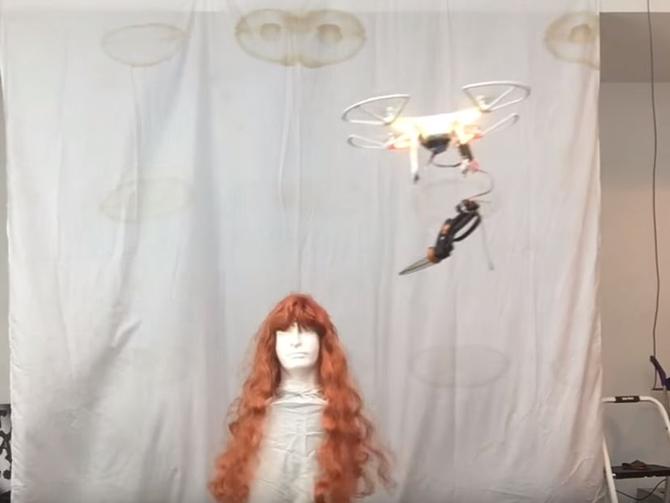
Who needs a hair artisian anymore while you a have a drone. What’s next? Makeup artists? Lookout Mary Kay.
What about movie/ video crew that’s all drones? The list goes on and on.
A popular robotics vlogger and a computer hacker pair up to give a mannequin a haircut with a drone. Is this the feel-good story of the summer?