Toggle light / dark theme

Moisture-driven tech can power green batteries—and destroy spy gear

Researchers from North Carolina State University and Rice University have created a nontoxic, stretchable battery that operates by extracting moisture from the ambient environment—even in climates as dry as the desert. The batteries could be useful in Internet of Things (IoT) applications ranging from wearables to advanced surveillance monitors with built-in kill switches. The study is published in the journal Science Advances.

Emerging technologies like wearable monitors, miniature robotics and other IoT devices require lightweight, flexible power sources. Conventional batteries, which represent the best power source options, are often too rigid and heavy to be useful, and they contain toxic materials that can leak. Energy harvesters, so called because they capture energy from the surrounding environment and convert it into electrical power, are lighter, but their performance is limited.

Running on moisture and salt The new moisture-activated battery (MAB) includes a magnesium anode and a silver/silver chloride cathode, with a cellulose membrane loaded with lithium chloride salts that serves as a separator. The separator harvests moisture from ambient air, which dissolves the salts and creates the electrolyte, allowing charge to flow through the battery.

Rust-to-iron cycle may unlock long-term storage for renewable energy

In the future, iron might be used as a chemical energy storage material, making large quantities of renewable energy available in the long term. Iron powder is combusted in a cyclic process that is carbon neutral and then reconverted to its original state using energy input. Scientists at Karlsruhe Institute of Technology (KIT) were the first to conduct an extensive study to evaluate the potential of this technology for power generation. Their results show that iron, while not superseding hydrogen, may usefully complement it in a climate-neutral energy system. The findings have been published in Chem Circularity.

Be it for wind energy from coastal regions or for solar power from desert areas, iron could serve as a transportable energy carrier in the future to make these renewable energy sources usable worldwide. “This works in a cycle that emits no carbon dioxide or environmentally harmful substances,” said Julia Schuler from KIT’s Institute for Industrial Production (IIP). For power generation, iron powder is combusted, producing iron oxide, i.e. rust. Using hydrogen from renewable sources, it is reduced to iron again in a process that removes the oxygen it contains. The iron powder can then be reused.

“When burned, iron powder behaves very much like coal. We wanted to find out whether it was possible to repurpose existing coal power plants to iron-firing,” said Schuler. She believes that modifications are primarily necessary in the heat generator; other components, such as the steam cycle, turbines, generator and power grid connection, could continue to be used.

Fossils found decades ago reveal extinct 3.5 million-year-old giant salamander species

In the late 1990s in the Ajimu region of Japan’s Oita Prefecture, researchers discovered three fossilized vertebrae belonging to the Cryptobranchidae family of giant salamanders. These were embedded in the Tsubusugawa Formation, Pliocene-era strata of lake deposits dating back approximately 3.5 million years. The strata have also yielded fossils of animals that no longer roam Japan, such as elephants and crocodiles, revealing a glimpse of an era much warmer and more humid than Japan’s current climate.

Researchers originally assigned the three Ajimu specimens to the genus Andrias, which includes the world’s largest living amphibians, but at the time, a lack of comparative specimens and research prevented their precise taxonomic identification. Now, more than two decades later, a new research team at Kyoto University has succeeded in shedding more light on these mysterious fossils.

After comparing the Ajimu specimens with the skeletons of extant Cryptobranchidae species, the team found that the three fossils belonged to an anterior trunk vertebra, a mid-trunk vertebra and a sacro-caudal vertebra. Further comparisons revealed that the mid-trunk vertebra possessed unique morphological characteristics not seen in other Cryptobranchidae species. This led the researchers to conclude that the Ajimu specimens represent a new species and genus.

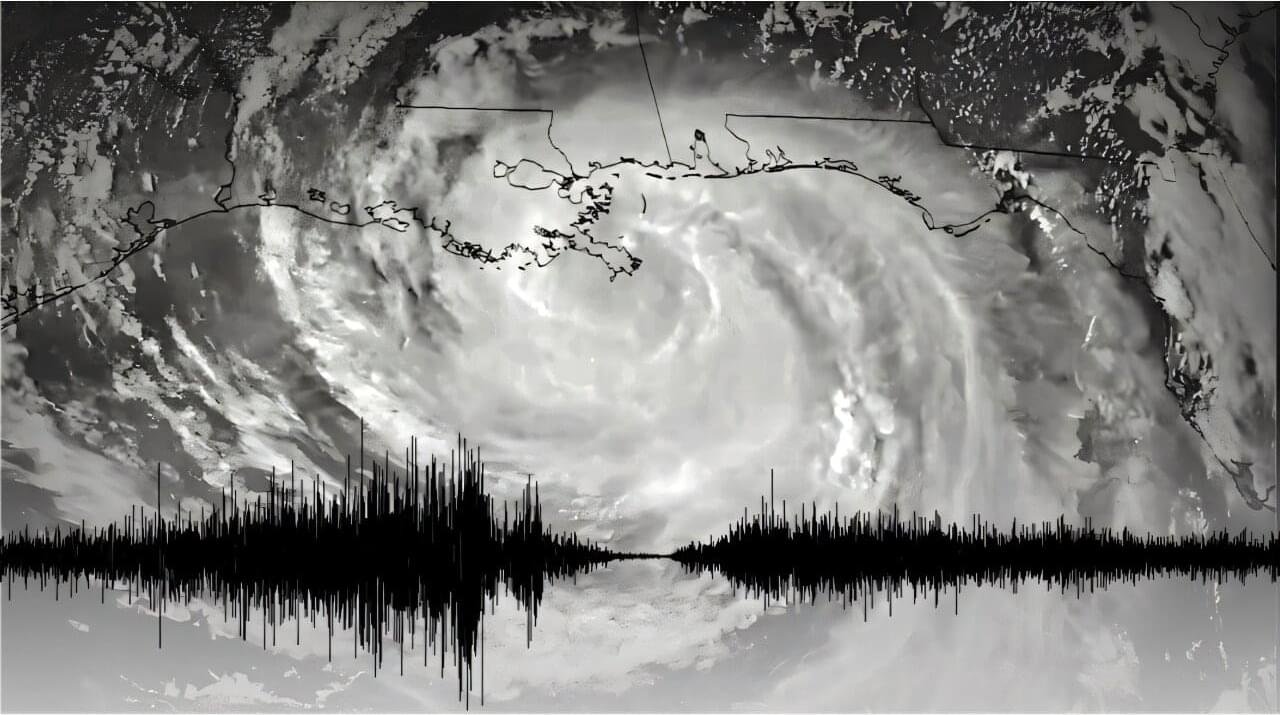
Day-night ocean warming helps explain why El Niño outpaces La Niña in models

Researchers have long known that there is an asymmetry in the El Niño-Southern Oscillation (ENSO), the confluence of wind and water currents that creates warm El Niño events and cooler La Niña events. Large-scale climate models tend to underrepresent this asymmetry for reasons that are still not fully understood. Better modeling of the mechanisms that make El Niño events warmer could both provide insight into Earth’s climate system and improve future ENSO predictions.

Previous studies of the asymmetry have looked at large-scale processes such as wind stress responses and thermal advection but haven’t fully answered the question. In a new approach, Yang and team examined how variations in sea surface temperature from day to night affect ENSO asymmetry, approaching the problem at a much smaller scale. The findings are published in the journal Geophysical Research Letters.

Comparing 35 Coupled Model Intercomparison Project Phase 6 (CMIP6) models, the researchers found that models with larger diurnal amplitudes (DA) for temperature better captured the ENSO asymmetry. Looking deeper with targeted model experiments, they found that a major driver of this mechanism is opposing daily mean sea surface temperature anomaly responses in the central and eastern Pacific. This east–west temperature difference causes the ocean to warm unevenly over months or longer. As a result, El Niño warms the ocean more than La Niña cools it.

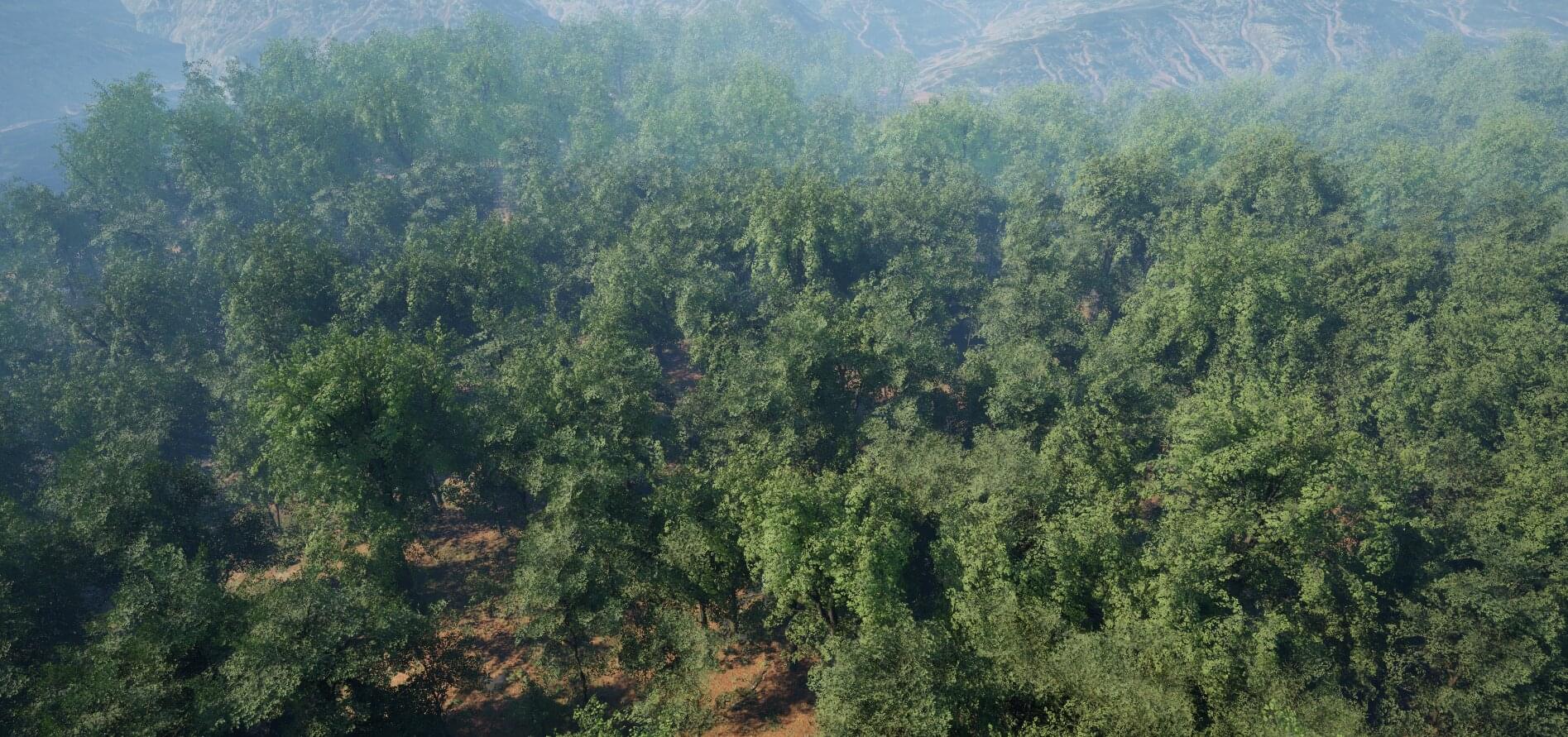
How giant tropical trees transport water 70 meters to stay as drought-resilient as smaller trees

The giant trees of tropical forests are important allies in the fight against climate change because of their ability to store carbon, yet they are still poorly understood by science. However, a study published in the journal Science reveals a crucial survival mechanism: These trees, which exceed 70 meters (230 feet) in height, have no difficulty transporting water to their tops and are no more vulnerable than smaller trees.

They have developed internal adaptations that compensate for the challenges of transporting water to the highest branches. Furthermore, tests conducted during severe droughts showed that they did not experience a more pronounced decline in growth than smaller trees. This contradicts the hypothesis that very tall trees would be more susceptible to water stress.

Robotic bird helps uncover the mysteries of flight turbulence

A bio-inspired robotic bird capable of mimicking the key movements of kestrels is helping researchers unravel the mysteries behind the species’ exceptional hovering capabilities.

With atmospheric turbulence expected to worsen due to climate change, understanding how birds naturally cope with rough air could help engineers design small unmanned aerial vehicles that are safer, more efficient and fly more smoothly.

Small unmanned aerial vehicles (sUAVs) are commonly used for applications including aerial photography, search and rescue, agricultural monitoring and package delivery, but are often grounded in turbulent conditions.

Intelligence Without Brains: A Radical New Idea

What if intelligence doesn’t require a brain? Biologist Michael Levin argues that intelligence is not confined to neurons, but exists on a continuum of goal-directed behavior and problem-solving across a wide range of species and systems. Using a framework he calls the “cognitive light cone,” Levin explores diverse forms of intelligence extending all the way down to the cellular level. His research suggests that cells communicate through electrical networks, enabling them to make collective decisions and adapt to unexpected challenges, evidenced by engineered tadpoles capable of seeing through eyes located on their tails. Levin radically challenges the conventional wisdom even further, proposing that forms of intelligence may extend beyond biology to molecular systems and maybe even the weather.

00:00 What is intelligence?
01:03 The field of diverse intelligence.
01:33 Intelligence at the cellular level.
02:08 The cognitive light cone.
03:01 The intelligence of groups of cells.
03:52 The bioelectric language of cells.
04:20 The mind of the body.
04:23 Cells that solve problems.
05:17 The tadpole experiment.
06:25 The cognitive spectrum.
06:48 Can you train a hurricane?
07:03 A new science of intelligence.
07:28 Beyond human biases.

——–
Quanta Magazine is an editorially independent publication supported by the Simons Foundation. We focus on developments in mathematics, theoretical physics, theoretical computer science and the basic life sciences.

READ free math and science articles on the Quanta website: https://www.quantamagazine.org.

LEARN about the Simons Foundation: www.simonsfoundation.org.

FOLLOW our social channels:

/* */