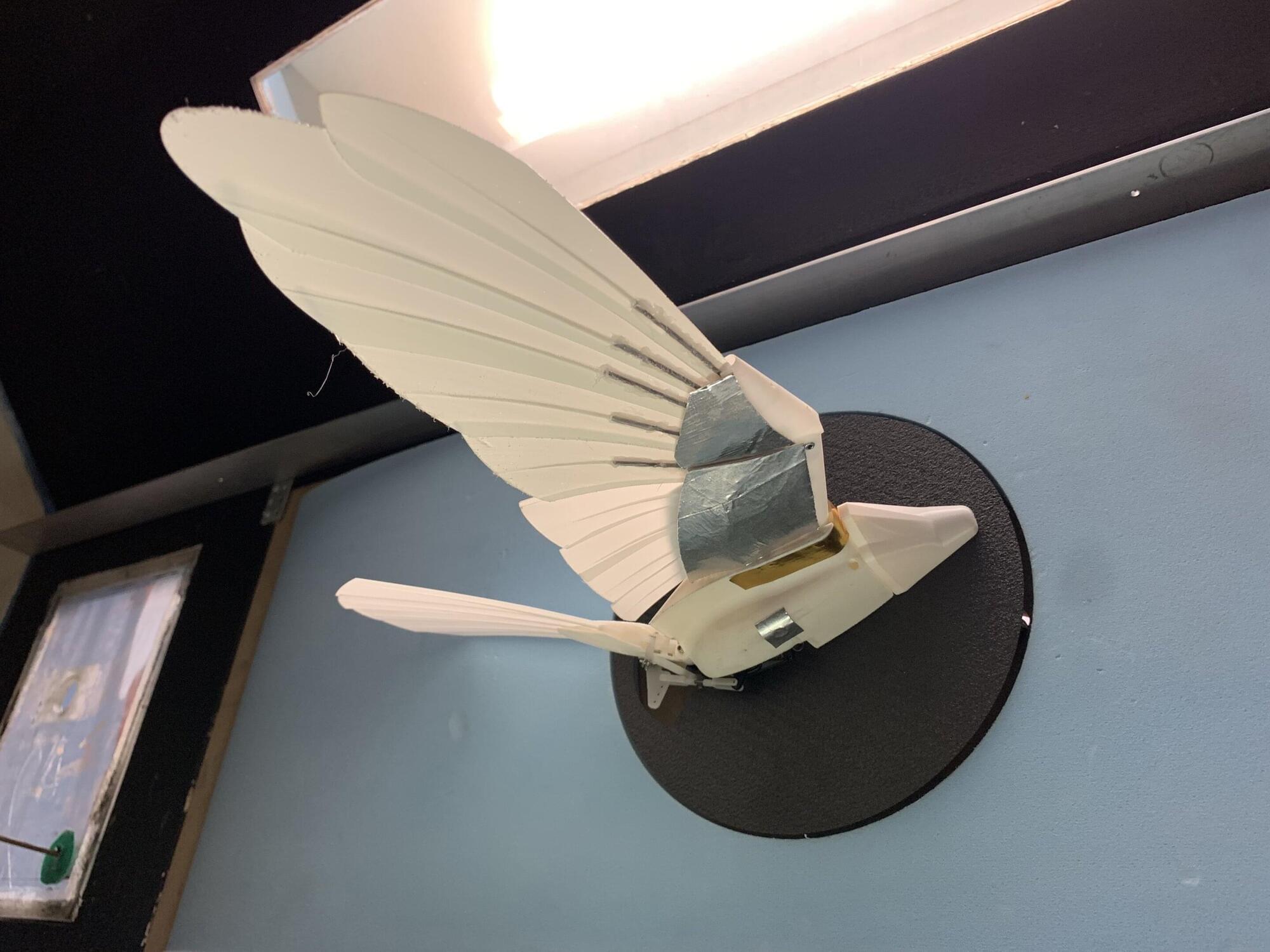
A bio-inspired robotic bird capable of mimicking the key movements of kestrels is helping researchers unravel the mysteries behind the species’ exceptional hovering capabilities.
With atmospheric turbulence expected to worsen due to climate change, understanding how birds naturally cope with rough air could help engineers design small unmanned aerial vehicles that are safer, more efficient and fly more smoothly.
Small unmanned aerial vehicles (sUAVs) are commonly used for applications including aerial photography, search and rescue, agricultural monitoring and package delivery, but are often grounded in turbulent conditions.