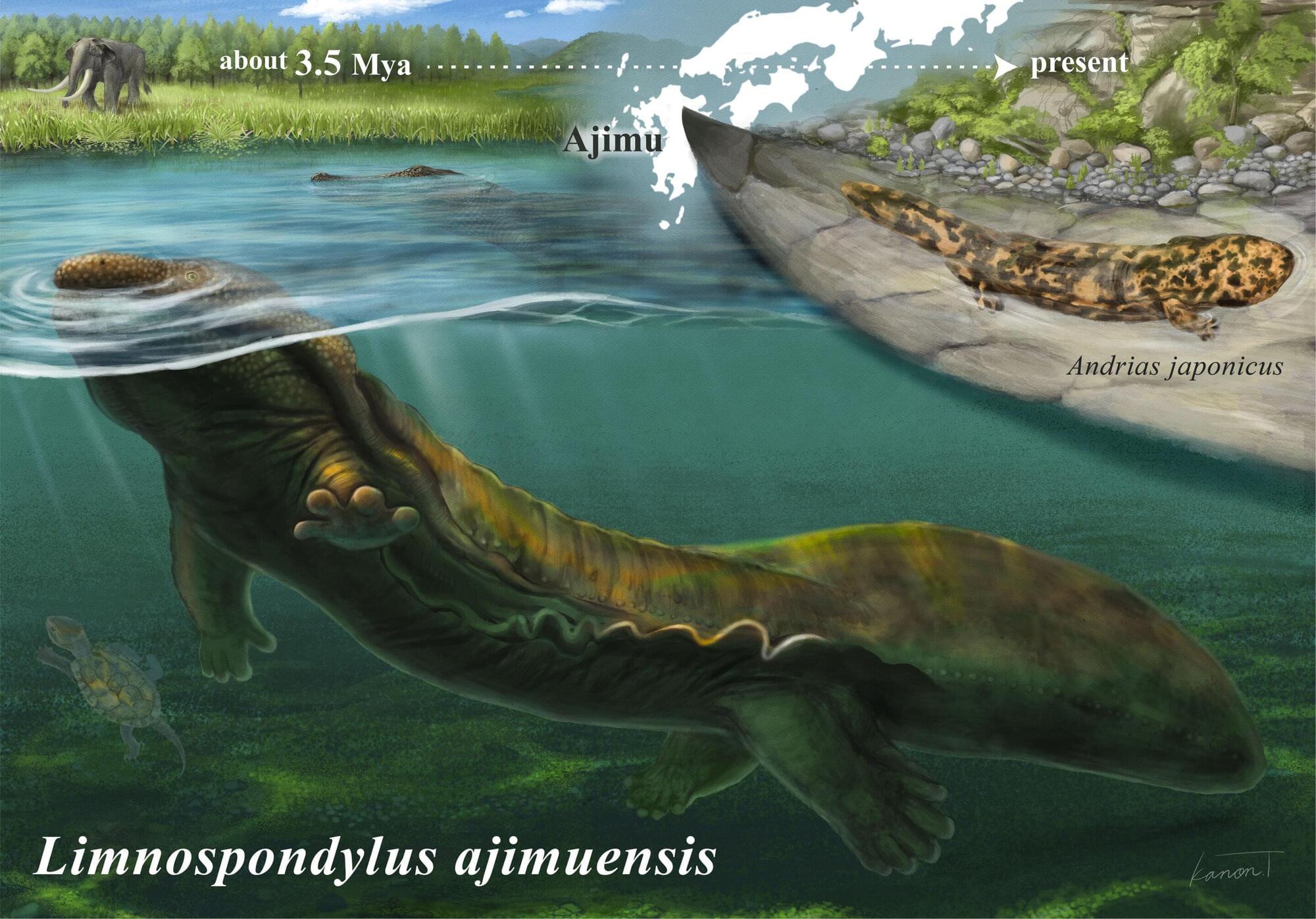
In the late 1990s in the Ajimu region of Japan’s Oita Prefecture, researchers discovered three fossilized vertebrae belonging to the Cryptobranchidae family of giant salamanders. These were embedded in the Tsubusugawa Formation, Pliocene-era strata of lake deposits dating back approximately 3.5 million years. The strata have also yielded fossils of animals that no longer roam Japan, such as elephants and crocodiles, revealing a glimpse of an era much warmer and more humid than Japan’s current climate.
Researchers originally assigned the three Ajimu specimens to the genus Andrias, which includes the world’s largest living amphibians, but at the time, a lack of comparative specimens and research prevented their precise taxonomic identification. Now, more than two decades later, a new research team at Kyoto University has succeeded in shedding more light on these mysterious fossils.
After comparing the Ajimu specimens with the skeletons of extant Cryptobranchidae species, the team found that the three fossils belonged to an anterior trunk vertebra, a mid-trunk vertebra and a sacro-caudal vertebra. Further comparisons revealed that the mid-trunk vertebra possessed unique morphological characteristics not seen in other Cryptobranchidae species. This led the researchers to conclude that the Ajimu specimens represent a new species and genus.