Toggle light / dark theme

Pharmacologic Treatments of Acute Episodic Migraine Headache in Outpatient Settings: A Clinical Guideline From the American College of PhysiciansFREE

Description: The American College of Physicians (ACP) developed this guideline based on the best available evidence on the comparative benefits and harms of pharmacologic treatments of acute episodic migraine headache, patients’ values and preferences, and economic evidence about these pharmacologic treatments. Methods: This guideline is based on a systematic review and network meta-analysis of the comparative benefits and harms of pharmacologic treatments of acute episodic migraine headaches, as well as systematic reviews of patients’ values and preferences and comparative cost-effectiveness analyses. The Clinical Guidelines Committee evaluated the following clinical outcomes using the GRADE (Grading of Recommendations, Assessment, Development and Evaluation) approach: pain freedom and pain relief at 2 hours; sustained pain freedom and sustained pain relief up to 48 hours; need for rescue medication within 24 hours; nausea, vomiting, and restored physical function at 2 hours; and overall and serious adverse events (AEs). Additional data on AEs were captured through U.S. Food and Drug Administration medication labels. Audience and Population: The audience for this clinical guideline is physicians and other clinicians. The population is adults with acute episodic migraine headache (defined as 1 to 14 headache days per month) managed in outpatient settings. Recommendation 1: ACP recommends that clinicians add a triptan to a nonsteroidal anti-inflammatory drug to treat moderate to severe acute episodic migraine headache in outpatient settings for nonpregnant adults who do not respond adequately to a nonsteroidal anti-inflammatory drug (strong recommendation; moderate-certainty evidence). Recommendation 2: ACP suggests that clinicians add a triptan to acetaminophen to treat moderate to severe acute episodic migraine headache in outpatient settings for nonpregnant adults who do not respond adequately to acetaminophen (conditional recommendation; low-certainty evidence).

Can melatonin supplements really ‘reverse’ DNA damage caused by lack of sleep?

Sleep isn’t just a luxury, it’s a vital process that helps our bodies repair and rejuvenate. Researchers have started to uncover how the quality and timing of sleep can affect more than just how rested we feel—it might also affect the very blueprint of our cells: our DNA.

A new study from Canada found that melatonin, a hormone known for its role in regulating sleep, might help reverse some of the DNA damage caused by years of poor sleep.

Melatonin is produced by the pineal gland in our brains when darkness falls. It signals to our bodies that it’s time to wind down and prepare for sleep. Beyond its sleep-inducing properties, melatonin is also a powerful antioxidant.

Cyborg Brain Implants: The Organoid Brain-Computer Interface (Human + Mouse + Computer)

Try brilliant FREE for 30 days: https://brilliant.org/ihm/
And get 20% off an annual membership!

Can you implant lab-grown brain tissue to heal brain damage? Kind of. What if you also implant an electrical stimulation device? The next generation of brain implants may be the Organoid Brain-Computer Interface (OBCI).

Learn about: brain organoids, dendritic spines, synapses, presynaptic and postsynaptic neurons, neurotransmitters.

Story of Einstein’s Brain: https://www.npr.org/2005/04/18/4602913/the-long-strange-jour…eins-brain

This New Tech Revolutionizes Biology… — YouTube

Dr. Michael Levin is on the verge of revolutionizing medicine by unlocking the bioelectric code that governs how cells communicate, heal, and build complex structures. His work reveals that intelligence exists at every level of biology—allowing us to reprogram tissues, regenerate limbs, and even suppress cancer by restoring cellular memory and connection.

As a listener of TOE you can get a special 20% off discount to The Economist and all it has to offer! Visit https://www.economist.com/toe.

Join My New Substack (Personal Writings): https://curtjaimungal.substack.com.

Listen on Spotify: https://tinyurl.com/SpotifyTOE

Become a YouTube Member (Early Access Videos):
/ @theoriesofeverything.

Links:

Genetic diversity and molecular evolution of 3-carboxymuconate cyclase (Gp60–70), the major antigen in pathogenic Sporothrix species

Sporotrichosis, a neglected tropical disease caused by Sporothrix species, is a growing concern, particularly due to the emergence of highly virulent, cat-transmitted S. brasiliensis. Rapid diagnosis and surveillance are crucial for controlling sporotrichosis. This study investigated the 3-carboxymuconate cyclase (CMC) gene, which encodes the major Sporothrix antigen (Gp60–70), as a molecular marker to understand the genetic diversity and evolution of these fungi. Analysis of 104 isolates (S. brasiliensis, S. schenckii, S. globosa, and S. luriei) revealed 79 unique haplotypes, demonstrating superior discriminatory power over traditional molecular markers. High–CMC polymorphisms, especially in S. brasiliensis and S. schenckii, suggest recent population expansion or positive selection, potentially driven by environmental pressures such as polyaromatic hydrocarbon pollutants. The conserved chromosomal location of CMC in pathogenic Sporothrix and its absence in less virulent species suggest a role in virulence. Identifying conserved residues within predicted B-cell epitopes provides targets for diagnostics and therapeutics. Additionally, we identified N-linked glycosylation sequons (e.g. NGS at 62, NNT at 225, and NGT at 373/374) conserved in pathogenic Sporothrix but absent in environmental Sordariomycetes, possibly contributing to pathogenicity and niche adaptation. This study establishes CMC as a valuable marker for understanding Sporothrix evolution and virulence, aiding in sporotrichosis management.

Display full size.

Light-induced symmetry changes in tiny crystals allow researchers to create materials with tailored properties

Imagine building a Lego tower with perfectly aligned blocks. Each block represents an atom in a tiny crystal, known as a quantum dot. Just like bumping the tower can shift the blocks and change its structure, external forces can shift the atoms in a quantum dot, breaking its symmetry and affecting its properties.

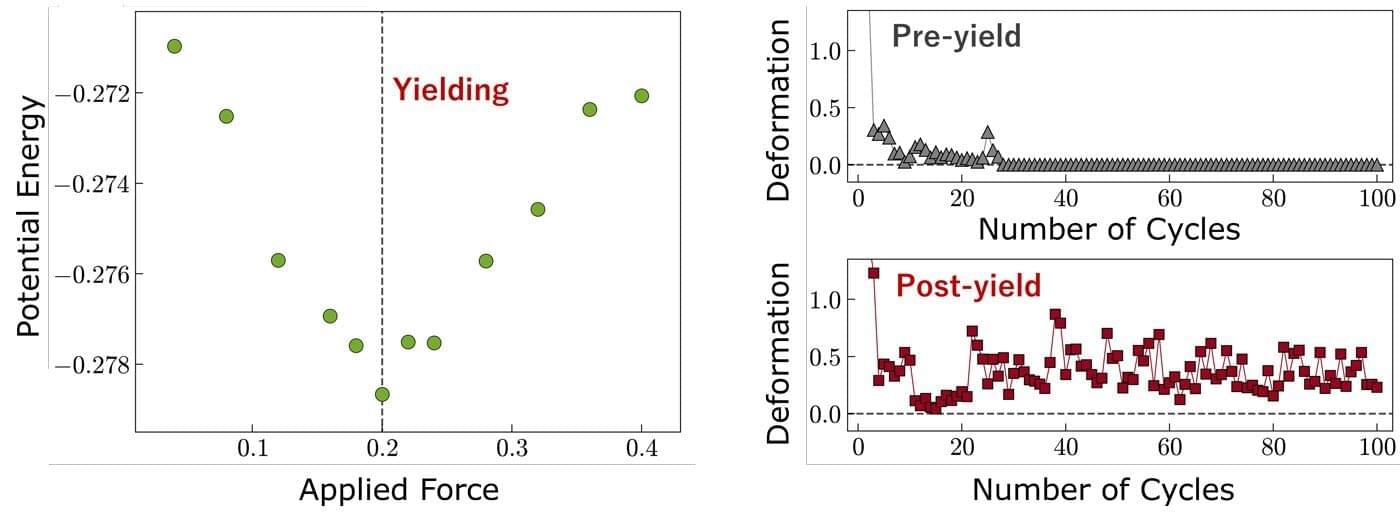
Scientists have learned that they can intentionally cause symmetry breaking—or symmetry restoration—in quantum dots to create new materials with unique properties. In a recent study, researchers at the U.S. Department of Energy’s (DOE) Argonne National Laboratory have discovered how to use light to change the arrangement of atoms in these minuscule structures.

Quantum dots made of semiconductor materials, such as lead sulfide, are known for their unique optical and due to their tiny size, giving them the potential to revolutionize fields such as electronics and medical imaging. By harnessing the ability to control symmetry in these quantum dots, scientists can tailor the materials to have specific light and electricity-related properties. This research opens up new possibilities for designing materials that can perform tasks previously thought impossible, offering a pathway to innovative technologies.

UbiREAD: Cracking the ubiquitin code of protein degradation

Ubiquitin marks proteins for degradation, whereby ubiquitin molecules can be combined in different types and numbers forming different chains. Researchers at the Max Planck Institute of Biochemistry (MPIB) have developed the new UbiREAD technology to decode the various combinations of ubiquitin molecules—the ubiquitin code—which determine how proteins are degraded in cells.

Using UbiREAD, scientists label with specific codes and track their degradation in cells. The study, published in Molecular Cell, revealed which ubiquitin code can or cannot induce intracellular protein degradation.

Proteins are the building blocks of life, maintaining cellular structure and function. However, when proteins become damaged, misfolded, or obsolete, they can lead to a range of diseases, from Alzheimer’s and Parkinson’s to cancer and muscular dystrophy. To prevent this, cells have developed a sophisticated system to mark unwanted proteins for degradation with a small protein called ubiquitin.

/* */